
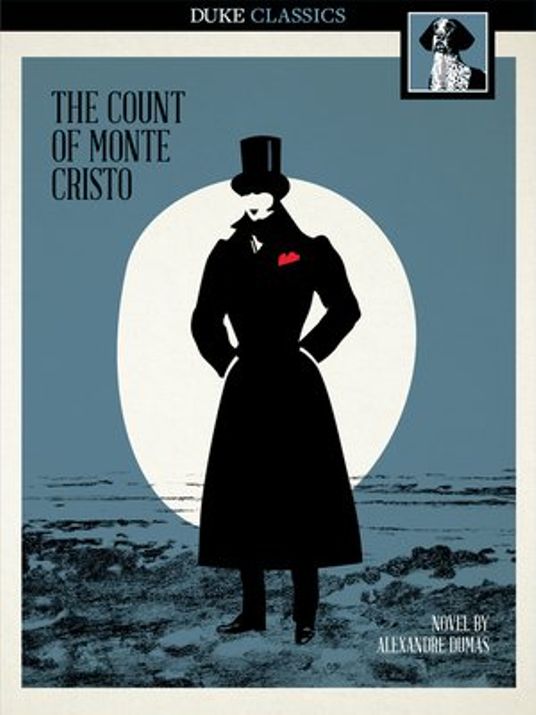
The Count of Monte Cristo by Alexandre Dumas is a literary masterpiece with numerous movie adaptations. The novel’s essence, with its tale of betrayal, revenge, and redemption, remains intact across various film interpretations. However, as with any book-to-movie transition, inherent differences arise due to the nature of these two different mediums.
With hundreds of pages, Dumas’ novel provides an immersive experience, allowing meticulous character development and exploring plot intricacies. The book offers readers a glimpse into the complexity of Edmond Dantes’ mind, unraveling his psychological and emotional evolution with unparalleled depth. The novel also has subplots and details, enriching the narrative with layers that may be challenging to fully capture in a shortened movie format.
On the other hand, constrained by time limits, film adaptations must distill the novel’s essence into a finite duration. This often involves streamlining the narrative, potentially sacrificing some of the novel’s depth for brevity. Characters may be condensed, and certain subplots may be omitted to create a more streamlined and accessible viewing experience. However, this condensation does not necessarily diminish the story’s impact; it offers a different perspective, emphasizing visual storytelling, performances, and cinema to convey emotions and critical moments.
The power of cinema lies in its ability to bring stories to life immediately. The visual spectacle, coupled with a carefully curated musical score, can enhance the emotional resonance of pivotal scenes. The beauty of cinematic landscapes and actors’ charisma breathe life into characters, making them tangible for audiences. Yet, the challenge lies in balancing the need for brevity with the desire to retain the essence of the source material.
The Count of Monte Cristo, in both books and movies, is a captivating exploration of human nature, vengeance, and the indomitable spirit. Each medium, the written word or the silver screen, brings unique strengths to the narrative, offering audiences distinct but complementary experiences of this classical literary. Whether reading the novel or watching a movie adaptation, the tale of Edmond Dantes continues to captivate and resonate across generations.
So which is better? This is a subjective question, depending on the individual and preference. Some readers like me prefer the novel because of the reading experience. I appreciate the depth of the story, the subplots, and the character’s descriptions. Others may like the movie for the immediate emotion and the visual performances. Maybe you want both. Either way, it’s well written, and that’s why the Count of Monte Cristo earned its name in classical literature. What would you choose, a book or a movie?
Happy choices!
Bella H.
The Count of Monte Cristo by Alexandre Dumas is available for checkout from the Mission Viejo Library. It can also be downloaded for free from Libby.
 Mission Viejo Library Teen Voice