
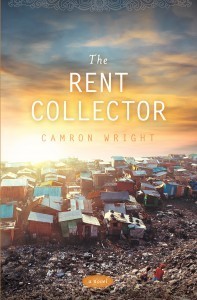
Some books make their impact slowly. The Rent Collector by Camron Wright is one of those stories that doesn’t rely on plot twists or dramatic pacing, but instead settles into you through its ideas. Set in a Cambodian landfill, the novel follows Sang Ly, a mother whose life is defined by survival: finding food, protecting her son, and enduring poverty that feels inescapable. But the heart of the story isn’t just where she lives; it’s how she learns to see herself.
What struck me most while reading was how literacy is treated as something deeply personal, not just practical. Learning to read doesn’t immediately change Sang Ly’s circumstances, but it changes her sense of possibility. In a place where dreaming feels risky, education becomes a quiet form of hope. That idea felt especially meaningful to me, because it reframes learning as more than schoolwork or achievement; it becomes a way of reclaiming dignity.
The most unexpected part of the novel is Sang Ly’s relationship with the rent collector, Sopeap Sin. At first, Sopeap represents fear and control, someone whose power is built on intimidation. But as her love for literature and storytelling is revealed, the novel complicates the idea of good versus evil. Sopeap’s character shows how people can be shaped by trauma and still be capable of beauty. This relationship is uncomfortable at times, but that discomfort is what makes it honest.
For teen readers, The Rent Collector offers a perspective shift. It’s easy to think of education as an obligation or a burden, especially when school feels overwhelming. This novel reminds us that learning is a privilege and one that can become a lifeline. Sang Ly’s determination to learn, despite exhaustion and fear, highlights how access to knowledge can change the way someone imagines their future, even if it doesn’t change their present right away.
By the time I finished the book, I wasn’t thinking about the landfill as much as I was thinking about stories themselves. The Rent Collector suggests that stories preserve humanity when everything else is stripped away. They hold memory, identity, and hope, things that can’t be taken, even in the harshest conditions. This book didn’t leave me feeling devastated or inspired in an obvious way. Instead, it left me more aware of how powerful something as simple as a story can be and how easily we forget that.
 Mission Viejo Library Teen Voice