
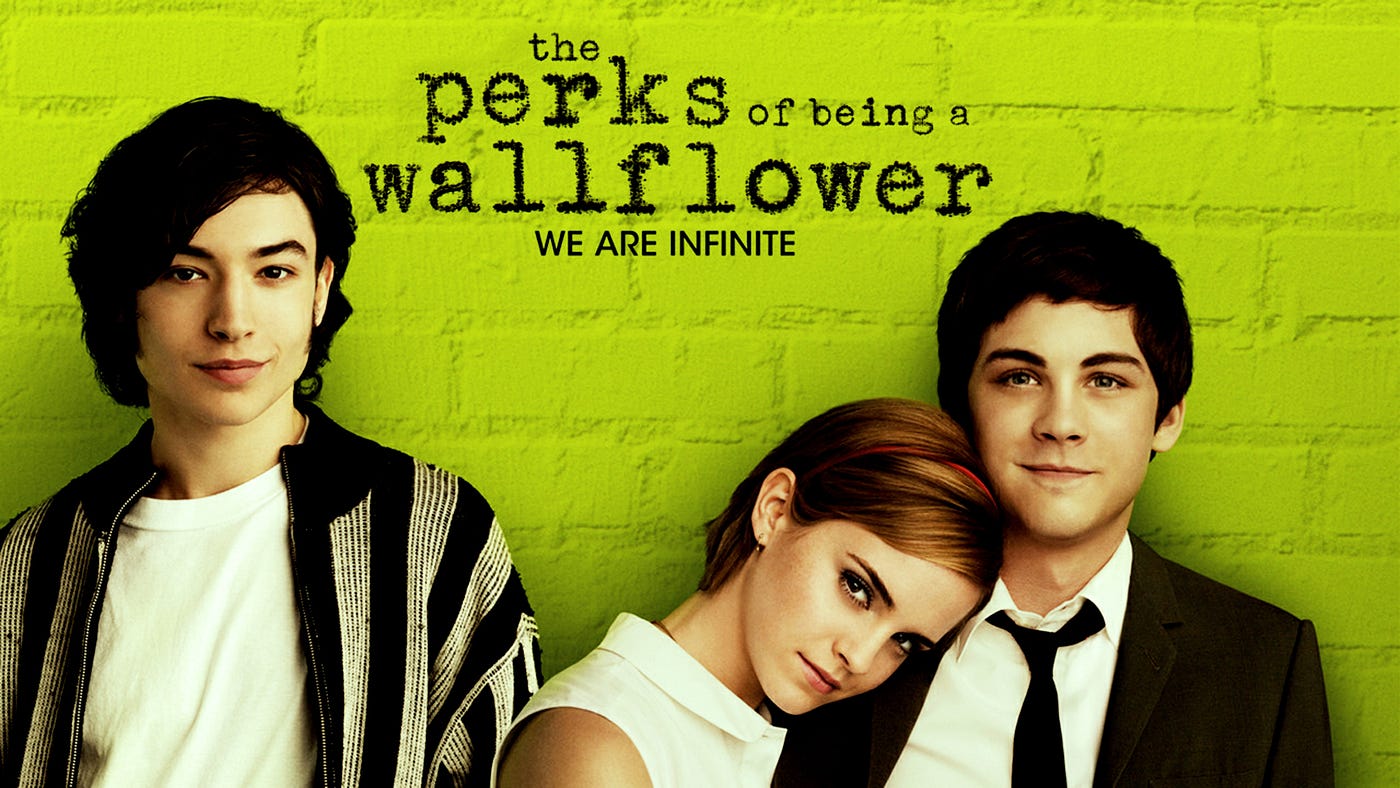
As a coming-of-age person, fittingly, I’ve always been obsessed with coming-of-age movies. The representation of the teenage experience as a moment in time where any problem appears catastrophic and any personal achievement or bliss appears life-changing correlates with these movies as they accurately show the strength of teenage emotions and how teens resolve to cope with those emotions. The Perks of Being a Wallflower does just this and more.
I’ve been long delayed in watching this movie, but have finally got around to it and I regret not having watched this movie long before. The Perks of Being a Wallflower, directed by Stephen Chbosky, and based on the book also written by Chbosky, follows freshman, Charlie, as he navigates the territory of his high school, counting down the days until he graduates. Charlie displays an outward disinterest in voluntarily engaging in social interactions with his peers, but beneath his outright rejection, Charlie seeks a meaningful friendship with someone who truly understands him.
Throughout the movie, Charlie’s obvious social awkwardness makes it difficult for him to interact with others without feeling self-conscious; however, underlying mental health issues, not clearly stated by Charlie, linger in his behavior. Charlie soon joins a fun and lively friend group with Patrick and Sam. Through an array of days that they spend together, whether studying or going on joy rides, Charlie finally gets to experience what it is to fulfill his teenage experience with real friends. I can relate to this greatly, as during my freshman year of high school, I also felt like a recluse. This caused me to have a negative outlook on my classmates and reject talking to people entirely; however, I soon found the people that I knew I wanted to be surrounded by, which changed my entire outlook on the rest of my teenage years.
By the end of the movie, we find out that Charlie’s Aunt Helen, whom he claimed he was very close to and whom we assumed was a family member he really connected with, actually abused him which led to Charlie’s eventual mental health problems, consisting of emotional explosions followed by blackouts. After a major blackout, Charlie finally receives the help he needs and begins to open up about his Aunt Helen. Overall, Charlie learns to be a wallflower, but not a doormat. He builds the confidence he needs to take control of the reigns of his life and fully participate in the next years of high school.
This message really resonates with me, and most importantly, I believe it resonates with a large population of teens today. The idea that it is a waste to stand by and not do what you want to do with your life is something that I will carry with me throughout the rest of high school and into my future.
The Perks of Being a Wallflower (DVD or book) is available to check out from the Mission Viejo Library. The book is also available to download for free from Libby.
 Mission Viejo Library Teen Voice
I personally loved this film when I saw it.