
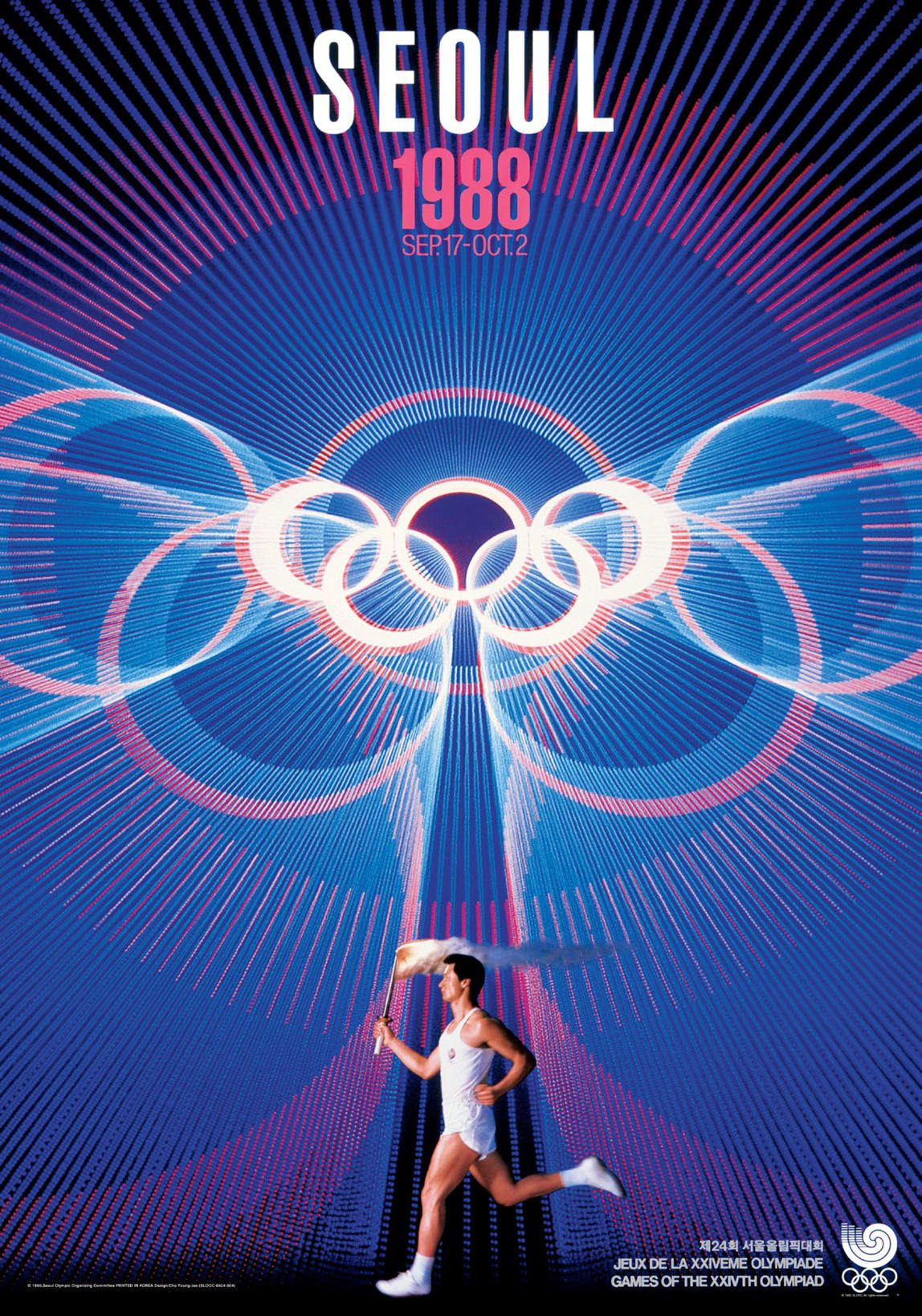
From September 17 to October 2, 1988, the 24th Summer Olympics were held in Seoul, South Korea. Today, South Korea is a wealthy country well known for K-pop, K-food, and K-beauty. However, in the 1980s, it was still a developing nation. Its economy was not strong enough to host a global sporting event, and the country did not even have proper Olympic stadiums. At the time, Japan was expected to host the 1988 Olympics in Nagoya, since it was far wealthier than South Korea.
In the late 1970s, then-president Park Chung Hee strongly supported hosting the Olympics. The government believed the event could help improve South Korea’s economy and prove that the country was capable of hosting a major international event. Under President Park’s leadership, Chung Ju-yung, the chairman of the Hyundai Group, led a delegation to persuade members of the International Olympic Committee (IOC). The delegation traveled to Baden-Baden, West Germany, and first met IOC members in London.
During these meetings, Chairman Chung argued that Japan was already a wealthy nation and that hosting the Olympics again would further accelerate its economic growth. This statement drew attention from IOC members, especially because Britain’s economy was competing with Japan’s at the time. As a result, many wealthy countries, including the United States and European nations, became wary of Japan’s growing economic power.
In the final presentation, Japan confidently delivered its proposal in Japanese with the help of translators. In contrast, South Korea presented entirely in English, showcased detailed stadium plans, and demonstrated its ability to host the Games without major errors. This strong impression influenced the final decision. In the final vote, Seoul won 52–27, becoming the host city of the 1988 Olympics.
However, not everyone welcomed the decision. North Korea opposed South Korea hosting the Olympics and attempted to disrupt the event through acts of terrorism, including a plane bombing. Despite these threats, South Korea continued its preparations and ultimately successfully hosted the Olympics.
Thanks to the 1988 Olympics, South Korea gained global recognition. This moment is often described by the slogan “세계는 서울로, 서울은 세계로,” which means “The world came to Seoul, and Seoul opened itself to the world.” After the Games, South Korea’s economy grew rapidly. A country once devastated by the Korean War in 1950 became a nation capable of hosting the Olympic Games within just a few decades. As of 2026, South Korea’s economy ranks 12th in the world among 197 countries.
 Mission Viejo Library Teen Voice
Interesting read. Learned something new!