The Remedy by Suzanne Young

remedy_suzanneyoung“I can’t remember who I am,” I say. “I’m not sure what’s real anymore.”

Actress. Imposter. Closer. Quinlan’s job is to step in and pretend to be whoever died to help families through the grieving process. She changes her hair, her clothes, and mimics them to the best of her abilities. She gives families the closure they need to keep going on with their lives despite the death of their loved one, but it is always only temporary.

Quinn is very good at her job. So good, in fact, that she can’t always tell her own past from the past of assignments. Quinn immerses herself so fully into her job that it’s hard to pull herself out. Especially on this new case. It’s the longest assignment to date, almost immediately after her last assignment. It might be too soon, but Quinn has no choice. She can’t say no to her boss when it’s her father.

“This isn’t my house. Isn’t my life. I let mine go and now I can’t find it. There’s nothing familiar to pull me back. I don’t know who I am.”

The only person who really gets Quinn is her mostly-ex-boyfriend Deacon. He was a Closer but quit a few months ago, around the time he quit on their relationship. Quinn still loves Deacon, but the last time she tried to let him back into her heart he shattered it. That makes twice where Quinn has felt him pull away. She isn’t sure if Deacon is worth risking her heart again.

Especially when her new assignment consists of consoling the decease’s boyfriend, Isaac. He’s cute, which may be part of the problem. The longer the assignment goes, the harder it is for Quinn to separate her own life from the assignment. It would be so easy to just forget about her life as Quinn and live happily in the dead girl’s world where she is treasured as a daughter and girlfriend. But throughout the assignment, Quinn can tell there’s something different about it.

Maybe it’s the secret about how her assignment died. Maybe it’s the mysteriously missing pages from the diary. Maybe it’s the dead girl’s friend who disappeared from existence. Whatever it is, Quinn is on the case. But the more she learns, the more secrets she finds. If Quinn isn’t careful, she might go so far into her role that she will lose herself in the process.

-Nicole G.

The Remedy is available for check out from the Mission Viejo Public Library.

Mr. Lincoln’s Drummer by G. Clifton Wisler

lincolndrummer_cliftonwislerThe American Civil War took place from 1861 to 1865 and pit the Northern and Southern States against each other, as shown in this novel by G. Clifton Wisler.  Boys from the age of 13 were enlisted to make money for their families.  There were a lot of economic problems at the time for the United States (who, due to the war, weren’t that amalgamated).  People were struggling to survive, and many barely even had enough food.   Since the war was to abolish slavery and the story is told from the side of Mr. Lincoln, there is little racism.  Willie, a young boy of the age of 11, had been working in his family’s business his entire life: mending clothes (mostly army uniforms).  But, he was always interested in war.  Willie didn’t realize any of the devastation and blood many encounter.

Much to Willie’s delight, an army general comes to town offering a modest sum of money for men to enlist in his regiment.  The general vaguely recognizes Willie and calls him over.  The man taught Willie a few of the drum patterns for the army calls some time ago and was impressed with Willie’s talent. The general gives Willie a couple coins.  As Willie walks home, he thinks what it would be like to be in the army, being a drummer.  When he arrives home and shows his mother the coins and asks, “Can I enlist to be a drummer?”  There is silence.

“Danger Zone” by Kenny Loggins, I thought, accurately summarizes the reaction by Willie’s mother to his “whimsical” question.  They both disagree. They need a third opinion. Waiting, painstakingly, for his father to come home, Willie dreams of the Army and of the drumbeat of his own, courageous instrument. Then, after hours of discussion between his mother, father, and himself, the family settle on a plan whereby father and son would enlist together under the condition they must stick together.

However, when the father and son exit the train from their town, they are separated.  Willie has to live his life as a drummer mostly by himself.  Throughout the story, Willie sees death of his own friends, converses with a Reb, and takes a fall himself.  At the end of the story however, awarded with pride, I thought of the song “Raise Me Up” by Josh Groban because that is how Willie feels. He doesn’t believe himself to be a hero.  He thinks that his parents, the general, and his friends pushed him too hard, and he failed.  I would rate this book a 6/10 for its lack of power.  The story itself was good, but I wasn’t drawn in.

Maya S., 7th Grade

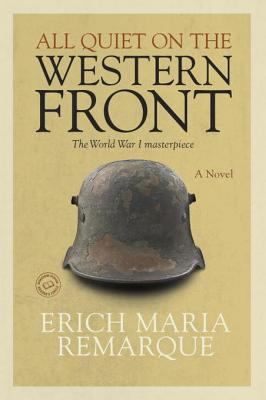
All Quiet on the Western Front by Erich Maria Remarque

allquiet_erichremarqueSet deep in World War I, All Quiet on the Western Front follows young German recruit Paul Baumer as he details his wartime experiences from signing up for the war with his graduating class to fighting in the trenches of the unforgiving Western Front. The war novel was written by German war veteran Erich Maria Remarque, and was published in 1929 to the dismay of the Nazi regime. It tackles ideas of loss, hope, adolescence and growth, and provides an in-depth look in the human condition.

One thing I noticed right away was Remarque’s uncanny ability to describe the setting at which the book was taking place, whether at a training camp, the Western Front, or Paul’s hometown in Germany. The author detailed descriptions of the hardships in the trenches, from the gnawing rats to the constant pounding of shells above, is so well written that you can’t help but get immersed into the setting.

The characterization is also very well done in this novel. You get a good feel for the camaraderie between the characters in war, and how important that is to survive in such a harsh setting. Remarque also introduces the various characters very distinctly so confusion wouldn’t be an issue. He lists certain traits they have at first, then elaborates and expands on those traits as the story goes on and different events take place. A few examples include:

  • Katczinsky- the oldest of the group, a crafty man who is a master at finding food and supplies
  • Tjaden- a defiant young man who loves to eat yet is somehow incredibly skinny
  • Detering- a peat digger who misses his life at home, works well with animals

The characters all interact with each other in a realistic, believable manner for the time and dialogue is heavy with dialect and references. The character development is great, and is one of the major themes of the story. The impact of the war on the soldiers is apparent and is shown subtly through differences in actions and speech.

I felt that the pacing of the story was excellent for the most part as well. The story starts o ff near the battlefield, then switches between the trenches, training camps, or in other locations far from war. This keeps the setting fresh and doesn’t drag on in one specific location for too long, except the hospital chapter where I felt it was dragged on for a little too long.

The effect of the war on the soldier is a huge theme. Men in war lose all identity and the futures of the young recruits are ruined. PTSD plays a role along with various coping strategies and defense mechanisms soldiers use to compensate for the horrors of war.

Because of these, the story has a lot of dark and mature themes, coupled with explicit violence that makes this a story that none under the age of 13 should be allowed to read.  For anyone else though, this is a phenomenal war novel that analyzes human race as a whole, I definitely recommend it to anyone looking for an insightful, historical novel.

-Ahmed Hussaini, 11th grade

All Quiet on the Western Front is available for check out from the Mission Viejo Public Library and Axis360

Paper Towns by John Green

papertowns_johngreenMargo Roth Spiegelman is an independent young woman who makes her own rules in the game of life. She goes with her own ideas and does not take orders from anybody, including her parents. She always plays games with people, running away whenever she pleases and leaving clues for people to find her. It is all a part of this little game she plays with everyone she cares about, making them scared as she has fun. She is so determined to live by herself, the way she wants, so when she runs away again, it doesn’t scare her parents. It just annoys them to the point where they don’t care if she comes back. It’s when she goes missing for more than a few days that everyone starts to think she is not coming back. Her old friend from when they were kids, Quentin, tries to get into the life of Margo. He tries to think like she would in order to find her and get her back, before it is too late.

When I first found out about this book, I couldn’t wait to read it. The storyline seemed so interesting to me, that a girl who runs away leaves clues for people to find her. But when I actually started reading it, my high hopes for the book weren’t met. All of the clues Q had to follow to find Margo were very confusing. As the reader, I was very confused and couldn’t figure out how the clues added up to finding her. It was all very complex, and sometimes that’s good when you’re reading a book, to have it be a little confusing to make you think. But this book was so confusing and difficult to read. I wanted to put the book down because it was too hard to think about everything while still trying to enjoy the story. I have heard of other readers loving this book, hanging onto every detail. In the end, it’s just a matter of opinion. Mine may not be the popular opinion, but this is what I thought of it. If you like mystery and adventure, you should definitely try to read this book. While some parts were confusing, some were also pretty funny and meaningful. One of my favorite quotes I will always remember is “she loved mysteries so much she became one”. John Green is a mysterious writer himself, so I do still look forward to reading more of his books in the future.

-Sabrina C., 10th Grade

Paper Towns is available for check out from the Mission Viejo Public Library, Overdrive, and Axis360