Sister Carrie by Theodore Dreiser

Sister Carrie - Kindle edition by Dreiser, Theodore. Literature ...

Carrie, a country girl, came to Chicago with a longing for the city. Carrie soon felt disappointed after a while. She lived in her sister’s house, and the shabby and humiliating conditions destroyed her dreams. At that moment Drouet, whom Carrie had met on the train, appeared. He extended a generous hand and offered financial help, and the two moved in together. The present life was a little like the one she had dreamed of, but she found that the relationship was not right. Then he meets Hurstwood, a publican, and they flirt and fall in love. Often, as they walked among the lights and the wine and the food, Carrie saw the congruity between dream and reality. However, such a life can not come so easily. Something happened to the landlord. In desperation, Hurstwood fled to New York with Carrie. For the rest of his life, the tavern owner was stranded like a dog. Once again she experienced what hardship meant. By chance, Sister Carrie found work at the Opera, and her good looks and natural voice put to good use. She grew popular and wealthy, and Hurstwood became a worn and rusted machine before her eyes. She left Hurstwood and lived a life of splendor alone which made Hurstwood kill himself.

This work is characterized by realism, which reveals the tragic fact of people’s fanatical pursuit of The American dream in the early 20th century. It reveals the instinctive theme that drives people to enjoy but ultimately disillusion and shows that there can be no real happiness in the money-centered American capitalist society. It can be seen from the novel that Carrie’s degeneration has certain social factors. First of all, due to the capitalist system at that time, Carrie was the representative of a group of people at the bottom of society. She was forced by a hard life and had to go down the road. On the other hand, it stems from Carrie’s dissatisfaction with the present situation of life and her constant pursuit of a higher life to satisfy her desire, which leads the man on whom she constantly depends to embark on this degenerate road. It was social and objective that Carrie had lost her job. It was this objective factor that led Carrie down a depraved path. Even when Hurstwood had told her that he had a wife, his financial ability and social position still attracted Carrie so deeply that she followed him to New York. For this man was able to gratify Carrie’s desires and her great vanity. Because in society at that time, having money meant still having a good quality of life. Having a high social status is not the value orientation of Carrie alone, but the value orientation of the whole society. It is this value orientation that influences a group of women from the countryside like Carrie to take this path.

-Coreen C.
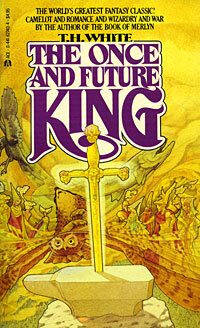
The Once and Future King by T.H. White

T.H. White’s 1958 novel is a must-read for all. The book follows the journey of a kingdom with dictators and soldiers that inspired your childhood bedtime stories about King Arthur and the wizard, Merlyn. The characters and plot were based on older novels and true events in history. The entire novel includes five shorter “books” filled with themes of knights, war, lost love, and unraveled secrets.

The first book called “The Sword in the Stone” also inspired the Disney adaption of the story. This book creates the setting for the entire journey and introduces the unknown future king, Arthur, as a young boy living as a peasant. Arthur learns, loves, hurts, and goes through multiple obstacles to find his inner truth.

Personally, the story stuck to me because of its well-thought plot and storyline that makes you feel like you are a part of its world. The story strikes you especially when you realize that the destiny of the characters was already written and known (by Merlyn) since the very first chapter of the book. For this reason, it feels overwhelming when you finally finish the novel and think of the different ways it could have ended.

White’s themes in The Once and Future King accurately apply in today’s world, despite the time between the book’s publication and now in the twenty-first century. This novel not only shows development in its characters but also within the reader.

Although this novel is recommended to be read by young adults, anyone eager enough to gain a higher understanding of the world can read it. Personally, The Once and Future King has stayed with me since I read it for my English class five years ago. Hopefully, the future readers of this novel come to love it and cherish it as much as the past readers have.

-Zohal N. 

The Once and Future King by T. H. White is available for checkout from the Mission Viejo Library

An American Tragedy by Theodore Dreiser

Amazon.com: An American Tragedy (Signet Classics) (9780451531551 ...

The novel is divided into three volumes. The story is based on a real criminal case in New York, and the hero Clyde Griffiths is also based on a real person. Clyde grew up in a poor religious family and preached on the streets for a living. Young and frivolous Clyde worked as a waiter in a luxury hotel in Kansas City, because of bad friends, all day long indulges in alcohol. In order to avoid trouble, Clyde went to New York to seek refuge with his uncle and fell in love with Roberta Alden, a poor and virtuous workwoman. Later, Clyde met the beautiful daughter of Sandra Finchley, which was enough to lift him out of poverty and into the world of high society. Before long, Roberta became pregnant and even asked to marry Clyde in secret. Poor women workers or rich women? In desperation, Clyde conceived the idea of murdering Roberta. Unexpectedly the matter does not carry out according to his wish and Roberta dies accidentally.

Clyde was subsequently brought to justice. There was an election in the United States, and the attorney general put pressure on investigators to prove Clyde was the murderer. Clyde was still condemned to the electric chair after his assistant fabricated evidence and his lawyer made a lot of money. God could not save him, and his parents still decried worldly materialism and praised God’s mercy. Is it the American dream or the American tragedy? This novel will give you the answer. The novel deeply shows the live view of the American people in the early 20th century that money is the most important, desire is inflated and the general sense of disillusionment. The novel An American Tragedy not only reveals the serious consequences of the hyperinflation of egoism but also reveals the corrosive and toxic effect of the money-oriented American lifestyle on human crime.

-Coreen C.

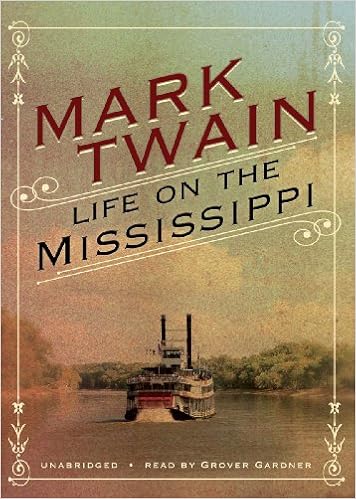
Book Review: Life on the Mississippi by Mark Twain

Life on the Mississippi: Mark Twain, Grover Gardner: 9781441764737 ...

Life on the Mississippi is an autobiographical travel book. Mark Twain recalled his work as a sailor on the Mississippi River. The author has a keen interest in the Mississippi River. In his hands, the river emerges as a living, changeable, unpredictable, capricious image. To Mark Twain, who had little schooling, the Mississippi River was nothing less than a university, which exposed him to many mysterious natural and complex social phenomena. The rise and fall of the Mississippi River even directly affect the rise and fall of farms and cities. In those years, the river had fought its way through Hurricane Island, Arkansas, Walnut, and Conference Bay. The author also describes with delight the cities along the Banks of the Mississippi: Burlington, St. Louis, Minneapolis, Rock Island, New Orleans, and St. Paul.

The author’s love for nature and for the working people is reflected in his autobiographical travel notes Life on the Mississippi. Mark Twain had a special feeling for the Mississippi River because he had worked as a pilot in his youth, working with the crew and fighting side by side on the river. He knew its eddies, its reefs, and its rapids. He never forgot the mountains, towns, and local customs on both sides of the river. In his novel, the author gives a very touching description of the beautiful scenery that rises over the river at sunset. The writer describes nature, not for the sake of scenery, but to express his complex mood by describing nature. The author emphasizes that of all his experiences, the one that has left the deepest impression on him is his life as a sailor in the Mississippi River.

-Coreen C.

Book Review: Ravelstein by Saul Bellow

Ravelstein (Penguin Great Books of the 20th Century): Bellow, Saul ...

The first two parts of Ravelstein, a biographical novel, are mainly about the last and most important stage of Ravelstein’s life. He was terminally ill, but he fought against the disease until his death. The latter part is mainly about the narrator, Chick himself is on the verge of death due to food poisoning, but he has deep thoughts about life and death at this time. Ravelstein was born in a small city and had a very unhappy childhood. His father had been poor all his life and was a tyrant in the family. Ravelstein, who grew up in the shadow of his father, came into contact with society at an early age and went out on his own. After struggling hard for many years, he finally got rid of the poor people’s life being a famous university professor. He taught students from all walks of life, many of them in important positions, including students who played an important role in the Gulf War. He maintained close contact and frequent intercourse with them. Taking advice from his good friend Chick, he turned his teaching research into a best-selling book attacking the theory of relativity, the American education system, and its declining international status and influence, and became a guest of the president of the United States and the prime minister of Britain. From then on, he became a successful member of the upper class of the affluent society in the United States and lived a luxurious and decadent life. While he was enjoying a life of fame and fortune, he found himself terminally ill. Towards the end of his life, he asked Chick to write an autobiography for him.

Ravelstein is a charming and paradoxical Jewish intellectual. he embraced life with the indulgence and intoxication of Dionysus and the dream and aspiration of the god of the sun. He questioned the contemporary American social value and education system but highly praised the classical culture of ancient Greece and Rome and loved classical music. He fell in love with Armani suits, Cuban cigars, pure gold Montblanc gold pens, and so on. He was an advanced intellectual in American society, but his manner was vulgar. When attending various celebrity social occasions, he would often splash coffee or other drinks on expensive clothes and drink them directly from a coke bottle, which even made T.S. Eliot stunned. He is a conservative who does not worship the free market, but uses his talent to produce valuable goods and become rich overnight. He advocates aesthetic, free love, but has gay friends; he grew up trying to escape his Jewish father, the tyrannical king of his family, but in his life he played his father’s role to his students and friends. The unique historical background, social situation and ethnic characteristics of the Jewish people make Jewish writers in the American culture face embarrassment in their creation. Jews in America (especially the upper-class intelligentsia), reluctant to abandon their traditional religion and unable to resist the American way of life floundered in this confusion, searching for their identity with both desire and disappointment.

-Coreen C.

Harry Potter: Pets

Among its enchanting world, characters, plot, and locations, the Harry Potter series possesses numerous pets that add charm to the books and, at times, contribute to the plot. From some perspectives, their importance to the story of Harry Potter may not seem of importance; however, some of these pets have invaluable parts, either in the story or their owners’ lives. Here are a few of these treasurable little creatures. Please note that there might be spoilers from books 1-6.

Hedwig: The snowy-white dignity of Harry’s loyal owl is one reason to admire Hedwig. She keeps Harry company when he is trapped at the Dursley’s house, and she delivers many important parcels to and for Harry throughout the series. One of my favorite moments with Hedwig is when she flies to Harry’s friends to make sure they remember to send him a birthday present.

Trevor: Even though his attempts at escaping are constant, I think Trevor really likes Neville Longbottom as his owner–he always seems to (however unwillingly) let Neville find and care for him. As with Neville, his dedication to his pet toad is admirable, for another boy might have long ago given up searching for a rebellious pet. Trevor’s relationship with Neville enriches Neville’s perseverant character and his ability to overcome difficulties–in his classes, with his grandmother–with resilience.

Crookshanks: Even though it is this ginger-haired cat that causes so much tension in Ron and Hermione’s friendship in their third year, Crookshanks proves his intelligence and dependability when he sees Sirius and Scabbers for who they are. Nearly all the other characters believe Scabbers harmless and Sirius a dangerous villain, but Crookshanks knows the truth about both–Scabbers is the danger, while Sirius is not. The courage and insight of Crookshanks shines in the third book so brightly that even Ron can no longer deny the loyalty of the cat.

Scabbers: It is true that Scabbers results in being Voldemort’s servant disguised as Ron’s (at first Percy’s) rat for many years. However, he does contribute admirably to some scenes in the series. On their initial trip to Hogwarts, Ron’s unsuccessful demonstration of a spell on Scabbers plays a part in the building of his friendship with Harry. Furthermore, Ron grows fond of the rat before he knows its true identity, and many games of chess and laughs in the common room no doubt occurred in Scabber’s presence.

BuckbeakStormy gray and confident, Buckbeak is a key player in Harry and Hermione’s rescue of Sirius. The hippogriff also saves Sirius from some of the loneliness of Number Twelve, Grimmauld Place during Harry’s fifth year. Held dear by Hagrid as well, Buckbeak (or “Witherwings”) has the respect and appreciation of many characters who fight on the side of Dumbledore’s Order.

The pets named above are merely a fraction of the many that hold importance in the Harry Potter series. Their interactions with the characters–comforting, assisting, escaping–lead to a better understanding of the characters, while establishing the pets as individual characters themselves.

– Mia T.

Books set in the Wizarding World of Harry Potter are available for checkout at the Mission Viejo Library. They may also be downloaded online for free from Overdrive

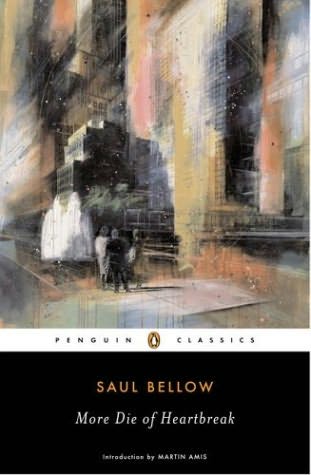
Book Review: More Die of Heartbreak by Saul Bellow

spacebeer: More Die of Heartbreak by Saul Bellow (1987)

The protagonist Benn Crader is a botanist. He was famous for a while but had a very unsuccessful love life. After the death of his first wife, his emotional world lost its focus, and although he later married Matilda Layamon, his second marriage brought him little happiness. There is no real love between him and Matilda, only a relationship of exploitation. The main reason Matilda, a beautiful woman, married Benn was to use his academic achievements and scientific fame as a solid foundation for her social activities. However, the novel does not simply focus on the description of Benn’s emotion, but by depicting his embarrassing situation it shows the emotional exhaustion of the spiritual world in modern American society.

Intellectuals can grasp the essence of things under the surface and are willing to use their wisdom and superb skills to advise the public. Therefore, intellectuals are not only knowledgeable people, but they are also doers of social moral standards and pioneers of reform. Through the ages, they have maintained their intellectual identity in vain, even at the cost of their lives. The protection of intellectual identity has gradually become a kind of collective unconsciousness. Intellectuals fulfill and maintain their identity as spiritual leaders, but this identity is subverted by the impact of mass culture. Popular culture deprives intellectuals of their right to speak. They communicate through film, television, and other media new role models, value systems, and lifestyles that are unconsciously internalized by the masses. The common people were so absorbed in the convenience and diversity of popular culture that they were no longer interested in intellectual dogmas.

When the identity of intellectuals is questioned or even deprived, the group of intellectuals feels an unprecedented sense of loss. However, the helplessness of intellectuals is not completely caused by the isolation of the society; the internal differentiation of intellectuals greatly accelerates the disintegration of the intellectual group. Intellectuals do not know whether they have been assimilated into popular culture or whether their identity as intellectuals has been lost. In fact, in the materialistic modern society, intellectuals began to lose their spiritual integrity. In “More Die of Heartbreak”, Benn compromises with society when he cannot find true love. He becomes an impoverished intellectual who lacks independent survival ability and even an independent personality. He needs constant consultation with his nephew Kenneth to get affirmation before he can calm down.

-Coreen C.