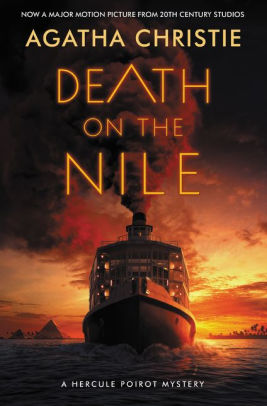
Linnet Ridgeway has everything she could possibly ever want. She is smart, rich, charming, and beautiful. Her friend Jacqueline comes to her one day with a request; Linnet makes Jacqueline’s fiance Simon Doyle her land agent. He needs a job, and Linnet gives it to him.
However, she falls in love with him and thinks about how lucky Jacqueline is. In fact, Jacqueline doesn’t have nearly as much as Linnet does. Eventually, Linnet ends up marrying Simon Doyle. Jacquline is mad at Linnet for “stealing” her fiance from her. She decides to follow Linnet and Simon during their honeymoon.
One morning, during a cruise of tranquility down the Nile, Linnet is found dead in her cabin. Hercule Poirot is on the cruise, and with one of his friends who is also searching for a criminal, they try to discover who committed the crime. However, Simon had been accidentally shot in the leg the night Linnet was killed, so they must get to their destination. A doctor on the ship has done all he can, but Simon must get to a hospital quickly, so the detectives are running out of time to find out who did it.
I enjoyed reading this book because there were so many plot twists and the ending was so unexpected. I also liked how there was such a variety of characters which helped to develop the story and to make it feel more realistic. The author also gives a lot of details about their backstories. As a result of these small sections about the characters and their lives, the reader has reason to suspect almost everyone. I really liked how there were multiple crimes that I kept trying to solve before the detectives in the book solved the complicated case. Almost nothing is as it seems to be.
This was an amazing book and I really enjoyed reading it. I would recommend you to read this intriguing novel.
-Peri A.
Death on the Nile by Agatha Christie is available for checkout from the Mission Viejo Library.
With quarantine, I found myself bored, and without new episodes of shows coming out, I turned to Netflix and Disney+ with shows from my early childhood years. One I watched over and over in elementary and middle school was H20: Just Add Water. The Australian show originally came out in 2006 and ran until 2010. It was followed by a spin-off 3 years later that ran until 2016. The original series follows three teenage girls as they become mermaids and navigate how to keep their secret hidden from their family and friends while also still maintaining a normal social and school life. The spin off series follows three mermaids who have been mermaids since birth as they discover the human world and deal with threats towards their home.
Since becoming a teenager and entering high school, I began to find new respect for the shows I watched as a kid/pre-teen. Being in high school, especially not as a freshman, allows for me to experience the shows I used to enjoy in a new light since I know some of the struggles they are talking about more, like lots of homework and more friendship drama. Shows, specifically H20: Just Add Water allow me, for at least 30 minutes per episode, allow me to both reminiscence on the past of my childhood as well as appreciate the show in the format it provided for teenage audiences.
I would recommend this show to anyone who enjoyed shows like this as a kid and want something both familiar and refreshing. I would also recommend that even if you have seen this show before, watch it again if you haven’t recently. Shows like this, and others on Netflix and Disney+ have been great to watch back as a teenager, especially with free time during quarantine and hybrid schooling.
Steven Spielberg has one of the best resumes when it comes to movies he has directed. His movies have grossed more than $25 billion in the box office which is a feat that has not been passed by any other director in the business. The Movie list that Speilberg has directed is unparalleled. Let me just list a few: Jurassic Park, Indiana Jones, E.T., Ready Player One, and Jaws. That’s only a few of the amazing movies that he has directed and those movies are all fantastic movies that have made hundreds of millions in the box office. His record when it comes to making movies is unparalleled in the business because he has made so many big hits at the box office and that is not a thing that many movie directors can say about the movies that they have directed. Another thing that sets Speilberg apart from other directors is his style of filming by using a cinematic style while using minimal cuts in between scenes. Also, Speilberg likes to talk about family issues in his movies often using them to help the characters overcome their struggles and end up succeeding in the end and prevailing over their foe.
-Howard M.
The films of Steven Spielberg are available for checkout from the Mission Viejo Library.
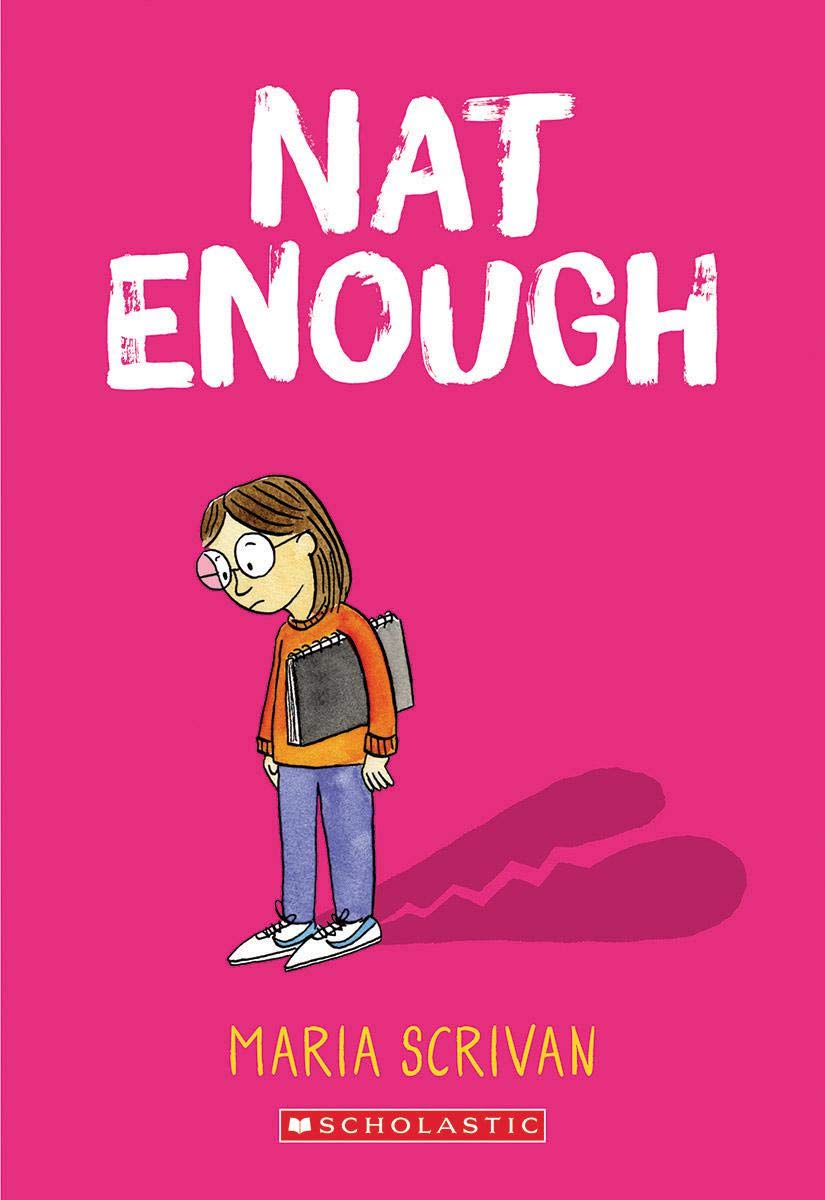
Natalie has always been best friends with Lily. However, when her friend moves away she is upset but is still excited and confident that their friendship will continue into middle school.
However, when Natalie arrives at school on the first day of middle school, she sees her best friend Lily in a conversation with a cool-looking girl. Lily seems to be… FRIENDS with this girl. Lily’s new friendship leaves Natalie alone and confused. What happened to their friendship? Weren’t they best friends? Did Natalie do something wrong?
All of this leaves Natalie feeling like she is not enough. Not enough to be friends with Lily. Not enough to be cool. Natalie feels very wounded. She doesn’t know what to do, and her only thought is to try to win Lily back. One day, after she finds a note from Lily, she gets to work. Natalie devises a plan to get Lily back.
Meanwhile, Natalie is receiving mean notes on her locker from Lily. Natalie feels terrible and wounded but she still wants Lily back. After all, they were best friends, weren’t they? Ignoring all of Lily’s mean acts, Natalie gives up a lot of what she loves to do so that she can please Lily and get her back.
Whatever Lily thinks becomes what Natalie does. However, can Natalie overcome these feelings and move on after Lily? Can she become her true self? Or she is simply not enough?
I really loved this book because it is very fun to read. It portrays how you do not need to be what anyone else wants you to be. You only need to be yourself. I would recommend you to read this book because as you grow older, your friends and you might have different interests, and you might not be as close to them as you once were.
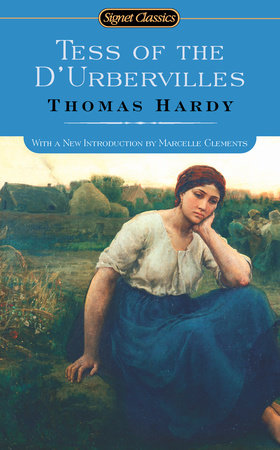
In the book, Hardy described the impact of the emerging industrialization and urban civilization on the old, rural Wessex area, exposing the false morality that imprisons people’s thoughts, emphasizes chastity, and represses women’s social status. The tragic fate of Tess reflects the background of the times: economic poverty, the unfair legal system, hypocritical religion, and the hypocritical morality of the bourgeoisie. Tess’s tragedy is the product of society at that time, so Tess’s tragedy is also a social tragedy. The tragedy of Tess, a beautiful girl with a pure heart, is caused by the ugly social reality. As a poor woman with a low social status, Tess was inevitably oppressed and humiliated, both materially (including economic, powerful and physical) and spiritually (including religious, moral and traditional concepts). As a victim of society, Tess is not only hard-working and brave but also pure and kind. She was born poor, but full of beautiful ideals. In order to realize this ideal, she went out three times. But she was alone, and each time she was hit harder and harder. Tess’s tragedy not only has its deep economic and class roots but also has its moral and religious, legal factors.
Tess’s economic and class status decided that she was in a passive position in front of the morality, religion and law that served the bourgeoisie. The tragedy of Tess is that a pure and kind woman was destroyed by the decadent ethics, hypocritical religion and unjust legal system of the bourgeoisie. And Tess’s own bourgeois morality and religious morality consciousness also caused her own tragedy to some extent, because she could not get rid of the shackles of those traditional morality to herself, which was the weak side of her character. In addition, the emerging bourgeoisie represented by Alec d’Urberville was the direct cause of Tess’s misfortune, while the traditional ethics represented by Angel was an invisible and more terrible spiritual persecution. The value of this image of Tess is precisely that she dares to challenge the forces that oppress her. However, in the face of powerful social forces, her resistance inevitably brings tragedy. Her tragic fate seems to be a personal one, but in fact she symbolizes the whole fate of the British farmer at the end of the 19th century. Hardy used Tess’s tragic life to forcefully attack the patriarchal society in the Victorian era.
Women living in this patriarchal society are doomed to be oppressed and controlled, unable to escape the tragic fate. In the eyes of the guardians of the mainstream discourse in the patriarchal society, women are always in the position of dependence and subordination. The innocent victim, Tess, is considered to be the opposite of the mainstream ideology, the patriarchal society and a deviant prostitute and demon girl who is not tolerated by the society. To the destruction and oppression of the patriarchal society, although Tess began to fight and even shouted out the essence of the oppression of the patriarchal society on women, she still failed and could not get rid of the powerful and invisible control network of the patriarchal society in the end and went towards destruction. The application of painting art in the environmental description of Tess of the D ‘Urbervilles, especially the application of color and light, has an important influence on the characterization, atmosphere contrast, theme analysis and readers’ psychological reception of this work. It presents the tragedy of love and marriage in the heroine Tess’s short life in a real and appealing way, which makes readers empathize with this tragic struggle of life.
Although the scenery is based on the scenery from nature, the scenery as a landscape actually no longer exists because they have become a background, reflecting and coordinating the feelings and experiences of the characters. Whether it is a grass, a tree, a flower, a cloud or a field, Hardy reproduces it not in the way a photographer does, but in the way he paints. With the help of color, light, line and other means of painting, the writer tries to explore the color relationship between the sky and the ground, during which there is an invisible contrast effect, reflecting his sensitivity to width and strength. Hardy presents the picturesque rural living environment, lifelike characters and wonderful and moving details to the readers, giving them beauty and enjoyment. At the same time, through the pictures of specific life, he spared no effort to depict the complexity of the characters and reveal the moral theme and tragic theme of the work. In the novel, the description of each scene is to reveal a certain course of the law of Tess’s spiritual development, which also echoes Tess’s character and destiny. Before each appearance of Tess, Hardy spent a great deal of time describing the environment there.
The various stages of Tess’s life, such as the quiet valley of Brie and its surrounding mountains, meadows, valleys, and rivers, the beautiful tablecloth, and the desolate and bitter robin, give the reader a general view. The use of painting art makes the text appear in front of the reader like a picture, which is organically integrated with the characters and plots in the novel. Here, art follows nature, and the artist’s hand involuntarily obeys the eye’s sense. By means of artificial or natural symbols it is possible to reawaken in our imagination images similar to the real things. By means of the art of painting, the essence of a particular aspect of external things is captured, and a certain aspect of human mood is associated with it, which, in the form of words, arouses in the mind of the reader the kind of feeling needed. In this way, Hardy skillfully conceived, combined the changes of natural environment with the ups and downs of characters’ fate, and used special environment description to render the relationship between people, between man and nature, and between man and society, which constituted the incomparable peculiar charm of the novel. The emotions of the characters and the changes in the mood and color of the environment constitute an inseparable whole. The environment portends to reflect the character’s fate and emotion, and the character’s emotional fate endows the environment with more spirit and vitality. The emotional appeal of the environment and the soul of the character form a whole, and complement each other.
-Coreen C.
Tess of the D’Urbervilles by Thomas Hardy is available for checkout from the Mission Viejo Library.
Netflix’s new teen movie Moxie largely fails in its potential and is decent overall, but still has something important to offer. Directed by Amy Poehler and based on a book of the same name by Jennifer Mathieu, Moxie is a high school movie whose aim is to discuss feminist topics.
The movie follows shy 16 year-old Vivian (Hadley Robinson) who begins anonymously making zines calling out the sexism in her school after meeting the valiant new girl Lucy Hernandez (Alycia Pascual) who won’t back down to sexism so easily. Later on, the two girls along with some friends made along the way form a group called Moxie, which actively challenges the problems the group faces.
Throughout the movie, Vivian encounters many challenges. From dress codes to more serious offenses, the movie aims to discuss a wide-range of topics in feminism but fails to do so in an effective way. Because it’s so ambitious and eager to take on all of these topics within a 2-hour time frame, the movie can’t explore them in ground-breaking depth, creating a touch-and-go effect.
The overwhelming amount of content here also detracts from the development of the characters as well, leading most of them to appear underbaked. Several times during the movie, there seems to be an attempt to explore these characters in more depth, but there’s never any further discussion later on. The marginalized identities of some of these characters seem to suffer from the same problem as they get caught up in the fray of inclusivity and are hardly ever discussed despite being involved in the Moxie group.
But even though Moxie is rough around the edges, when I first watched Moxie, I was pleasantly surprised. I was expecting yet another poorly written Netflix high school movie with the same overdone cliches, and even though Moxie is a lot of those things, I was happy to see a teen movie eager to spread a powerful and important message rather than a televised Wattpad fanfic.
While the movie’s received a lot of criticism online, most of which I’d agree with, I still think it’s important to acknowledge that its existence is a good thing. Not many movies are willing to even attempt discussing these topics or providing the amount of representation this movie did. So to that I give it props as a good next step for future movies that want to delve in these topics too.
The one good thing about the movie is that it’s different. It tries to discuss something important which is always something worth thinking about. So for those of you at least interested in the movie, I’d still encourage watching it and forming your own opinion of the movie and how it handles these topics.




 Mission Viejo Library Teen Voice