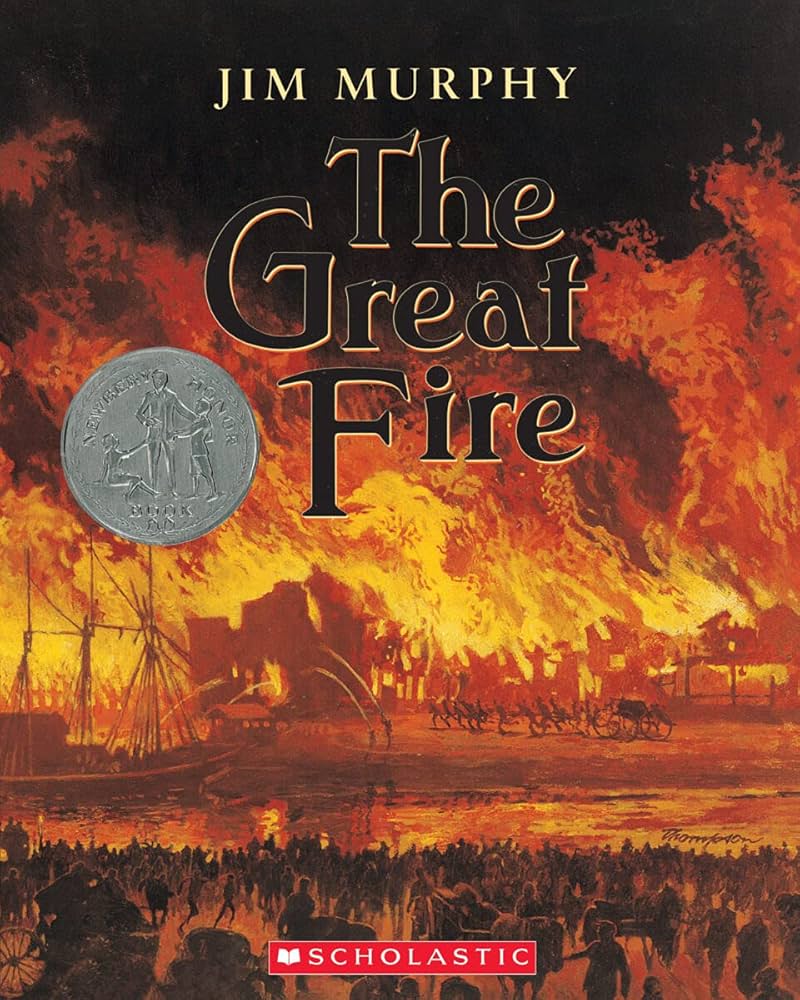
The Great Fire by Jim Murphy

The Great Fire is a novel by Jim Murphy about the Chicago fire of 1871, which destroyed most of the city. The fire was believed to have started in a barn, and eventually spread throughout Chicago. This book describes the fire from several different perspectives. These perspectives enable to reader to learn about the human impact of this devastating tragedy. The book also contains many pictures to help visualize the events.

Before reading this book, I did not know about the Great Chicago Fire. I found this book to be highly informative and engaging. The different human perspectives made it feel very personal. I was especially affected by the perspective of a thirteen-year-old girl named Claire Innes. I felt like I could relate to her because we are close in age. Claire was separated from her family during the fire as the people around her panicked as they tried to escape. Her house was burned down, just like the houses of most of the other residents of Chicago.

The fire caused major destruction, and many people died. After the fire, the people worked to rebuild the city. This book provides a realistic view of what it would be like to deal with such a disaster. The book earned many awards, including a Newbery Honor. I can understand why this book earned so many awards, because it is very well-written and compelling. I would highly recommend it.

The Great Fire by Jim Murphy is available to check out from the Mission Viejo Library. It is also available to download for free from Libby.

FREE Writing Workshop

Have you ever had to write a short bio about yourself? If you haven’t yet, you will!

Join us this Saturday at 1 pm for a free writing workshop led by local author and editor Cassandra Rendon. Learn how to craft an informative and compelling bio that you can use on social media and elsewhere.

If you can’t attend this Saturday, the workshop will be held again on Friday, March 29 at 5:30 pm. Hope to see you there!

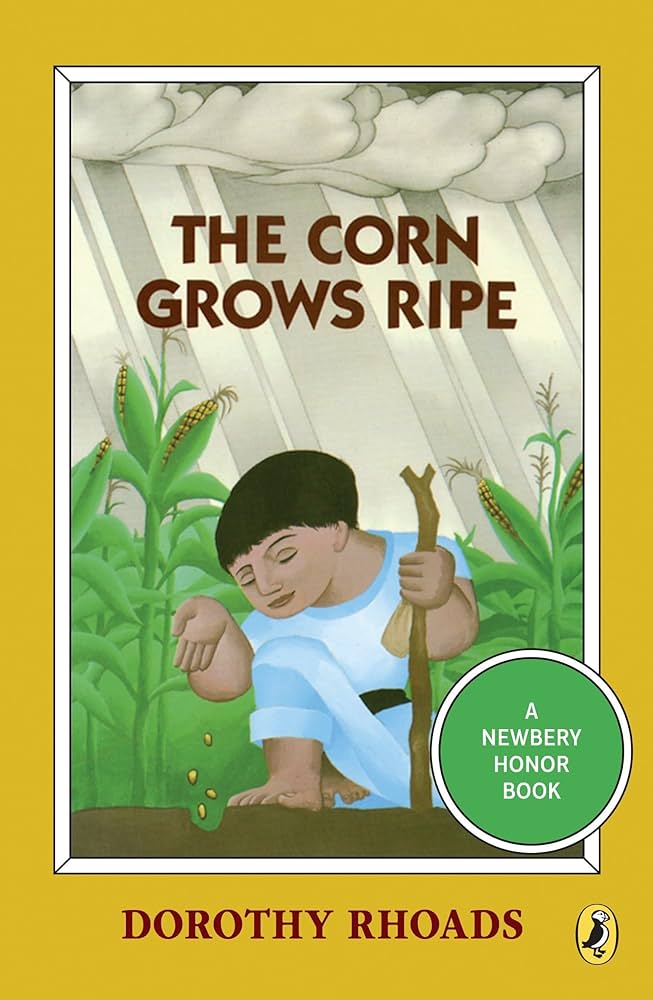
The Corn Grows Ripe by Dorothy Rhoads

The Corn Grows Ripe is a charming book by Dorothy Rhoads. The story takes place in a Mayan village. The main character is a 12-year-old boy named Dionisio. Everyone calls him by his nickname, “Tigre,” which means jaguar. At the beginning of the story, Tigre often oversleeps and is accused of laziness. One day, his father has an accident and breaks his leg. This is devastating to Tigre’s family, because they depend on his father to plant a cornfield every year for food. Tigre’s father cannot do the work this year because of his injury. Tigre realizes that he may need to find a way to plant the cornfield himself. Tigre has never accomplished such a difficult task before, but he knows that his family is depending on him to rise to the challenge.

This book is quite short, but I enjoyed it. I found it interesting to learn about Mayan culture from this story. The story seemed realistic to me, and I believed that the events could have actually happened. I especially appreciated the family relationships. The story seems to be about a real family struggling with real problems. I also appreciated the moral lessons of this book. Tigre learns to overcome adversity through strength and courage. By working hard, he learns to develop the same attributes as his father.

This is a Newbery Honor award-winning book, and I believe that it deserves that honor. The book flows well and is enjoyable to read. It also teaches many historical facts about Mayan culture. I think that this book is a good way to learn a fascinating culture while also learning about good values, such as courage and hard work. I would recommend this book to anyone interested in a short but enjoyable read.

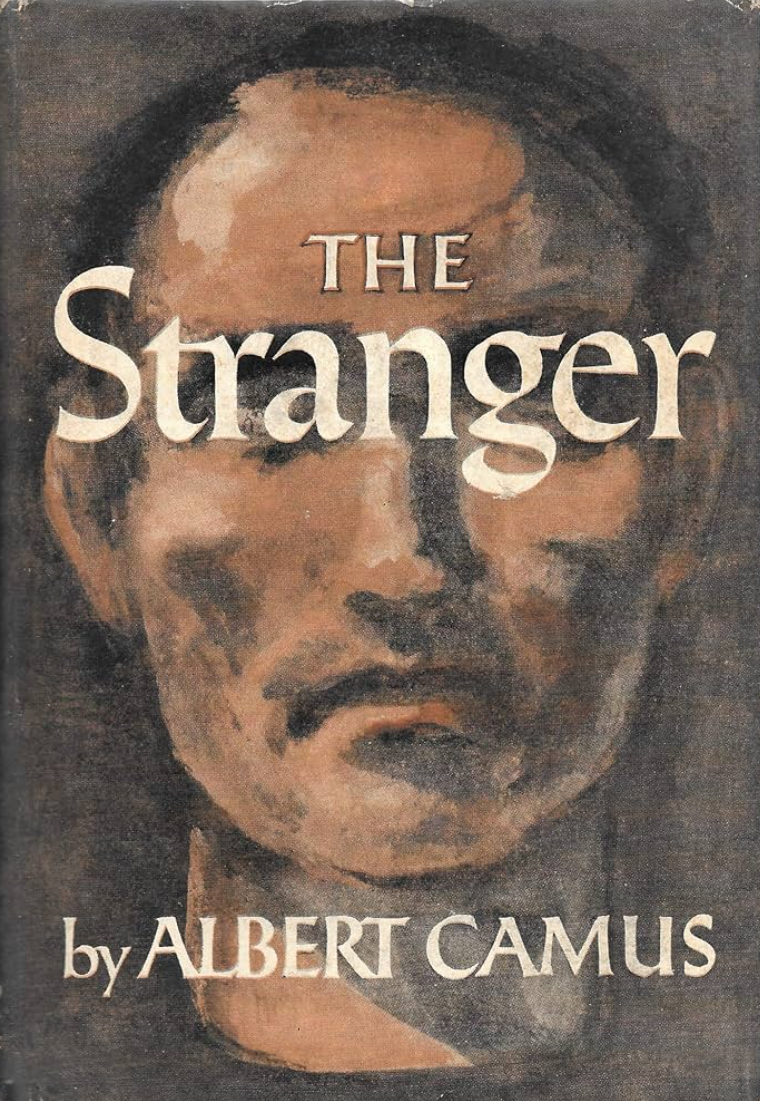
The Stranger/The Outsider Title Analysis

[Spoilers for The Stranger/The Outsider/L’Étranger]

In my English class, we read the famous novella known by some as The Stranger” by Albert Camus. Albert Camus is a famous absurdist and existentialist “philosopher” (although he refused to identify himself as one) who is famous for pioneering the idea that life does not have meaning. While some may consider this to be a pessimistic outlook on the world, a closer inspection of Absurdism reveals quite the opposite; Camus argues that because there is no intrinsic purpose in life, we should not dwell on the unfortunate events that have happened to us. Rather, we should focus on enjoying our lives to the fullest and living as if there is no tomorrow.

In Camus’s novella, The Stranger, he expertly crafts a story about a young man named Meursault, a French-Algerian who embodies the concept of absurdism. When his mother dies, Meursault only states in a matter-of-fact manner that she is dead, referring to her corpse as “a body” and falling asleep at her funeral. He even engages in a relationship with his coworker Marie the day after.

Throughout the novel, Meursault continues to miss important social cues, such as when Marie (whom he later gets engaged to) asks him if he would marry any woman, to which he responds with the affirmative. He turns down a promotion that would relocate him to Paris because “one life is as good as any” and he gives a statement at the police station to protect his mobster acquaintance for the simple reason that he was asked. At the end of the novel, he murders an unnamed Arab man and is found guilty; he spends the remainder of his days in jail awaiting his execution.

There are many translations of this story, such as The Stranger, The Outsider, The Foreigner, The Alien, and Odd Man Out. In my opinion, out of all of these translations, The Outsider serves as the best title for the novella. It established that Meursault is known by his community (given that he grew up in French Algiers and never relocated) but that he is missing out on something that only people on the inside are aware of so to speak. This crucial element, a strong sense of social awareness and a moral compass, prevents him from fitting in, casting him as an outsider in society. While the other titles hold (mostly) the same denotation, they do not convey this critical connotation, which is why The Outsider functions as the best-translated title.

The Stranger by Albert Camus is available to check out from the Mission Viejo Library.

Book Review: The Glass Castle

I recently was given the opportunity in my AP language and Composition class to choose my own independent reading book. Normally, our book is assigned to us and we have no choice in what we are consuming. However this time, we were allowed to select a nonfiction book from a list of options provided. I chose The Glass Castle by Jeannette Walls, and I was not disappointed.

Jeannette Wall’s captivating memoir, The Glass Castle, is a narrative recounting the tumultuous childhood and adventures of the nomadic Walls family. When Rex Walls, Jeannette’s father, is sober he is a charismatic man who creates magical experiences for his children. However, when Rex is intoxicated, neglect is imminent and the Walls are poverty-stricken. This narrative dives deep into obstacles of alcoholism and poverty that plague the Walls children.

I was absolutely hooked throughout the entirety of Walls’ memoir. Every page brought about another crazy situation and adventure the Walls family was undertaking. I felt deeply connected to Jeannette and her siblings, and found myself rooting for their successes. There were many unimaginable scenarios throughout the story and when discussing with classmates, we all found ourselves jaw dropped. Seeing the Walls children be forced to parent themselves, yet still succeed, was a satisfying experience. Their journey shows that adversity can be overcome and one can rise up above the cards they are dealt, no matter the circumstances. This memoir was gripping and inspiring. It’s a great quick read and I would highly recommend it! It’s also great for my fellow AP Lang students to use as evidence for the free response question 3 argument essay!

This book contains imagery and discussion of topics such as alcohol addiction and SA, so please be cautious before reading!

The Glass Castle by Jeannette Walls is available to check out from the Mission Viejo Library. It is also available to download for free from Libby.
Book Review: Metro 2033 by Dmitry Glukhovsky

This is the first time I’m doing a book originally translated from a foreign language, but this book has definitely been one of my favorites. Although I’ve heard the translation was a bit off in some parts, I really liked this book because of the way the author seamlessly blended the horror and action of this book with some philosophy.

This story is set in 2033, in the tunnels of the Moscow metro system after a nuclear war wiped out most of humanity’s population. The surviving population in the massive fallout shelter that is the metro system eventually split by station, with separate metro stations becoming their own city-states, waging war, and forming confederacies amongst themselves. This first book in Glukhovsky’s three-book series introduces and covers Artyom, a young man from VDNKH, which is under threat from entities only known as “the dark ones”, who may not be what they seem.

The story starts with Artyom meeting up with a man named Bourbon, who promised to pay Artyom a hefty sum if he helped him get through several tunnels in the metro system. However, as they go along on the Journey, Bourbon mysteriously dies. A stranger named Khan then saves him, and Artyom realizes that Bourbon may not have paid him after all, but would rather have double-crossed him. After Khan and Artyom make their way to another station called Kitai Garod, presumably named after the section of Moscow that it is under. The two become separated at this station due to an attack by fascists from another station, and Artyom is captured. Right when he is about to be executed, Marxist revolutionaries rescue him.

Eventually, Artyom meets a stalker named Melnik, who in the context of this book, is somebody who goes to the surface in order to find supplies and other important items. Artyom delivers a message that he was supposed to get to him. The two eventually go to the great library at the surface, with another person, Daniel, in order to retrieve a map. However, this goes badly, as Daniel perishes in the process to a creature in the library, and Artyom barely makes it back to the metro alive.

I won’t spoil the rest of the book, but this book was definitely a very interesting one, as it is much different from most of the other post-apocalyptic novels I’ve read. The author is very philosophical in his telling of this story, which makes this book stand out from the rest, as well as using the events that happen in the book to represent things in real life. I would recommend this book to anybody who really loves post-apocalyptic or horror novels.

Ready, Set, Love Review

Ready, Set, Love is a Thai drama series that was released on February 15, 2024. The series language is Thai and it can be watched on Netflix. It features Thai actor Blue Pongtiwat Tangwancharoen, Kemisara Paladesh, and many more. 

In the series, men are outnumbered by women due to a pandemic that wiped out a significant number of men. As a result, only 1% of the population is men so it is rare to find a man in their world. However, these 1% of men have to live in this area called The Farm. Since it is rare to see a man, a game was created by the government to see which lady ended up with a man to marry and live on the farm.

Day, the main character, participated in this game accidentally when she won a raffle that her boy-obsessed sister put her in. She only went there for the food but somehow encountered Son, the male lead in the bathroom. It becomes a misunderstanding as Son thinks Day is a stalker but in reality, Day wanted an autograph for her sister. Turns out her sister collapsed due to her health condition so Day wanted to quit. However, the lady in charge of the game tells her the price which can save her sister’s life. 

As a result, Day ends up playing the game and somehow passes through the levels. Son, who almost rejects her in a round, recognizes her necklace and keeps her in the game. They fall in love throughout the show and they end up leaving the place with others.

I first encountered this show after I finished a movie so I decided to watch it because I got bored and it was the best decision ever. I ended up finishing the show in one sitting because it was pretty short. I love the storyline and I love how there were lots of plot twists and character developments. This show is definitely very entertaining and I recommend watching it.

Python

Python is one of the most crucial and intriguing programming languages in the world. It was first created in the late 1980s by Dutch programmer Guido Van Rossum. He wanted to make a powerful language as intuitive as basic English. By doing so, people could express concepts in fewer lines of code.

Python is typically used for developing websites, analyzing/visualizing data, and automation. Because of its simplicity, It is incredibly effective in the real world. Since it has an elegant syntax and emphasizes readability, it is a great option for a beginner in programming. Commands such as “print” and “if, then” statements make Python a relatively easy language to learn. Other, more advanced programming languages, such as Java, have a much more complicated syntax.

Frameworks such as Django and Flask include Python and are exceptional for website building. In 2021, I created a standalone website for T-shirt shopping using Django, including Python and HTML. AI development is also reliant on Python as it is versatile and stable. It has powerful capabilities for all people, regardless of programming experience. In a society where technology has become increasingly vital, learning Python can be the first step to a career in software development.

Books about Python are available to check out from the Mission Viejo Library. It is also available to download for free from Libby.
Powerless: Book Review

This book was amazing, to say the least! I think it has slowly become of my favorite fantasy (going to be a series) of all time. Not only was the world-building on point, but the character development and plot twists were insane! If you loved the Red Queen series, the Throne of Glass/Court of Thorns and Roses series, or the Hunger Games, you’ll absolutely love this book.

SPOILER BELOW:

The context of the story is this: the world they live in is split into hierarchies. You have the Elites at the top, living in the palace, and they are the ones with strong powers such as the ability to shapeshift and control flames, etc. Then there are the people in the middle that have medium to lower powers such as strength that live in the surrounding cities and slums. Lastly, there are the “ordinaries” that the king has ordered to execute on sight because he believes that they are too irrelevant to live.

Our main character, Paedyn, is an “ordinary”, and she hides in plain sight as a supposed “psychic” where she reads people’s minds simply based on their facial expressions and is able to fool people with this “power” she has. She is also a master thief and steals rich people’s coins as a way of surviving in the slums.

But the gist is that one day, she was seen fighting to save someone’s life and pretty much everyone in her village voted her to be in the “games” that the Elites hold annually because they saw that she had high skills with a knife and bow/arrow. Of course, she does fall in love with one of the princes while preparing for the games at the palace. But the sarcasm that she holds and their “love-hate” story is really intriguing and oftentimes very funny!

The plot twist at the end of the book is a killer! This series is going to be a trilogy and this is the first book. The second book is coming out in July, so if you are one of those readers that like to read the books when you finish the series, I would wait a little longer. But, I cannot express how amazing the book is on all levels.

Powerless by Lauren Roberts is available to check out from the Mission Viejo Library. It is also available to download for free from Libby.

Bella’s Delicious Pumpkin Bread 

Living a gluten-free lifestyle can be difficult sometimes. Still, thanks to my mom, I learned to enjoy many different kinds of food, including bread, cookies, cakes, pies, and others that wouldn’t be gluten-free. 

Gluten-free pumpkin bread is a delightful treat that combines the comforting flavors of pumpkin with a health-conscious choice that I can enjoy even being gluten-free. This particular bread variation caters to individuals with gluten sensitivities or those adhering to a gluten-free lifestyle like me. 

When it comes to homemade gluten-free pumpkin bread, the advantages are numerous. By making bread at home, I can control what ingredients to put in, ensuring the absence of hidden gluten sources or unwanted additives commonly found in store-bought varieties. Additionally, when making bread at home, I can customize it according to my preferences, such as adjusting to make it less sweet or incorporating alternative flour for added nutrition and the kind of sweetener healthier alternatives like dates, coconut sugar, or even monk fruit sugar. Below is our bread recipe to make in the fall when abundant pumpkins are in the farmer’s market.

Ingredients:

· 2 cups gluten-free all-purpose baking flour 

· 3/4 teaspoon baking soda

· 1.5 tablespoon cinnamon

· 1.5 cup pumpkin puree ( or can pumpkin puree)

· 1 cup coconut sugar

· ½ maple syrup

· 1/2 cup coconut oil

· 1/2 cup almond or coconut milk

· 2 tablespoons vanilla extract

Baking Instructions:

1. Preheat oven to 375 degrees F. Grease a 9 x 5 bread pan.

2. In the Vitamix, add the wet ingredients first, then the dry ingredients, and blend at medium speed for 30 seconds or until all combined.

3. Don’t over blend – 1 minute max. Use your spatula to scrape down the batter since it will be thick and sticky.

4. Pour batter into the loaf pan. Sprinkle some cinnamon and coconut sugar on top.

5. Bake for 35-40 minutes. And check with a toothpick. Bread is done when the toothpick comes out clean. 

6. Leave the bread in the oven for 5 minutes after turning off the stove. 

7. Cool the bread on the rack and slice it about an inch thick for each slice. Store in the bread box or plastic bag. 

8. Bread can be on the counter for 2-3 days, no more than 4 days. Or in the fridge for 5-6 days. You can also freeze it for up to 4 months.

Happy Baking!

Bella H.