The Adventures of Tom Sawyer by Mark Twain

Over the summer, I read a classic, Mark Twain’s The Adventures of Tom Sawyer. It remains a pioneering work in American literature. The story captures the 19th-century era with detailed and rich storytelling, showing Tom’s childhood adventure as a young boy who loves to get into trouble.

As we examine this classic, it’s crucial to recognize the evolving cultural context of the era and how social norms have changed since its publication.

When I read this in class, our teacher asked us to read it out loud, and some of the wording still made me uncomfortable saying it.

The Adventures of Tom Sawyer was published in 1876, and the societal attitudes and values of that time were so different from those of today. Twain’s portrayal of 19th-century American life is charming, engaging, and revealing, a world where language and cultural norms differ from today. He wrote the terms and phrases that might have been commonplace or acceptable then but would be frowned upon if anyone wrote them today. The most memorable part of this book was the terminology and racial references that he used, which were appropriate for then but not today. We counted the racial slurs in the books, which were more than 100 words.

Even though it was a classic, many students in my class weren’t happy to read it. There were many stereotypes and racial prejudices, but if we consider the era or the 19th century in which the book was written, it’s understandable that a good writer would make it very life-like and believable, and Mark Twain is no different. At that time, such language was embedded in our culture’s fabric, and its use was not questioned as it is today.

We have come a long way since then, understanding the harmful effects of stereotyping and racism. Modern readers and critics usually grapple with the discomfort of such languages in classic literature. Still, it is good for us to understand and see the change and growth in our society and what we deem acceptable and not acceptable.

I still like reading Tom Sawyer because it’s a classic, and it shows that our society has evolved and grown into something much better than the classics we read. The discomfort of encountering outdated language shows the positive changes in societal attitudes and how our society has grown and aspect more empathy, respect, and understanding from people.
Despite the controversial language, this book offers a human experience and captures youth’s essence. Tom, with his mischievous personality and also his struggles to do what’s right even though he seems to attract trouble.

Finally, while The Adventures of Tom Sawyer provides a snapshot of a 19th-century era, it is a reminder of the ongoing journey toward cultural sensitivity and social justice. So, the next time you read a classic, examine it critically and see how societal norms and language use differ and evolve from one century to the next.

Happy Reading!

Bella H.

The Adventures of Tom Sawyer by Mark Twain is available to check out from the Mission Viejo Library. It is also available to download for free from Libby.
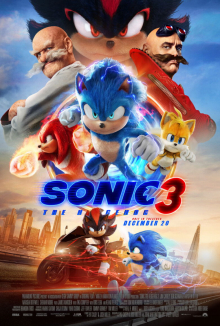
Sonic the Hedgehog 3

Sonic the Hedgehog 3 is a PG-rated movie that came out in late December 2024. The movie follows up on the events of the second film in the trilogy, which introduces one of the main villains in the third film. This villain is named Shadow, voiced by Keanu Reeves, who causes numerous problems for Sonic, who Jim Carrey voices. I watched it at the Regal Theater at the Spectrum with one of my close friends. We both left the film satisfied with the time we had just spent watching this film

The movie begins with Sonic and his two friends, Tails and Knuckles, facing up against Shadow, who has been in captivity for decades. Ultimately, Shadow escapes from the trio because of Sonic’s ego. As the film continues, Shadow meets up with the other main antagonist, Dr. Robotnik, to execute a world-threatening plan.  As the movie progresses, the audience sees Sonic grasp the concept of teamwork. However, he is only able to fully understand what it means to work as a team because of the significant issues that Shadow brings, leaving the audience with an encouraging message.

Overall, this movie is a great option to watch. Sonic the Hedgehog 3 has some great themes such as the value of friendship when Sonic can learn what it truly means to be a team, allowing the world to be saved. The movie also excels with its characters that are easily likable. I also enjoyed the action sequences that happen throughout the movie, which are very attention-grabbing. Although, this movie may include parts that might be childish for some. For example, the plot is predictable and nothing special, giving off the feeling of boredom as you watch it. Despite that fact, I recommend this movie to anyone who finds interest in the characters and can tolerate the dull plot.

In conclusion, Sonic the Hedgehog 3 can be an enjoyable watch if you can put aside its childish aspects. If not, I believe that you won’t be able to enjoy it as much as it was intended to. My favorite part of the movie was the unique and iconic characters, which include the long-awaited Shadow. Another notable part of the movie was the many action-packed scenes such as multiple astonishing fight scenes between the main characters. While Sonic the Hedgehog 3 might have childish aspects, it can be really enjoyable if you can put them aside.

-Matthew Ronquillo

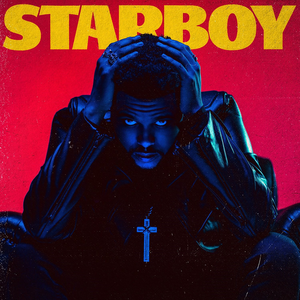
Album Review: Starboy

Starboy is one of the most streamed albums of all time, with several songs having over 1 billion streams. Starboy is the third album from Canadian singer-songwriter Abel Tesfaye under the stage name The Weeknd. With the anniversary of this record approaching and a new Weekend project on the way, I thought it would be good to revisit this album. Here are some highlight tracks

Starboy: I remember hearing this song on the radio when I was younger and it was my first introduction to The Weeknd. With over 3.6 billion streams this song features the electronic duo, Daft Punk. “Starboy” is a track centered around The Weeknd’s newfound rise in stardom. In the lyrics, we realize he can afford to buy his family whatever they want now. However, he acknowledges that there will be consequences of this “House so empty, need a centerpiece”, which perfectly describes a missing piece in his life.

Reminder: The instrumentation has a very laid-back approach. The refrains in the chorus are extremely catchy. The song is about how The Weeknd has built a reputation doing specific things, and anytime people forget that darker side of him, he will be back to remind them.

Stargirl Interlude: This track has over a billion streams on Spotify, making it the first interlude to reach this milestone. It features Lana del Rey, with her signature soft vocal style. She sings most of the track, and the track serves to depict the female version of the starboy.

Secrets: One of the more pop-influenced tracks on the records and my personal favorite. In the lyrics, he explains that his lover talks in her sleep spilling all the secrets of her heart.

I Feel It Coming: The ending track to this record also features Daft Punk. This production is a cross of 80’s pop and house music. The lyrics depict feeling a deeper connection with a person, and you can feel yourself falling in love. 

Overall this is a fantastic record that blends pop, R&B, house, and rap. 

The Lottery: A Classic That Hasn’t Lost Its Kick

“Horrible”

“Superbly Contrived”

“Cancel My Subscription” 

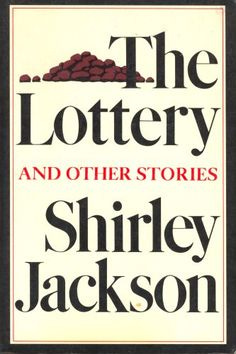
These were all reactions to Shirley Jackson’s infamous short story, The Lottery. Originally published in The New Yorker magazine in 1948, this story has been haunting minds for generations. When my mom was around my age, she read The Lottery in her 8th grade English class. According to her, she found it eye opening, “I was amazed at how much suspense and curiosity a writer could evoke in just a handful of pages.” After she explained to me more about the story and author’s influence, I was interested in giving it a read. I checked out a book containing an anthology of Shirley Jackson’s short stories from the library. 

Flipping to the table of contents, I located The Lottery and began to read. The Lottery is a story about a yearly lottery event held in a rural American town. The purpose of the lottery is to ensure a good harvest, but how the lottery achieves this is unclear until the end of the story. At its heart, the Lottery is a cautionary tale about the dangers of blindly following tradition and adopting a mob mentality.

The title alone is foreboding, especially when you have heard people’s previous reactions to the story. This short story is so influential that even Stephen King was inspired by it. He states that, “I read it in the study hall, back at good old Lisbon High School. My first reaction: Shock. My second reaction: How did she do that?” Later, he adapted The Lottery into his short story, Rainy Season

As I closed the book, I found that it was very impactful for a short story. The writing invoked a lot of suspense, and I would recommend it to anyone looking for a quick but thought provoking read. If you are interested in reading it for yourself, (which I highly suggest as it only takes 5 minutes) you can find a free digital/audio copy here at: The New Yorker.

Why Are We So Obsessed With the Apocalypse?

So much media features the end times. From movies like A Quiet Place and Mad Max to novels like Silo and The Girl With All the Gifts, people just can’t seem to get enough of the genre. Why are we so obsessed with the apocalypse? According to Hugh Howey, author of the post-apocalyptic novel series Silo, humans tell stories as much for warning as for entertainment. Stories about disaster are expressions of our internal fears, and seeing characters prosper in face of those disasters gives us hope.

For this reason, wilderness and survival stories have always been popular. But why have we moved past the wilderness and towards the world-ending?

As we’ve explored most of the Earth, we’ve lost a lot of the wonder and fear we used to have for certain environments. Howey believes that “we need to imagine a future where we might be exploring other worlds, or a future where our world returns to the wilderness that we fear” in order to make our stories interesting.

If you’re interested in the post-apocalyptic genre, here are my top 3 favorites:

  1. Parable of the Sower by Octavia E. Butler
  2. The Girl With All the Gifts by M.R. Carey
  3. Silo series by Hugh Howey

These books are absolutely amazing, and I highly recommend them!

The Loop by Shandy Lawson

What if you were stuck in a world where time never moved forward, forcing you to relive the same terrifying events again and again? That’s exactly what happens to Ben, a teenager who finds himself stuck in a time loop, reliving the same deadly events over and over. With danger closing in and no clear way out, The Loop by Shandy Lawson is a thrilling ride that keeps you guessing until the very end.

One part of the story I really liked was Ben’s growing friendship with Maggie. At first, Ben is confused and scared, but Maggie already knows what’s happening—she’s been stuck in the loop longer than him. She’s not just a companion; she’s his guide to surviving the nightmare they’re trapped in. Maggie’s determination and quick thinking make her a strong character, and I liked how she never gave up, no matter how many times they had to start over.

Then there are the loopers, the men chasing Ben and Maggie. They’re mysterious, dangerous, and always seem to know what’s coming next. Unlike Ben and Maggie, the loopers don’t seem surprised by the time resets, which made me wonder—are they part of something bigger? Do they control the loop, or are they just as trapped? Every time Ben and Maggie try to escape, the loopers are there, making the story feel like a mix of mystery and action.

One of the most intense parts of the book was Jerry, the ruthless hitman working for the loopers. He’s a serious threat to Ben and Maggie, and his presence makes the stakes even higher. Unlike the loopers, who are mysterious, Jerry is direct—he has a job to do, and he won’t stop until it’s done.

I also liked Ben’s friend, Todd, because he represents the normal life Ben wants to return to. Todd has no idea what’s happening to Ben, which adds to the frustration and loneliness of being stuck in the loop. Ben’s mom also plays a small but important role, reminding us of the life he’s desperately trying to hold onto.

What I loved most about The Loop was its fast-paced suspense and unpredictable twists. Just when I thought Ben and Maggie had figured things out, something would change, throwing them back into chaos. This book kept me on the edge of my seat, making me wonder—will they ever escape, or is the loop unbreakable? If you like thrilling stories with mystery, action, and high stakes, I highly recommend The Loop!

-Adarsh V.

STEAM Stations: Engineering Day

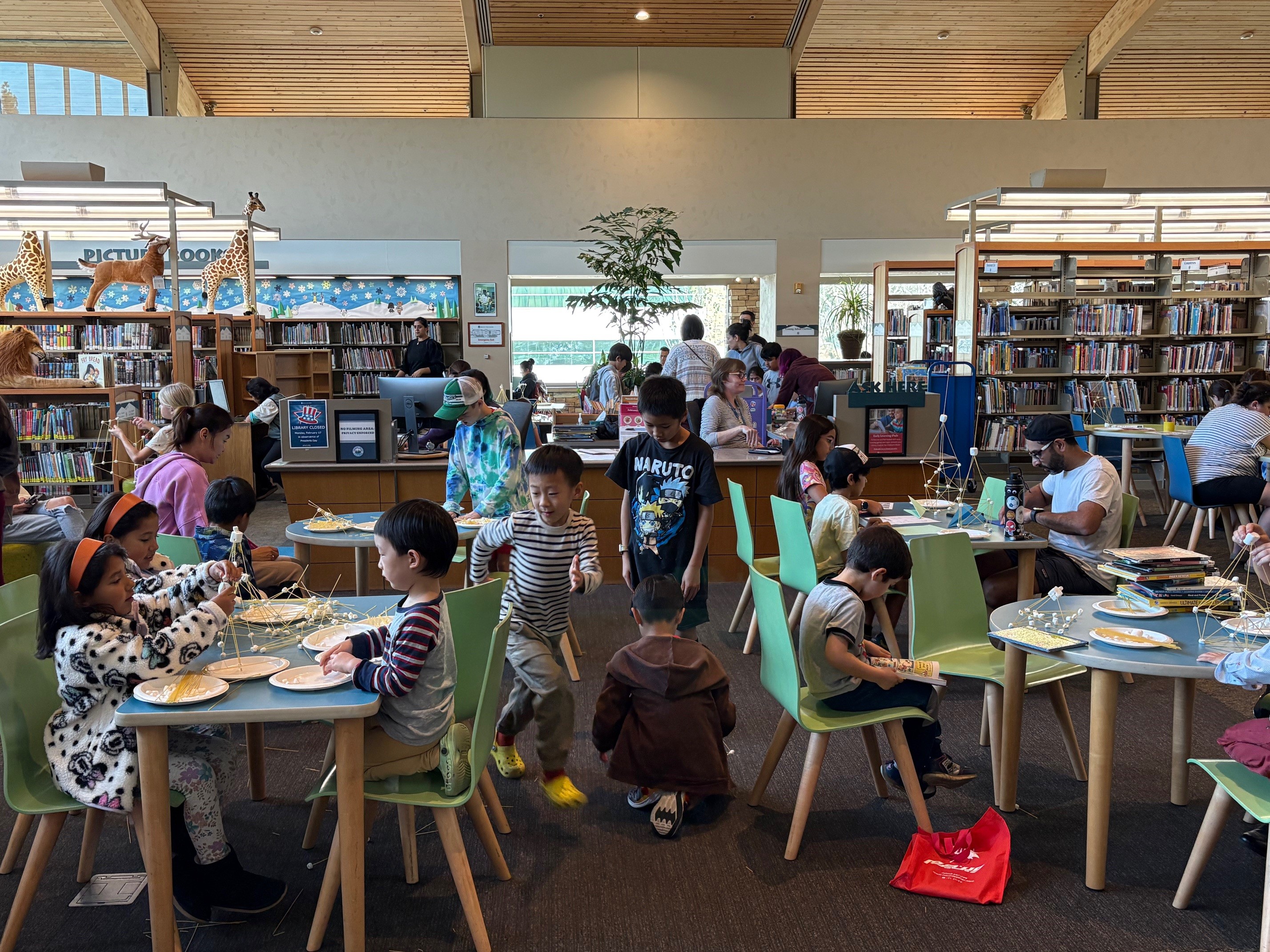
At the beginning of February, the youth team of the library hosted our 2nd STEAM Stations event! What are STEAM Stations? For those who don’t know, STEAM Stations is the monthly library youth event that the Teen Advisory Board organizes that focuses on various aspects of STEAM (Science, Technology, Art, Mathematics). Last month, we focused on binary coding which was a super fun experience. This month, we focused on engineering which was very exciting!

For those who missed it, we had three different stations that focused on simple aspects of engineering:

Our first station was our spaghetti and marshmallow towers. Participants would use their spaghetti sticks and mini marshmallows in order to build a tower as tall as they can. Once they had their tower built, their challenge was to balance one large marshmallow on top. They were all able to test their structures and building skills with a super fun activity.

The second station was our pom-pom catapults. Another activity focused on building but also trajectory! Participants would follow the directions using popsicle sticks, rubber bands, and a plastic spoon in order to create their own catapult that they could test out with fun, colorful pom-poms. It was an entertaining activity that tested more of their building skills and challenged them to launch their pom-poms the farthest they could with their craft. 

Finally, we had our paper-airplane station. A nice, simple station that allowed participants to test what kind of design created the best working paper airplane. Participants could create their own design or follow given directions to try and create the best paper airplane that would be able to soar as far as possible. 

Our February STEAM Stations was another success! It was super popular with people of all ages coming around combined with a mix of returners and newcomers. We had people who knew the event was happening and people who had no idea what STEAM Stations were come to participate. Our participants had a lot of fun experimenting the best ways to build their spaghetti towers, some even working together to build one giant one. They also had a great time launching pom-poms into the air and throwing paper airplanes around the Children’s Center. All of our stations focused on an aspect of building and required everyone to really think about how to create the most efficient design and model while also having fun.

Our third and final STEAM Stations event will be held on March 8 at the Potocki Center for the Arts and will be centered around Biology! We will have even more fun and creative activities ready for everyone who wants to attend. We hope to see you all there!

-Nicole R.

Tiny Dancer

Tiny Dancer [Book]

The Tiny Dancer is a book written by Siena Cherson Siegel and illustrated by Mark Siegel, that follows the journey of a young girl named, Sienita, on her pathway and dream of becoming a professional ballerina at the New York City Ballet Company located in New York City.

The book starts with Sienita as a young dancer, as a dancer at a small local studio near her in San Juan, after traveling to New York with her mother and doing an audition for the School of American Ballet School, she gets accepted and moves there. We then follow the pathway of Sienita at SAB and other ballet schools, through her many challenges and obstacles, from losing her boyfriend, her parents divorcing, and forced to reduce her ballet training when she experiences an injury, completely ruins her and dis motivates her as a person. Therefore, she must find a way to motivate herself back up again and continue working her dream and passion as a ballerina.

I really enjoyed reading this book, the illustrations and drawings were appealingly drawn showing life and motion. This book really shows and explains the difficulties associated with a passion that you are in. However, one negative aspect to this book that I did not enjoy much was how Sienita gave up on her dream of becoming a professional, she should have motivated herself even more and risen up to the challenge to work even harder to come back to her level, instead of letting herself get lowered down by how talented others are and by her injury.

If you are looking for another book similar to this one, To Dance, is also available in full color format with a similar story in a shorter, manageable text. This was the first book that I read from this author, after reading this book you cannot imagine the excitement I had to see a 2nd book written by the same author in a longer version!

If you are interested in reading this book, Tiny Dancer, by Siena Cherson Siegal is available to check out from the Mission Viejo Library today! I would totally recommend this book for people who are interested or currently are in the dance industry, or for anyone just looking for a motivating, beautifully illustrated and drawn book.

The Great Gatsby by F. Scott Fitzgerald

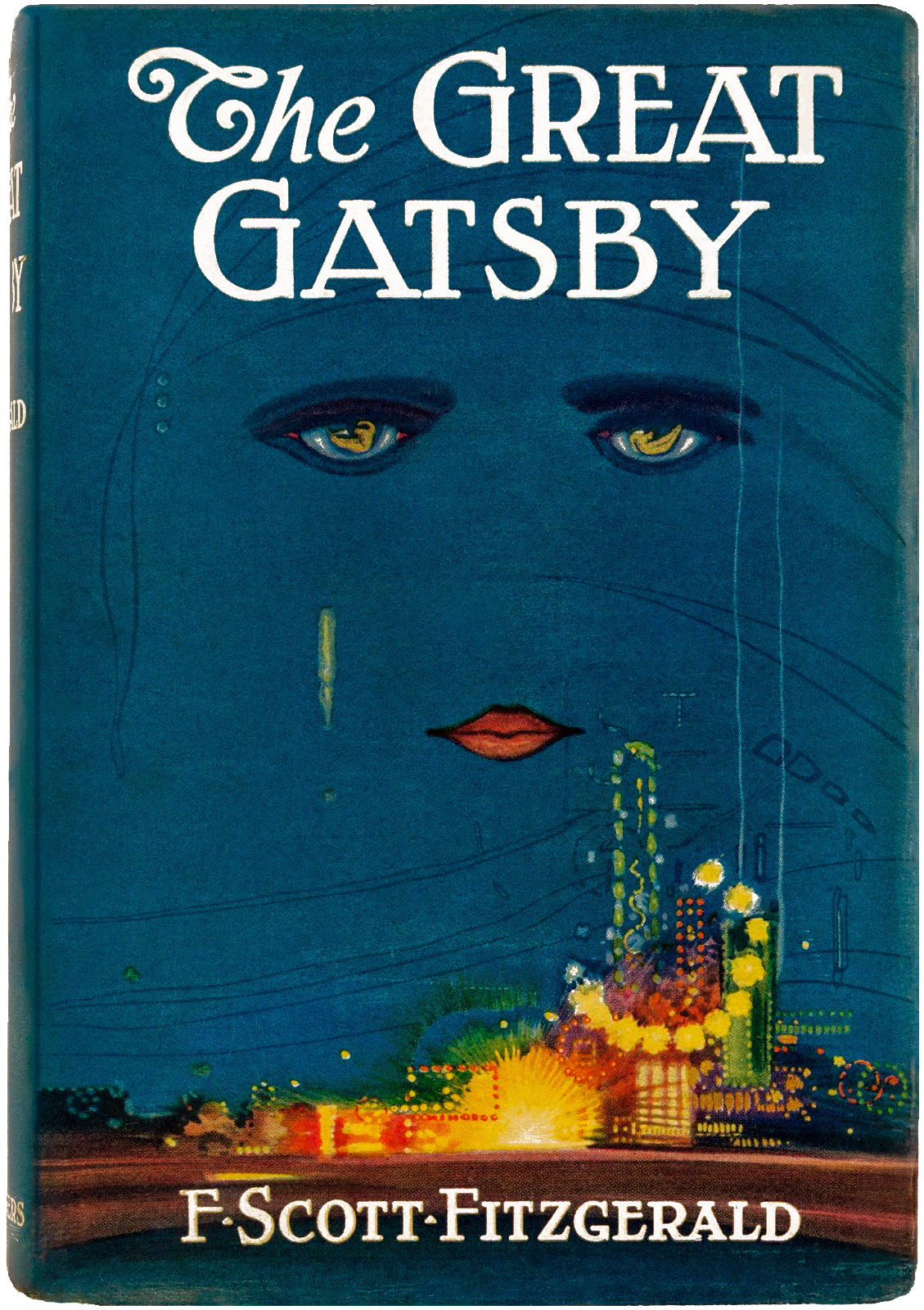
Recently, after watching the movie, I began The Great Gatsby. Considered by many to be the “quintessential American novel,” The Great Gatsby was one of the great books of its generation. While I initially felt ambivalent towards the modernist genre of novel in general, This novel changed my mind; I found this book very interesting and relevant to today’s world.

The novel starts with an introduction from Nick Carraway, the main protagonist and the narrator of the story. Nick introduces the line that divides the two cities, East and West Egg, as well as the lower-middle class industrial area known as the Valley of Ashes that splits the two districts. Nick lives in East Egg, even though he has the connections and family wealth typically associated with the “Old-Money” class of West Egg. At the same time, Fitzgerald also introduces one of Nick’s old acquaintances, Tom Buchanan, a temperamental, dishonest character who used to be one of Nick’s classmates at Yale. Nick also introduces Tom’s wife, Daisy, who will later be important to the plot of the book.

Nick first meets Gatsby through one of his lavish parties, which he throws weekly at his large mansion in East Egg. It is revealed that Nick had served with Gatsby in the WW1, fitting of the post-war setting of the book during the Roaring ’20s. Nick finds Gatsby’s parties shallow and garish, reflecting the West Egg sentiment about East Egg. Nick later uncovers that Gatsby’s parties were a futile attempt to win back Daisy, with whom he was deeply in love.

As the story progresses, the rivalry between Gatsby and Tom deepens, and the reader is also introduced to the lesser-known, shadier side of Gatsby. Fitzgerald includes several references to prohibition-era legislation and politics, including references to bootlegging and the 1919 Black Sox gambling scandal, using the character of Meyer Wolfsheim, one of Gatsby’s shady contacts, as an allusion for Arnold Rothstein.

I won’t spoil the rest of this story, but this book is definitely a classic that is worth reading. I really like how Fitzgerald is able to make his message about the American Dream and his overall Modernist sentiments about the meaning of life very clear to the reader, allowing them to create their own interpretation of the novel. I would recommend this novel to anybody who is interested in reading about life during the Jazz Age, or in general, anybody hoping to add a new piece to the puzzle that is the American story.

The Great Gatsby by F. Scott Fitzgerald is available to check out from the Mission Viejo Library. It is also available to download for free from Libby.
Mazu – Sea Goddess and Queen of Heaven

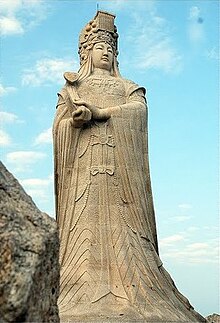
Mazu is a respected female deity in Taiwan. She is known for offering help to endangered seafarers using supernatural aid. She is also known as the Empress of Heaven, the sea goddess, and other names. Mazu is said to have been a young woman with magical powers, who was given life after death after a tragedy. The legend originated in China during the 10th century (900s), then traveled down the coast and across the strait to Taiwan. Word spread, temples sprung up, and Mazu became a very powerful figure on the island.

Mazu, or Matsu, is the deified form of Lin Moniang, a shamaness from Meizhou Island. She was said to have been born to Lin Yuan, a local fisherman. Her birth happened under Liu Congxiao’s reign, a Quanzhonese warlord in the Min Kingdom, on the 23rd day of the third month of the lunar calendar, in the year 960. This was the first year of the Song dynasty. Despite being awfully quiet, she was blessed with many abilities even as a normal child, such as being able to predict the weather and experiencing divine visions. Mazu is a goddess as the result of a miracle that occurred while she was a teenager.

One day, her father and four brothers were out on a fishing trip off of Meizhou Island, when suddenly dark clouds began to fill the sky. A hurricane that they could not conquer had fallen upon them, blocking out the sun and rocking their boat with huge waves until it capsized. At the same time, Lin Moniang (mortal Mazu) was weaving at her loom, when she suddenly fell into a trance and turned into her pure spirit form. She transported herself to her father and brother’s boat and managed to save her brothers from the storm. Unfortunately, her mother saw her in her trance and woke her up, preventing her from rescuing her father, who was still in the ocean. Out of depression, Lin Moniang climbed up to a cliff and jumped into the sea, but right before she hit the water she transformed into a beam of celestial light and ascended to Heaven. In Heaven, she was rebirthed as the goddess we now know as Mazu. As the light disappeared, a rainbow appeared in the sky, signaling the end of the storm.

Sanchong Yi Tian Temple in New Tapei, Taiwan, with Mazu as the principal deity

She is guarded by two demons, Qianliyan (“Eyes That Can See One Thousand Miles”) and Shunfenger (“Ears That Can Hear the Wind”). Before they became her guards, they were both in love with her, and she made a deal with them that if they could defeat her in battle, they could marry her. She easily beat both of them though with the help of a magic scarf that blinded them, and they vowed to serve as her guards forever.