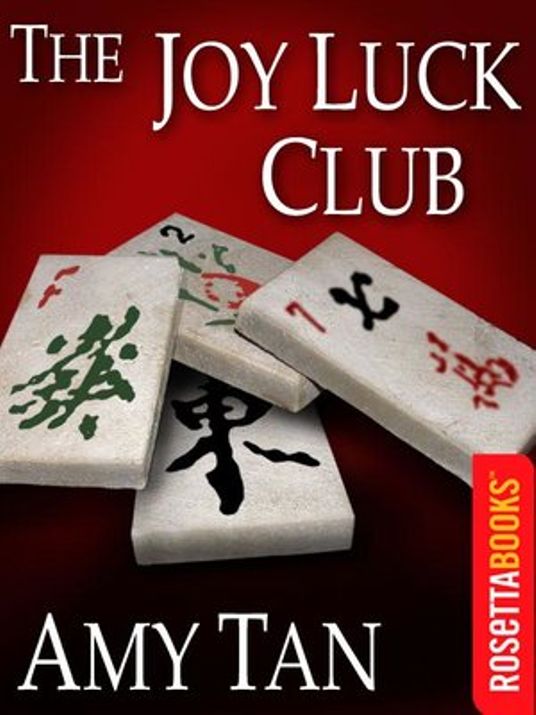
In 1989, Amy Tan published the story The Joy Luck Club, a novel describing the struggles and experiences of Chinese immigrants in the United States. In 1949, shortly after World War II, four women created a group to play mahjong, a Chinese tile-based game. The book centers around these four women and each of their American-born daughters.
The story dives into the cultural differences between each mother and child of different origins. They struggle to understand one another, affecting their relationship. The fourth mothers (Suyuan Woo, An-mei Hsu, Lindo Jong, and Ying-Ying St. Clair) realize that America is not what they expected and the American Dream is almost unattainable. Each mother has a different story with her daughter, but they are all interconnected. They reveal the misunderstandings and different values between each mother-daughter relationship.
Suyuan Woo wanted her daughter Jing-mei to be a genius as a child. She pushed Jing-mei to try activities she had no interest in. Suyuan hoped to instill strength in her daughter since she persevered through a war in China. She was internally strong and determined to combat any challenge she faced. However, without many opportunities in China, she could not achieve all her dreams. This led her to have high expectations for her daughter, which Jing-mei was unable to attain, causing a strain on their relationship. Although she feels pressured at first, after her mother’s death, she begins to find her identity after she visits her half-sisters in China. She understands her culture and heritage, allowing her to balance her American and Chinese identity to fulfill her mother’s wishes.
An-mei Hsu encountered many challenges in her childhood. She witnessed her mother’s manipulation and eventual suicide at an early age. Her entire family saw her as a failure, destroying her confidence. Her daughter, Rose, was in a traumatic marriage with her husband and was unable to find her voice. However, she listens to An-mei and fights for herself, creating a connection between them.
As a child, Lindo Jong was forced into marriage with a spoiled and disrespectful boy named Tyan-yu. She is treated as a servant but can escape, characterizing her childhood. She wants her daughter Waverly to be able to control her destiny. Waverly develops an ego and becomes overconfident, but still struggles with her relationship with her fiancé Rich. Through conversations and advice from her mother, Waverly can find herself and gain insight, allowing her to control her life.
Finally, Ying-Ying is faced with trauma through broken marriages as a child. She is scarred for life and warns Lena to be cautious, creating a sense of generational trauma. Once Ying-Ying marries Clifford St. Clair, she loses her identity and Chinese heritage through a name change. Her miscarriage afterward is her final straw, which sends her into a downward spiral and she becomes a “ghost” of herself. She is unable to communicate with her daughter (Lena) and husband, making her feel she has no voice. However, Lena learns to express herself and free herself from built-up internal pain, helping her confront her husband, Harold, and break away from the marriage.
Overall, The Joy Luck Club is a tremendous novel that explores the different experiences of four pairs of mothers and daughters. The struggle to communicate, balance their identities, and achieve their American Dream creates an intriguing experience for the reader and a further desire to read.
The Joy Luck Club by Amy Tan is available to check out from the Mission Viejo Library. It is also available to download for free from Libby.








 Mission Viejo Library Teen Voice