Book Review: Your Inner Fish by Neil Shubin

Recently, I read Your Inner Fish, a book about the evolutionary origins of mankind, as well as talking about the research that the author directly went through in order to gain more information about how humans came to be through evolution, as well as how surprisingly, we share some similarities with prehistoric fish (as the title implies).

The Book starts with Shubin introducing and explaining his experience with using fossil evidence to determine the origin of mankind, travelling around multiple locations in the world and multiple fossil sites looking for clues. The book also goes over the influence of geography on how they look for fossils, with different rock layers signifying older fossils. The author also talks about different traits we have in similarity to other animals throughout the book. Furthermore, the author also goes over the usage of embryology, or the comparison of the embryos of two different species in order to find similarities to prove common ancestry. In his research, the author found that the human embryo had several similar traits with a shark embryo, implying that we are in some way related to a prehistoric fish. The author also covers the fascinating subject of using DNA to determine changes in an animal throughout the world’s long history, and also talks about the degree of similarity human DNA has to other species, as well as more fundamental theories such as the theory that the mitochondria was once its own independent organism, but later combined with others to form the cell structures we know today.

Overall, I think this book was very interesting, because of the fact that the author was able to make otherwise boring and complex topics interesting by explaining it in a simpler way. I would recommend this book for anyone who is interested in learning more about topics in biology.

Your Inner Fish by Neil Shubin is available to download for free from Libby.

Book Review: The Overstory by Richard Powers

From the start, this was probably one of the most unique books that I’ve read, with a very good message behind it. Although it was definitely one of the longer ones I’ve read, it was well-written enough to keep any reader interested.

This book tells the story of 9 Americans who work together to prevent the destruction of forests within the U.S. The book starts in the 1800s with the story of the Hoel chestnut tree, detailing an important background for another character later in the story. The Hoel family had a tradition of taking pictures of the tree every year, and these pictures were eventually inherited by Nicholas Hoel, the great-great-great grandson of Jorgen Hoel, who planted the tree. After this chapter, the book fasts forward in time to the story of Winston Ma and his family, who escapes communism in China and becomes an electrical engineer in the U.S. He starts a family, and plants a mulberry tree. However, later, when everything falls apart, he takes his own life underneath the very tree he planted, leaving behind his daughter, Mimi Ma, who will be an important character later in the story.

There are seven more individual stories in this book, each revolving around a specific character in a different time period. Each of these nine individuals has seen their live impacted massively by nature, and each one of these stories are centered around a certain tree, as seen in the two early characters. The 9 characters eventually go on to formulate a plan to spread awareness for their cause, but It does not really go as planned. I won’t spoil what happens to each of these characters, but I will say that this book can have either a happy or sad ending, depending on one’s interpretation of it.

Overall, I think this book had a great message behind it, with the author clearly emphasizing the importance of nature to the world, as well as the importance of the continued existence of trees. This book is an amazing example of environmental activism through literature, and I would recommend this book to anybody interested in the environment and its preservation.

The Overstory by Richard Powers is available to check out from the Mission Viejo Library. It is also available to download for free from Libby.

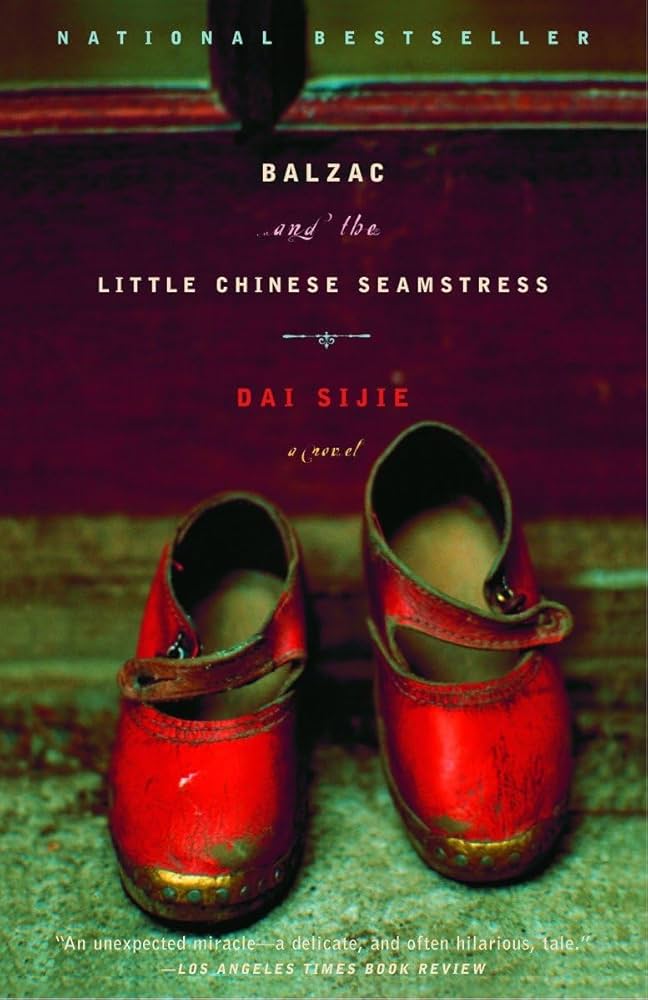
Book Review: Balzac and the Little Chinese Seamstress By Dai Sijie

Recently, I read this book for my school’s international novels unit, and I’d have to say that this is one of the best books I’ve ever read, and probably one of the only times I actually really enjoyed reading a book that was assigned to me.

This book is set in China during the Cultural Revolution. The author actually based the experience of the main character, whose name is not explicitly revealed, and his friend Luo, on his own experiences being re-educated under the communist regime. The boys in this book, who are part of a group the ruling party classifies as “young intellectuals”, are sent away to the Chinese countryside under Chairman Mao’s re-education program, where they are “re-educated” by the peasants. However, ironically, the two boys end up being the ones exposing the peasants to Western ideas, which the author makes apparent since the start of the book, with the violin and alarm clock in their possession, which the peasants have not seen before.

The two boys are sent into a small village in the mountains, for the reasons above. Early in the book, the abilities of the boys are made apparent. The main character’s main talent is playing the violin, while Luo’s ability is being able to retell and tell a story with great emotional effect. Luo’s ability eventually allows them a slight reprieve from the grueling labor they are forced to do in the village, and they get to watch and retell films for the village.

Luo and the narrator eventually meet the daughter of a tailor, one of the wealthier people in the region they are in. He eventually falls in love with her, and they have a relationship together. Meanwhile, Luo and the narrator go to visit a friend nicknamed “Four-Eyes”, who was also sent to be re-educated, similarly to them. As the story goes on, he grows more suspicious of the other two, likely due to his paranoia.

A prevalent, repeated theme throughout the book is the unlikeliness that the boys will ever be allowed to go back to the city, as their parents were branded “enemies of the people” by the new regime. The boys frequently mention that their chance to return is around “three in a thousand.” However, they still do everything in their power to be considered to be allowed to return to the city. The concept of a power balance is also explored by the author throughout the book, as he establishes how the peasants are supposed to be the ones in power and educating the boys, but the items such as the alarm clock that Luo brings to the village govern the life of the villagers to some degree, and at the same time exposes and educates them about the outside world.

I won’t spoil the rest of this book, but this book was for sure one of the better books I’ve read throughout this year. I really enjoyed the perspective and detail the author put into writing this book, using an experience he actually went through to paint a vivid picture of what it was like. I would recommend this book to anybody who likes historical fiction or just want a great book to read in general.

Balzac and the Little Chinese Seamstress by Dai Sijie is available for checkout from the Mission Viejo Library.

Book Review: Metro 2033 by Dmitry Glukhovsky

This is the first time I’m doing a book originally translated from a foreign language, but this book has definitely been one of my favorites. Although I’ve heard the translation was a bit off in some parts, I really liked this book because of the way the author seamlessly blended the horror and action of this book with some philosophy.

This story is set in 2033, in the tunnels of the Moscow metro system after a nuclear war wiped out most of humanity’s population. The surviving population in the massive fallout shelter that is the metro system eventually split by station, with separate metro stations becoming their own city-states, waging war, and forming confederacies amongst themselves. This first book in Glukhovsky’s three-book series introduces and covers Artyom, a young man from VDNKH, which is under threat from entities only known as “the dark ones”, who may not be what they seem.

The story starts with Artyom meeting up with a man named Bourbon, who promised to pay Artyom a hefty sum if he helped him get through several tunnels in the metro system. However, as they go along on the Journey, Bourbon mysteriously dies. A stranger named Khan then saves him, and Artyom realizes that Bourbon may not have paid him after all, but would rather have double-crossed him. After Khan and Artyom make their way to another station called Kitai Garod, presumably named after the section of Moscow that it is under. The two become separated at this station due to an attack by fascists from another station, and Artyom is captured. Right when he is about to be executed, Marxist revolutionaries rescue him.

Eventually, Artyom meets a stalker named Melnik, who in the context of this book, is somebody who goes to the surface in order to find supplies and other important items. Artyom delivers a message that he was supposed to get to him. The two eventually go to the great library at the surface, with another person, Daniel, in order to retrieve a map. However, this goes badly, as Daniel perishes in the process to a creature in the library, and Artyom barely makes it back to the metro alive.

I won’t spoil the rest of the book, but this book was definitely a very interesting one, as it is much different from most of the other post-apocalyptic novels I’ve read. The author is very philosophical in his telling of this story, which makes this book stand out from the rest, as well as using the events that happen in the book to represent things in real life. I would recommend this book to anybody who really loves post-apocalyptic or horror novels.

Book Review: Purple Hibiscus by Chimamanda Ngozi Adichie

Recently, for my school’s English class, I read Purple Hibiscus, which is a book about a girl named Kambili growing up in a wealthy but abusive household in Nigeria. This was probably one of the best books of this genre that I’ve read, as it contains plenty of interesting themes, as well as having a deep overall meaning.

At the start of the story in chapter 1, Kambili witnesses her father hurl a leather missal across the room after her brother, Jaja, defies him by refusing to attend church. Here, the first signs of the fact that her father is abusive is revealed. however, at this part, Kambili tells the reader that this event was later in the book, after everything else happened.

The start of the actual story begins on chapter 2, with the story taking place at Kambili’s house. this second chapter gives important background information on the family, their economic condition, as well as other details that will be important for later. It is also revealed that Kambili lives in a very religious household, with her father pushing the faith on her and her other family members. As the story progresses, the author makes it more and more apparent that the father clearly uses his religion to control his family, as well as further showing the extent of the influence of abuse on Kambili, her brother, and her mother.

What made this book very interesting was how the author took inspiration from her youth but obviously included elements of fiction added to it. In fact, Chimamanda Ngozi Adichie gave a TED talk about the book as well as the “danger of the single story“, which I highly recommend watching before reading this book, as it provides the reader with some background on the book.

Overall, This was a great book, and I would recommend it for anybody who is interested in an emotional, moving story.

Purple Hibiscus by Chimamanda Ngozi Adichie is available to checkout from the Mission Viejo Library.

Book Review: Outliers by Malcolm Gladwell

Recently, I read Outliers, a book explaining success and the reasons behind it, as well as delving deeper into the factors that cause success, such as background, family, and other factors. This book was definitely an interesting read, as it unpacked the causes of success, which is the central ambition of many people.

Gladwell introduces the book with the phenomenon of the Roseto effect, named after a study on the town done in the 1950s. During this study, the doctors performing it were shocked to realize that the people living in the town had the lowest rate of heart disease, and the lack of any heart conditions in general, leading to the discovery of the phenomenon that living together in a tightly-knit community indirectly contributes to less heart disease. The author then explains how Roseto was an outlier and the factors that contributed to it, looking beyond the general assumptions.

After the introduction, Gladwell proceeds to go on to explain several different phenomenons, such as the common belief and stereotype of Asians being good at math, by looking at cultural and linguistic factors, as well as the rise of Joe Flom, a takeover lawyer during a period of time when companies did not do many cases such as those. These are the two most interesting “outlier” cases he went over in my opinion, but he went over a handful of other ones that are just as interesting.

Overall, I think this was a great read, as it went over several interesting topics, analyzing them beyond the surface details, and teaching us to look at the other side of things. I would recommend this book for anybody who is interested in sociology, or success stories in general.

The Outliers by Malcolm Gladwell is available to checkout from the Mission Viejo Library. It is also available to download for free from Libby.

Book Review: A Burning by Megha Majumdar

Recently, I read A Burning by Megha Majumdar, which is mainly about the story of Jivan, a Muslim girl living in India, who comes from a less fortunate background. She is accused of a crime she didn’t commit, and there are two other characters, Lovely, an aspiring actress, and PT Sir, Lovely’s old gym teacher who is trying to move up in society. This book was definitely a good read, as it is told from multiple perspectives, as well as exposing social issues in India.

The novel starts with Jivan making a post on Facebook regarding a recent terrorist attack that happened at a train station in the Kolabagan slum, where she lives. In this part of the story, the author gives important background into who Jivan is. After a brief online argument with another woman regarding this issue on Facebook, she makes her own post criticizing the government for their lack of action, resulting in suspicion of assisting or participating in the terrorist attack being placed on her, and eventually leading to her arrest. The story then shifts to the perspective of Lovely, who is a hijra, which is considered the “third gender” in India, and an aspiring actress. this part of the story gives background on her as a person as well. then, the perspective shifts to PT Sir, the only male teacher at an all girls school, whose desire to move up in society eventually causes him to join the JKP, a right-wing political party in India.

As the story progresses, both Lovely and PT Sir realize that they must work against Jivan in the ensuing legal case in order to boost their own position in society. This causes both of them to work against Jivan in her already precarious position. Although I won’t spoil the ending, This story makes us question whether we will choose our own personal paths and careers over the well-being of others, and it brings up the question of character. However, it also exposes other issues in India, such as the persecution of minority groups, as well as corruption within politics. This was a great book in my opinion, as the shifting perspectives between the three main characters in this book really gives a good view into the world within this story. All in all, this was a great read, and I would recommend it for anybody who is interested in learning about social issues as well as those looking for an interesting read!

A Burning by Megha Majumdar is available to check out from the Mission Viejo Library. It is also available to download for free from Libby.

Book Review: House on Mango Street by Sandra Cisneros

Recently, I read a book called House on Mango Street, which is the story of a girl named Esperanza, which translates to “Hope” in English, as she navigates her process of coming of age. This book was definitely an interesting read, as it is formatted and told in a style that not many books utilize.

To understand the novel and its purpose, it is recommended that one reads the author’s foreword, as it explains the author’s story, how her background led to this book’s creation, and how Esperanza is loosely based upon Cisneros herself, as both of them like writing. This novel starts off with the author introducing the environment that Esperanza grows up around, her house, and the school she goes to. The author deliberately makes Esperanza an unreliable narrator at the start, realistically depicting a younger child’s naive view of the world. Cisneros shows this through the fact that she didn’t know a car she was riding was stolen by one of her cousins earlier in the book, and is expressed later in the book when she doesn’t understand that some boys were joking with her friend, causing her to react unexpectedly.

The novel is written into short little segments, which the author calls “vignettes”, instead of being split into specific chapters like a traditional novel. This gives the novel a more personal feel and really frames the story, as well as giving the readers more details of the impoverished neighborhood in which Esperanza eventually comes of age. The author also blends her cultural background into her writing with this story, and it is reflected in the character of Esperanza, whose parents are quite similar to Cisnero’s parents in a way.

Overall, this book is a great read for those who are interested in reading novels in which the protagonist grows and matures as a person, and the author definitely makes this process interesting through plenty of storytelling and nuanced descriptions of this book’s setting, giving the reader a more personal look at the lives of the characters within this book.

The House on Mango Street by Sandra Cisneros is available to check out from the Mission Viejo Library. It is also available to download for free from Libby.

Book Review: Liquid Rules- The Delightful and Dangerous Substances That Flow Through Our Lives by Mark Miodownik

It isn’t common that I do a non-fiction book for a book review, but this might be one of the first times because this book felt so interesting to read. In this book, Mark Miodownik briefly explains why some liquids are dangerous, and why some aren’t, as well as why coffee and tea tastes bitter, all in the course of one flight.

The book starts with a brief introduction to all the liquids the author has had taken away from him during airport security. At the start, The author boards a plane to attend a conference in San Francisco, he begins to explain how jet fuel has more energy than nitroglycerin, an extremely volatile explosive substance. Here, he also introduces Susan, a woman sitting next to him. Throughout the flight, he goes on to explain how the TV he is watching works, how airplanes went from being made of plywood to being made partially using glue. The journey ends with Miodownik realizing that the person he sat next to the whole time was actually the whole reason why he came to the meeting in the first place, as she was the keynote speaker of the conference

In my opinion, this book was really interesting as it took usually mundane things we use in our everyday lives, and delves deeper into how they work. Miodownik makes all of these things very fascinating through his very thorough explanations of how each of these things work, as well as their chemical properties. I would 100% recommend this book for anybody who is very interested in science.

Liquid Rules by Mark Miodownik is available to download for free from Libby.

Book Review: Before We Were Free by Julia Alvarez

Recently, I read Before We Were Free by Julia Alvarez, which was about a family and their experience in the Trujillo-era Dominican Republic, a period of time when the country was ruled by a terrible dictator. This was definitely one of the best books that I read, as the narrator, in this case, Anita de la Torres, a 12-year-old girl in the family, makes personal connections to the reader throughout the book.

From my perspective, this book has a great build-up, as the author allows readers to slowly uncover what is going on, and we don’t truly know everything at the beginning. At the beginning, everything seems perfectly normal, with not many traces of the dictatorship being present, although the author did include many subtle tips, however, Anita realizes that her “Tio Toni”, or Uncle Toni, was missing. as the story unfolds, Anita comes to find out more and more about the country they live in.

Everything changes for Anita when members of the SIM, or the secret police of the dictatorship, go into her home and search for the Garcias, the neighbors. from here on out, her family has this sense of silence, and Anita comes to the realization that something was wrong, and realization dawns upon her that there was something wrong with the government. Eventually, she realizes that her parents are in a plot to assassinate Trujillo and bring freedom to the country.

I won’t spoil the rest of the book, but I can tell you that this book has a bittersweet ending. This was a great book I’m my opinion, as the narrator makes the reader feel a personal connection to all the characters, as well as explains her surroundings and experiences in vivid detail. All in all, although this book starts off slow, it takes off very quickly, and will leave readers interested in reading the whole thing!

Before We Were Free by Julia Alvarez is available to check out from the Mission Viejo Library. It is also available to download for free from Libby.