Unknown's avatar

About Forrest F

I'm a current senior at LHHS who loves reading, listening to music, and going to the beach!

Diversity Circle at the Mission Viejo Library

Globalization is all around us— our electronics, food, popular culture, literature, and much more are all the result of intermingling between many different countries across the world. Different cultures and people will continue to share spaces, creating diversity within our communities. The Mission Viejo Library recognized the need to understand and appreciate diversity, which is why they hosted their Diversity Circle event with Don Han on 4/7.

When I signed up to participate in this event, I was unsure of what to expect. Although I had participated in various diversity events at school, most of them consisted of students watching a powerpoint and being taught about how to be mindful of our differences. However, the Diversity Circle immediately struck me as different. I actually walked right past the event as I was trying to find it— the set up was like that of an intimate conversation, and I thought that a meeting was going on as a glanced through the open door. When I finally found my way in, I saw the seats arranged in a small circle so that everyone could hear each other as they spoke.

Our conversation started with the question of why we thought diversity was important. As we went around in a circle, I was impressed by the unique responses from each of my peers, some of whom I recognized and others whom I did not. As we took turns speaking, we passed around a small ladybug rock, which indicated whose turn it was to speak. Mr. Han explained how it was customary for whoever initiated the meeting (in this case, it was him) to place emotionally significant items in a small wooden bowl in the middle of the circle. One item that particularly fascinated me was a thin cloth that the men of his people would wear in a variety of different ways; Mr. Han had taken it with him when he moved to the United States.

One question that particularly struck me was about DEI (diversity, equity, and inclusion). Mr. Han asked us if we thought DEI was relatively new or if it had already existed for a long time, and for the first time, we respectfully disagreed with one another. We explored this topic as both a specific policy and a general concept about inclusion, with some of us asking about past civil rights movements and whether that counted as a form of DEI.

I am grateful for this opportunity to become a more educated and conscientious member of my community as well as to engage in meaningful conversations. For those on the fence, I encourage you to learn more about diversity!

Writing Prompt: What’s a job you would like to have for just one day? Why?

In today’s world, people are more and more commonly making career switches when they feel unfulfilled in their previous jobs. Although I haven’t entered the workforce and haven’t had to make this difficult decision yet, I imagine that I will seek to pivot my career in some shape or form.

To answer this question, I would have to consider what job would be enjoyable in the short-term, but what I wouldn’t want to have for very long. Dangerous yet high-paying jobs such as being an underwater welder come to mind, although I’m pretty sure that the PTSD I would get from risking my life would outweigh the salary benefits. If I were to hold a job for one day, I would want it to be enjoyable and risk-free, even if it meant that I wouldn’t earn much money. Then it hit me: professional sleeper.

Being a professional sleeper for a day is the obvious choice; I love nothing more than to come home and sleep after a long day of school and extracurricular activities, so why not get paid for it?

After doing some research, I’ve discovered more about this desirable position. Unlike typical 9-5 employees, professional sleepers tend to work as part of studies that can last from several days to several months. Depending on the restrictions of the studies they participate in, professional sleepers may work multiple “jobs” at the same time in order to earn livable wages, which range from $50,000 to $100,000+ per year. For example, NASA paid participants $19,000 to undergo a rest study for 2 months (although this study was less about sleep and more about how the body responds to prolonged weightlessness). Also, the sedentary lifestyle that many professional sleepers live may lead to health complications down the line. Healthcare professionals advise that remaining inactive for many hours a day, especially without intermittent breaks in between, can lead to greater disease risk (Park JH, Moon JH, Kim HJ, Kong MH, Oh YH. Sedentary Lifestyle: Overview of Updated Evidence of Potential Health Risks. Korean J Fam Med. 2020 Nov;41(6):365-373. doi: 10.4082/kjfm.20.0165. Epub 2020 Nov 19. PMID: 33242381; PMCID: PMC7700832.).

Considering the joy of getting paid for something that my body requires, I would become a professional sleeper for one day. However, I would want to seek a more fulfilling lifestyle and be more active, so I wouldn’t consider it for a long-term career. I think the perfect job would have a healthy mixture of relaxation and stress in order to promote positive mental health, but above all else, it would have variety in the tasks I would have to do. So now, I pose the question: what job would you have for one day?

Earth Day Event

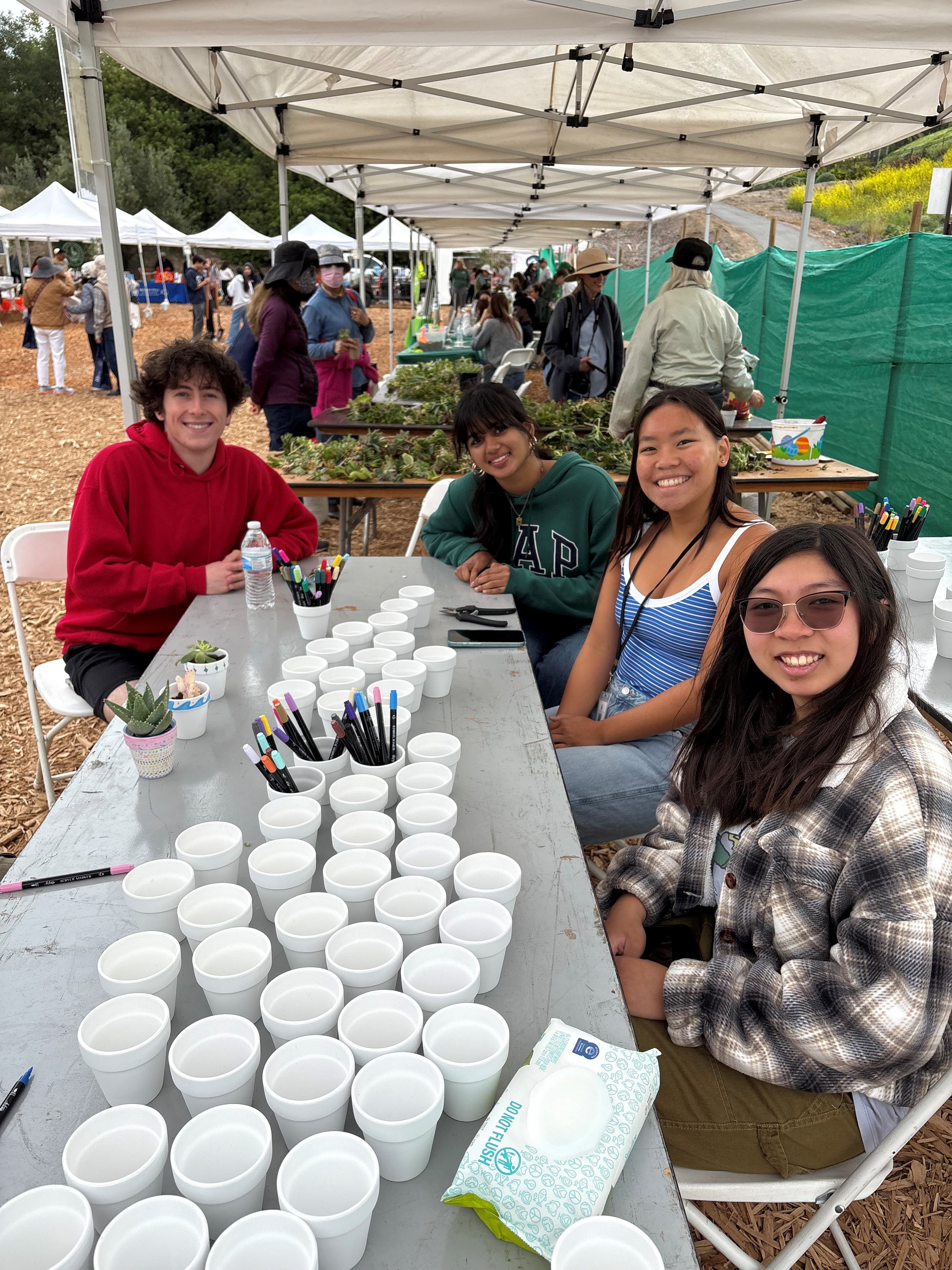
On Saturday, April 26th, I had the pleasure of helping the Mission Viejo Library with the Earth Day event. The Mission Library had two booths: one was run by the Teen Advisory Board (TAB), while the other was run by the teen interns. I worked at the TAB booth and helped people decorate succulent pots as well as assemble the mesh bottom cover, the soil, the rocks, and of course, the plant itself. All of our succulents were donated from the community, which goes to show how caring the residents of Mission Viejo are. Many people (including a member from city council) came to spread the joy of Earth Day.

The best part? It was all free! From the live band (that played all day, except to take a short break for the rain) to the assortment of tasty food, residents could stop by and partake in the festivities without having to buy tickets or RSVP. There were multiple stands giving away free merchandise and educating visitors about the environment, such as the El Toro Water District which handed out dog waste baggies. Not interested in getting free items? Our Teen Intern booth had a nature-based scavenger hunt where savvy explorers were challenged to locate birds, insects, and plants in an effort to appreciate our community’s natural beauty. Or, if fairs, aren’t your interest, many volunteers planted trees along the trail behind our booths. Getting to meet so many people who are also environmentally conscious was a delight, and I can gladly say that I made new friends! No matter what you were looking for, the Earth Day event was sure to have it.

While the festivities were wonderful, it is important to consider the message behind Earth Day. Cleaning up after ourselves is extremely important especially when considering the impact of anthropogenic waste has on ecosystems both locally and globally. Thousands of species suffer from genetic bottlenecks, have their mating passages disrupted, or even go extinct every year due to human actions. Taking AP Environmental Science at my high school has taught me about how humans need to take more accountability for our environmental impact, and this event reinforced what I have learned.

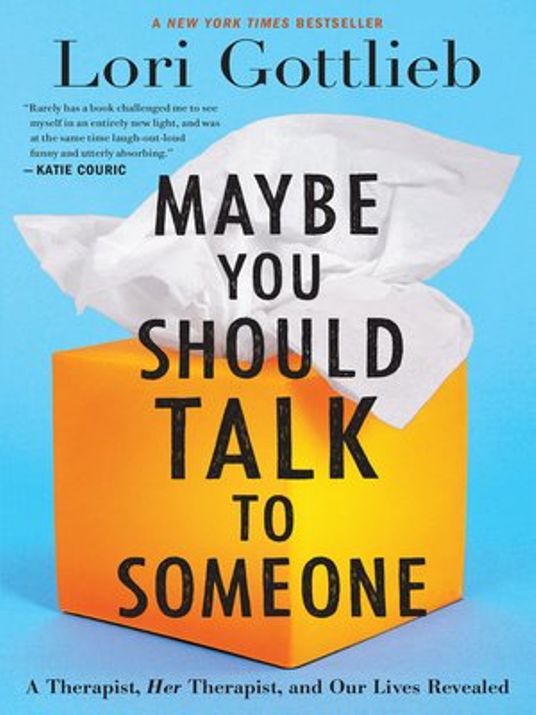
Maybe You Should Talk to Someone by Lori Gottlieb (Book Review)

Maybe You Should Talk to Someone by Lori Gottlieb is available for checkout from the Mission Viejo Library. It can also be downloaded from Libby

Saying No Is A Strength- But Why Do People Have Trouble Saying No to Distractions?

Daily writing prompt
How often do you say “no” to things that would interfere with your goals?

In today’s world, we are constantly surrounded by distractions that attempt to pull us away from more meaningful pursuits. Take, for instance, technology such as our phones. Whenever we are faced with a task that we find uninteresting, the temptation to check social media may creep in. Perhaps a student scrolls through TikTok for several minutes before starting calculus homework, or a teacher feels the need to to check Pinterest before they begin grading essays. In reality, the task may only take a short period of time to complete, but still we allow small distractions to get in our way. This feeling is universal, but does it signal laziness, or is there a deeper meaning behind this phenomenon?

Social Media Photos, Download The BEST Free Social Media Stock Photos & HD  Images
Stressed Out Teen Images – Browse 188,097 Stock Photos, Vectors, and Video  | Adobe Stock

According to McLean Hospital, there are several reasons why we might procrastinate. For some, it truly is a sense of laziness that, from time to time, causes us to lose motivation. Other times, there may be deep-rooted mental health problems that interfere with our ability to complete tasks. This includes, but is not limited to: anxiety, OCD, depression, and ADHD, just to name a few. What’s more is that procrastination can not only be a result of these mental health issues, but it can also be a cause of them as well. As people procrastinate, they have less time to accomplish whatever goals they have, which can then cause stress over time management.

The National Library of Medicine states that most people who procrastinate are between the ages of 14-29, and in another study, found that people between 18-25 have the greatest prevalence of mental illness. These statistics make even more sense when considering the especially high workload placed on people in this age group— college students attempting to manage rigorous academics along with anxiety around starting their new lives.

However, there is one positive to be considered. According to the Substance Abuse and Mental Health Services Administration (SAMHSA), mental illnesses such as those linked to procrastination tend to peak around 18-25 and consistently decrease thereafter; a similar trend can be seen with procrastination.

Results from the 2010 NSDUH: Mental Health Findings, SAMHSA, CBHSQ

https://www.samhsa.gov/data/sites/default/files/NSDUHmhfr2010/NSDUHmhfr2010.htm

Procrastination scores across the life span according to sex. Note:... |  Download Scientific Diagram

https://www.researchgate.net/figure/Procrastination-scores-across-the-life-span-according-to-sex-Note-Post-hoc-analyses_fig5_294257227

So, given this information, what can we take away from this? I believe this shows that we must be kinder to ourselves, even when we have trouble saying “no” to something that’s on our to-do lists. If we continually struggle to complete a certain task, it may be worthwhile to examine the underlying emotions that it brings us and address those feelings before we move forward. As always, we must strive to be better, not perfect.

Taking A Step Back

The soft scrape of a page being turned in my newest book is what brings me happiness.

Too often are we, as humans in the 21st century, focused on attaining a goal or possession that we have glorified in our minds. Admittedly, I used to (and probably still am, to some degree) like this, but I realized during my junior year of high school that this was an insatiable pursuit.

During my junior year of high school, I was obsessed with keeping my grades up. I would stay up until 3 am studying for a math test that I had the next day or spend hours perfecting a paper for a class in which I already had a 97%. I would spend 20 minutes on a drawing and rush to finish it if I couldn’t get it done because I would start to grow tired of it. I would start a new video game in an attempt to get a “perfect playthrough” and then drop it as soon as I did. In doing these things, I realized that I wasn’t pursuing a genuine feeling of enjoyment out of them- rather, I was chasing the immediate gratification I would feel from their completion.

As I reached the end of my junior year, I realized that I was happy, in part from these things, but for the most part, I couldn’t put my finger on exactly what made life so great. Was it that I had gotten an A in my math class? That I had gotten that internship or won that award? Something told me no. It was the day-to-day victories that should have been insignificant, most of which I had already forgotten which made life so great. It was the inside jokes my friends and I would cry from laughing at during lunch. It was the random FaceTime I would get from a friend I hadn’t seen in forever or an old photo that would hit me with a wave of nostalgia.

It was going to the bookstore with my Omi to check out a new book, hearing stories from her during the whole car ride there. As we entered the store I soaked in the soothing scent of books and felt perfectly content. I weaved through the aisles trying to find the book I wanted, and clutching it like a prize, would bring it up to the checkout counter. I opened it as soon as I got home, eager to see what adventures I had missed out on during the time between this installment and the last. And so I turn the next page and breathe a sigh of contentment knowing that this is what brings me happiness.

The Best Beaches in Southern California

During my time in Palo Alto, which is unfortunately many hours away from Southern California, the thing that I’ve missed the most are our beaches. I would consider myself to be an authority on the best beaches in Southern California, and I’ll go over some of my favorite ones.

Laguna Beach (Main Beach): Large, irreproachably beautiful, but often crowded with tourists. In the summer, the sands are filled with people escaping the Midwest cold, and it’s hard to find a spot to sit down. Another result of the beach’s popularity is that people leave their garbage on the sand, which is fun for no one. If you’re new to the city of Laguna Beach, this is definitely a place you must visit but there are better options.

Laguna Beach (Victoria Beach): Victoria Beach is a smaller, more private beach than Main Beach. While still taking advantage of the warmth and beauty of the area, Victoria Beach is cleaner and better for large gatherings.

Salt Creek Beach: As another very popular beach, Salt Creek is famous for its great waves and exciting atmosphere for all levels of beach-goers. You may have to walk down a very long, steep hill to get down to the water, but when you really feel the struggle is on the way up. While I’ve seen every age group at “Creek,” it’s most likely you’ll be surrounded by teenagers when you stop by. It’s also worth noting that you must pay for parking during certain hours.

Strands Beach: Strands Beach (which is really just “Beach Beach,” because Strand is German for beach) is a free, slightly less exhilarating version of Salt Creek. Many people appreciate this beach for the fact that you can see the sunset on the water, but its clean shore and laid-back atmosphere are also great!

Seal Beach: Although I’ve only visited Seal Beach a few times, what struck me about this beach were its rich culture and its clean, warm sand. It has a very easygoing feeling about it and seems like it would make a great day trip for any family out there.

Aliso Beach: Aliso Beach is a relatively small beach that you can drive right up to. When you get into the water, you’ll notice its sharp decline very quickly. This beach is great for small events, but its not my favorite on this list.

Doheny Beach: Doheny is definitely a surfer’s beach. It’s rocky, not sandy, so no need to shuffle on the sand to scare away stingrays, but I always feel like I’ll freeze to death in the water. This beach also has paid parking, but that shouldn’t be a deterrent. No matter what level of surfer you are, it’s a great experience.

Linda Lane: This hidden gem is a fun, family-friendly getaway. The unfortunate parking situation is typical with most beaches, but the only bad thing about this beach is its slim wedge of sand separating the rocks from the water. If you stay until high tide, it’s likely you’ll run out of room, so plan your stay accordingly. While I may seem overly critical of this beach, it’s truly an amazing place!

What is ASB Camp?

The Associated Student Body (ASB) is a group of roughly 40 students who, each year, make decisions about a variety of school events. The dances, such as the Hello Dance, Homecoming, Winter Formal, and Prom are great examples of this, but ASB students also play a crucial role in hosting an annual leadership conference at LHHS. At this conference, the ASBs from each high school in SVUSD create and run their own workshops for 7th and 8th graders, teaching them what it means to be a leader and how they can strengthen their leadership skills. On top of this, ASB is in charge of maintaining a positive, inclusive environment in the day-to-day life of their school. With all of this responsibility comes a high requirement of experience and dedication– but where do they learn to be leaders? The answer is the Orange County Leadership Camp (OCL). 

OCL is a 4-day summer camp for rising high school students who were accepted to be part of their school’s ASB. Students attend the program with their high school and for many incoming freshmen, this is their first exposure to the new freedoms (and responsibilities) that high school leadership entails. Students are immersed in several workshops taught by public speakers and learn about how to bring the most to their school through their position in ASB. Since each student in ASB has a specific job title such as Commissioner of Campus Awareness, or Class President, they attend classes that are best suited to their duties. In these workshops, students collaborate with others from a variety of backgrounds and learn how to take on different perspectives to incorporate back at home.

Not only does OCL bring in renowned speakers to train our students, but each school’s ASB chooses two people to lead a mini lesson on a specific event or tradition that their school specializes in. In this activity, known as “Meet the Pros,” every student rotates to a different mini lesson after 5-10 minutes. This process allows students to be exposed to a plethora of creative ideas, such as a senior-only talent show at the end of the year, or a student mental health week,  which can be adapted back at their school. Having small groups of students rather than one or two large ones allows for the audience to ask questions and take in-depth notes, even coming up with ways to improve the event being described. Previously, LHHS taught a mini lesson on our Staff Appreciation Week, in which ASB makes candy necklaces for the staff, writes personalized cards to each of them, and makes them elaborate posters. 

Being such an integral part of their school, it is essential for ASB leaders to establish a community where people can feel like their voices are heard. While much of their learning comes from trial and error, OCL provides these students with a head start to making the school year as successful and enjoyable as possible. 

Literature and Escapism: Why are so many drawn to fiction?

In the 21st century, teens and adults alike are bombarded by notifications ranging from depressing news stories to shocking exposés regarding beloved celebrities. Social media has made people emotionally numb as they swipe from one heartwarming post to a sob story on the next page, disrupting their capability to process emotions. In such a mentally taxing world, it seems only natural that some would seek escape through other mediums- this being literature, mainly fiction.

But what do I mean by “escape?” The term for mentally excusing oneself from reality and seeking a sense of calmness, namely through fantasy, is how Oxford Dictionary defines the word “escapism.” While exploring fantastical worlds is okay in moderation, escapism is the excessive use of material to sever one’s connection from reality, resulting in an unhealthy relationship with the real world. This makes it difficult for people to address the root of their problems- whether it be an unfulfilling career, lackluster social life, or an underlying mental health condition, escapism shrouds the problem and allows it to be forgotten in exchange for temporary relief.

Harry Potter and the Philosopher's Stone (film) - Wikipedia

Chief offenders of indulging escapist tendencies include the renowned Harry Potter and Percy Jackson series which are known for their elaborate worlds of magic and Greek mythology. While the authors of the franchises themselves aren’t to blame for the problems of others, they certainly provide a plethora of spinoffs and merchandise to keep legacy readers sucked in for several years (if not decades). With the Harry Potter fans, known as “Potterheads,” a thriving community of middle-aged Millennials are present on platforms such as Discord, Reddit, and Twitter. While being a longstanding fan of a book series is not problematic in itself, it becomes an issue when individuals become so enthralled with the stories that they cannot distinguish reality from itself.

For example, when entering a Google search of “Potterheads are convinced Harry Potter is real,” a plethora of social platforms with questions about whether Harry Potter could possibly be real pop up. Through Google’s Q&A system, a worrying, question of “Is it possible that Harry Potter is real?” can also be noticed. As Miriam Margoyles, the actor who played Pomona Sprout in the Harry Potter series concerningly stated, “I worry about Harry Potter fans because they should be over that by now” (Margoyles Miriam, “Miriam Margolyes jokingly tells Harry Potter fans to grow up | Seven Sharp,” 2024). If even those who stand to gain the most from this disillusionment take issue with escapism, it is time for us to address it as well.

Miriam Margolyes Doubles Down On 'Harry Potter' Adult Fans Stance: "It Was  25 Years Ago, Grow Up!"

Of course, this analysis of human behavior is all in good fun and I appreciate you reading!

The Stranger/The Outsider Title Analysis

[Spoilers for The Stranger/The Outsider/L’Étranger]

In my English class, we read the famous novella known by some as The Stranger” by Albert Camus. Albert Camus is a famous absurdist and existentialist “philosopher” (although he refused to identify himself as one) who is famous for pioneering the idea that life does not have meaning. While some may consider this to be a pessimistic outlook on the world, a closer inspection of Absurdism reveals quite the opposite; Camus argues that because there is no intrinsic purpose in life, we should not dwell on the unfortunate events that have happened to us. Rather, we should focus on enjoying our lives to the fullest and living as if there is no tomorrow.

In Camus’s novella, The Stranger, he expertly crafts a story about a young man named Meursault, a French-Algerian who embodies the concept of absurdism. When his mother dies, Meursault only states in a matter-of-fact manner that she is dead, referring to her corpse as “a body” and falling asleep at her funeral. He even engages in a relationship with his coworker Marie the day after.

Throughout the novel, Meursault continues to miss important social cues, such as when Marie (whom he later gets engaged to) asks him if he would marry any woman, to which he responds with the affirmative. He turns down a promotion that would relocate him to Paris because “one life is as good as any” and he gives a statement at the police station to protect his mobster acquaintance for the simple reason that he was asked. At the end of the novel, he murders an unnamed Arab man and is found guilty; he spends the remainder of his days in jail awaiting his execution.

There are many translations of this story, such as The Stranger, The Outsider, The Foreigner, The Alien, and Odd Man Out. In my opinion, out of all of these translations, The Outsider serves as the best title for the novella. It established that Meursault is known by his community (given that he grew up in French Algiers and never relocated) but that he is missing out on something that only people on the inside are aware of so to speak. This crucial element, a strong sense of social awareness and a moral compass, prevents him from fitting in, casting him as an outsider in society. While the other titles hold (mostly) the same denotation, they do not convey this critical connotation, which is why The Outsider functions as the best-translated title.

The Stranger by Albert Camus is available to check out from the Mission Viejo Library.