Things Fall Apart by Chinua Achebe

Chinua Achebe’s Things Fall Apart follows a wealthy and respected warrior, Okonkwo, living in a late 1800’s Nigerian tribe. Haunted by the actions that led his father, Unoka, into exile, Okonkwo leads his life by rejecting his father’s feeble and “feminine” demeanor. To fully denounce his father’s scarred reputation, Okonkwo embodies, what he feels, is an ideal warrior to a great extreme. While Okonkwo hopes to gain the respect of his clan, his actions that reflect this warrior construct are interpreted differently by his fellow clansmen.

Achebe immerses readers in pages of pure Igbo culture, bringing readers into a full understanding of the societal customs and government of the Igbo people in Nigeria at this moment in time. However, the end of the novel is met with the growing and consuming influence of British colonial expansion. Through tactics of pacification and outward violence, the colonial missionaries successfully break apart Okonkwo’s tribe. When Okonkwo attempts to resist these abrupt changes, his clan responds indifferently to his ambition. Through this rejection, Okonkwo meets his tragic downfall as a result of his weak collective identity.

Achebe concludes in the novel with a jarring transition into the perspective of a colonial missionary, in which the missionary decides to write a novel, titled The Pacification of the Primitive Tribes of the Lower Niger, that encapsulates Okonkwo’s tragic and complex life into a single paragraph. The demeaning language used in this title, as well as the arrogance and indifference highlighted in the missionary’s brief inclusion of Okonkwo, struck me the hardest. I felt that the most significant moment of the novel occurred at the end, in which Achebe illuminates a major global issue: outsider perspectives, such as that of the missionary, diminish and flatten the depth of insider perspectives.

While insider perspectives show depth and reality, outsider perspectives can misrepresent, simplify, or erase the lived reality of underprivileged groups. The insensitivity of an outsider can strip the dignity and traditions of an insider, creating a contrast between what readers know and what an outsider records. Ultimately, Achebe’s novel presents readers with a universal message: perspective directs our knowledge and only those with first-hand knowledge and experience should have the privilege of telling their story.

I Who Have Never Known Men by Jacqueline Harpman

Jacqueline Harpman’s novel, I Who Have Never Known Men, surrounds the theme of what it means to be human in a world where you have been stripped of everything that makes you feel human.

The novel follows a young woman, the narrator, with no memory of her past or the outside world, living in an underground cage with 39 other women, guarded by men who never speak. During her time in this cage, the narrator, who remains unnamed throughout the entire novel, lives with a constant urge to gain knowledge of the outside world and what humanity is really like. Relying on the broken memory of the other women, the narrator struggles to put together the notion of the outside world, like a jigsaw puzzle with pieces that don’t fit together. She finds herself holding on to anything that makes her human, while being faced with dehumanizing circumstances everyday, such as defecating without privacy, walking with nowhere to go, and attaining intellectuality without proper books or educational material. This marks an important aspect of what makes humans, humans: The strive for knowledge and persisting curiosity.

One day, an alarm in the bunker where the women are imprisoned goes off, initiating the fleeing of the guards who accidentally leave the cage open when feeding the women. After a moment of wondering whether the guards would return and in disbelief that they were actually free, the women run from the cage, starting up the stairs of the bunker and facing the sky for the first time in years, feeling raindrops fall to their faces like water hadn’t existed, and feeling their heartbeats rise in adrenaline like their heart hadn’t beat before.

However, once free, the women face an unforgiving post-apocalyptic world, unlike the one they had remembered like a distant dream, and slowly begin to die, one by one, not just of illness, but of the burden of grief of missing their past lives. The narrator, having no recollection of this life and having had grown up in an imprisoned world, persists in her efforts to find her humanity while being the last of the women to survive a world unlike the one the women had described.

What I love about this book is that its a story of a human with so much of her humanity stolen from her, yet she still finds herself asking the most fundamentally human questions: Why am I here? What does this all mean? It’s a story about how even when born into a society so different from any that exists now, humans will always find hope, love, and wonder.

I Who Have Never Known Men by Jacqueline Harpman can be downloaded from Libby

Dumplin’ by Julie Murphy

Dumplin’ is one of the few novels that I’ve loved both the book and film-adaptation. In both forms, Dumplin’ depicts the raw feeling of proving one’s self-worth, not based on outward appearances, but based on one’s self-respect and confidence in one’s capabilities. While capturing the jealousy, insecurity, and self-fulfillment of a teenager navigating the superficiality of teenage social-status and norms of beauty, Dumplin’ also left me with a message that will be prevalent throughout my life.

Julie Murphy’s Dumplin’ captures small-town Texas teen Willowdean Dixon’s path to finally feeling comfortable in her own skin. Through Willowdean’s, or Will’s, narration, she illustrates how being overweight affects her relationship with her former beauty pageant winning mother, Rosie Dixon, and her conventionally pretty best friend, Ellen. Will’s mother, being obsessed with maintaining physical beauty, never pursues a close relationship with her daughter, leaving her sister, Lucy, Will’s aunt, to take her place as a mother figure. Both Lucy and Will bonded over their love for country star Dolly Parton, an affection she also shares with Ellen. Through their idealization of Dolly Parton, a figure of confidence and glamour, Lucy encouraged Will to value and love herself despite being overweight.

To me, this was the part of the novel that stood out to me the most. Dolly Parton’s music in the novel inspires and influences Will to achieve the best version of herself and to approach that moment with the highest level of confidence. Dolly’s influence enforces the idea of figuring out who you are and doing it on purpose. While Will struggles to accept her plus-size figure due to her constant comparison to Ellen, Will chooses to compete in her mother’s beauty pageant, forcing herself to discover what real beauty is.

Today, beauty is very subjective. How we define beauty differs between cultures and the kinds of societies we live in. In my opinion, beauty is not what is aesthetically pleasing to the eye, but the confidence and goodness that a person carries within. It’s true that confidence makes someone more attractive, but what makes someone beautiful is when that confidence is real and grounded in self-worth; it is when that confidence cannot be shaken by any form of social comparison or deprivation. One cannot find worth in comparing oneself to others.

Will finds her beauty in self-worth, fulfilling her aunt Lucy’s wishes and proving to her mother that there’s more to beauty than being thin. Will stops blaming others for judging her and making her feel less than and looks within herself to build that esteem to feel good about herself. Being overweight does not define her; only Will can decide what defines her and how that will shape who she is and who she wants to be in the end.

Dumplin’ by Julie Murphy is available for checkout from the Mission Viejo Library. It can also be downloaded for free from Libby.

A Different Man

Most people struggle with allowing their physical traits define what they can or can’t do. Attractiveness, unfortunately, can serve as a major factor in acquiring a job, starting a relationship, or even making new friends. In today’s world, the more attractive you are, the more likely people will gravitate positively towards you. This is known as the halo effect. Essentially, the halo effect occurs when one judges another person based on one positive trait, usually attractiveness, and then leads one to assume other positive traits that are unrelated, like intelligence or kindness. However, Aaron Schimberg’s dark comedy, A Different Man, offers an alternative perspective through the story of Edward, an aspiring actor with a rare genetic condition, neurofibromatosis type 1.

Edward condition causes benign tumors to grow on nerve tissue, leading to facial disfigurement, in his case. Throughout the beginning of the movie, Edward struggles to find an acting job, not as a result of his condition but because of his terrible acting. Living in a dingy apartment in New York City with no close family or friends, Edward blames his lack of success on his looks. It becomes apparent that Edward constantly wallows in his self-pity, accepting his life as one big failure. Soon, he becomes unlikely friends with his next-door neighbor, Ingrid, who soon rejects being involved with him romantically. Desperate and helpless, Edward agrees to undergo a medical procedure that will cure him of his condition and restore his face. Days after his procedure, Edward begins to feel physically uneasy, constantly throwing up and peeling off chunks of his face.

After a troublesome night, Edward awakes to find his condition cured. He assumes the identity of Guy Moratz and becomes a wealthy and successful real estate agent, claiming that Edward had committed suicide. “Guy” spots Ingrid holding auditions for her off-broadway play ‘Edward’ and auditions, earning the role of Edward. However, Guy is struck hard when he meets Oswald, a charming, confident, and wise-cracking man with the same condition as Edward, who later assumes the role of Edward in Ingrid’s play. Guy is confronted with the fact that his own failures had nothing to do with his condition beyond that of being a loser.

Guy spends the rest of the movie rotting in his jealousy of Oswald, watching how others are captivated and in awe of Oswald’s talent and charisma. This directly addresses the idea of the halo effect. While the majority of daily interaction is affected by one’s attractiveness, one’s overall behavior and temperament is the true indicator of attractiveness.

What struck me most about this movie was not just the 70’s style, grainy cinematography, but the parallel between Edward’s old life and ideal life. Edward experiences both but lives them in the same way. He approaches both lives in a soft-spoken, meek manner, bolstering an unfulfilling dream.

Our Wives Under the Sea by Julia Armfield

Julia Armfield’s Our Wives Under the Sea explores a dream-like meditation of the grief and loss brought on by loving someone so much. Though this was a lot to swallow, Armfield’s use of an overarching metaphor and loose threads within the plot captures the yearning for the person one loves while they slowly, and inevitably, slip from one’s grasp.

Miri, one of the novels’ main narrator, struggles to see her wife, Leah, drift further and further away from reality, as she paces their apartment and deteriorates physically and mentally. Leah, a marine biologist, had undergone a month’s-long deep sea expedition that ultimately left her and her team stranded thousands of feet under the sea with no communication. The novel takes place after Leah resurfaces and gradually unfolds her experience in a submarine encapsulated by darkness.

Miri watches as Leah submerges herself day after day in the bathtub, filled with salty water. Her skin begins to resemble that of a fish, iridescent and nearly transparent. She bleeds from her pores and drowns in the water that excretes from her skin. These elements of eeriness and unsettling imagery that Armfield embeds in Leah’s physical appearance express the intimate nature of loss and Miri’s uncertainty about what is happening to her partner, creating significant mental distress in her.

While unfolding Leah’s progression into the embodiment of the sea, Armfield also captures Miri’s unraveling grief of not knowing whether her marriage will stay alive. Finding no comfort in talking to her friends or the relatives of Leah’s old team, Miri begins to seek comfort in online chats amongst women, but finds that to be a failure as well.

Ultimately, Miri finds the strength to let go of Leah. She embraces her grief and accepts that her marriage with Leah is over, as Leah’s spongy and slippery skin, sinks from Miri’s arms and into the ocean’s depths. This bittersweet ending, though heartbreaking, was greatly nuanced as it embraced what love looks like when the reality that surrounds it is painful and unfulfilling. Though Leah had lost her sense of humanity, she never lost her peace.

This novel was definitely a hard read, but I appreciated this very different perspective on what grief and loss can look like and the horror of the unknown. I would definitely recommend this novel to anyone who is looking to steer away from predictable literature or a fan of slow-burn novels.

Our Wives Under the Sea by Julia Armfield is available to download for free from Libby.

Album Review: Rae

In her second album, Rae, alternative singer/songwriter, Ashe, introduces a collection of danceable and cry-able songs, snapshotting a lively and carefree moment in her life. Even though she has recently come out with a new album, Willson, which I also believe is an incredible album that revels in her self-discovery, Rae still stands out as a very underrated album that deserves more recognition for its creativity and masterful lyricism. I’ve highlighted a few of the most notable tracks on the album:

Shower With My Clothes On: With a parade of melodic ad-libs, singing trumpets, and a harmonic guitar strum, Ashe encompasses the feeling of spinning out of control with anxiety and a world trapping you in. She notes the last few moments of a relationship when in a state of hopelessness, knowing that you must let go. Ashe sings, “I don’t know how to feel, I’m out of my mind,” as she immerses us into her spiral and active panic attack. Through this notion, Ashe consoles her listeners, telling them to find any way to decompress when in a situation like this, even if it means getting in the shower with their clothes on.

omw: This bittersweet track, with components of an 80s beat and a breezy piano riff, is layered with hope that through whatever “rain and lightning,” there are better times ahead, as long as you try to get there. Ashe revels in her positivity saying “I’m on my way” to a brighter future. What most struck me about this track was the addicting beat and fluidity of the lyrics. I also found it satisfying to hear such a positive and hopeful outlook on the days ahead.

Angry Woman: This track screams at the stereotypical behaviors of women in society today. Ashe fights with the notions of women needing to ‘behave’ and ‘not get emotional’ in her punk rock track. Through this, she describes her, and generally women’s struggles with the abuse of power and their right to get angry to inspire some change.

Loose Ends: The gentle lull of Loose Ends in this high-energy album gives a place for soft, folksy lament that captures the emotional aftermath of a relationship. It reflects the action of masking real love while being dissatisfied in a relationship and the plea for direction while struggling to decide what’s next. She sings, “Love is a game that you let me lose, I would’ve stayed if you asked me to.” Possibly the saddest song on the album, Loose Ends laments someone in a state of desperation who becomes an outcast amongst their family and friends. Although Ashe doesn’t provide any positive note that things will get better, it suits the situation that at this moment, one doesn’t know or feel that things can get better.

Overall, Rae gives off a retro-pop style that feels unique to most albums of today. I’ve had a fixation on this album, and I hope that someday it’ll get the recognition it deserves.

A Wallflower, Not a Doormat

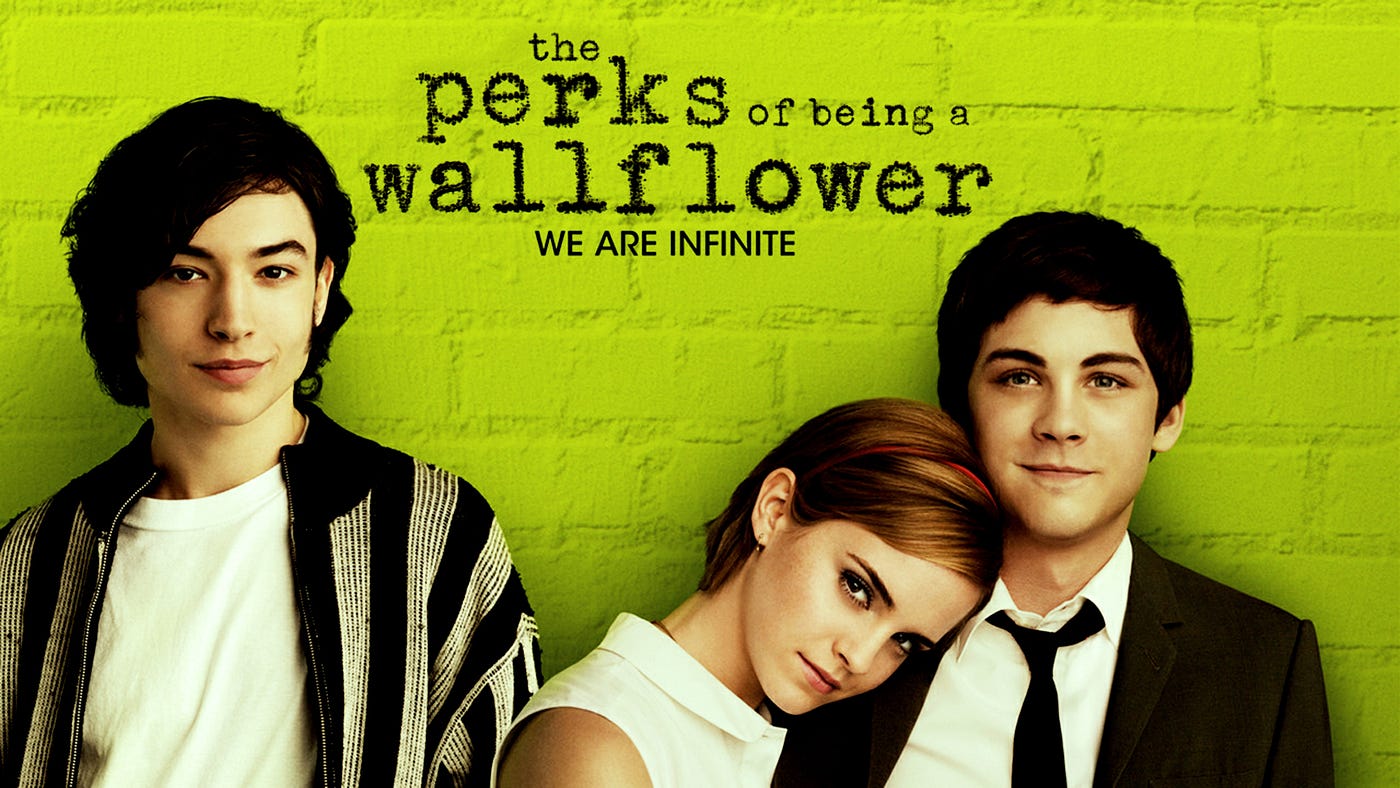
As a coming-of-age person, fittingly, I’ve always been obsessed with coming-of-age movies. The representation of the teenage experience as a moment in time where any problem appears catastrophic and any personal achievement or bliss appears life-changing correlates with these movies as they accurately show the strength of teenage emotions and how teens resolve to cope with those emotions. The Perks of Being a Wallflower does just this and more.

I’ve been long delayed in watching this movie, but have finally got around to it and I regret not having watched this movie long before. The Perks of Being a Wallflower, directed by Stephen Chbosky, and based on the book also written by Chbosky, follows freshman, Charlie, as he navigates the territory of his high school, counting down the days until he graduates. Charlie displays an outward disinterest in voluntarily engaging in social interactions with his peers, but beneath his outright rejection, Charlie seeks a meaningful friendship with someone who truly understands him.

Throughout the movie, Charlie’s obvious social awkwardness makes it difficult for him to interact with others without feeling self-conscious; however, underlying mental health issues, not clearly stated by Charlie, linger in his behavior. Charlie soon joins a fun and lively friend group with Patrick and Sam. Through an array of days that they spend together, whether studying or going on joy rides, Charlie finally gets to experience what it is to fulfill his teenage experience with real friends. I can relate to this greatly, as during my freshman year of high school, I also felt like a recluse. This caused me to have a negative outlook on my classmates and reject talking to people entirely; however, I soon found the people that I knew I wanted to be surrounded by, which changed my entire outlook on the rest of my teenage years.

By the end of the movie, we find out that Charlie’s Aunt Helen, whom he claimed he was very close to and whom we assumed was a family member he really connected with, actually abused him which led to Charlie’s eventual mental health problems, consisting of emotional explosions followed by blackouts. After a major blackout, Charlie finally receives the help he needs and begins to open up about his Aunt Helen. Overall, Charlie learns to be a wallflower, but not a doormat. He builds the confidence he needs to take control of the reigns of his life and fully participate in the next years of high school.

This message really resonates with me, and most importantly, I believe it resonates with a large population of teens today. The idea that it is a waste to stand by and not do what you want to do with your life is something that I will carry with me throughout the rest of high school and into my future.

The Perks of Being a Wallflower (DVD or book) is available to check out from the Mission Viejo Library. The book is also available to download for free from Libby.

I Must Betray You by Ruta Sepetys

I Must Betray You is a historical fiction novel, encompassing the struggles of a 17-year-old boy, Cristian Florescu, living within the communist regime in Romania, who is blackmailed by the secret police to become an informer on the American family his mother cleans for. Feeling trapped and overwhelmed by his anxiety, Cristian captures his oppressive life through expressive poems within his personal journal. Soon, he chooses to use his role as an informer to his advantage and fight in the revolution to overthrow the communist dictator.

The main developer of the plot of this novel is the nuance of relationships that Sepetys establishes between Cristian and several other characters. For example, Cristian’s relationship with his older sister Cici marks the development of his anxiety and the major theme of betrayal within the novel. Throughout the novel, Cristian suspects the people who surround him to be informers just like him; however, through doing so, he virtually creates an emotional distance, isolating himself and jump-starting an overflow of anxiety. Cristian never suspects Cici as he sees her as the only person he can trust and has always been there for him. Unfortunately, Cristian soon uncovers striking deceptions in Cici’s character that cause him to shun their relationship.

Cristian’s discovery regarding Cici highlights this book’s most impactful message: in a world where you can’t trust anyone, it hurts the most when you are betrayed by those you did trust. Even the strongest relationships can fall apart, but ultimately, it is the truth that sets you free.

Not only does this novel unveil an inspiring moral, but it also sheds light upon a chilling and emotional aspect of European history not often acknowledged. The 1989 period of violent civil unrest in Romania is captured in the development of Cristian’s character as a teen boy who succumbed to a life of confinement to a young adult who fought for a liberating future to pursue his dreams as a passionate writer.

I would recommend this novel to readers who enjoy historical fiction novels and readers who don’t. Its fast-paced storyline and escape into a fantasy that incorporates real historical events create a highly intriguing reading experience that I believe readers of any interest will enjoy. Through heartbreaking revelations and action-packed moments, Sepetys truly captures the inspiring impact that teenagers can make upon their society.

I Must Betray You by Ruta Sepetys is available to check out from the Mission Viejo Library. It is also available to download for free from Libby.

Out of the Easy by Ruta Sepetys

I have always struggled to find a book suitable for teens. Having little interest in whimsical, fantasy books and heavy-themed adult novels that I had trouble relating to, Ruta Sepetys’s Out of the Easy was the novel I had been waiting to discover. Her nuanced themes within her writing create intriguing and relatable characters and plotlines in her book. The most captivating aspect of her novel is the main character Josie Moraine. Through this character, Sepetys encapsulates the aspiring and anxious mind of a 17-year-old girl coming of age.

Set in the 1950s, Josie Moraine lives in the shadows of her mother’s notorious reputation as a prostitute. Josie longs for a life outside of New Orleans to cut the ties with her mother and fulfill her dream of attending an elite college, miles away from her haunting city. However, these dreams of escape begin to tremble at the news of a mysterious death in the Quarter. Torn between an investigation that might help her discover who she is and working to raise the money to leave New Orleans, Josie struggles to find the balance between what decisions will shape her future for the better. Undergoing the pressure of her reputation tainted by her mother, Josie’s important relationships, such as with her best friend Patrick and her lingering love interest Jesse, begin to falter. Josie’s strenuous search for her true identity causes everything she worked for to crumble, leading her to push away the people she needs and loves.

When Josie is in this state in the novel, Sepetys perfectly captures this pivotal moment as a teenager, when you feel like everything and everyone is against you and you begin to lose sight of why it is that you try. However, this feeling sheds light on the importance of knowing when to hold on and how to let go. Soon in the novel, Josie finds her strength and rediscovers her identity, not in her mother’s ignorance, but in the people who have always been there for her. Josie lets go of the murder investigation, which caused her to question the existence of her father and how the discovery of him could tell her who she is. But Josie no longer needs that reassurance and finds it, instead, in the future of who she will become.

Out of the Easy is one of those books whose structure makes you feel like you’re in a movie. The novel’s realistic dialogue and nuanced characterization enthralled me into Josie’s world and allowed me to have a haunting peek at what it meant to be a teenage girl in this period. I can’t wait to read this book again and unveil any details I may have missed.

Out of the Easy by Ruta Sepetys is available to check out from the Mission Viejo Library. It is also available to download for free from Libby.