Epic the Musical: The Ocean Saga (EP Review)

EPIC: The Musical is a concept musical loosely adapting the story of the Odyssey, the famous Greek epic. It has been fully released with 9 sagas, each featuring 3-5 songs, and the Ocean Saga is the third in line. If you haven’t listened yet, this will have spoilers – go check it out!

  1. Storm
    The opening song, Storm is mostly setting up the rest of the saga. Odysseus and his crew are facing a torrential storm (go figure), but Ody spots a floating island. He asks Eurylochus to prepare the crew to throw harpoons at the island, hoping to latch on and escape. Admittedly, the plot hook of a storm is underwhelming compared to the previous threat of a cyclops, but it is catchy nontheless. I often find myself humming the main lines when it rains! The vocals of the crew echoing back Odysseus’s lines drive home how he is what is keeping the crew afloat, and how they all listen to him. (Which certainly won’t come back to haunt us later).

2) Luck Runs Out

In this, Eurylochus expresses his doubts about Odysseus’ plan. This song is fascinating as it delves into the mindset of both of the characters. Odysseus’ main trait is that he is cunning, a trickster. He has relied on his wits to get the crew out of all situations thus far. Eurylochus is above all else, practical. We saw this in Full Speed Ahead, in his introduction, where he proposes the crew take the more brutal, but efficient way of raiding the island. Eurylochus is worried about the fact that Odysseus is relying on nothing but himself, that he has no safety net to fall back on. “How much longer,” he asks, “til’ your luck runs out?” Odyssseus tries to convince Eurylochus under the mantra of optimism, but he doesn’t relent. In the end, Odysseus pulls Eurylochus to the side and reminds him that he can’t be opposing his plans. The crews voices, interestingly, echo Eurylochus instead of Odysseus here, showing that they share his doubts and fears and are siding with him.

3) Keep Your Friends Close

Odysseus has successfully made it to the island in the sky, and is now requesting the aid of Aeolus, the wind god, to help them through the storm. Aeolus proposes a deal – the storm will be put inside a bag and given to Odysseus. Now, he will be able to get through, but should he open the bag, his crew will be blown all the way back. Aeolus’ “winions” feed into Odysseus’ crew the idea that the bag actually has treasure inside, tempting them to open it. Despite Odysseus’ best efforts to dissuade the crew and protect the bag, the temptation is too great and the bag is opened – blowing the ship in the complete opposite direction away from Ithaca.
This song overall perfectly accomplishes a light and bouncy feel in the first half contrasted with a deeper, dramatic tone in the second. Aeolus’ singer perfectly portrays the airy, whimsical feel of the wind god, and the segment where Odysseus has a dream perfectly serves to remind the viewer of what he is working towards – right before it is brutally ripped away. This song also deepens the growing divide between Odysseus and his crew, which has been a major theme in this saga. The usage of the flute perfectly suits Aeolus as well!

4) Ruthlessness

The usage of trumpets, Poseidon’s designated instrument, match his aggressive temper amazingly. Poseidon’s singer has some amazing vocals with growls and roughness that perfectly mature the brash nature of the god. Besides the musical aspect of this song, it also displays some important themes. The main conflict of EPIC: the Musical is the clash between the ideology of “Open Arms”, as referred to by Polites in the aptly named song, which is the idea that everyone should be treated with trust and kindness, versus the idea of Ruthlessness.

The Ocean Saga’s songs set up vital theme dominoes for the rest of the musical with their compelling instrumentation and devastatingly catchy lines. Next up: The Circe Saga!

SK8 the Infinity: TV Series Review (Spoiler-Free)

SK8 the Infinity is a lighthearted slice of life anime about skateboarding (which you probably could tell by the title). It’s a great show with lots of comedy and drama to boot, all wrapped up in a neat 12 episodes, making it a quick and easy watch!

The show is about two main characters: Reki, a skateboard-loving, overenthusiastic highschooler who skates at a dangerous underground course called “S”, and Langa, a quiet, blunt transfer student from Canada. The two quickly bond as they dive deeper into the top-secret insanity that is “S”!

Reki and Langa are incredibly endearing as protagonists, making it super easy to want them to succeed. The side characters all have great chemistry with each other, making the in-between character moments just as special as the dramatic skateboarding races.

Speaking of that, this show tends to be very overdramatic at times – which might not be ideal for someone who prefers very grounded shows. It does do a fairly good job at ramping up the unbelievability as the show goes on instead of throwing the viewer right in, but the point still stands. It’s best to go into this show with some suspension of disbelief. However, I personally found the drama to be incredibly entertaining and fun to watch!

In the end, I would highly recommend SK8- it’s got great characters, intense races, and fun episodes that I continue to rewatch. Check it out!

How to Reorganize and Decorate Your Desk

Most of us use a desk for…everything. Watching videos, playing games, doing hobbies, finishing homework. Desks tend to get cluttered easy, but with some good organization and decoration it becomes easier to direct your focus to the right things!

Cleaning

When cleaning, it helps to start with one place at a time. Try just doing one desk drawer or picking up one type of supply. You don’t even have to clean everything up in one sitting, you can do it over a day, over a week, etc.

Putting markers back in boxes, stacking papers, and throwing away scraps are good ways to start that aren’t too overwhelming. Do whatever works for you!

When deciding whether something should be thrown away, consider whether you might need it later or if it has sentimental value to you. Loose papers and plastics should be recycled, if possible.

Now for the redecorating!

Storage

Desk drawers get easily cluttered. It helps to divide them with trays so you can easily sort, say, pencils from pens, or highlighters from erasers. If your desk doesn’t have drawers, keep your supplies in a bag or container that’s nearby and in view. If your supply storage is somewhere harder to reach, you might get lazy and just leave things out on the table!

If you have a lot of cables to your devices, try separating them using a cable organizer to avoid tangles.

Desktop

If you find that your desk gets a lot of scratches or marks, you can try getting a protective deskmat that can withstand some blows.

Lighting

Lighting is a great way to enhance the mood of your work area. Maybe you want to try hanging fairy lights for something cozier, or desk lamps. Different colors can also change the feel of your desk, so try them out!

Wall Decor

Besides just the area on your desk, the walls around or behind it can be decorated! Try hanging up posters, prints, or if you dabble in art, even drawings of your own. Just make sure that whatever you use to hang them off won’t damage your walls, and you’re good! You can also hang up objects or props you love, as well as plants (real or fake!).

Habits

Cleaning your desk one time won’t solve the problem forever. When you take something out, put it back when you’re done. Plus, doing small sweeps regularly to rid your desk of trash is easier than letting it pile up.

And that’s it! Redoing your desk can help motivate you to finish work and make the space feel more comfortable. If you want more ideas, try looking up references, as they’re a great place to start. Good luck!

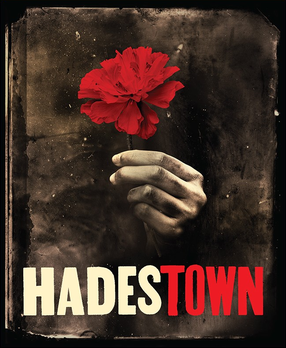
Hadestown: a Spoiler-Free Review

Recently I saw Hadestown live – a retelling of the story of Orpheus and Eurydice, in musical form. It was so good! The songwriting, the aesthetic, the performances, they all came together to form an amazing experience that I’d highly recommend.

As I said before, this musical retells the myth of Orpheus and Eurydice, starting from their first meeting all the way to Orpheus’ fated trip below. If you haven’t heard of the story yet, that’s completely fine! It makes your viewing experience perhaps even more dramatic, because you won’t know how it’ll end.

The show sets the Greek Underworld in a sort of industrial, Depression-era aesthetic, making for some really creative interpretations of the various features of Hell. It also does a great job of setting the contrast between the grungy, oppressive, sweltering Hadestown and the bright, airy, but freezing overworld.

The traveling cast that I saw was amazing (they performed in Segerstrom Center in late October) and the Broadway Official Recording is also spectacular. The emotion carries through even without the visuals!

Notably, the band is prominently displayed on stage along with the actors. Not only does this look insanely cool, but it gives the musical a different feel – something more personal. The songs of Hadestown are heavily inspired by different jazz genres, which is a breath of fresh air compared to other musicals.

Overall, I would highly recommend checking out Hadestown if you can!

EPIC the Musical: the Cyclops Saga (EP Review)

EPIC: The Musical is a concept musical loosely adapting the story of the Odyssey, the famous Greek epic. Currently, it has eight “sagas” released, each featuring 3-5 songs, and “the Cyclops Saga” is the second of these! Spoiler warning for the musical, of course.

  1. Polyphemus

In the intro to the saga, Odysseus and his crew sail to the cave that they were told about by the lotus eaters and promptly find and kill a bunch of sheep. However, they are confronted by a massive cyclops who lives in the cave, and whose sheep they have just killed. Odysseus attempts to bargain with it, and his wiles come into play. He is sure to give his name as “nobody” instead of Odysseus, and attempts to persuade the Cyclops to accept wine as a trade for the sheep. The Cyclops drinks the wine but refuses to let them go. Polyphemus’ (the name of the Cyclops, thus the name of the song) voice is done very well to be menacing and intimidating – you can almost visualize this hulking deadly figure. There are many small vocal melodies in this song that I find get stuck in my head from time to time.

2. Survive

Odysseus and the crew begin to make a stand against the Cyclops, but are swiftly taken aback by it bringing out a club and beginning to beat some of the crew to death. If you aren’t watching the musical with animatics (which I highly recommend) then it might not be as easily apparent to you: one of the crewmates that’s killed is Polites. This death affects Odysseus greatly for the rest of the journey: Polites was his best friend, and this is just after Polites encourages him to “greet the world with open arms”. Now, after Odysseus has tried bargaining with the Cyclops…look at where that got him? This song does a great job of raising tension through the beats of the club: each hit is another dead, and their cries for Odysseus (“captain!”) are utterly heartbreaking.

3. Remember Them

Thanks to Odysseus getting the Cyclops to drink the lotus wine in “Polyphemus”, it passes out. He and his crew manage to stab it in the eye. When the Cyclops attempts to get help, it says that “nobody” had blinded him. This is thanks to Odysseus’ introducing himself as Nobody earlier on and, of course, does not get him any assistance. Notably, Athena tells Odysseus to kill the Cyclops instead of just blinding him, but he refuses and tries to stick by Polites’ “open arms” philosophy. However, before they fully take off, Odysseus makes the mistake of turning around and telling the Cyclops his real name. Odysseus’ pride has gotten the better of him: he wants the Cyclops to know who beat him. This song causes a ripple of change that affects countless future events. If only he had just listened to Athena…

4. My Goodbye

In this song, Athena, who has been acting as Odysseus’ patron until this point, declares her separation from Odysseus. The two have a back and forth argument, each cutting deeper and deeper into each other’s insecurities. You can just feel the pent-up energy in the lyrics and the voice delivery, plus reiteration of Athena’s theme fading into the distance at the end of the song puts into perspective how alone he is. Teagan Earley, the voice of Athena, really shines here, and it is my personal favorite song of this saga.

EPIC: The Musical: The Troy Saga (EP Review)

EPIC: The Musical is a concept musical loosely adapting the story of the Odyssey, the famous Greek epic. Currently, it has seven “sagas” released, each featuring 3-5 songs, and “the Troy Saga” is the first of these!

Song 1: The Horse and the Infant

This song sets off the musical, starting off inside the Trojan Horse, one of Odysseus’ most famous tactical achievements. Notably, it establishes Odysseus’ main desire: to get back home to his wife and son in Ithaca. As he makes his way ransacking through Troy, a vision appears to him from Zeus, ordering him to make a heartbreaking decision. I love this song for its fast-moving lyrics and quick rhymes that sell the drama and tension of the scene. The instrumentals during the vocal break are also striking, setting up a danger motif that is repeated in many future songs.

Song 2: Just a Man

Odysseus has been faced with a decision. Kill a child or let him live, knowing that in the future the child will grow to take revenge on his family. In the musical, Odysseus’ instrument (the one he is most associated with) is the guitar, which switches types here to showcase his emotional side. It’s very striking and lamentful, and drives home the conflicted feelings Odysseus has.

Song 3: Full Speed Ahead

Odysseus and his crew begin sailing home after the grueling war. Eurylochus, his second in command, and Polites, his best friend, are both introduced. The song ends with Odysseus and Polites scouting out a strange island they encountered in hopes of finding food. I have to say, this is one of the catchiest songs in the whole musical. It also does a great job of foreshadowing with its lyrics: “But the problem’s not the distance / it’s what lies in-between”, of the dangers they will encounter ahead.

Song 4: Open Arms

Polites encourages Odysseus to let go of his coldly tactical mindset and be more welcoming, more kind, and “greet the world with open arms!.” On the island, they stumble across some creatures eating lotus fruits. After asking where they could find food, the creatures tell them about a cave to the east. This song has such a cheerful tone to it that it’s hard not to enjoy. The use of instruments like the kalimba and the marimba also add to the playful atmosphere so well.

Song 5: Warrior of the Mind

Odysseus is pulled into “Quick-Thought” by Athena, which is called her “signature move” by the creator. The two are pulled into an alternate reality space, and Athena scolds Odysseus for becoming soft, not being the “Warrior of the Mind” she expects him to be. Athena emphasizes her point by showing him the past, when he was young and she first started mentoring him. It ends with her telling him not to disappoint her. Athena’s motif is established in this song, along with her signature instrument of the piano. The vocals in this song are incredible, with Teagan Earley having such a powerful voice perfect for a strategy and war goddess.                

“The Troy Saga” is an excellent start to the Musical and does a great job of setting up the characters!

Circe by Madeline Miller: A Spoiler Free Review

Circe by Madeline Miller is a retelling of the witch Circe from Greek Mythology. She is the daughter of the titan Helios and a nymph. The gods, fearing her witchcraft, banish her to a deserted island. Here, she forges her path – honing her craft, meeting infamous figures of mythology, and being pitted against the wrath of men and gods alike. She’s torn between the mortal and the divine, and forced to grapple with what it means to be immortal. 

I really, really enjoyed this book. It’s one of the most unique stories I’ve read, chock-full of beautiful writing and characters. It’s definitely one I’ll be rereading for a long time to come.

In Circe, I particularly enjoyed the writing. The way Madeline Miller weaves her words into prose is mesmerizing. It’s almost lyrical in its flow, natural yet riveting. I would often read the same paragraph multiple times to soak in the words. This also comes into play as Miller describes the gods. She forgoes many physical details, instead describing things like the sound of their voice and the power in their presence. You begin to fear them the way Circe does. Additionally, the passage of time from the start to the end of the book is beautiful. At the end of the book, you look back and remember all she has gone through – it feels so long ago since she first stepped onto the island. You lived through it with her, in a sense. That feeling of passed time once I finished the book for the first time was overwhelming. 

No one book is enjoyable for everyone. Circe tends to be very character-driven rather than plot-driven and relies on mostly introspective focus. She is isolated on her island, after all. Thus, there are not so many dramatic action moments as dramatic personal moments. Plus, some consider the pacing to be somewhat slow and uneven, especially towards the latter half of the book.

All in all, I enjoyed Circe’s rich, bold 385 pages. It bursts with life and thought, and it holds a proud place displayed on my bookshelf. It is definitely a recommend from me. 

Circe by Madeline Miller is available to check out from the Mission Viejo Library. It is also available to download for free from Libby.

A Guide to Discovering New Books

Sometimes you get stuck in a reading slump. Maybe the last book you read was so good nothing seems to match it. Maybe it was so bad you’re starting to lose hope. Instead of pulling random books off the shelves, use these tips to strategically find books you’ll love.

(Tip 1: Preferences?)

A good start is identify what your preferences in books are. Instead of just randomly selecting books, try to think about stories you’ve liked before. What connects them? 

  • Genre. It can sometimes be deeper than just fantasy or realism. Maybe you love sci-fi romances, or you’re a sucker for slice-of-life.
  • Length. Some people think a book isn’t worth it if it’s under 70,000 words, and some people think that’s too much. Finding where you lie on this spectrum is a good way to make sure books aren’t too over- or underwhelming!

    (Tip Two: Authors)

Keeping up with the theme of looking back, tapping into an author of your favorite work is a consistently reliable way to find books you’ll enjoy!

  • Many authors have websites that list their complete bibliography. Explore their other works, paying attention to blurbs and reader reviews.
  • If you loved a particular series, see if the author has written other series in a similar genre or style.

(Tip Three: Recommendations!)

Lastly, a good way to find new favorites is to tap into your fellow readers! Ask some bookish friends, family, and others for recommendations. Sometimes you’ll find out you have a lot in common genre-wise, and sometimes you’ll end up reading something completely new. 

Actually, a good place to start is on this very blog! Check out some of the reviews people have posted to see if any seem to match your interests.

Feeling lost in the vast sea of books is a common experience. But hopefully, if you identify your reading preferences, explore the works of authors you enjoy, and tap into the recommendations of fellow bookworms, you’ll remember, the joy of reading lies in the journey of discovery. Happy reading!

7 Worldbuilding Element Ideas

Whether you want to write a story, draw some art, make a game, and more: worldbuilding is the core of your creative energy. But where to begin? Here are seven ideas to inspire you on your journey!

  • Urban Fantasy

Using the best of both worlds, in a setting like this you can have a character who texts and performs alchemy, who goes to college and also goes on quests. The possibilities are endless!

  • Floating Islands

Need I say more? The land of this world is locked in a stagnant, floating position above the ground. Cities are connected by bridges. The ground world is overrun with poisonous flora and fauna. Will anyone ever leave?

  • Timezones…Literally

In different parts of the world, time moves slower and/or faster compared to other regions. Going on a week-long vacation in one region can mean a 2-year disappearance in the other…

  • Dragons with Different Hoards

In most fantasy worlds, dragons hoard gold and treasure fiercely, fighting off intruders who come to invade. But what if they guarded other things: a library of books, a garden of precious fruits?

  • Gravity Seasons

As our weather patterns change over each year this world’s gravity changes. It may become more or less intense, or even switch directions…?

  • Energy Parasites

Taking the form of a firefly, these sap the energy from people, causing them to become increasingly demotivated, tired, and pliant. Hopefully, the characters notice before it’s too late…

  • Raft Cities

In this world, a flood spilled over the land thousands of years ago. From the materials of the plants and animals who have adapted to this water world, the humans of today survive on rafts floating on the endless waves. They are no longer the apex predators: what is beneath the surface is far more powerful…

Hopefully one of these inspired you to create your own fantasy or sci-fi world!

The Benefits of Classroom Cameras

According to the National Center for Education Statistics, in 2020, 91% of public schools reported using security cameras to protect their students. These devices are certainly a positive force on campuses. They can work to deter potential threats and catch bullying and theft in the act. Security cameras should be allowed in school classrooms.

Surveillance cameras in classrooms can catch theft, bullying, and other crimes. According to a survey conducted by Campus Safety Magazine, 78% of schools using cameras reported them to have helped prevent crime with nearly one in three describing them as having frequently helped. As seen above, schools themselves have announced the beneficial effects of cameras on campus; therefore, inside classrooms should be no exception. Surveillance indoors can make a huge impact on safety and security in schools. Some people have claimed that security cameras invade privacy, but classrooms are public spaces. They’re not private in the way a bedroom or a bathroom is. School and classroom cameras shouldn’t invade students’ privacy any more than regular cameras in grocery stores or libraries. Altogether, security cameras in classrooms work to dissuade students from misdemeanors.

Surveillance in classrooms is beneficial for keeping students and their possessions safe. There have been many instances where security cameras in schools have caught criminals or protected individuals. Campaigning against security cameras in classrooms is only making school a more dangerous place for students to be. Understanding the benefits of these devices will allow schools to ensure the safety of students.