To Kill A Mockingbird

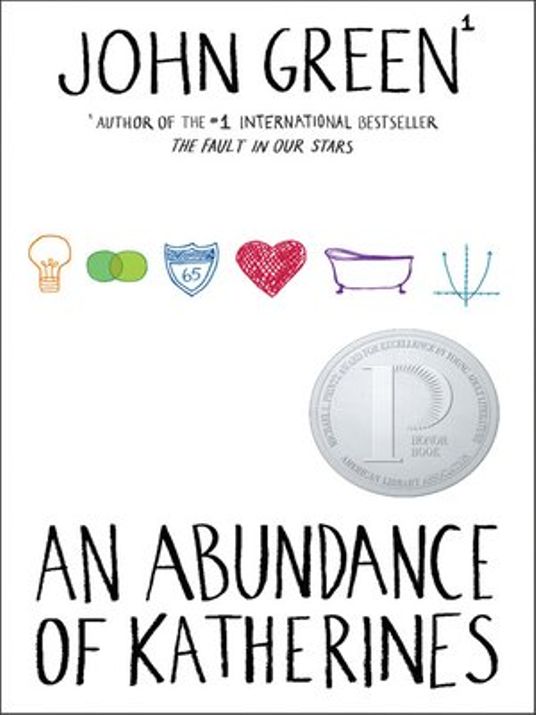
It’s that wonderful time of year again… the end of first semester freshman year and the beginning of the enduring English 1 ritual: To Kill a Mockingbird.

I’ve heard a lot of complaints about TKaM, usually about how boring it is and how no one can understand what the heck is going on. But I beg to digress, because though it’s one of the most commonly read books in the high school curriculum, ever, I really enjoyed reading this book.

Obviously, the story of TKaM is pretty famous already, and I think it’s important that high schoolers are forced to read a book that confronts issues still relevant in our society today. Especially in a time when books are being banned and voices are being silenced, it’s important to have this classic in our schools and education system.

There have been concerns about the prevalence of the n-word, about ideas of white saviorhood in the book, and also opposition from others who want to suppress this unsavory part of American history. But the tragic story of Tom Robinson is an important lesson, and despite some valid concerns, I think To Kill a Mockingbird fittingly and engagingly introduces an idea and a time period that shouldn’t be erased from our school books.

Moreover, I think it’s just a well-written story and an enjoyable read. Maybe it’s time we stop complaining about the “weird” wording and appreciate it for what it truly is.

To Kill a Mockingbird by Harper Lee is available to check out from the Mission Viejo Library. It is also available to download for free from Libby.

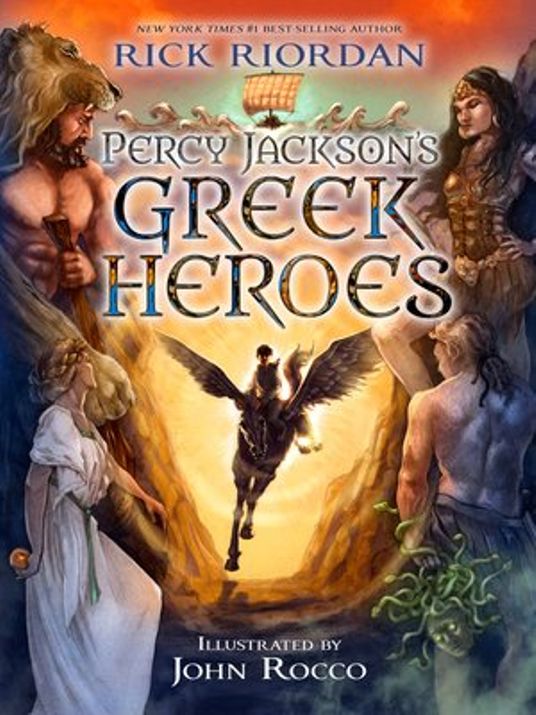
Percy Jackson’s Greek Heroes

As a newly converted Latin nerd making my first odyssey into the perilous (root word: periculum) land of Roman jargon, I’m deeply appreciative of my 3rd grade obsession with Percy Jackson. Not only am I able to seem even nerdier among my peers, I’m also glad for how Percy Jackson has widely popularized Greek and Roman mythology.

Now, re-reading one of the most information-dense books (Percy Jackson’s Greek Heroes), I’m surprised at how much information is cleverly packaged in Percy Jackson’s sarcasm and humor. It doesn’t feel like reading a textbook, but I’m still gaining an immense amount of information. And that’s the true power of Rick Riordan’s bestselling books: the ability to take something that’s always been more niche and turn it into something fun.

I like the stories themselves too: Rick Riordan tells the classic myths of Heracles, Medusa, and the Minotaur, but also the stories of Otrera, queen of the Amazons, or Atalanta, the great huntress. It’s a snarky, modern take on classical myth that retains their initial meaning.

Take the story of Arachne: an incredibly talented mortal seamstress with skills that rival those of Athena. Her pride got the better of her after she challenged Athena to a weaving competition, and the end is not pretty. But Riordan also points out the other, less-mentioned moral of the story: that the villagers who once worshipped Arachne were just as willing to betray her. Ultimately, the ugliest characters in the story are not the prideful gods in Arachne’s tapestry, or the spider she becomes, but the hypocrisy of Arachne’s own community.

All in all, I still love Percy Jackson, for all of its minor historical inaccuracies. It brought classical mythology into a modern spotlight, and it’s just a truly fun and enjoyable read. You might even pick up a few facts and morals in the process. Just don’t forget to sacrifice a goat after your read.

Percy Jackson’s Greek Heroes by Rick Riordan is available to check out from the Mission Viejo Library. It is also available to download for free from Libby.
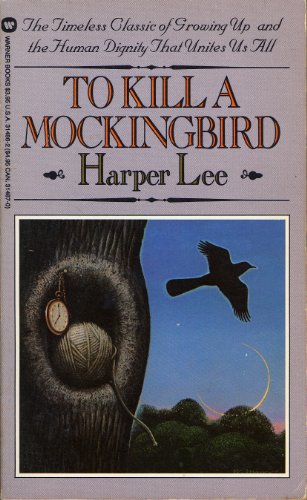
An Abundance of Katherines – and how it’s so much more than just a road trip

When two genius best friends embark on a road trip, they don’t know they’re choosing a journey that will change, not just the way they think, and the people they are. 

Funny, light-hearted, and ultimately thoughtful, John Green’s 2006 novel, An Abundance of Katherines, follows the story of child prodigy Colin Singleton as he finds himself in the tiny town of Gutshot, Tennessee. Surrounded by strangers (and his best friend Hassan), he discovers a summer job, new friends, and a different way of seeing himself. With his newfound friends, he realizes life doesn’t need to be successful to be satisfying. It’s a light-hearted story that’s fun, silly, and a little romantic. (Side note: Am I the only one that loves the math-y graphs in this story?)

And the questions Colin Singleton grappled with in Gutshot are questions we’ve all struggled with ourselves; Have we wasted our potential? Why does no one like us? Why are we unsuccessful? And where does the future lie? 

We’ve all felt the need – no, the urge – to do something big. We’ve all wanted to be successful, to leave our mark on history. Sometimes, it’s something we owe to the expectations of others, but as often as not, it’s our own desire to leave our mark on history, to live up to the markers we set for ourselves.

In our world today – a world that is more connected than ever – it can be easy to feel overwhelmed by our “inadequacy”. The accomplishments of millions of other strangers are easily accessible at our fingertips; and that can be crushing to our self-confidence and image.

At a time like now, it’s especially important to recognize that our lives should not be defined by measures of conventional “success”. We are not the college we attend (or don’t attend), the house we buy, or the salary we earn. We are real, living people; and people need to take breaks, enjoy ourselves, and ease up a bit sometimes. In the rat race towards some empty title – in Singleton’s case, to fulfill his intellectual potential, and to matter – we forget our original purpose, and waste our lives chasing an empty title because we’ve forgotten what else we can do.

The book isn’t without flaws; the plot is a little predictable, Lindsay’s boyfriend is a little too cliche, and the wild hog is a bit too much of a coincidence. But that’s ok, because it’s still a fun read and the quick, endearing plot will keep you flipping to the next page.

In the words of Lindsay Lee Wells, one of Singleton’s new friends, “It’s so easy to get stuck. You just get caught in being something, being special or cool or whatever, to the point where you don’t even know why you need it; you just think you do.”

Maybe that’s a wake-up call we all need. Not just Colin Singleton, one-of-a-kind child prodigy, but all the people who are stuck to a goal we might need to refresh.

Ultimately, the story ends on a happy note (no spoilers!!!), and his story of self-discovery is one we can all share. Maybe we can all embark on this journey, one that’s so much more than just a road trip.

An Abundance of Katherines by John Green is available to check out from the Mission Viejo Library. It is also available to download for free from Libby.