Book Review: Sword Art Online: Progressive 1

Sword Art Online: Progressive, written by Reki Kawahara, is the first book in a series by the same name. SAO: Progressive is a spin-off from the author’s main series, Sword Art Online, and exists to show the floor-by-floor progression throughout the floating castle of Aincrad. The novel primarily follows Kirito, a normal if somewhat awkward boy, who happened to be one of the beta testers for SAO. Progressive does a lot of things well and I genuinely believe it to be one of the best-written stories to come out of the Sword Art Online franchise. Also fair warning but while SAO Progressive can be read without foreknowledge of the series, this review can not.

One thing Progressive does very well in comparison to other works from the same series is the characterization of the protagonist. Kirito, in the other SAO stories, is characterized poorly at best. In the original novels, the author tries to make him seem like an awkward but relatable guy something which is happened by all the cool and awesome powers and people constantly throwing themselves at him while on the other hand, the anime decides he doesn’t need a personality if he’s a badass. Meanwhile, Progressive actually lets the boy have a personality that is honestly pretty endearing. With Progressive’s Kirito it seems like he has a variety of reactions around various people and situations. In situations where he gets to talk about the game, he tends to be pretty well-spoken while he tends to flounder in any social context. Also, he did mental math to determine exactly how big a cake was and then how much he would get if he got half the cake which I find more hilarious than I probably should.

Another thing that I know I and many others enjoy about Progressive is actually getting to see more of the game Sword Art Online. In the original series, the author had a tendency to skip around and only really focus on the main romance and a few minor side stories while in this story we get to see much more of the castle of Aincrad. It’s really interesting to see how things play out and what new floors look like not to mention mysteries that begin building up.

All in all, I think this is a pretty good read especially if you already like Sword Art Online or at least the concept it presents.

Book Review: Re:Zero -Starting Life in Another World

Re: Zero -Starting Life in Another World- by Teppei Nagatsuki is the first novel in the still-running series by the same name. Following series protagonist Subaru Natsuki the first novel in the series Subaru in his attempt to find his footing in a new world and his attempts to grasp the workings of his only ability in the new world: Return by Death.

In order to understand the plot of this story and why I believe it to be one of the greatest isekai(other world) series of all time, you first must understand the specifics of two things: Subaru himself and his Return by Death ability. Starting off with Subaru, one of the things that makes Re: Zero great is that Subaru sucks as a person, at least to begin with. It’s not that Subaru is a monster, to begin with, far from it. What Subaru is, is a man-child who was never forced to grow up and mature, leading to him making both selfish and selfless decisions entirely based on what he is feeling at the time. One very interesting thing when you compare Re: Zero to other isekai or even other fantasy series is that unlike them most of Subaru’s problems and deaths could have been prevented if he was just a better person.

Speaking of Subaru’s multiple deaths I should probably get around to explaining how that is even possible. You see in most stories where protagonists are summoned to other worlds those protagonists are typically blessed with some sort of special something to aid them on their journey. Maybe they were given an instinctive understanding of that world’s magic or maybe they just got a super powerful shield that will always protect them. In the case of Subaru Natsuki however, he gains the ability to reset time back to a checkpoint he has no control over when he dies. This ability is very important because it helps tie into one of the main throughlines of the series: Self Improvement.

As mentioned above Subaru is something of a idiot who tends to cause his own problems. Grant not all of the issues he deals with are his own fault but most of his deaths are caused by things he could very well avoid. However thanks to Return by Death Subaru is able to see how things go wrong and try to change things. It’s not easy for him and in novel 1 it takes him three whole death loops to even realize he is in fact returning by death, but after that he’s able to figure out what he’s doing wrong and improve upon his previous attempts. This in turn lets him escape the loop he was trapped in.

There is definitely a lot I left out of this review but this review is running kind of long so I’ll say this, Re: Zero is one of the greatest works of fiction I have ever read. It is excellently written and makes for extremely effective psychological horror for the shut in nerds who it is aimed towards. However, even to those not a part of the target audience I would still very much recommend Re: Zero -Starting Life in Another World-.

Original vs. Parody: Sword Art Online

Sword Art Online (SAO), written by Reki Kawahara, is a name that sparks many arguments among anime fans. Some claim it to be one of the greatest shows ever made while others claim that calling it hot garbage is an insult to garbage. Meanwhile, SAO’s YouTube parody counterpart Sword Art Online Abridged tends to be much more beloved by general anime fans with much fewer people complaining about the negative aspects of the show. The review/dissection seeks to examine the two shows to discover why SAO Abridged is considered to be a better show than its original.

Likely the first thing to talk about when discussing why people like SAO Abridged over SAO proper is the characters. In the original Sword Art Online, most of the characters had very, very bland one-dimensional personalities. The general lack of personality in these characters usually meant that the storylines arising from them tended to be rather flat. Additionally, the main protagonist of the series, Kirito, shares this lack of defined personality traits or is at least perceived to. Meanwhile, SAO Abridged infuses even minor one-off characters with personalities. From the NPC Gary and his goal to save his family to the now psychopathic protagonist Kirito every named character in Abridged has personality in spades something which makes it vastly superior to the original.

The next thing to be talked about in SAO Abridged is how it improves upon the character arcs. In SAO Kirito does not have so much a character arc as he effortlessly transforms from a (supposedly) cool loner to a (supposedly) cool loner with a wife, a kid, and a close group of friends. Meanwhile SAO Abridged follows its version of Kirito on his journey to becoming a better person because he frankly is not a good person at the series start. In fact in episode four of Abridged Kirito is described by one of the characters as “like, the worst person I’ve ever met.” However, Abridged improves upon the original SAO by having Kirito struggle through a variety of setbacks to eventually become a better person.

The last thing to talk about with SAO Abridged is the improvements to the story. Now, I’m not going to bring out the dead horse of the community of the “lol I forgot” comment because I disagree with that necessarily being a plot improvement. However, Abridged has many more improvements to the plot beyond the aforementioned scene. For example, episodes five and six are improved by addressing the fact the original show’s version of the plot only works as an idiot plot and in Abridged the plot instead works because Kirito does a wee bit of trolling. Other plot improvements include the removal of the incest subplot (don’t ask if you don’t know) and the fact that Asuna retains her personality in the second arc.

In conclusion there are many a reason SAO Abridged is considered to be superior to its original incarnation, not all of them mentioned here because there are way to many. So to anyone who wants a surprisingly thought provoking series with admittedly raunchy humor I would highly recommend SAO Abridged. And to those who want a power fantasy with a protagonist who is very easy to project onto, I present you with SAO proper.

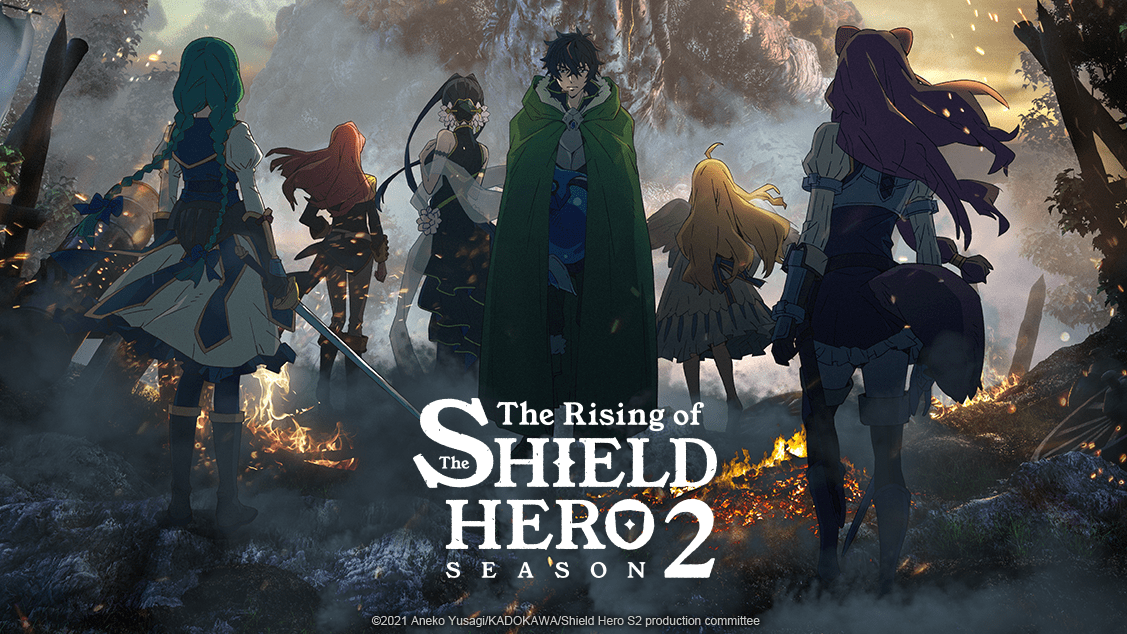
Adaptation Review/Comparison: The Rising of the Shield Hero Season 2

Before I begin the review proper I would like to preface that this review is mainly for those who are already aware of the Rising of the Shield Hero and while I will attempt to add context this review is more for those trying to decide whether to continue watching and/or reading the shield hero rather than those trying to decide whether to pick up the series or not. With that out of the way let’s start the review.

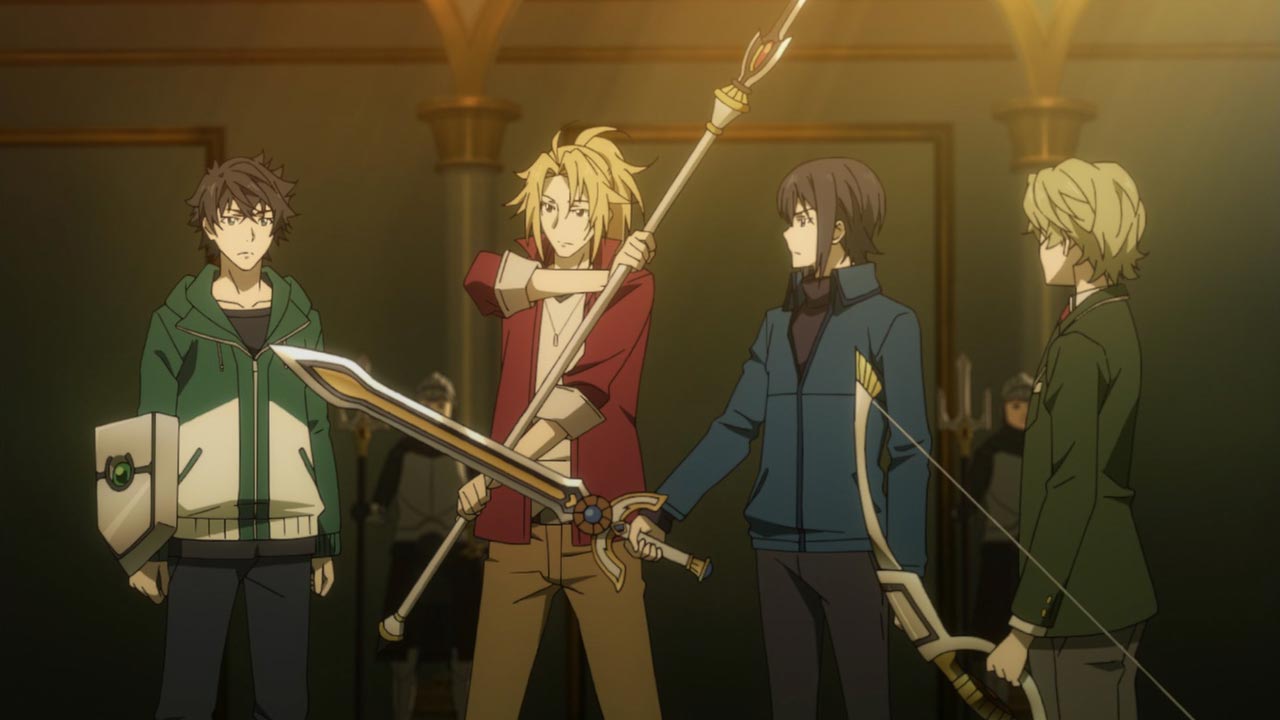
Now for those who decided to keep reading after that intro paragraph The Rising of the Shield Hero is a series of Japanese light novels written by Aneko Yusagi which was then adapted into an anime. The series follows the titular shield hero, Naofumi Iwatani, and his journey to save the world along with three other heroes.

The section of the story we are covering here is what is covered in the second season of the anime and in light novels 6-9. Now right off the bat, the anime decides to cripple itself by choosing to not adapt around 75% of the sixth novel which leads to an other-all state of confusion for anime watchers. You see much of the sixth novel is spent on introducing new characters and establishing new concepts and plot points. For example, in the light novel, we are introduced to the character of Eclair Seaetto who was tasked with helping the heroes learn actual combat abilities rather than just spamming their magic weapon skills like they had been. She also ends up beating the Sword Hero in a sword fight in order to prove a point which both highlights her skill with a sword and the fact that the Sword Hero is an awful swordsman.

Anyway, copying the anime in skipping that part we move on to what fans refer to as the Spirit Turtle arc. For a short summary of the plot for this part, in the world of the shield hero, there are four guardian beasts tasked with saving the world should the heroes fail to do so. However, a villain from another world going by the name of Kyo decided that he wanted to awaken the spirit tortoise early so that he could steal its power. Now unlike the previous section which only exists in the novels the spirit tortoise arc exists in both the novels and anime and both have their own pros and cons.

On one side of the comparison, the light novels do a much better job of highlighting the desperation Naofumi feels when fighting the spirit turtle and the sense of dread it brings. Not only do we hear Naofumi’s panicked thoughts but he also highlights how even with his insane level of defense the spirit turtle still manages to harm him. The novels also add the fact that the turtles’ servants act like parasites, using the still living bodies of their victims to grow their numbers. If the novels have one weakness it is that they are a slog to read through. This arc of the story happens to be rather stretched out and honestly it was painfully boring to read at some points.

On the other side of things, while the anime doesn’t do as much to establish the threat of the turtle it does have some definite benefits. For one thing the anime adds more scenes with the character of Ost Horai which give her more depth as a character and make it more painful when she dies at the end of the arc. Additionally, the anime was able to change the boring slog of the novels into mindless action which is a definite plus. If I have to be honest I would much rather watch the animes adaptation of this part than reread the novels.

The adaptation for the next arc, however, cements the Shield Heroes anime adaptation as less than stellar. To the anime’s credit they do at least cover this arc’s main plot points(Traveling to the other world to avenge Ost, meeting the Hunting Tool Hero, Raphtalia gaining the Legendary Katana Vassal Weapon, Fighting Trash 2, and killing Kyo) and it does alter a few things to make more sense like not spitting Raphtalia up from the main group immediately after entering the other world. The problem with this arc in the anime is that they only really cover the main plot points and skip over more minor but still important scenes such as Naofumi acquiring his Demon Dragon Shield which serves as his weapon of choice for quite some time in the novels.

In conclusion, if you want to truly experience the story of The Rising of the Shield Hero to the fullest I would highly recommend reading the light novels as while the English translation can be questionable in some areas it provides a better over-all experience with the story.

Book Review: The Heroes of Olympus The Mark of Athena

The Heroes of Olympus: The Mark of Athena by Rick Riordan is the third book within the Heroes of Olympus series. Within this book, the seven demi-gods mentioned in the prophecy of the seven finally meet up and begin their quest. Of those seven demi-gods, this book shows the P.OV. of the four of them who are Greek demi-gods, namely Percy Jackson son of Poseidon, Annabeth Chase daughter of Athena, Piper McLean daughter of Aphrodite, and Leo Valdez son of Hephestus.

Moving more into the plot now, this book places a lot of emphasis on the struggles and furthermore, the doubts of the protagonists. With Percy we see him being to think more about his role on the team, his fatal flaw of loyalty, and how that affects him. Percy is grappling with the fact that he is insanely loyal and protective of his friends and therefore struggles with letting them go and do their own thing because he’s worried that if they do and they get hurt it will be his fault.

With Annabeth we mostly see her struggling with her doubts about if she can complete the quest her mother gave her. Basically, Annabeth is given the task of following the Mark of Athena and recovering the Athena Parthenos, which was stolen by the Romans several years before the story started and is now in the hands of the antagonists. This quest becomes even more important when it is learned that the recovery of the statue is important to fixing the gods’ case of fantasy dissociative identity disorder(don’t ask).

Piper’s issue is honestly mostly petty drama with her boyfriend who spends most of this book passed out so we’re skipping over that dumpster fire to talk about Leo. So Leo’s issue is due to the fact that he is something of the odd man out in the group of heroes. Leo has a lot of issues combining to make him the proverbial black sheep with the two most notable being that his being possessed by ghosts at the start of the book starts a fair bit of the book’s conflict and the fact that he is the only member of the seven to not be in a relationship. The second one may seem minor by comparison but given that there are several points where he is referred to as a seventh wheel it’s pretty clear that it affects him a lot.

I honestly have to say that I enjoyed this book more than the previous two in the series. Not that the first two were bad it’s just that most of the “character development” there was a character getting over trauma related to one of their powers or with Percy and Jason dealing with their amnesia (long story). In conclusion, I would say that this series is definitely a good one and that its author really earned his title of “the storyteller of the gods.”

The Mark of Athena by Rick Riordan is available to check out from the Mission Viejo Library. It is also available to download for free from Libby.

Book Review: Konosuba: God’s Blessing on this Wonder World: Oh! My Useless Goddess (Yes I am aware the title of this book is overly long)

Okay, so Konosuba I’m not writing out that whole title again is an isekai comedy written by Natsume Akatsuki and is the first novel in a long-running series. (Also for those who don’t know isekai is a Japanese word for other world and will be used frequently in this review). The series follows its protagonist Kazuma Sato as he blunders his way through his journey where the only thing he really has going for him is his above-average luck and genre awareness.

So as mentioned above Konosuba is extensively a comedy. Said comedy is mostly drawn from subverting tropes commonly found in its second genre: Isekai. You see the isekai genre as it currently exists mainly contains teenage male power fantasies; stories where a normal nerd can gain insane amounts of strength, power, and magic with about as much effort as it takes to open a bag of chips. This is not the case for Konosuba’s protagonist however as he is recognized in-universe as one of the weakest adventurers in the guild. Additionally, this is not something that changes later in the book with Kazuma’s biggest achievement by the end of the novel being the fact that he killed a larger-than-normal amount of sentient cabbages during the harvest.

Another bit of comedic subversion in this book is how Kazuma’s team is set up. You see in normal isekai stories the protagonist is typically surrounded by a party whose gender ratio generally leans in the opposite direction to the protagonist, i.e. if the protagonist is male there will be a disproportionate amount of females. However, the subversion with Kazuma’s group is not that they are mostly male but rather the fact that they are completely worthless. With a group that consists of a healer who refuses to do anything unless she’s in crippling debt, a wizard who only knows one spell that can be cast once per day, and a paladin who can’t hit a target that is standing right in front of her Kazuma almost has to play the role of babysitter for the group of idiots that he found himself with.

None of this is to say that Kazuma himself is not also an idiot, he is, just less than the others. For example, the only reason the group’s healer, Aqua, is with the group is because Kazuma dragged her along. You see in this novel Kazuma is brought to his new world after he died a tragic death in our own. Upon dying he met Aqua, who claimed to be a goddess who could send him to a new world with one item or power of his choosing. However since Aqua mocked the way Kazuma died, in an act of pettiness he decided to bring Aqua with him to the new world.

However, I have gushed about this book for long enough and need to finish this review somehow. All in all, I personally believe that if you are a fan of the isekai genre this is a novel worth picking up and if you aren’t this novel still contains its fair share of good jokes.

Spoiler Free Book Review: The Rising of the Shield Hero Volume 1

The Rising of the Shield Hero, by Aneko Yusagi, is the first novel in a long-running series that goes by the same name. The books follow Naofumi Iwatani, an average Japanese college student. One day Naofumi finds a mysterious book in his library that transports him to another world alongside three others.

Those from the world that summon them quickly explain that the four of them are the Cardinal Heroes of legend, destined to save the world from the Waves of Destruction. However all is not as it seems and Naofumi soon finds himself betrayed stripped of his reputation, money, clothes, and everything else except the shield on his arm marking him as a hero. And now that the plot synopsis I can finally begin discussing why this book is so good. One thing this book and series does very well is writing an antihero protagonist. Now, Naofumi isn’t a great person, he commits too many morally dubious actions to qualify as a paragon hero or anything of the sort. At the same time, he also isn’t a heartless monster, as while the other three heroes are focused on fighting big monsters for fame or glory, Naofumi instead focuses on ensuring people are safe. Thus, Naofumi is neither hero nor a villain, he is an antihero, a hero with unheroic qualities.

Now there is definitely more I could touch on with this review but that would result in delving into spoiler territory so I’ll just end off with an overall review. The Rising of the Shield Hero is a well-executed revenge fantasy novel so if you’re a fan of that sort of thing I would recommend checking it out.

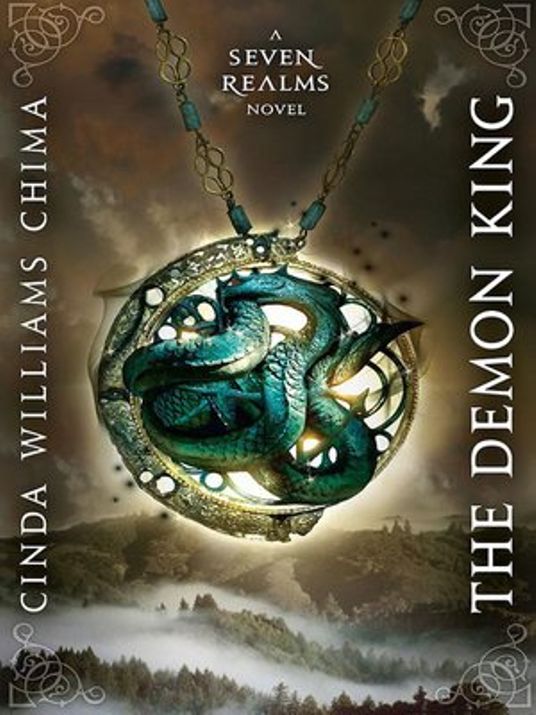
Book Review: The Demon King by Cinda Williams Chima

The Demon King, by Cinda Williams Chima, is the first book within the Seven Realms series. The series follows multiple protagonists with the main two being reformed thief Hanson “Cuffs” Alister and princess heir, Raisa ana’Marianna. While the two protagonists have next to nothing in common aside from living in the same city you know that almost no authors would create two protagonists and not have them interact.

I’ll start with Raisa’s P.O.V. first because I personally like it less and I want to get it over with. Being the heir to the throne in her nation Raisa is expected to marry the second she is eligible because this is fantasy medieval Europe and how else would you start teenage rebellion without giving the protagonist something to rebel against? Anyway Raisa’s half of the story basically trying to figure out what kind of Queen she wants to be and which of the two men in her life she likes more; Amon, the son of the captain of the guard and her childhood friend or Micah Bayar, son of the high wizard and a powerful mage in his own right. Ironically, Raisa can’t be with either of them due to age-old magical ceremonies as well as politics. Nothing really gets resolved in this book however because this series has four books and there wouldn’t be a plot if everything got solved in book one.

Now onto my favorite character of the novel Han. Hanson as mentioned above is a reformed thief. Not mentioned above however is the fact that Han was actually the Streetlord of Ragmarket which is basically the equivalent of being a mob boss in real life. This isn’t really relevant to what I’m going to talk about but I just wanted to mention it. Anyway Han’s half of the story is more complicated than Raisa’s which is funny because her half involves politics. Han’s story is two fold; part of it involves him trying to find a legal way to make money to support his family while the other is more complicated. Essentially one day Han and his friend Dancer were on a sacred mountain and found some wizards setting fire to it. In order to stop them Han threatens to put an arrow through their leader and makes him hand over his amulet which is the source of a wizards power in this series. The other half of Han’s story is the tragedies that start occurring because he stole said amulet. 

Personally, I think the reason I liked Han’s character so much was because of his struggle of trying to find honest work, which as someone in the latter half of high school I can sort of relate to. Or it could be my obsession with gentleman thieves showing up, one of the two.

All in all, I think that this book is a pretty good one if you like high fantasy novels.

The Demon King by Cinda Williams Chima is available to check out from the Mission Viejo Library. It is also available to download for free from Libby.