How to Make Hakka Style Stir Fry

Image from https://www.seriouseats.com/hakka-style-stir-fry-with-pork-belly-and-squid-recipe

Also called “Hakka Stirfry,” Hakka Style Stir Fry is a popular dish in Taiwan. Originating from the Hakka people, a subgroup of the Han Chinese from Central China, this dish is salty, fragrant, and greasy, blending delicious umami flavors. Today, around 15-20% of the Taiwanese population has some kind of Hakka blood. This recipe makes 6 servings.

Ingredients:

8 ounces of dried cuttlefish
8 ounces pork belly
8 ounces of Taiwanese celery (1.5 inch long strips)
8 ounces of green onion (white parts, 1.5 inch strips)
4 pieces of marinated pressed bean curd (1.5 inch strips)
1 red chili pepper (de-seeded, thin strips)
2 cups of warm water
3 cups of cold water
1 tablespoon of cooking oil
Seasoning:
2 tablespoons of soy sauce
5 tablespoons of rice wine
½ teaspoon of white pepper
½ teaspoon of salt
soy sauce rice wine white pepper salt

Preparation:

  1. Soak cuttlefish in 2 cups of warm water for 1 hour, remove the outer skin, clean and cut into long strips (1½ inch x ½ inch). Set aside.
  2. Boil cold water in pot on medium heat, add pork in boiling water for 2 minutes before turning off the heat. When the liquid is cool, remove pork and rub with 1 teaspoon of salt, let it marinate for 30 min. Remove pork skin and discard, cut remainder of pork belly into the same size strips as cuttlefish.
  3. In a heated frying pan or wok, add fattier pork strips first, brown until fat is drained, add the rest of the pork strips, stir until all meat is browned, remove meat from pan and set aside.
  4. Stir fry bean curd in the same pan until slightly brown, remove bean curd and set aside.
  5. Add cuttlefish in the pan, stir fry on medium low heat for a few minutes, drizzle 3 tablespoons of wine slowly around the edge of the pan, and continue stirring until fragrant.
  6. In a clean hot pan, add 1 teaspoon of oil, add cuttlefish, and stir on high heat, add soy sauce, turn heat to medium, add green onions, stir for a few seconds, add celery, chili pepper, pressed bean curd and pork, mix thoroughly. Add ½ teaspoon salt and 2 tablespoons of wine, stir until wine is absorbed. Sprinkle with white pepper.

Preparing this dish shouldn’t take more than an hour, and is suitable for everyday meals, or in larger portions, even for special occasions.
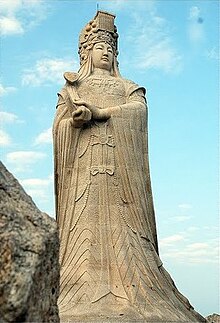
Mazu – Sea Goddess and Queen of Heaven

Mazu is a respected female deity in Taiwan. She is known for offering help to endangered seafarers using supernatural aid. She is also known as the Empress of Heaven, the sea goddess, and other names. Mazu is said to have been a young woman with magical powers, who was given life after death after a tragedy. The legend originated in China during the 10th century (900s), then traveled down the coast and across the strait to Taiwan. Word spread, temples sprung up, and Mazu became a very powerful figure on the island.

Mazu, or Matsu, is the deified form of Lin Moniang, a shamaness from Meizhou Island. She was said to have been born to Lin Yuan, a local fisherman. Her birth happened under Liu Congxiao’s reign, a Quanzhonese warlord in the Min Kingdom, on the 23rd day of the third month of the lunar calendar, in the year 960. This was the first year of the Song dynasty. Despite being awfully quiet, she was blessed with many abilities even as a normal child, such as being able to predict the weather and experiencing divine visions. Mazu is a goddess as the result of a miracle that occurred while she was a teenager.

One day, her father and four brothers were out on a fishing trip off of Meizhou Island, when suddenly dark clouds began to fill the sky. A hurricane that they could not conquer had fallen upon them, blocking out the sun and rocking their boat with huge waves until it capsized. At the same time, Lin Moniang (mortal Mazu) was weaving at her loom, when she suddenly fell into a trance and turned into her pure spirit form. She transported herself to her father and brother’s boat and managed to save her brothers from the storm. Unfortunately, her mother saw her in her trance and woke her up, preventing her from rescuing her father, who was still in the ocean. Out of depression, Lin Moniang climbed up to a cliff and jumped into the sea, but right before she hit the water she transformed into a beam of celestial light and ascended to Heaven. In Heaven, she was rebirthed as the goddess we now know as Mazu. As the light disappeared, a rainbow appeared in the sky, signaling the end of the storm.

Sanchong Yi Tian Temple in New Tapei, Taiwan, with Mazu as the principal deity

She is guarded by two demons, Qianliyan (“Eyes That Can See One Thousand Miles”) and Shunfenger (“Ears That Can Hear the Wind”). Before they became her guards, they were both in love with her, and she made a deal with them that if they could defeat her in battle, they could marry her. She easily beat both of them though with the help of a magic scarf that blinded them, and they vowed to serve as her guards forever.

New Year’s Around the World

The moment midnight strikes signifies the end of one era and the beginning of a brand new one. New Year’s is a celebrated moment worldwide, with many celebrations and traditions taking place on the memorable night. These activities can differ though, depending on where you are.

One prime New Year’s tradition is the Times Square Ball Drop in New York City. New Year’s is a spectacle to behold in the Big Apple at the end, and also technically the beginning, of every year. The ball begins to fall at 11:59 PM, and settles at the bottom at exactly midnight, signifying the new year. Before the ball drops, famous singers can be seen performing in Times Square to nearly a million people, all packed in tight to witness the celebration.

In addition to New York, many Latin countries have traditions as well. One example is eating twelve grapes on New Year’s Eve. Each grape represents a wish or resolution for the coming year. Different variations exist with this tradition, including eating them under a table or toasting friends and family with them in a cup. Some other traditions include keeping a cup of water at the entrance to the home, throwing water out into the street, and packing a suitcase full of things and walk around the block, said to bring lots of travel into the new year.

Many Asian countries have New Year’s traditions as well. In Japan, people eat soba – which are long noodles made from buckwheat flour. This tradition is said to bring good luck and longevity in the coming year. In addition to this, Joya no Kane is a Buddhist tradition where temples ring their bell 108 times to clear away negative thoughts and feelings from the past year. China celebrates their own new year’s a few weeks later, and the celebrations last typically 16 days. Traditions for the Chinese include red envelopes, lanterns, bright red decorations and clothing, and fireworks and firecrackers.

Europe also has their own various traditions for the coming of the new year. Some countries in Europe wear red underwear to symbolize good luck, the same reason why Asian countries also utilize a lot of red. In Germany, people drink feuerzangenbowle, eat pfannkuchen, which are essentially pancakes, and watching “Dinner for One” has also become a common sight on New Year’s. In Denmark, smashing plates is a way to welcome a new year of luck and good fortune. The Scottish practice a tradition called “first-footing,” where usually a tall, dark-haired man is the first to enter a home after midnight, bringing shortbread, salt, coal, and more.

Concussions

Concussions can occur anytime, anyplace. They can range from a mild headache and nausea to being severely knocked unconscious for minutes straight.

Some signs of a concussion include headaches, feeling pressure in your head, dizziness, disorientation, nausea, etc. If you recently suffered a sudden jolt to your head and experience these symptoms, seek medical assistance immediately.

Concussions were first separately recognized in the medical field when, in the 900s, Persian physician Abu Bakr al-Razi, made a distinction between concussions and severe traumatic brain injuries. Three hundred years later in the 13th century, Lanfrancus, also known as Lanfranc of Milan, an Italian surgeon, was the first to define this injury as a brain “commotion.” In the 16th century, French physician Ambroise Paré coined the term “commotio cerebri,” which, in Latin, directly translates to “shaking of the brain”. As time passed and medical technology and knowledge advanced, concussions were more studied.

To this day, concussions are still an extremely dominant type of injury in many different medical fields, especially sports medicine. Every year, around 3.8 million concussions occur solely from sports-related injuries. Additionally, an estimated 5-10% of all athletes experience a concussion in any given season of a sport, most of which go undiagnosed without treatment. The most concussion-prone sports include rugby, ice hockey, American football, lacrosse, and soccer.

Books about concussions are available to check out from the Mission Viejo Library.

American Born Chinese by Gene Luen Yang

American Born Chinese is a graphic novel written by Chinese-American cartoonist Gene Luen Yang in 2006. The novel focuses on an immigrant teenage boy named Jin Wang, who goes to a school in the United States where his classmates and teachers are all ignorant of his Chinese background.

In addition to Jin Wang, two, possibly three other main characters are included in the novel and towards the end of the novel are brought together for a specific purpose. These characters are the Monkey King, who struggles with his identity as a monkey and wants to be human, Danny, an American sitcom character whose life is ruined when his cousin, Chin-Kee, a sitcom character who is a racial stereotype of Asians, comes to visit him and tags along at school.

Gene Luen Yang’s humorous approach, artistic talent, and clever storytelling make the book very entertaining. The novel also comes a few important themes. A few underlying messages can be found in the novel, such as identity and transformation, stereotypes, and coming of age. Both Jin and the Monkey King experience changes in themselves – Jin becomes fed up with being Chinese American and starts to go by Danny, the Monkey King, after being kicked out of a dinner party in heaven, studies the many principles of kung fu in order to transform himself into a more human-like being.

In conclusion, this graphic novel is one worth checking out. With three seemingly unrelated stories about identity based around Chinese legends and stereotypes, Gene Luen Yang’s tale is bound to entertain anyone.

American Born Chinese by Gene Luen Yang is available to check out from the Mission Viejo Library. It is also available to download for free from Libby.

Tom Clancy: Power and Empire by Marc Cameron

In the novel, Jack Ryan Jr., the main protagonist, is faced with many obstacles from the Chinese government, Mexican cartels, and more as the G20 summit approaches. Jack’s father, Jack Ryan Sr. (the President of the United States), will attend, so the stakes are even higher. The novel is based in the present day, in various locations, such as Texas, Washington D.C., Beijing, Buenos Aires, and Tokyo. To help Jack with the many catastrophes occurring in the plot, he has his colleagues from The Campus, a secret crime-stopping organization – Clark, Ding, Adara, Dom, Midas, Gavin, and Yuki, who they meet along the way.

Not long ago, Zhao Chengzhi was made President of China after former president Wei Zhen Lin had died. However, his modest approach to national and international events upset other individuals in the Chinese government, so a secret coup was formed by the minister of foreign affairs, Li Zhengsheng, to overthrow his power and make himself the President. This decision sparked the chain of events in the novel. Later on, Li has General Xu Jinlong, the leader of the CSB (Central Security Bureau), sabotage the Chinese cargo ship “Orion” and sink it off the northern west coast of the United States. By doing this, Li was able to make the first step in provoking the United States.

As the story goes on, different characters, including our protagonist Jack Ryan, are introduced and numerous heart-racing episodes unfold. This book is one worth reading, and can be found online or checked out from the Mission Viejo Library.

Walt Disney World: Things to Know and Places to Visit

In May of 1965, Walt Disney Productions purchased almost 28,000 acres of land in an area southwest of Orlando using multiple dummy corporations. On October 15, Disney decided to announce its creation by asking the Governor of Florida to confirm the rumors of a new location, calling it “the greatest attraction in the history of Florida.” This resort, opened officially on October 1st, 1971, is what we now know as the Walt Disney World Resort. It includes 4 different parks – Magic Kingdom, Epcot, Hollywood Studios, and Animal Kingdom. The now 50,000-acre property also includes various other locations, including water parks, a sports complex, and various golf courses.

Some things to know

  • Stay hydrated. The Florida weather, especially during summer, can be pretty extreme, due to high humidity and heat, and staying hydrated can help visitors withstand the conditions.
  • Stay cool. Find air conditioning, or even use a portable fan to avoid the weather and reduce the risk of heat stroke.
  • Plan ahead. On average, around 160,000 people visit the resort, so making reservations and knowing where to go can make visiting easier and faster.

In addition to these 3 tips, guests should also know that Magic Kingdom and Hollywood Studios both have a thing called virtual queues. Enter the queue online with the My Disney Experience app, which will provide a group number and an estimated time for getting in line. When the provided number is displayed on the screen above the ride’s entrance, visitors can scan their tickets and step in line. This system was implemented in 1999 to reduce the chances of overwhelming wait times.

Places to visit

Disney World is a place filled with many different and unique experiences, but some stand out among the rest. Some rides, for instance, are quit exhilarating and are worth riding such as TRON Lightcycle / Run. TRON is a unique ride located in Tomorrowland, strapping in riders as if riding a motorcycle, and hitting a top speed of 60 mph. Riding TRON at night is even more of a spectacle, as more of the lights illuminate to increase the thrill. Also an equally thrilling ride, the Rock ‘n’ Roller Coaster Featuring Aerosmith accelerates to a top speed of 57 miles per hour in 2.8 seconds, catapulting straight into multiple twists, turns, and loops.

In addition to those two rides, Expedition Everest – Legend of the Forbidden Mountain, located in Asia at Disney’s Animal Kingdom, is also very exciting. The ride is portrayed in a Tibetan village, where riders board a train and travel up and into Mount Everest. The ride features many loops and turns, but the fun starts when the train stops and plunges into the depths of the mountain at 50 miles per hour.

In addition to rides, Disney World features a very wide variety of restaurants. Epcot has 11 pavilions representing different countries around the world, allowing visitors a large pallet of places to enjoy. One example is Shiki-Sai, located in japan. Shiki-Sai offers some of the most delicious sushi one could ever taste. In addition to Japanese cuisine, Italian dining at Epcot is equally superb. Via Napoli features delicious lasagna, pasta, and their specialty Neapolitan pizza.

In all, Walt Disney World is a very exciting place, with many different opportunities and experiences for visitors to enjoy.

Books about Disney World are available to check out from the Mission Viejo Library.

The Origin of Volleyball

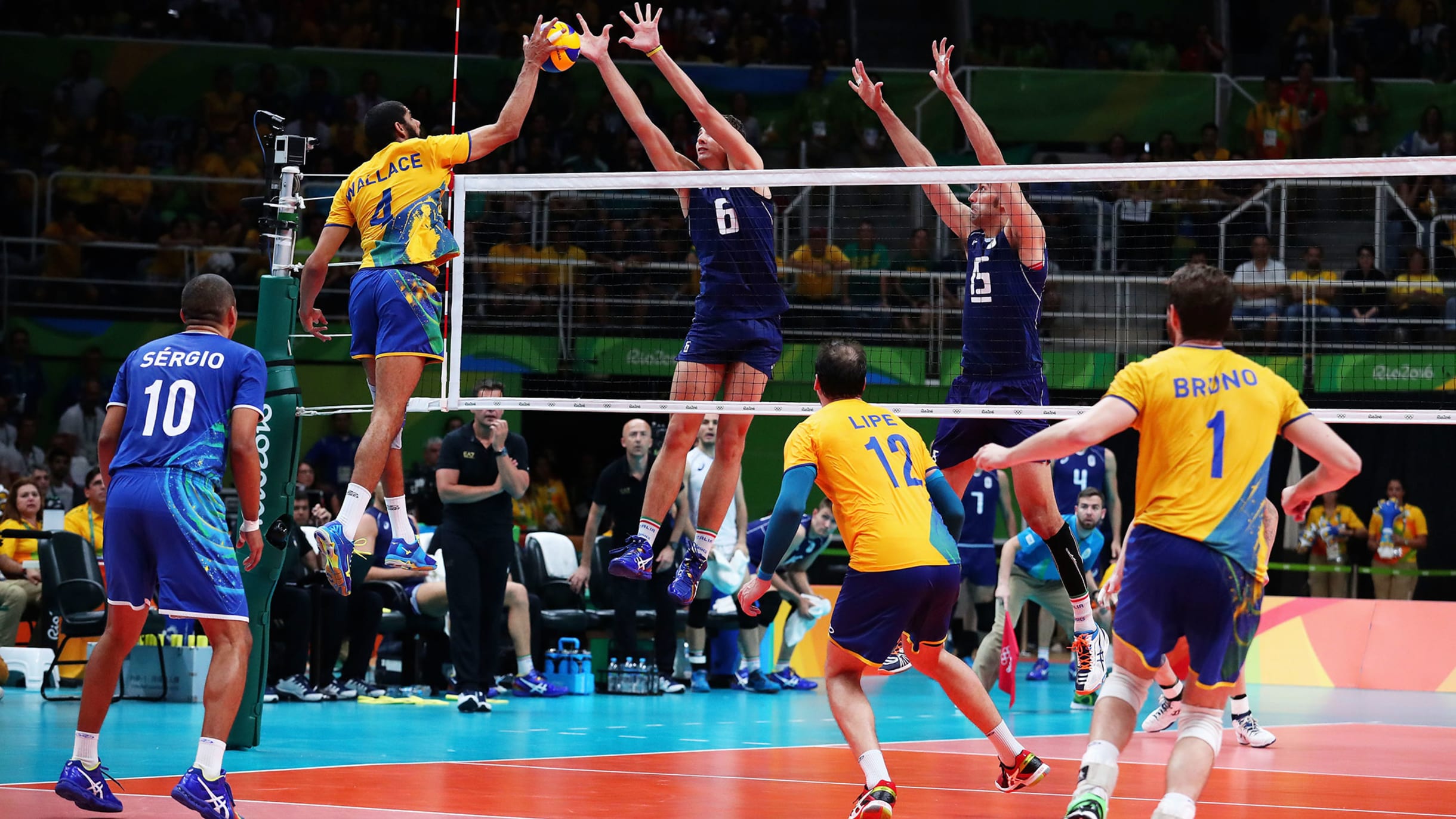
Men’s volleyball is one of the fastest-growing sports in the United States, having increased by 40% since 2017. This fun and easy-to-learn sport has a rich and interesting beginning, and it all started in 1895, at a YMCA in Holyoke, Massachusetts.

William George Morgan was born on January 23, 1870, in the town of Lockport, New York. Morgan attended the Northfield Mount Hermon Preparatory School, where he met James Naismith, the future inventor of basketball. After that, he attended the International Young Men’s Christian Association Training School (now known as Springfield College) in Massachusetts, where he and Naismith both pursued careers in physical education. In 1895, Morgan moved to Holyoke, Massachusetts, where he became the Director of Physical Education at the local YMCA.

Morgan noticed that while playing basketball, the non-athletic/older men playing would have a hard time keeping up with the strenuous physical activity involved. He decided that he wanted to make a different game, similar to basketball, but more inclusive and easier to play. Morgan used ideas from handball, tennis, badminton, and his own experience to develop his new game.

The game would feature:

  • A 30 feet wide, 60 feet long playing area
  • A 6-foot, 6-inch net in the middle, separating the play area into two halves
  • 5 people on each side of the court, making a total of 10 players
  • A ball, which would be sent over the net in a “volley”
  • Innings (inspired from baseball), later called “sets,” to add a competitive tone to the game

A problem that Morgan had was finding a ball to use for his new game. A basketball was too heavy and hard, and just the bladder of the basketball itself was too light, so he contacted A.G. Spalding & Bros to make him a custom ball. They created a leather ball, around 26 inches in circumference, and was the perfect weight for his sport, 9-12 ounces. Finally, all the new sport needed was a name, and Morgan named it “Mintonette,” a word derived from badminton.

In 1896, William Morgan first presented his sport at the to the YMCA Directors of Physical Education at the YMCA in Springfield. The object of the game was to keep the ball off the floor as it went from one side of the net to the other. One person that was especially intrigued was Professor Alfred T. Halsted, who was the first person to suggest naming the sport “Volley ball,” later formed into one word, volleyball.

As the years went by, many major things happened:

  • 1900 – Spalding starts to produce the volleyball
  • 1920s – First beach volleyball courts are created in Santa Monica, California
  • 1922 – First YMCA volleyball national championships held in Brooklyn; 27 teams appeared
  • 1928 – the United States Volleyball Association (USVBA) was created, which made rules and held tournaments (now known as USA Volleyball)
  • 1937 – USAV recognized as the national governing body for the sport
  • 1947 – FIVB (The Federation Internationale De Volleyball) was founded
  • 1964 – Volleyball was introduced to the Olympic games in Tokyo, Japan
  • 1983 – The Association of Volleyball Professionals (AVP) is formed
  • 1996 – Two-man beach volleyball becomes an Olympic sport