
The Growing Epidemic of Romantisicm

Within the recent past I feel as though there has been an upsurge in this idealistic “perfectly imperfect” life which isn’t actually at all about embracing imperfection but instead inserting a sort of “convenient imperfection” making it seem as though everyone has the perfect life by projecting the perfect kind of messiness.

Evidently this has been only exacerbated by the media. Social media is only a highlight reel, however the issue grows when it is advertised as being reality. For example, a model showing what they eat in a day being a cheeseburger and a pizza, a college student showing their day in their life studying at little cafes and going out with their friends, these are all only adding to the issue. These people are constantly talking about romanticizing their lives, always finding what is exciting and new about a given day, and showing a cookie cutter life with these “convenient imperfections” that look like nothing to the average person.

I’m not saying the issue is with finding beauty in the mundane, except I feel quite the contrary I really believe finding beauty in the mundane is essential to happiness and joy within everyday life because I think that it is there as long as you look for it. But what I am saying is that it is when these people preach an impossible standard of reality (that is really still a highlight reel) that is seemingly attainable, but in reality just simply is not, that is when the romanticist mindset turns sour.

So it isn’t that we can’t find joy in our everyday lives, even if we aren’t a celebrity, have a trust fund, or are a nepotism baby. It just is that we need to take in life exactly the way that it is given to us. Find the joy in as much as you can, it’s there you just have to be willing to receive it. Let yourself feel when things are hard or sad or disappointing, not everything is going to work out exactly then way you think they will and that is the same for everyone, but that doesn’t mean its all bad. Everything happens for a reason. Laugh and cry and smile and sing and dance and like and dislike and form opinions and look up and receive life for what it is. Because no one is going to see it the same and really that is what is so romantic about it.
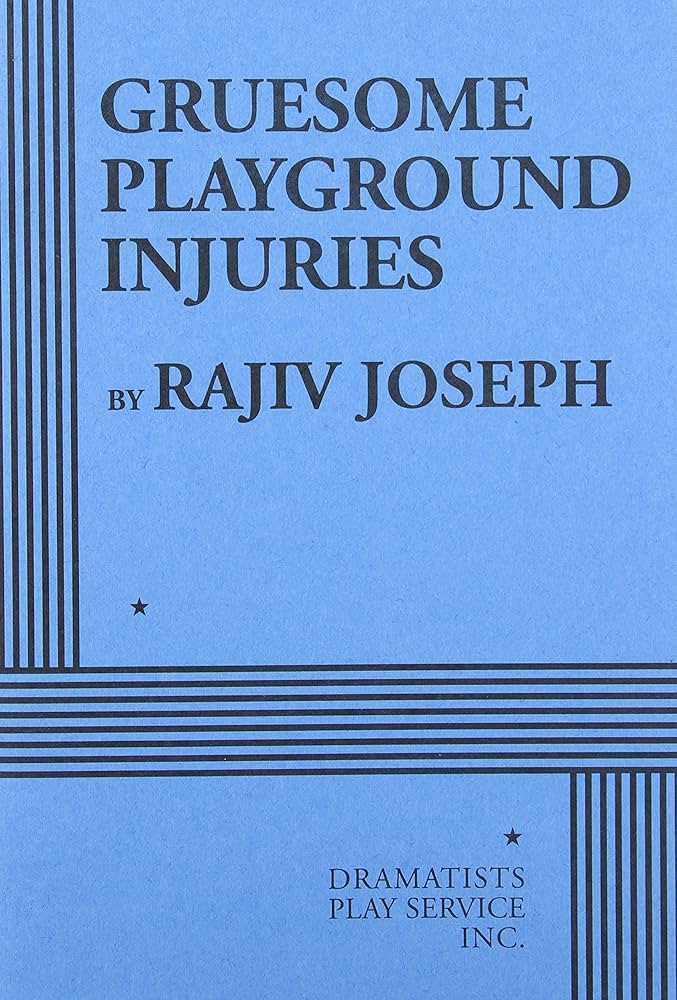
Rajiv Joseph is one of the greatest playwrights of our time.

I know this is a loaded statement, but I truly believe it. I recently had to read and perform one of his plays, Gruesome Playground Injuries, for an acting class. This play was my introduction to Joseph’s works and it is astonishing to see how his brain works. His plays are normally short, only a few scenes, not typically exceeding one hundred pages. He is able to develop characters so emotionally complex within that short span it will leave readers so invested and attached that they linger in their brains. At least, that is what happened to me.

My most recent read was a play of his called Guards at the Taj and it was nothing short of mind-altering. The play has four scenes, consistent with Joseph’s concise style, however, it is nowhere near lacking in volume. The play is set in Agra, India, in 1648. Everything, excluding the language, is accurate to the time period.

The first scene opens with the only two characters in the play, Babur and Humayun, two imperial guards at the Taj Mahal. Humayan is very rigid and regimented in his ways. His father is the head of the imperial guards and I believe him to have a mindset of success in quantifiable measures. Babur severely opposes this; he is philosophical in his beliefs and mindsets and sets emotion and abstraction to be prominent ways of his ways of thinking. The two talk a lot about beauty: what it is, who appreciates it more, where it can be found, and what can and cannot be beautiful. Babur accuses his friend of not knowing beauty as he does, but when the two of them see the Taj Mahal for the very first time, the men begin to weep, they drop their swords and hold hands.

The second scene opens with the men standing in two feet of blood. Babur clutching a sword, and Humayan blinded. The gore depicted on the stage is usually what is only alluded to by playwrights. Joseph takes this standard, crumples it up, and throws it out of the window to be found by a lion who rips it to shreds. The stage Lining the stage are barrels of 40,000 hands (the hands of the 20,000 men who created the Taj Mahal), all of which had been severed by Babur and Humayun. I believe that the gore was necessary to the point Joseph is making: what is real will happen and be seen. The reality of the play was that nothing that Humayan claimed he had talked about that would get the men out of their current standing situation (as low-class imperial guards) or even the conversation he said he had with his father (claiming to beg at his feet not to kill Babur when Humayan sold him out). None of it was pictured. What was shown was Humayan severing and cauterizing the hands (and his relationship) with his best friend, Babur, and I think Joseph was determined to make all of the gore and messages in his scenes undeniable.

I believe that this is a piece that everyone needs to read. I really hope to see it performed one day. It stands relevant to so many different situations and in so many aspects of relationships, social hierarchy, and the search for beauty, and the feeling of reading it for the first time cannot be encapsulated in words. And all of it in 45 pages. Rajiv Joseph is a genius.