Most Popular Social Medias of 2023

2023, the year of technology. Where daily activities such as shopping, chatting, and reading went online and social media gained users by the masses. According to “Smart Insights,” about 61.4% of the world’s population used social media last year. So with the start of a new year and the end of a great one, it’s time to look back on some of the biggest social platforms used in 2023.

In sixth place, we have TikTok with an average of 1.1 billion monthly users. This addictive app hit 1 million users within a matter of just 200 days. The majority of its audience is 18-20 years old, but older age groups can also find entertainment in it.

At fifth we have WeChat, which is widely known in China as an “app for everything.” It has 1.33 billion monthly users. With its messaging function, video chats, games, mobile payment, location sharing and more, there’s no wonder it’s so popular!

In fourth, Instagram is a steady contestant with 2.4 billion monthly users. Most people have it as a secondary platform, though. Only 0.1% of people have Instagram as their only social media. But despite that, it’s still a great place to stay in touch with your friends!

WhatsApp is third! Because of its widespread use over 180 countries, it has about 2.78 billion monthly users. It is ranked number one as the most used messaging app in the world!

Second place is YouTube, a beloved platform for people all around the world. Users can make jobs from being content creators on YouTube. Not to mention it’s function of YouTube Shorts, which has bite-sized videos to enjoy whenever you’d like.

Finally, in first place we have Facebook. Although it has an older audience, people of all ages can enjoy it. Whether it’s seeing pictures of your grandma’s dog or your best friend’s birthday, Facebook is the go-to place for updates on people’s lives.

2024 is a new year full of new surprises. My predictions for social media will be that TikTok gains more viewers and makes it into the top 5, or maybe even top 3. Social media has come a long way, and I await its further development in the new year.
Would Life Be Easier Without Governments?

I’ve always thought that life would be so much easier if everyone just governed themselves, and was in charge of their rights and property. Humans have, after all, imposed war, famine, unjust societal standards, and a plethora of other issues upon themselves; no natural forces have really contributed that much to the unhappiness and restriction within our society.

What would happen if there was no government, or a system of hierarchy? Someone could own an endless amount of property and have as many liberties as they wish. But, to make it just, everyone else would have those same exact freedoms, too. This also means that if I declare a certain amount of land to be mine without any legal resources binding me to it, my neighbor could just as rightfully claim that land to be theirs and kick me off. I wouldn’t really be able to do anything about it, and I would probably get angry. If this system were to exist in our world right now, every little thing would end up in a stalemate, and wars would probably be a lot more frequent.

No matter how good you think your idea of perfect personal liberties are, there will always be someone near you with opposing thoughts regarding what those rights should be. If those ideals were to be extremely different, people would most definitely break into chaos. For example, you might think that it is wrong to own multiple firearms (even if it is for self-defense) but your neighbor may think it is right. Not only can some sort of conflict ensue, but because there would be no legal consequences to your neighbor’s actions, you may also start to feel unsafe, which is in violation of your natural rights.

Governments have the power to protect our inalienable rights and impose serious consequences on those who violate them, but with the guarantee of certain rights, other freedoms will have to be sacrificed. This idea of social contracts means that no one can ever really be entitled to every single freedom in the book if they want to peacefully (to some extent) coexist with other individuals.

In the end, it’s impossible to please everyone; not all people will be satisfied with the way central governments are structured. While I agree that our current ruling system has its faults, it is pretty successful at maintaining societal structure while still trying to defend everyone’s personal rights.

The Shining by Stephen King

In the 1977 horror novel The Shining, Jack Torrance is hired as the winter caretaker of the Overlook Hotel, and was invited to stay there with his family during the rough season. Seen as how Jack was battling against a past drinking addiction that put him and his wife in conflict, this was a perfect chance for the family to get closer. However, his five year old son, Danny Torrance, has a psychic ability called “the shining,” which allowed him to sense that the Overlook Hotel is a place of danger. Despite this, the Torrances, needing the money, continued with their plan to go there, leading to a journey of insanity, demonic possessions, and a dark, gruesome look at the Overlook’s past.

One of the best aspects of King’s writing would have to be his extremely detailed imagery. The extent to which he describes each event allows the readers to better picture the struggles and terrors each character goes through, which is an important aspect of any horror novel. The complexity in the characters, especially in Jack, also added a sense of realism to the story. King shows how Jack wasn’t “perfect,” and that his abusive past ultimately impacted the person he grew to be. Yet, he still felt shame towards his actions at the same time, causing readers to feel confusion as they develop their feelings towards him.

Overall, I found The Shining to be extremely engaging and definitely one of the best horror novels I’ve ever read. While still suspenseful and thrilling, I didn’t find the story to be extremely scary, making it more accessible to a wide audience. I do admit that some chapters felt very long and dragged on, but the build up to the end ultimately made these dull moments worth it. Despite any flaws, the characterization, imagery, and impressive writing displayed throughout the novel makes it truly deserving of the title of one of King’s best works.

-Aysha H.

The Shining by Stephen King is available to check out from the Mission Viejo Library. It is also available to download for free from Libby.

1984 by George Orwell

In the classic 1984, writer George Orwell invents a frightening world in which a totalitarian government, otherwise known as “the Party,” rules its citizens through extreme oppression. Within this highly imaginative society, the Party controls every aspect of an individual’s life, down to their very own thoughts. Any sign of rebellion would result in extreme torture till the point of death. Now, I could go on and on listing every aspect of living in such a society, but the Party’s main goal, one in which they try to engrave into the minds of all citizens, can be summarized perfectly into one sentence: “War is Peace, Freedom is Slavery, Ignorance is Strength.”

Now describing what this dystopian world is actually about, I would say that my favorite aspect of this extremely compelling read would have to be the perspective in which it’s told. 1984 is written through the life of a low-ranking Party member named Winston Smith, who disagrees with the views of the Party and secretly takes part in acts of rebellion. Given his rank, I feel as though Winston perfectly illustrates the experiences of a “common man” in such a society, causing people to sympathize for him as he battles against those “above him.” His philosophical views on life and politics also causes readers to better relate to and connect with his character.

Additionally, despite being a perfect example of Orwell’s brilliant creativity, 1984 also reflects the political climate in which it was written. The novel was originally released in 1949, a time when communism, the Cold War, and nuclear weapons were seen as a global threat to citizens across the world. Learning about this history caused me to appreciate and contemplate the novel even more, as it can also be seen as Orwell’s warning to future readers on a society that can very-possibly come to life if our political landscape isn’t dealt with carefully.

Overall, I found 1984 to be an enticing and eye-opening novel that exposed me to a world I could have never imagined. I truly believe it deserves to be known as one of the best classics ever made, and I can find myself recommending it to all readers.

-Aysha H.

1984 by George Orwell is available to check out from the Mission Viejo Library. It is also available to download for free from Libby.

Does A Perfect Day Really Exist?

This is just a short little post of me thinking about life, but a question that has been on my mind lately is “does a perfect day really exist?” What even is perfect?

Some sources on the internet say that a perfect day happens when ‘everything goes just the way you’ve planned it to be’, and I guess that is possible- to an extent. Can every little detail really go the way you’ve planned it to be? I don’t believe in perfect days, but I do believe that some people who consider themselves to have perfect days don’t really have perfect days, but rather happier and more positive mindsets. Though on that note, I think that if you want to at least have an okay day, you need to have some general conditions/expectations set in place that you want to be vaguely fulfilled. Those expectations also need to be reasonable because you can’t just claim that you need the atmosphere to be 62 degrees Fahrenheit at 10:31 AM to have a perfect day (even though nobody would probably do that). The weather has its own agenda going on for itself.

I have tried to have perfect days on purpose, and it never works, at least in my experience. In fact, things seem to go even more wrong when I’m consciously focused on doing them right. In the rare occasion in which things do spontaneously go according to plan, I’m always interrupted by some thought or event that doesn’t exactly ruin my day, but ruins my ‘rhythm’ (not my mood, they’re kind of different, I can’t really explain it!). The event wouldn’t even necessarily have to be bad, but more of something I wouldn’t have been expecting/wanting at that moment.

But I guess these average days are always just a reminder for me that life is real. Everyone and everything around us has its own plan, and the Earth doesn’t adapt to us- we need to adapt to it. So I think the key to having an above-average or at least a pretty good day is to try your best, surround yourself with everything that makes you happy, and live and love the mundane 🙂

Learning on your own terms: the benefits of homeschooling as a teen

There are several reasons why I prefer homeschooling over traditional schooling. Some of these include:

  1. Flexibility: Homeschooling can provide more flexibility in scheduling, which can appeal to some teens with other interests or responsibilities. For example, I can write my novels any time as long as I finish all my weekly high school requirements. I can also dual enroll with a university or college, finish high school, and get college credits.
  2. Personalized education: Homeschooling allows for more personalized instruction. This means I can cater my education to my interests and needs rather than following a one-size-fits-all curriculum. Because I get to choose my curriculum with my teacher, I almost always have no problems finishing my schoolwork quickly.
  3. Avoidance of negative social situations: Some teens may prefer homeschooling to avoid adverse social problems such as bullying, peer pressure, or a lack of inclusion. I never had this problem; most homeschooled high students I met or knew were too busy with their day-to-day lives. Most of the time, we’re with older adults, so there are no such adverse social problems.
  4. Increased family time: One of the advantages of homeschooling is that it can provide more opportunities for family time and closer bonds between parent and child. I like homeschooling because I can spend time with my siblings whenever I want or need to. When my family decides to travel, I can take my schoolwork with me, and there are no missed school days to make up. This is a huge perk for my parents and me since we love to travel.
  5. Religious or philosophical beliefs: Many families homeschool because it aligns better with their religious or philosophical beliefs and values. I have many friends who homeschool for this reason. It’s important to families that their children receive an education that aligns with their ideas. Because we’re living in the US, we have the freedom to choose; we all should take advantage of how we want to do school to improve ourselves as model citizens.

It’s worth noting that homeschooling is only for some, and this form of education can also be challenging and complex. The most difficult in homeschooling is being motivated and disciplined with your schedule. You are on your own when finishing and staying on task with your schoolwork. No teachers ask you to do it and finish it on time. No classmates to compete and get you going. No- just you competing against yourself to be the best version of yourself. This is why I love homeschooling, but many teens choose not to. However, for some teens like myself, homeschooling can provide an excellent choice and preferred educational experience.

Bella H.

The Dark Side of Fishing

Throughout history, fishing has been one of the most popular pastimes for all ages, renowned for relatively passive participation required to be successful (ie. sitting on a dock waiting for the fish to come to you). But this does not take into account the negative consequences towards the other half of this game – the fish themselves. 

Conventionally, fish are thought of as dumb, unfeeling creatures, making them the perfect specimen for a practice that is essentially dragging animals from their home environment on barbed hooks solely for human entertainment. This is a treatment that we would not give to any other member of the animal kingdom that we believe to exhibit a certain level of sentience, or the ability to think for itself. For example, cruelty against dogs or cats is heavily dissuaded, whereas such violence on fish, worms, or other “non-sentient” creatures is implicitly allowed.

This assumption about the pain capacity of fish, however, has been proven false. As it turns out, fish have the same types of pain receptors that humans and other animals due, alongside the necessary nerves and senses to detect this pain. They can be shown to feel bee stings, so one can only imagine how strong their pain must be when caught on a hook. 

Additionally, fish are much more intelligent than they are shown to be. Through experimentation, fish have been shown to be able to efficiently learn geometrical relationships with landmarks and navigate mazes, thus shattering conventional stereotypes about fish and with it humanity’s casual belief in their superiority. One cannot help but wonder about the pain these intelligent animals must have felt, and what thoughts would have gone through their minds as they were abused and killed simply for the pleasure of a stronger animal. 

While it is undeniable that fishing is important on various levels, from personal to cultural, it is equally important for us to ensure that our fellow animals are not needlessly injured for our own entertainment and do our part to protect this much munched on group of the sea.

Information adapted from Victoria Braithwaite’s LA Times article “Hooked on a Myth” (https://www.latimes.com/archives/la-xpm-2006-oct-08-oe-braithwaite8-story.html)

– Mahak M.

Climate Change

Cracked and crumbling, the earth once full of life and water lays barren and dry. Dust bunnies blow across the land without a single living thing in sight. Blue skies turn gray and smoky. Trees that once seemed to hold up the sky with their strong arms are now reduced to stumps. That is the future that lays ahead. 

Climate change has always been a big problem. Politicians ignore it as if they weren’t the ones who created it. Advocates protest, and we turn a blind eye. Brushing it off like it’s nothing, a mere annoyance. No one expects the earth to crumble away in their lifetime. We flourish in our big cities focusing only on what’s ahead of us, but not what’s above or below us. We move too fast to acknowledge problems that seem to loom ahead. Problems that are screaming to be solved. Problems that are bolded and put in italics for us to see. Problems that are shoved in our faces but we choose to ignore.

So what if the earth is dying? Why should I care? It won’t happen in my life so there’s no reason for me to do anything. These are all excuses. Excuses not to care nor act. Excuses to not do anything. We waste our lives away waiting for someone else to do it for us. We wait and wait and never yet to consider that everyone else may be waiting too. 

There must be something done soon, or there wouldn’t be an earth to worry about.

Books about climate change are available to check out from the Mission Viejo Library. They are also available to download for free from Libby.

Your Words Have Power

What would we do without words? Words are powerful; They can inspire, motivate, and move us to action. They can also hurt, insult, and destroy. As teenagers, we are constantly bombarded with words from many different sources, from our peers to parents, teachers, or the media. Recognizing that our words have power and can influence us in how we communicate is important. We can see the power of words play out through books and movies. Numerous examples of films and books can resonate with us and strengthen the impact of words.

Dead Poets Society is one example of how words impact us. In this movie, an unorthodox English teacher inspires his students to be themselves and embrace their individuality. He encourages them to express themselves through poetry. Robin William, who played the teacher in the movie, tells his students to “carpe diem,” meaning seize the day and live life to the fullest. Through words, he profoundly impacts his students’ actions. They challenge the school district rules and go on to pursue their own passions. This movie is a compelling reminder that our words have power. Words of encouragement can inspire and move us forward to do great things that impact many lives.

The Hate U Give, written by Angie Thomas, also shows us how words impact how we think in a powerful way. Starr, a young girl in the story, witnesses the shooting of her friend by a police officer. The author uses words to shape our perceptions of others and strongly influences how we think about racism and prejudice. It encourages us to use our words to create positive changes in our world.

These are just a few examples of the power of words and how they shape our actions, thoughts, and interaction with people around us.

We are constantly bombarded with words from everyone and everything.

As teenagers, we have the power to use our words to bring positive changes to others and the world around us. Use words that encourage and inspire others rather than break them down. Stand up and speak out against hateful language and attitudes.

Our words cannot be underestimated. Words inspire, motivate, and move us to action. It can also hurt, insult, and destroy others. By recognizing the impact of our words, we can use them responsibly to create lasting and positive impacts. Doing so can create a more positive and inspiring communication culture in our society. Maybe, it can even lessen the chances of war.

The next time you have a conversation with someone, remember your words have power; what you say can uplift or tear a person down. You have the choice to inspire and encourage others so you can help create a better world. Choose your words wisely so you can inspire.

Bella H.

Spotify vs. Apple Music: Which is Better?

The age long debate of the century: Spotify vs. Apple Music. Below are points listing off the pros and cons of each music streaming service as well as the author’s thoughts. Also, feel free to participate in the survey at the bottom of this article.

Spotify

Pros:

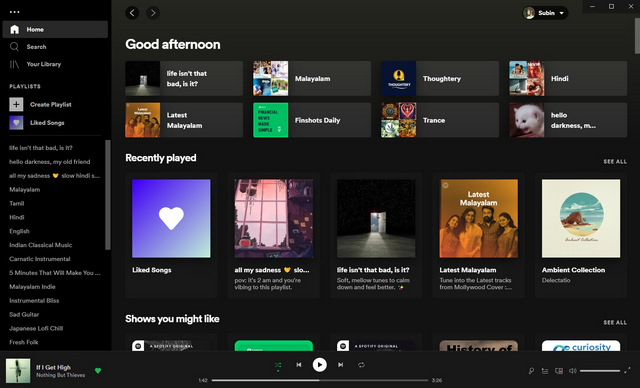
  • Users can easily navigate Spotify with its organized interface
  • Spotify can curate playlists based on one’s music taste
  • The AI DJ can introduce one to new songs
  • Offers a free version of Spotify

Cons:

  • The free version offered interrupts the user with ads
  • The lists of playlists on the side on the computer version can be overwhelming at times
  • Sending too many emails containing either terrible deals or news expensive concerts
  • Some songs can only be accessed as a podcast in order to upload them to the site

Apple Music

Pros:

  • Boasts more songs, podcasts, etc. than Spotify
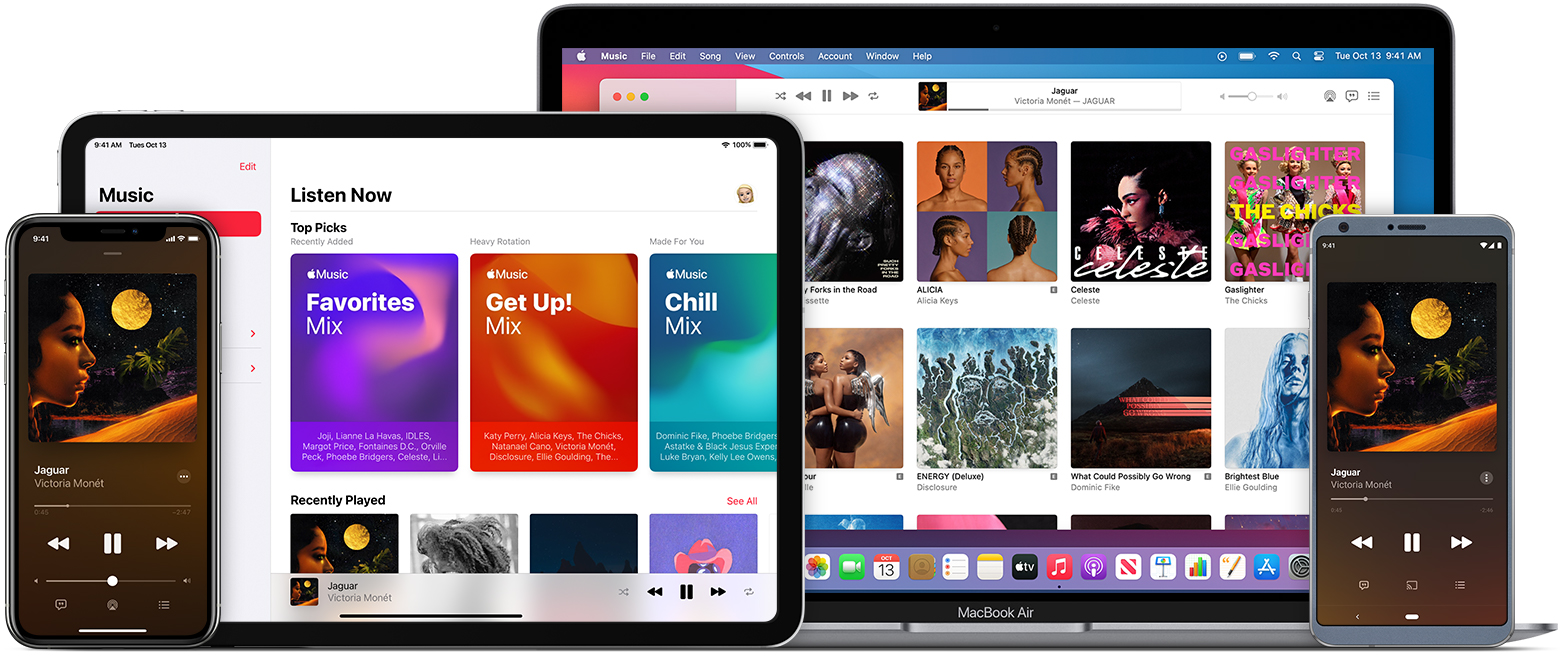
  • No need to download an app if the user has an Apple device
  • Offers a free trial for one to even six months
  • Compared to Spotify’s sound quality, Apple Music’s is more crisper

Cons:

  • Doesn’t offer a free version of its service
  • Not as “cool” because Apple Music isn’t as popular for teenagers
  • The service doesn’t encourage user engagement with others
  • Costs a dollar more than for Spotify’s premium

Author’s Thoughts

As a Spotify user, clearly I am team Spotify! What really drew me in to purchasing a subscription for the premium version was the multitude of opportunities for me to engage with my friends. I can easily look to see what my friends are currently listening to or even create a playlist with them combining our music tastes through the new Blend feature. Additionally, the overall appearance of Spotify both allows for simplicity and an aesthetically pleasing interface.