The Tiger Rising by Kate DiCamillo

The Tiger Rising was written by award-winning author Kate DiCamillo. The story takes place in Florida. The main character is a twelve-year-old boy named Rob Horton who is struggling with his emotions after his mother’s death. Living in a small town with his father, Rob feels lost and alone. His life changes when he finds a tiger locked in a cage in the woods, which mirrors his own feelings of being trapped and unable to express himself. As Rob navigates his grief, he meets Sistine Bailey, a new girl in town who becomes an important friend. Sistine is also mistreated by other children at school.  Together, Rob and Sistine bond over their shared pain and the tiger they both care about. Sistine helps Rob to face his emotions and think about what it means to be free, both for himself and for the tiger.

Although this book is short, I enjoyed it very much. The story is simple but powerful. It deals with the struggles of dealing with loss and grief, while expressing feelings of freedom and hope. The characters are highly complex and realistic. Through their development, DiCamillo teaches lessons about how to cope with death and isolation, and about the consequences of keeping emotions bottled up. I believe that most people can relate to the feelings expressed in this book, and learn from its lessons. DiCamillo is an excellent author, and this book is a great example of her ability to communicate deep emotions and the power of loving relationships. This is a very poignant book that I would recommend to anyone.

The Tiger Rising by Kate DiCamillo is available to download for free from Libby.

The Institute by Stephen King

Summer is here and what’s better than reading a nice, long story when all you have is time? Well, at least that’s what I’ve been doing. I had bought this book long ago and had read it already but I was always looking for a reason to reread it. This is my first (and only) Stephen King book I have read so far, so I really don’t have much to base it on but I really enjoyed it.

The Institute by Stephen King is a science fiction thriller novel, focusing on telepathy, telekinesis and a conspiracy come true. It consists of two main perspectives, one being Tim Jamieson, the policeman of a small town; and the second being Luke Ellis, a twelve year old child prodigy. The story begins with Tim and him finding his way to a small town in South Carolina after switching up his plans of going to New York. With his past job experience of being a police officer, he joins the small police force of DuPray and lives his life there. After beginning with Tim, King switches to Luke for most of the story in which he is abducted and taken to The Institute where kids like him are used and exploited, however, not for being a prodigy, but instead for powers of telepathy and telekinesis. As The Institute becomes more dangerous, Luke does his best to escape with his friends, gaining help from others along the way. 

I loved this book. Like I said, this was my second time reading this and coming back to it now, I see why I held it in high regard. The characters of The Institute were greatly enjoyable. From the sassiness of young kids and teens to the deadpan humor of Tim, they all had their quirks that made them feel alive. In making them feel alive, the events they go through become more impactful as it all turns more twisted throughout the story. King writes a variety of scenes ranging from happy to mysterious to sad to cruel. He fills the plot with secretive planning and action packed scenes that fill you with a different kind of thrill.

But the reason why I found this book so fun and interesting was, while the plot and characters were great; the style in which the story is written was very entertaining. King likes to jump around in this book, following different characters, and seeing their point of view at that point in the story. Now, it may sound like it would be confusing, jumping from one character to the next when you’re just trying to read a story. However, the way King has written it makes you want to know each and every point of view, some of which are unexpected but no less fun to read. He makes every switch meaningful and well-connected to each other. Every portion has a purpose to the plot of the story, pushing it along, adding new bits of information to the puzzle on the way. 

Overall, The Institute by Stephen King is one of my top books. I loved the characters and had a fun time with the plot of the book. I especially loved the uniqueness of the book and how it’s written. It was a great read just being a bit on the long side. A little thing about this book is that the language and terms of this book may not be appropriate for anyone younger than a teen and it may be better appreciated by an older audience. So I would personally recommend this to an older group of people, teens or up.

-Nicole R.

The Institute by Stephen King is available to check out from the Mission Viejo Library. It is also available to download for free from Libby.

A WOLF CALLED WONDER

A Wolf Called Wander by Rosanne Parry is a poetic and well-written book. It takes readers on a journey with a young wolf who gets separated from his family when a rival pack attacks. He must learn to hunt, to find water, but most importantly find a place to call home.

Wander (the wolf in the story) is a good example of never losing hope. After a massive injury trying to hunt an elk all alone, Wander is on the verge of starvation.

But he keeps thinking of finding any of his pack’s survivors, which helps him carry on. Wander soon meets a raven, with whom he forms their own pack to benefit both of their needs. Together, this dynamic duo overcome starvation, hunters, a wildfire, and even manage to find a happy ending for both.

This book is based on the true story of a wolf named OR-7, or Journey, who traveled an astonishing 1000 miles+ from Oregon to Northern California. He lived twice the average wolf’s lifespan. More information about wolves and Journey can be found at the end of the book. 

OR-7 (Journey)

Wander finds many challenges to overcome, therefore making the book a page-turner. And Rosanne Parry’s talent with words gives an in-depth look to Wander’s emotions and feelings. She uses a very poetic style of writing which absorbs readers in the story, giving them a wolf’s view of the world. 

I did feel it is more like a long poem than a book, but I liked the story it revealed. I would really recommend this book to kids who like artistic and creative stories. Overall, I enjoyed A Wolf Called Wander and think it is a book worth reading.

A Wolf Called Wander by Rosanne Parry is available to check out from the Mission Viejo Library. It is also available to download for free from Libby.

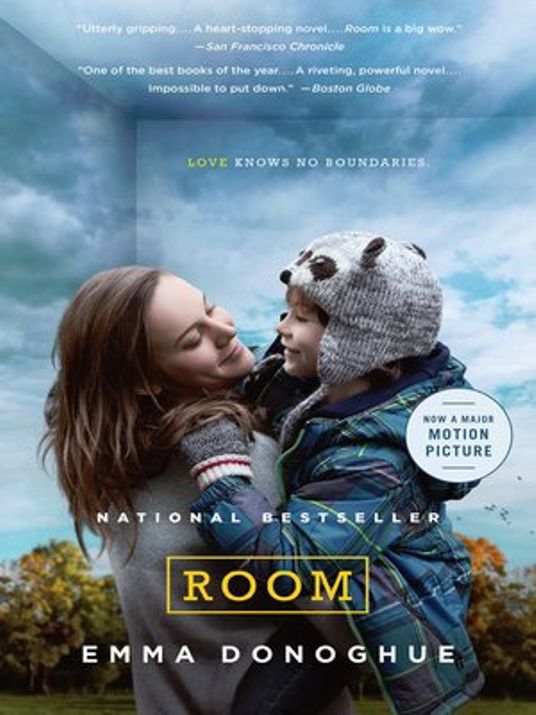
A Review of Room by Emma Donoghue

This was one of my most riveting reads yet. When I picked up this book from my local library bookstore, I wasn’t all that excited by the fading and cracking cover of this book. I was peeking through the shelves looking for my newest read when I saw the book. It was all white except for the word ROOM plastered in bright scribbly letters. I was intrigued by this and picked it up to read the short excerpt on the back.

I was pleasantly surprised as I sat down and began reading this. The short wording in the beginning of the novel made it hard to understand but it was interesting as the plot thickens in the very beginning. We find out that the narrator is a five year old boy trapped in a “prison” with his mother who he calls Ma. The narration is sometimes hard to understand as we learn very early on that this boy was born in the room and has known nothing of the outside world, except bits and parts from the TV. His mother was kidnapped at a young age and help captive in this shed that has become their home. There are various household objects strewn throughout the home and the boy loving refers to them as their names. He lives in the wardrobe, that is his bedroom ever since he was little. The man who kept them there is named Old Nick. Old Nick comes every Sunday hoisting groceries and the occasional “sunday treat”. Old Nick is not permitted by Ma to touch or even look at the boy. Jack (the boy) is very malnourished, and under stimulated as we learn to find out. But with his childlike innocence, his description of the room is to be comforting and just like home. He hasn’t known anything else other than this room to be his home. He watches the television with his mom, runs around the room, jumps on the bed, takes a bath, brushes his teeth, and does everything a normal kid would. Except its in a dimly lit room, with only the skylight and lamp as light. The room is stale smelling with little room to manoeuvre in.

So far in the novel, the plot seems a bit mundane but I really loved how the author used various names for common objects to really emphasize how the boy had no friends, and this was the only life that he knew. His mom was also a really well-developed character as I sympathised with her a lot and sometimes I really couldn’t figure out how she didn’t explode with anger. Jack was not always the best behaved kid and his screaming always sent his mother over the edge.

Towards the middle of the book, I was expecting the escape from the room to be towards the end of the book, however, the escape from the room was a little bit underwhelming and the buildup was for almost nothing. It didn’t really give me any emotion that I thought I would’ve felt. The aftermath of the escape was also a bit boring as the last half of the book was the rehabilitation of Jack and his mom. I did think that it was going to be more interesting but it was mostly just repetitive. We didn’t really get to see many interactions like Jack going to school and it mainly just slowed the plot down.

I wasn’t that happy with the ending as they went back to the Room to say goodbye and really see how they lived in there for so many years. It was very anti climatic as the ending was just saying their goodbyes. I did wanted to see more raw emotion and I didn’t get that much from this book. I would recommend this book to people though because I did really like the plot and all the thought the author put into the book. The wording was really different and I liked how the narrator was Jack instead of his mom. It really gives us another perspective as to how a child would acknowledge the situation at hand. All in all, Room by Emma Donoghue is a solid 7/10 for me with great characters, but a meh plot.

Room by Emma Donoghue is available to check out from the Mission Viejo Library. It is also available to download for free from Libby.

Book Summary & Review: Whale Done

Whale Done, written by Stuart Gibbs, is the eighth novel in the mystery series FunJungle. In this adventure, Teddy Fitzroy heads to Malibu with his girlfriend Summer after his house is burnt down. When arriving at the mansion Teddy is staying at, the sleuths quickly discover the dead washed-up whale on the beach. However, something seems extra fishy–besides the stench of the dead whale. Before Teddy, Summer, Doc, and Cass (a Marine Biologist and close friend of Doc) can continue the autopsy, the whale explodes. On top of this fiasco, a local surfer named Sharky claims sand is being stolen from a nearby beach.

Teddy and Summer find their hands full with two mysteries. Closely after the explosion of the whale, the crew finds two college students fleeing from the scene. The detectives quickly chase after them and manage to catch one of the students, Chase. After extensive questioning, Teddy finds that Chase and Scooter (the other student) were tricked and framed by an anonymous woman. 

Later in the book, Teddy and Summer have conflicts in their relationship, and Teddy is forced to question the status of their relationship. Although they have hardships, Teddy continues to investigate with Doc and Cass. The small team finds that actor Jackson Cross who is deep into bankruptcy has been stealing sand to extend his property size, to make his house more appealing to buyers. Soon after, Teddy and Summer attend a movie premiere, which forces them to be together once again. When the movie finishes, the couple goes to an after-party, where they discover who the culprit of the dead whale is.

They find that Tris, a PR worker, who works for a shipping company caused the explosion of the whale by convincing the students to blow it up. She did this to protect the company TransPacific from having a PR fiasco and was paid much in return. (The ship bumped into the whale because they did not stay on maritime routes. This caused the death of the whale.) Whale Done ends with Teddy uncovering the truth of the two mysteries, and reconciling his relationship with Summer.

Personally, I thought that this was entertaining, however, it was not the best. I’ve read a lot of Stuart Gibb’s books, specifically the FunJungle series. Over the years, I feel that his books have become slightly repetitive and predictable. Despite this, Whale Done kept me on my toes and was exciting to read. I enjoyed the character development of Teddy and Summer, this was a great bonus. If you are looking for a short and easy book to read, I would recommend the FunJungle series or any book written by Gibbs.

You can read this book at the Mission Viejo Library. It is available as an E-Book and Audiobook from Libby as well.

Book Review: Rana Joon and the One & Only Now

This story, following a music-loving teenager named Rana in 1996 California is one full of love, love for writing, love for music, and love for other people. It narrates the life of Rana, reeling from the death of her best friend and finding her own talent through a haze of loneliness and unsettling family dynamics.

I loved this book so much more than I thought I would. I read it on a whim because I like the cover art, and was left crying by the end of it. Author Shideh Etaat finds the perfect balance between fiction and reality through the storytelling of Rana. As a lover of rap music and Tupac, I felt the story was incredibly compelling and relatable, even to the teens of today.

Rana’s family is a main focus of the book, and the dynamic between herself, her mother, her brother, and her father is one that is almost identical to a myriad of South Asian families in present-day California, the bridge between immigrant parents and first-generation children growing longer and wider as time goes on.

The book explores themes of queerness in immigrant families, a flawed main character learning how to live for the first time, and how the people around us can shape our experiences and our enjoyment of life itself over time.

I would recommend this book to anyone who is looking for a deep, thoughtful, funny read about love, life, loss, and how both writing and music can bring people together through anything. I could read this over and over again and still never get bored of the, frankly, beautiful writing that Etaat portrays as Rana’s as she learns to navigate her own life with herself at the helm.

Tanvi G.

Rana Joon and the One & Only Now by Shideh Etaat is available to check out from the Mission Viejo Library.

The Golden Key by George MacDonald

The Golden Key is a short novel by George MacDonald. The story takes place in a mystical forest called Fairyland. Mossy is a young boy who learns from his great-aunt about a golden key hidden at the end of the rainbow. Mossy does not know what the key would unlock, but he feels a strong desire to obtain it. One evening, while Mossy is looking out of his window, a rainbow suddenly flashes across the sky.  This reminds Mossy of the golden key, so he darts out of the cottage to get closer to the rainbow. To his delight, he reaches the end of the rainbow and finds the golden key.

Meanwhile, not far away, a young girl named Tangle is chased out of her home by fairies. She is led by a strange creature known as an air-fish to the cottage of an old woman named Grandmother. Grandmother then sends out an air-fish to look for someone else. That person turns out to be Mossy. The air-fish returns with Mossy, who has the golden key in his hand.  The two children then embark on a journey to discover what the golden key will unlock.

This book is difficult to describe. It seems like a magical fairytale, but the imagery feels more intense than most children’s stories. The story is extremely mysterious and fantastical, and it seems to have profound spiritual significance. I sense that this book is intended to be an allegory, but I am not sure about its overall meaning. The main themes seem to relate to the journeys of life and death, as well as a hope in life after death. I found this book to be charming and delightful, even though I was baffled at times by its symbolism. I would recommend this book to anyone interested in reading a dreamlike story that is deeply mystical and imaginative.

Circe by Madeline Miller: A Spoiler Free Review

Circe by Madeline Miller is a retelling of the witch Circe from Greek Mythology. She is the daughter of the titan Helios and a nymph. The gods, fearing her witchcraft, banish her to a deserted island. Here, she forges her path – honing her craft, meeting infamous figures of mythology, and being pitted against the wrath of men and gods alike. She’s torn between the mortal and the divine, and forced to grapple with what it means to be immortal. 

I really, really enjoyed this book. It’s one of the most unique stories I’ve read, chock-full of beautiful writing and characters. It’s definitely one I’ll be rereading for a long time to come.

In Circe, I particularly enjoyed the writing. The way Madeline Miller weaves her words into prose is mesmerizing. It’s almost lyrical in its flow, natural yet riveting. I would often read the same paragraph multiple times to soak in the words. This also comes into play as Miller describes the gods. She forgoes many physical details, instead describing things like the sound of their voice and the power in their presence. You begin to fear them the way Circe does. Additionally, the passage of time from the start to the end of the book is beautiful. At the end of the book, you look back and remember all she has gone through – it feels so long ago since she first stepped onto the island. You lived through it with her, in a sense. That feeling of passed time once I finished the book for the first time was overwhelming. 

No one book is enjoyable for everyone. Circe tends to be very character-driven rather than plot-driven and relies on mostly introspective focus. She is isolated on her island, after all. Thus, there are not so many dramatic action moments as dramatic personal moments. Plus, some consider the pacing to be somewhat slow and uneven, especially towards the latter half of the book.

All in all, I enjoyed Circe’s rich, bold 385 pages. It bursts with life and thought, and it holds a proud place displayed on my bookshelf. It is definitely a recommend from me. 

Circe by Madeline Miller is available to check out from the Mission Viejo Library. It is also available to download for free from Libby.

Book Review: The Scythe by Neal Shusterman

Foretelling a possible dystopian future, the Scythe features a world of immorality ruled by a sentient, all-knowing AI called the Thunderhead. However, death is still a necessity for humans as a result of the overpopulation on earth, causing humanity to form the scythes—similar to real-life grim reapers. They are chosen from billions of humans to kill anybody they wish—be it mass murder or a public execution—and are not under the control of the Thunderhead. Featuring Citra Terranova, a newly appointed scythe apprentice, she navigates her conscience through a world a murder as she competes for the scythe position against a fellow scythe apprentice she might have to kill.

The Scythe is a heart wrenching story that leaves people wondering if this could possibly happen in the future given Earth’s direction towards AI. The author beautifully characterizes the motives and backstories all plot characters, leaving no plot hole overturned.

What I loved the most was rather than telling the obvious story of overthrowing the ‘tyrannical rule’ of the scythes, we learn the scythes’ story instead. While many people feared the scythes, not all scythes were willing to become one, similar to Citra’s situation. As a scythe, they needed to leave behind their humanity and family and walk a solitary path alone as a murderer. But even through all that, they’re still human. The author cleverly details the inner struggles of many scythes who committed suicide due to their conscience, others who lavished in the power, and finally some who killed with compassion.

Additionally, many political schemes arise in the scythe world as beliefs over mass execution vs. private murder clash. What lengths would humans go through with the power to kill anyone?

Overall, this is one of my favorite dystopian books and I would definitely recommend to anyone interested in dystopian!

The Scythe by Neal Shusterman is available to check out from the Mission Viejo Library. It is also available to download for free from Libby.

The House on Mango Street

The House on Mango Street by Sandra Cisneros is a classic book that I believe should be read by everyone, of any age. This novel is composed of short vignettes following the life of a young girl named Esperanza living in a small house in Chicago. The descriptive storytelling style is broken up into 44 short stories, each one no more than two pages in length, totaling a little over 100 pages. It is a fairly quick and easy read, and it can be referred back to at any point without having to reread the entire thing. I first heard of this book in middle school, when I had to read about five of the vignettes. Those have stuck with me, and have continued to be some of my favorites, along with the new favorites I discovered through reading the whole book.

I believe this book should be read by anyone of any age, mainly because of the variety of characters that are introduced. Readers get to learn about Esperanza’s neighbors, who are all quirky in their own ways. We learn about Esperanza’s siblings, her friends, the younger kids on the street, the people who move in and out, the teenagers, the adults, and the elderly. Her neighbors are a diverse cast of characters who each have their own struggles in life, but they form a community on Mango Street. One of my favorite things about the novel is how it is told from the eyes of a young girl. I find that I could relate to her at any age, from reading it when I was in middle school, about the age Esperanza is in the book, but also reading it as I get older when I can see her growth and relate to other characters.

Another one of my favorite things about it is the dedication. The novel is dedicated both in English and Spanish to “The Women” or “Las Mujeres.” The House on Mango Street focuses on the female experience, highlighting female characters that Esperanza interacts with but also observes from afar. The stories about Marin and Sally highlight the struggles of being a girl and the story titled “Rafaela Who Drinks Coconut and Papaya Juice on Tuesdays” depicts Esperanza’s fear of becoming, as she describes it, a woman who sits by the window waiting for her husband. Esperanza wants to be independent, she wants a house of her own one day, that she doesn’t have to share with her entire family. I also loved how there were stories about Esperanza’s parents and her family as a whole. Rather than seeing her observe others, readers get to see someone who she really understands.

Ultimately, I loved this book and I can see myself referring back to it as I get older. If this was a required reading for you, I highly recommend taking another look at it, because it truly is an essential book for young readers. My favorite vignettes include, “My Name,” “Marin,” “Hips,” and “Beautiful and Cruel.” If you don’t read the whole book, I recommend reading those at least.

The House on Mango Street by Sandra Cisneros is available to check out from the Mission Viejo Library. It is also available to download for free from Libby.