The Catcher in the Rye by J.D Salinger

John Lennon, a hit member from the group “The Beatles” was pronounced dead due to Mark Chapman’s assassination. Mark Chapman, a deranged fan of The Catcher in the Rye felt as if he was identical to the main character, Holden Caulfield. Mark Chapman had killed John Lennon because he believed that he was a phony, a huge theme in the book.

The Catcher in the Rye is a book showcasing the main character, Holden Caulfield, wandering around the streets of New York and trying to understand what he wants to do in life. The book is still extremely relevant to people today as it demonstrates teenage emotions in the real world and an extremely realistic picture of someone who has lost something important. Holden Caulfield’s thoughts are all over the place in the book and to some it may feel like a bunch of words on a paper. Though to others, it’s realistic, it’s all of his thoughts as a teenager and it really represents the struggles of just being a teenager in between childhood and adulthood. Holden represents our uneasy feeling of walking off a cliff into becoming an adult and having to leave our childhood behind. Holden represents how us as teens would deal with grief and hardships without any guidance. Holden is a cry for help and he teaches us the truth about how much a guardian really means to someone so young.

Why aren’t we doing anything to stop growing up? Why has everyone turned so fake recently? What are we really meant to do? Many questions similar to these are brought up in the novel and it’s very intriguing and beautiful to watch someone we can all relate to try to figure out the answers. The book is relatable to all people. For those who are teens, it really clicks with you and gives you a sense of connectedness, like you aren’t alone. For those who are older, it brings back those teenage years and will definitely bring back the teenage self that still lives inside of you.

The Catcher in the Rye stands out to me because of all the emotions I went through while reading it and the feeling of realization when I found out that all of his thoughts really meant something and all of the subliminal messages inside of the novel. While re-reading the book you can really see all of his cries for help that you may not have picked up before and all the symbolism you may have brushed off. The Catcher in the Rye gave me a whole new understanding of books and a new perspective on the meanings of books.

So why was John Lennon really assassinated? Was it really because of The Catcher in the Rye? In all honestly, I don’t know. What I do know, however, Mark Chapman feared Lennon’s fame and really believed he was just a huge phony.

The Catcher in the Rye by J. D. Salinger is available for checkout from the Mission Viejo Library. It can also be downloaded for free from Libby.

Animal Farm Book Review

Imagine fighting to overthrow a corrupt leader, just to end up with someone even worse. Last year in Sophomore English class I was required to read Animal Farm by George Orwell. This book is an allegorical novella reflecting the events of Russia’s Bolshevik Revolution. At the time, I was taking an AP European History class, so this book really impressed me as a history lover.

Animal Farm depicts the story of a farm where the animals overthrow the farmer in hopes of a more egalitarian animal-run society. However, when they are able to overthrow their masters, their utopian vision does not seem to be their new reality.

The main theme throughout Animal Farm is power and the desire to obtain this power. The novel depicts how a revolution for better living can quickly turn into a state where citizens have less power than they started with. The allegorical style can be viewed as a simple breakdown of the events of the Russian Revolution and the novel almost acts like a history lesson. It’s important to note the controversy Animal Farm has sparked. Many institutions banned the novel as it was considered “communist propaganda,” while some simply disliked the novel as they believed it provided a negative view on socialism.

Regardless of public opinion, I thought Animal Farm was a very interesting novel and I was captivated throughout my whole reading experience. I would recommend this novel in particular to anyone who knows or has learned about the Bolshevik Revolution as it makes the book 100 more times enjoyable to analyze and identify the parallels. Watching the tone of the animal leadership shift was absolutely page-turning, and I think any fan of history would truly enjoy this novel!

Animal Farm by George Orwell is available to check out from the Mission Viejo Library. It is also available to download for free from Libby.

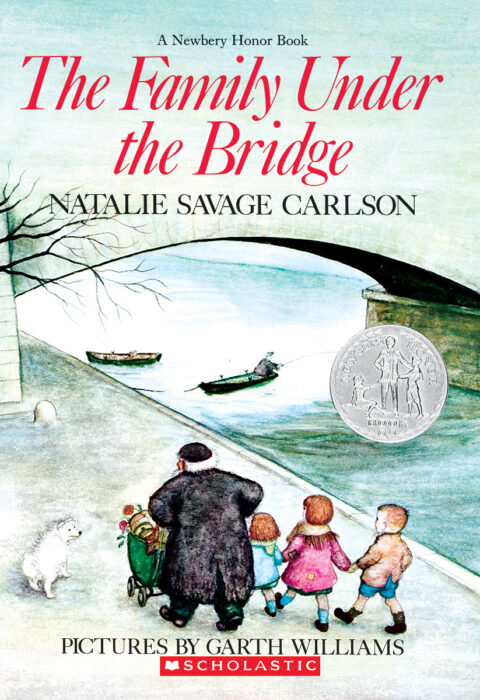
The Family Under the Bridge by Natalie Savage Carlson

The Family Under the Bridge is a Newbery Honor award-winning book by Natalie Savage Carlson. The story is about an old man named Armand, who has been experiencing homelessness for many years. He enjoys a simple and carefree lifestyle dwelling under a bridge in Paris. He owns very little, so he is able to push around all of his belongings in a baby buggy. Without a family, he feels free and independent.

One cold December evening, Armand is surprised to discover three small children occupying his usual spot under the bridge. This annoys Armand, but he sees that the children are cold and hungry. His heart is softened, and he realizes that he must find a suitable home for the children. As he tries to help them to find food and a home, he quickly becomes attached to the children.

This is a short book, but I found it quite memorable. The story is sweet and charming. It also features excellent pictures by the well-known illustrator, Garth Williams. I enjoyed the character of Armand because he develops into a very kind man as he gets to know the children. I appreciate the family-centered message of this book. The main message is of the importance of families. This would also be a great book to read around Christmastime. This book is well-deserving of its award and I would highly recommend it.

The Family Under the Bridge by Natalie Savage Carlson is available for checkout from the Mission Viejo Library.

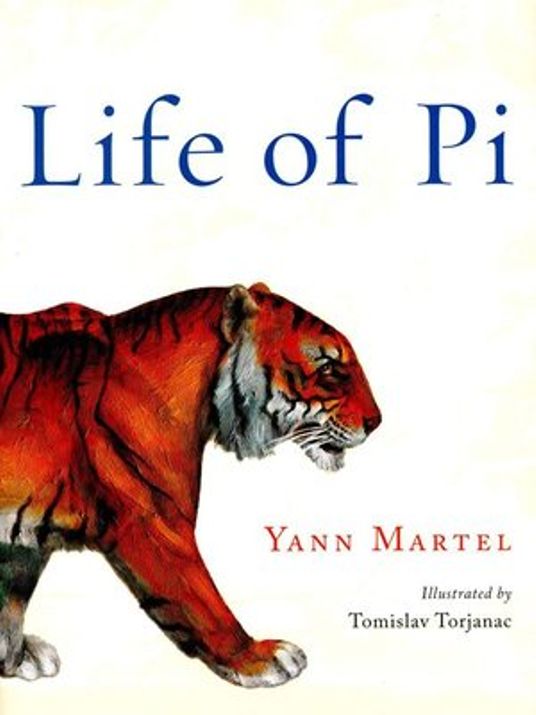
Book Review: Life Of Pi By Yann Martel

I read this book about half a year ago, towards the beginning of the school year. It was summer homework for my school, and I thought it would be very boring and a hassle. This proved not to be true as I kept reading.

This book is about a young boy, Pi Patel, who is stranded out in the middle of the ocean on a lifeboat. He is stuck with a giant tiger and some other animals. The book shows the thought process of a shocked boy who just lost his family and needs to do everything in his power to survive.

Initially, everything was well for the Patel family. They owned the Pondicherry Zoo and lived a happy life. When they decided to move to Canada, Pi’s dad decided to move all of the zoo animals to Canada and then sell them for money. This proved difficult since the ship sank, leading to Pi being stranded on a lifeboat in the middle of the ocean. I don’t want to spoil too much of what happens, but I personally thought the ending was fulfilling and that the book was very interesting.

One part I found particularly interesting was the fact that Pi was named after a swimming pool in Paris. Both of Pi’s parents were never too fond of swimming, but it was their family friend, whose favorite pool was the Piscine Molitor, who inspired them to name him that. I found it sad that the people at Pi’s school teased him by calling him “Pissing” instead of “Piscine,” but he dealt with the teasing really well and I loved how he responded to everyone, even the teacher.

Overall, I feel like this book is a great option for anyone who is looking for some good survival books. It was a lot of fun to read and there is a lot of action in the book. You will never get bored by this book!

– Albert X., 10th grade

Life of Pi by Yann Martel is available to checkout from the Mission Viejo Library. It is also available to download for free from Libby.

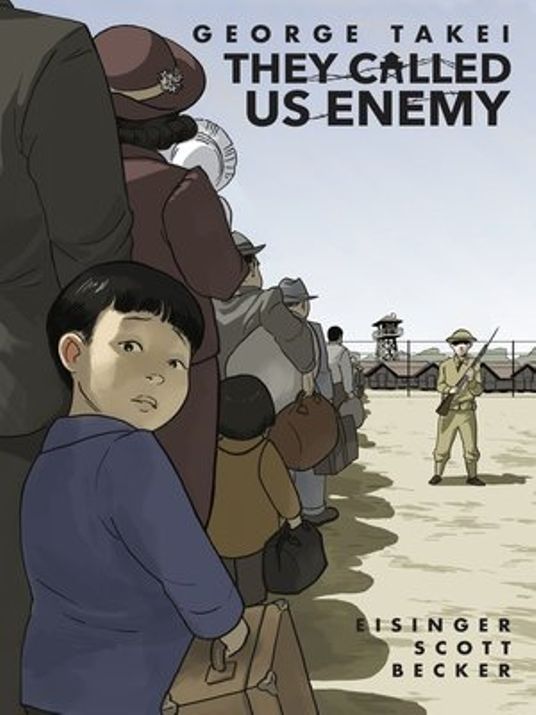
They Called Us Enemy by George Takei

In my English class, we read the graphic novel They Called Us Enemy by George Takei. George Takei is an actor, known for his role as Hikaru Sulu in the Star Trek franchise, author, and activist. They Called Us Enemy is a powerful graphic memoir of Takei’s life in the Japanese-American concentration camps during World War II.  

For context, during World War II there were two alliances. They were the Allies (including France, Great Britain, the United States, the Soviet Union, and China) and the Axis powers (including Germany, Italy, and Japan). On December 7, 1941, Japan bombed the United States Naval Base at Pearl Harbor, Hawaii. Two months later, Executive Order 9066 was passed by President Roosevelt, forcing those with Japanese Ancestry to leave their homes for internment camps because they were not considered citizens, but aliens, or foreign citizens, to the US.

George Takei was around 4 when his family had to leave for the camps. He went to two camps, Rohwer and Tule Lake, surrounded by metal fences that would influence his sense of self-belonging for the rest of his life. The book explores the aspects of dehumanization and injustice committed by the US government through his family’s imprisonment in the camps. 

In AP World History, we learned about World War II and all its outcomes. Through my class, I discovered that concentration camps for Japanese-Americans were extremely detrimental. Once I read the book, I realized that the Japanese Americans were living, breathing human beings and they weren’t just a number. They were somebody’s mother, father, uncle, aunt, brother, and/or sister, and not just some identification code. They Called Us Enemy made me realize that what happened to hundreds of thousands of people was as real as ever and detrimental to all.

They Called Us Enemy is available to check out from the Mission Viejo Library. It is also available to download for free from Libby.

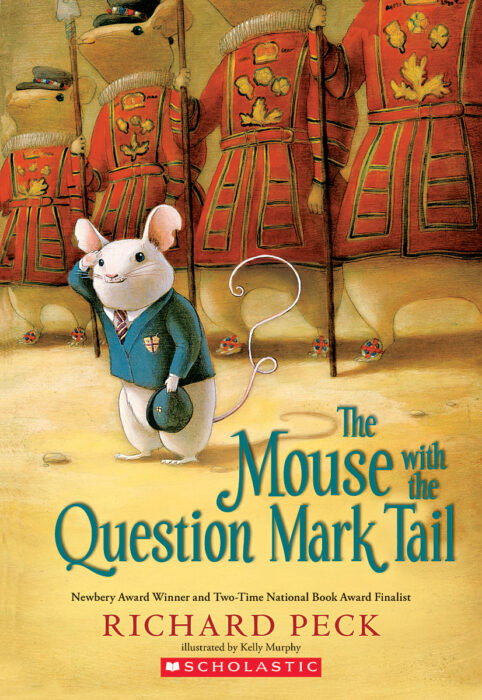
The Mouse with the Question Mark Tail by Richard Peck

The Mouse with the Question Mark Tail is a novel by acclaimed author Richard Peck. The story is told from the perspective of a young orphaned mouse. He lives with his aunt in London, in a place near Buckingham Palace called Royal Mews.  Everything about his life is a question mark. He does not know anything about his parents, and he does not know his own name. His tail is even naturally shaped in the form of a question mark. He is much smaller than other mice his age, so people start calling him “Mouse Minor.”

Life is difficult for Mouse Minor. On his first day of school at the Royal Mews Mouse Academy, he is bullied by bigger mice. The bullying gets worse over time, so he tries to escape from the school. However, he is discovered by humans who are amazed to find a mouse dressed in a school uniform. This triggers a series of events that leads to a wild and exciting adventure, which will ultimately reveal the secret of Mouse Minor’s identity.

I really enjoy the characters in this book. My favorite character is Mouse Minor himself, but I like the other characters as well. Mouse Minor makes a friend named Ian, and I like how well they get along together. I also think this book flows really well. The story is full of twists and surprises. It is also surprisingly realistic, even though the story is about human-like mice. It reminds me of another favorite book of mine, which is Kate DiCamillo’s The Tale of Despereaux. Both books are quite similar and extremely enjoyable to read. I would definitely recommend this book to anyone.

The Mouse with the Question Mark Tail by Richard Peck is available for checkout from the Mission Viejo Library. It can also be downloaded for free from Libby

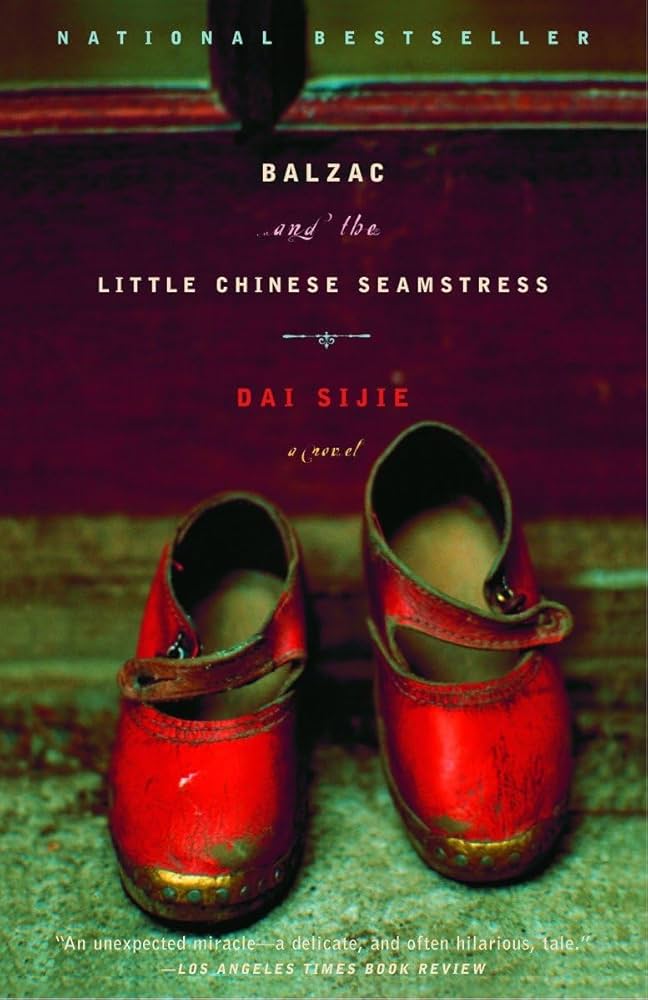
Book Review: Balzac and the Little Chinese Seamstress By Dai Sijie

Recently, I read this book for my school’s international novels unit, and I’d have to say that this is one of the best books I’ve ever read, and probably one of the only times I actually really enjoyed reading a book that was assigned to me.

This book is set in China during the Cultural Revolution. The author actually based the experience of the main character, whose name is not explicitly revealed, and his friend Luo, on his own experiences being re-educated under the communist regime. The boys in this book, who are part of a group the ruling party classifies as “young intellectuals”, are sent away to the Chinese countryside under Chairman Mao’s re-education program, where they are “re-educated” by the peasants. However, ironically, the two boys end up being the ones exposing the peasants to Western ideas, which the author makes apparent since the start of the book, with the violin and alarm clock in their possession, which the peasants have not seen before.

The two boys are sent into a small village in the mountains, for the reasons above. Early in the book, the abilities of the boys are made apparent. The main character’s main talent is playing the violin, while Luo’s ability is being able to retell and tell a story with great emotional effect. Luo’s ability eventually allows them a slight reprieve from the grueling labor they are forced to do in the village, and they get to watch and retell films for the village.

Luo and the narrator eventually meet the daughter of a tailor, one of the wealthier people in the region they are in. He eventually falls in love with her, and they have a relationship together. Meanwhile, Luo and the narrator go to visit a friend nicknamed “Four-Eyes”, who was also sent to be re-educated, similarly to them. As the story goes on, he grows more suspicious of the other two, likely due to his paranoia.

A prevalent, repeated theme throughout the book is the unlikeliness that the boys will ever be allowed to go back to the city, as their parents were branded “enemies of the people” by the new regime. The boys frequently mention that their chance to return is around “three in a thousand.” However, they still do everything in their power to be considered to be allowed to return to the city. The concept of a power balance is also explored by the author throughout the book, as he establishes how the peasants are supposed to be the ones in power and educating the boys, but the items such as the alarm clock that Luo brings to the village govern the life of the villagers to some degree, and at the same time exposes and educates them about the outside world.

I won’t spoil the rest of this book, but this book was for sure one of the better books I’ve read throughout this year. I really enjoyed the perspective and detail the author put into writing this book, using an experience he actually went through to paint a vivid picture of what it was like. I would recommend this book to anybody who likes historical fiction or just want a great book to read in general.

Balzac and the Little Chinese Seamstress by Dai Sijie is available for checkout from the Mission Viejo Library.

The Count of Monte Cristo Book or Movie Review

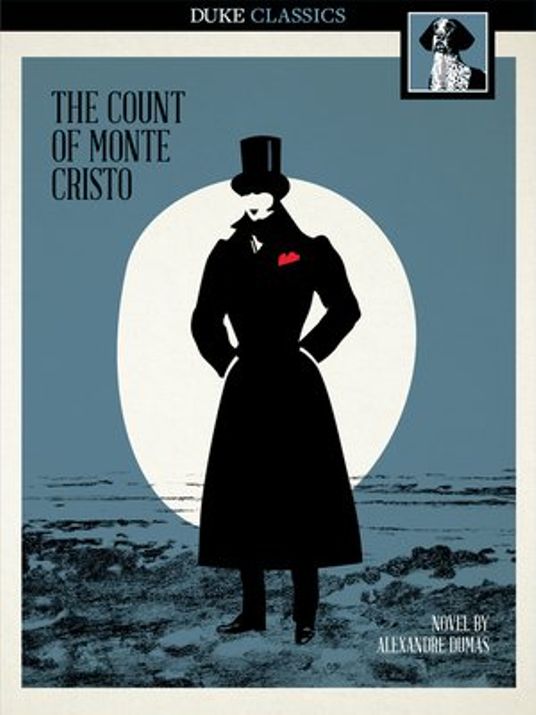
The Count of Monte Cristo by Alexandre Dumas is a literary masterpiece with numerous movie adaptations. The novel’s essence, with its tale of betrayal, revenge, and redemption, remains intact across various film interpretations. However, as with any book-to-movie transition, inherent differences arise due to the nature of these two different mediums.

With hundreds of pages, Dumas’ novel provides an immersive experience, allowing meticulous character development and exploring plot intricacies. The book offers readers a glimpse into the complexity of Edmond Dantes’ mind, unraveling his psychological and emotional evolution with unparalleled depth. The novel also has subplots and details, enriching the narrative with layers that may be challenging to fully capture in a shortened movie format.

On the other hand, constrained by time limits, film adaptations must distill the novel’s essence into a finite duration. This often involves streamlining the narrative, potentially sacrificing some of the novel’s depth for brevity. Characters may be condensed, and certain subplots may be omitted to create a more streamlined and accessible viewing experience. However, this condensation does not necessarily diminish the story’s impact; it offers a different perspective, emphasizing visual storytelling, performances, and cinema to convey emotions and critical moments.

The power of cinema lies in its ability to bring stories to life immediately. The visual spectacle, coupled with a carefully curated musical score, can enhance the emotional resonance of pivotal scenes. The beauty of cinematic landscapes and actors’ charisma breathe life into characters, making them tangible for audiences. Yet, the challenge lies in balancing the need for brevity with the desire to retain the essence of the source material.
The Count of Monte Cristo, in both books and movies, is a captivating exploration of human nature, vengeance, and the indomitable spirit. Each medium, the written word or the silver screen, brings unique strengths to the narrative, offering audiences distinct but complementary experiences of this classical literary. Whether reading the novel or watching a movie adaptation, the tale of Edmond Dantes continues to captivate and resonate across generations.

So which is better? This is a subjective question, depending on the individual and preference. Some readers like me prefer the novel because of the reading experience. I appreciate the depth of the story, the subplots, and the character’s descriptions. Others may like the movie for the immediate emotion and the visual performances. Maybe you want both. Either way, it’s well written, and that’s why the Count of Monte Cristo earned its name in classical literature. What would you choose, a book or a movie?

Happy choices!
Bella H.

The Count of Monte Cristo by Alexandre Dumas is available for checkout from the Mission Viejo Library. It can also be downloaded for free from Libby

The Outsiders by S.E. Hinton

In my English class, my teacher made us read The Outsiders, which is one of the most famous novels of all time. The Outsiders is about a group of friends with different backgrounds and personalities. The book’s main character, Ponyboy is a member of the Outsiders. At the start of the book, we learn about the rivalry between the Greasers and the Socs. Ponyboy is a Greaser, which are lower-class people, and the Socs are upper-class people. The book at the start leads us in the direction of the Socs being people without any problems, but throughout the book, we learn that the Socs do have problems of their own. While reading The Outsiders, I was very entertained by the story’s conflicts and the bond between the characters.

At the beginning of the book, we get to meet the protagonist, Ponyboy. Soon after, he gets jumped by a group of Socs while on a walk, but luckily gets saved by his friends, Steve, Two-bit, Johnny, Dally, and his two brothers Darry and Sodapop. Later in the book, Ponyboy runs into two female Socs. Through one of the girls, Ponyboy learns that Socs also have problems just like Greasers. Throughout the book, Ponyboy and his friends go through several life-changing events and character development. At the end of the story, Ponyboy learns that the world isn’t as black and white as he thought.

While I read the book, I had an amusing time reading it because of its various conflicts. Learning about each character’s different problems such as their love life and a character’s family problems makes the book a compelling read. Another part of the book I enjoyed was how the author demonstrated the bond between the characters. S.E. Hinton does an extraordinary job of showing how much each character cares about each other by using many events that demonstrate their powerful bond.

Overall, The Outsiders is one of the most captivating books to read. The most outstanding aspect of the book is the relationship between the characters. The author manages to show the bond between the main characters and even the friendship of side characters. Another marvelous part of the book is the different conflicts that each character suffers through. I highly recommend this book to other people of all ages since it can entertain a wide range of people.

-Matthew R.

The Outsiders by S. E. Hinton is available to check out from the Mission Viejo Library. It is also available to download for free from Libby.

Cold Girls Book Review

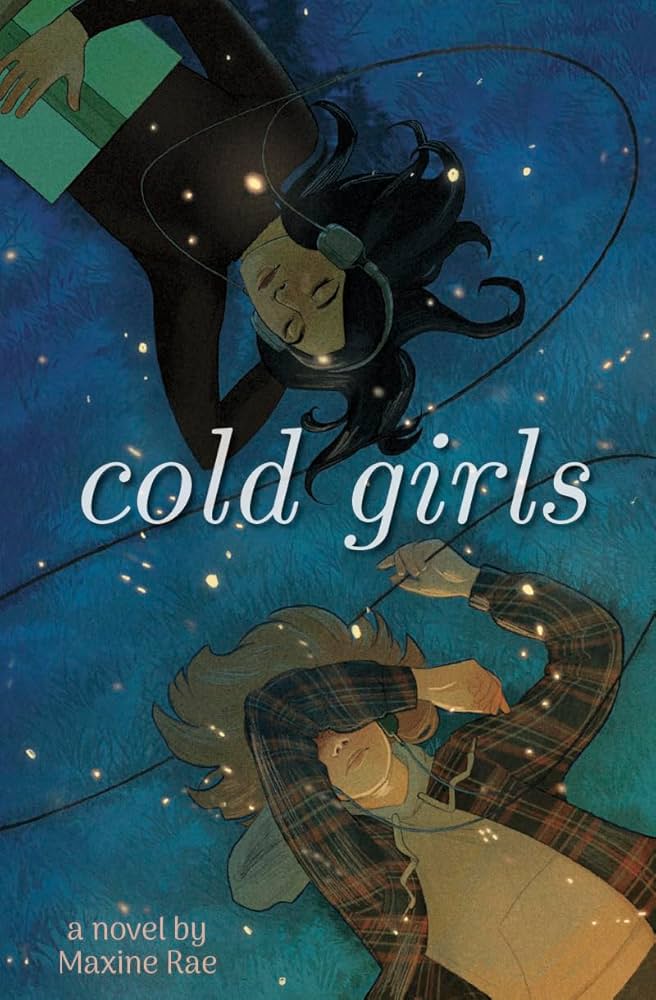
The book Cold Girls by Maxine Rae is about a girl named Rory Quinn-Morelli and her life before and after her best friend Liv’s death. The before story begins when Rory joins choir and she is placed next to Live in the alto section. They slowly start to become friends as Liv starts making small talk to her. The two start hanging out at each other’s houses and sneaking out to parties together. Soon Rory realizes that she is falling for Liv, who has a boyfriend. A few months later Rory is accepted into her chosen college and Liv is not. 

After a few months of being best friends Rory realizes two things 1) Liv knows Rory likes her and 2) Liv might like Rory too. Just as Liv leans in to kiss her, Rory backs away (because she doesn’t want to be the person to hurt Liv like people have before) and suggests that they leave the party. The two have fun and dance the night away. They both get tired and suggest going home. A car that runs a red light hits their car and Liv dies. 

The after story follows Rory after she reconnects with Liv’s parents and old friends. She starts finding peace in life and opening up to her therapist. The story ends with Rory finding letters Liv was going to give to her for her birthday. She lies down and listens to music she and Liv liked. 

One thing I loved about this book is how the author set it up. Maxine Ray created the story so both the before and after story would switch off each chapter. This showed the reader how she was affected by Liv in so many ways. I rate this book a 10/10 because all the emotions were so raw and real (I cried a few times while reading it). 

Cold Girls by Maxine Rae is available for checkout from the Mission Viejo Library.