Diamonds Are Forever by Ian Fleming

Diamonds Are Forever | Bookogs Database

He’s risked his life in an “innocent” casino. He’s fought toe-to-toe with the dastardly Soviet spy agency SMERSH. He’s even prevented nuclear annihilation of the world by the destructive Project Moonraker.

But when Agent 007, James Bond, is called in to halt a threatening diamond smuggling crime ring with expansive influence, he may finally find himself in over his head.

Posing as a captured courier, Bond teams up with Tiffany Case, a beautiful woman with ties to the very center of the operation. Following the trail of sparkling blood from Africa through England and finally to  America, Bond must infiltrate and remove every stop between the source and his destination.

Facing dangerous assassins and secrets upon secrets, Bond will somehow need to remain undercover long enough to unveil the last link in the long and deadly chain: the mysterious syndicate leader known only as “ABC.” One false move, however, and 007 may find himself on the wrong end of the wrath of the American underworld. 

Ian Fleming’s Diamonds Are Forever is the fourth book of the 007 series, and is definitely not to be missed by any James Bond fans. Jam-packed with action, adventure, danger, and hints of romance, both diamonds, and the book will last forever in the hearts and minds of the beholder.

-Mahak M. 

Diamonds Are Forever by Ian Fleming is available for checkout from the Mission Viejo Library

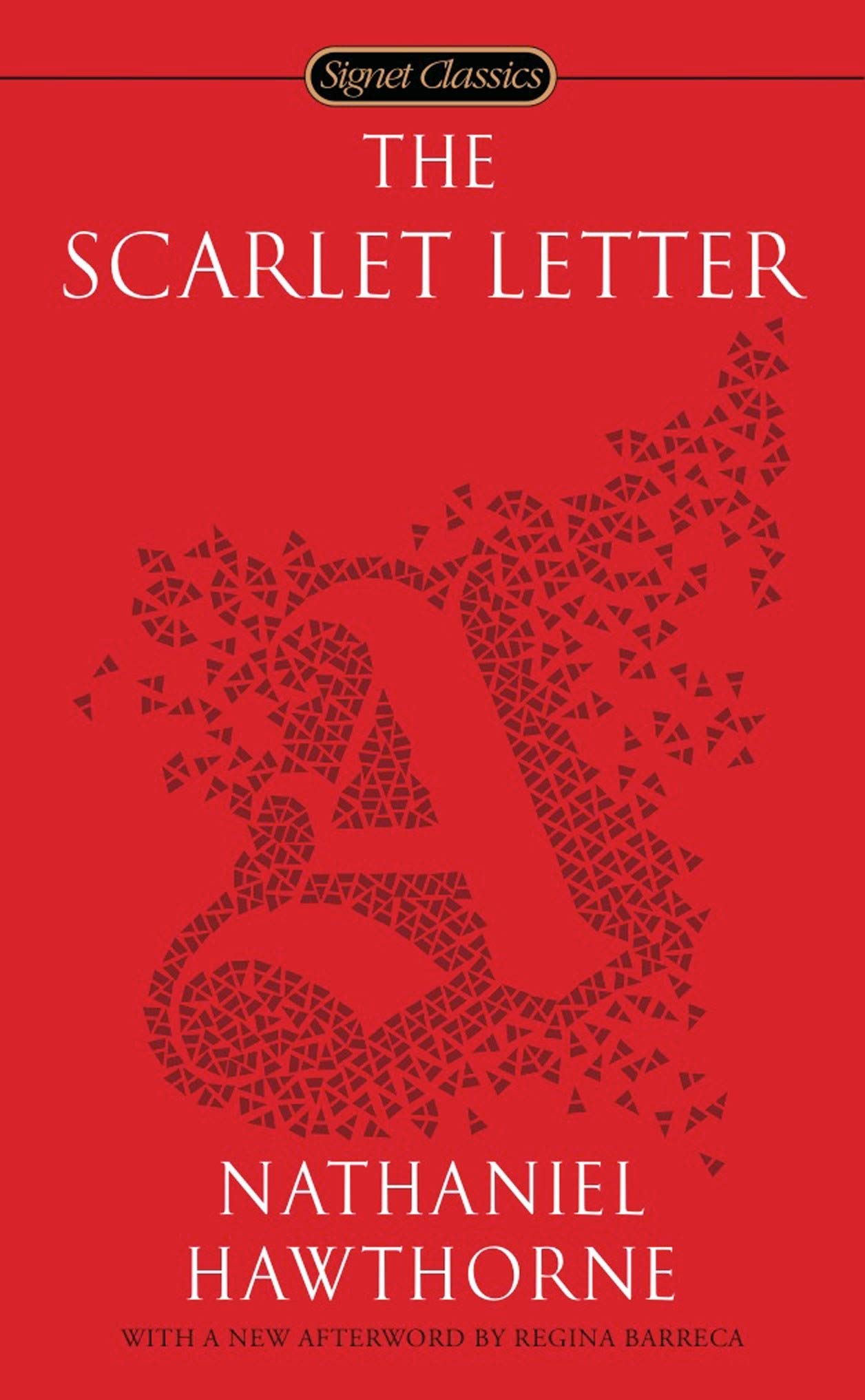
The Scarlet Letter by Nathaniel Hawthorne

The Scarlet Letter (Signet Classics): Hawthorne, Nathaniel ...

The Scarlet Letter is a novel by American romantic writer Hawthorne. It was published in 1850. The Scarlet Letter is about the tragedy of love in colonial North America. The heroine, Hester Prynne, was married to a physician, Chillingworth, but there was no love between them. In her loneliness, Prynne fell in love with the reverend Dimmesdale and gave birth to her daughter Pearl. Prynne was publicly punished and was paraded to the public with the symbol of adultery. But Hester Prynne remained steadfast and refused to name the child’s father. Symbolism is often used in the novel. Characters, plots, and language are highly subjective, and psychological activities and intuition are often given priority in the description. Therefore, it is not only a representative work of American romantic novels but also known as the pioneer of American psychoanalytic novels.

The love between Hester and Dimmesdale is full of the sacrificing spirit of a moth to the flame, which has a strong tragic color. They are not only the unashamed martyrs who sacrifice themselves for the higher truth but also the victims who are offered to God on the altar of Puritan. The symbolism of the letter “A”, at the heart of the book, is more colorful than red. Its connotation changes with the development of the plot and characters, and varies with the standpoint of the observer, showing the characteristics of wandering and drifting. “A” is the first letter of the alphabet, signifying beginning, and in Christian doctrine, the beginning in the fall, the original sin from which no one is spared. The beginning of the world was the fall; Adam and Eve, the ancestors of human beings, were expelled from the Garden of Eden because they sinned by eating the forbidden fruit. The beginning of life is also the fall, Adam and Eve’s children and grandchildren inherit original sin which means that people are born to sin.

-Coreen C.

The Scarlet Letter by Nathaniel Hawthrone is available for checkout from the Mission Viejo Library. It can also be downloaded for free from Overdrive.
Salt to the Sea by Ruta Sepetys

Salt to the Sea, written by best-seller author of Between Shades of Grey Ruta Sepetys, tells a heart-wrenching and gripping historical fiction account of an overlooked by-product of WWII. Tragically symbolic of the disaster, Sepetys eternalizes the story of human struggle across the pages of the novel from four intertwined voices: Joana, Florian, Emilia, and Alfred.

The unique characters, of varying backgrounds—a compassionate Lithuanian nurse, an innocent German soldier, a young, pregnant Polish girl, and a careful Prussian thief—cross the paths of each other, pushed together by calamity and betrayal. The book follows their journey to the Wilhelm Gustloff, the only light at the end of their tunneled worlds. The ship, an escape from the Red Army, however, is overpopulated.

The cruel truth of the history, as well as the fictional characters created, brings the world in the book to life. Although the back-stories for the characters are not explicitly written, the mystery brings a kind of de-personalization to the series of events that occur. A reader can feel him or herself more realistically in the story, stumbling upon a group of strangers, coming together, and getting to know one another by circumstance. And then, when their stories are over, all that is left of them is a memory of the time spent together. A point evocatively hit upon in the story was how someone can be judged based solely on his or her shoes. Whether they are in good condition, made from good material, their laces (or lack thereof), a person’s shoes tell their whole story.

This particular comment reminded me of the Paul Simon song, Diamonds on the Soles of Her Shoes. The song, though brimming with shifting poly-rhythms and clever lyrics, simply tells the story of a rich New York girl, her many suitors, and her shoes, the soles laced with diamonds. Likewise, although the shoes of Sepetys’ characters tell a bit about each of their individual and unique stories, the world full of horror and hardship will continue to label these accounts as simple stories, overlooking true human condition.

For all historical fiction readers and shoe lovers, I highly recommend Sepetys’ book. She maintains a striking balance between history and fiction. And because of her beautiful words, I give her nothing but the highest praise.

-Maya S.

Salt to the Sea by Ruta Sepetys is available for checkout from the Mission Viejo Library

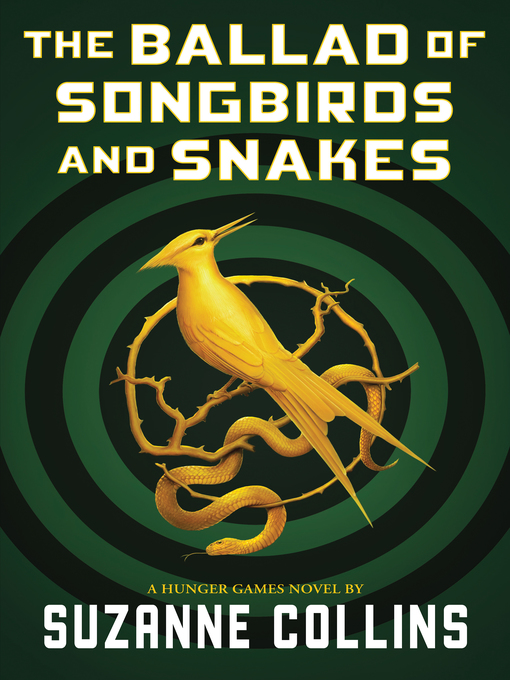
The Ballad of Songbirds and Snakes by Suzanne Collins

I recently finished the newly-released prequel to the well-known Hunger Games series, written once again by author Suzanne Collins. I loved the original trilogy so much and consider them among my favorite books, so, as you can imagine, the idea of a prequel was very exciting. Originally, the Hunger Games series was set in a post-war, dystopian era in the country of Panem, and the setting in this book is no different, other than the fact that the events within it took place earlier in time. 

Panem is divided into twelve districts of people with the Capitol as the grand center and overarching control over all. The point of the Games is to allow each district to remember their overwhelming powerlessness against the Capitol, as every year two tributes from each district  between the ages of twelve and eighteen are reaped and then forced to fight to the death in a gruesome, twisted show of entertainment, similar to ancient gladiators, while the rest of the country watches them live on television. 

Now, contrary to popular belief, this book is neither about Haymitch or Finnick, who were both characters from the original trilogy who would have indeed had interesting backstories, but rather about another intriguing character: President Coriolanus Snow. Snow was never a central character in the original trilogy, so we know little to nothing of his backstory and character, other than the fact that he is considered the trilogy’s corrupt villain, in the form of the cold, menacing leader of Panem. The Ballad of Songbirds and Snakes explores Coriolanus as to what he was like as an eighteen year old Capitol boy. From the very beginning, you can easily see how this young man will inevitably rise to power. 

This book, though often going at a slow pace, gives you insight to what life was like before Katniss ever came into the picture, and before the Games were the lively, twisted events that they were, as Coriolanus is a mentor. Funny enough, Coriolanus ended up being the mentor of the girl tribute of District Twelve, Lucy Gray. This was much to Coriolanus’s dismay, as being part of the Snow family entails a sense of superiority and importance, and being given a tribute from poor and lowly associated District Twelve is nothing short of a slap in the face for him. 

The concepts this book presents are interesting, the plot featuring many twists and turns, and there many notable characters throughout the story.  You never quite know what will happen on the other side of the page. The story unfolds slowly, but with very sharp bumps in the road. I highly recommend this book, especially if you enjoyed the other three installments of the series.

-Aisha E.

The Ballad of Songbirds and Snakes by Suzanne Collins is available for checkout from the Mission Viejo Library. It can also be downloaded for free from Overdrive.

The Golden Compass by Philip Pullman

Do you believe in destiny? No matter what your answer is, The Golden Compass by Philip Pullman will cause you to rethink it.

Full of adventure, fantasy, science-fiction and giant talking bears, The Golden Compass details the quest of a little girl named Lyra on a search for her best friend Roger. What she doesn’t know is that the fate of the world as she knows it rests in her hands.

 Throughout her journey to save her friend, Lyra receives help from a myriad of dynamic and likable characters, including a witch named Serefina, the pilot of a hot air balloon, and an armored bear, among others. She is also never without her daemon named Pantelimon, who serves as a companion and protector, and can change into the form of any animal he wants. Every person is born with one, though adult daemons do not change form.

Though the main character of the story is a little girl, it is far from a simple children’s book. The Golden Compass questions compelling topics about humanity, fate, and the possibility of alternate universes that would pique the interest of anyone with an inquisitive and imaginative mind. The book has been described by some as too controversial for the new ideas it presents. However, I believe it is important to educate oneself on the thoughts and ideas of others, even if one does not always agree with them.

All that said, the writing itself is descriptive and filled with detailed and immersive imagery illustrating each scene clearly and artfully. The characters are diverse, interesting and relatable, and if I could sit down and have lunch with all of them I would.

Each page of The Golden Compass was engaging and I thoroughly enjoyed reading it. It is different from any book I have read before and does not fall under one category. Pullman seamlessly combines fantasy, science-fiction, friendship and adventure all into one, and I am looking forward to reading the next book in the series.

-Charlotte H.

The Golden Compass is available for checkout from the Mission Viejo Library. It can also be downloaded for free from Overdrive.
The Coldest Girl in Coldtown by Holly Black

Although the name of this book originally had me skeptical, as soon as I read the first page I couldn’t stop. The Coldest Girl in Coldtown is a novel by Holly Black that was published in 2013. Its genres include Drama, Horror fiction, and Young Adult Fiction.

This novel is about a girl named Tana and her journey to a Coldtown, where she is always one step away from death, or even worse, a vampire. I thoroughly enjoyed this book and thought it was a heart-wrenching novel that was one of the most difficult to put down.

Tana’s world is centered around vampires, who are the apex predators. Without vampires, the news would be ‘boring’ and America, the only place where the spread of the vampires is somewhat contained, would have little to none to pride itself on. Coldtowns are where vampires or humans that are in the process of turning are sent. With boarded-up homes and bloodthirsty vampires rampant, the only way to describe the towns spread across the United States is… cold.

Although our current worries are far from turning into vampires, I find the characters in this book relatable. While trying to contain the virus known to them as vampires, today’s society works hard to contain Covid-19. Tara worries for her sister’s safety more than almost anything else, the same reason why I yell at my sister to put on shoes instead of flip-flops when going outside in the hopes that she doesn’t trip and fall.

As Tara is forced to journey into the deep center of a Coldtown, she makes friends, gets stabbed in the back, loses her sanity, and finds it again through the power of love and the undeniable fact that you are only as strong as you believe yourself to be.

-Apoorvi S.

The Coldest Girl in Coldtown by Holly Black is available for checkout from the Mission Viejo Library.

The Million Pound Note by Mark Twain

Man with a Million (1954) - IMDb

The Million Pound Note is a novella written by American writer Mark Twain and published in 1893. It tells the adventures of Henry Adams, an American boy who is an impoverished clerk in London. Two rich brothers in London made a bet to lend Henry an uncashable million-dollar note to see how he would wind up in a month. Instead of starving or being arrested, Henry became rich and won the heart of a beautiful lady. This article reproduces the satire and humor in the master’s novels with slightly exaggerated artistic techniques and exposes the money-worship ideology in the early 20th century.

At the beginning of the novel, Henry floats too far out to sea in his small sailboat. When he arrived in London, Henry had no one with him. After using up his last dollar, he was left without food and clothing. While Henry loitered hungrily in Portland Square, a child threw a pear with a bite thrown into the gutter. Henry stared hungrily at the muddy treasure, drooling. Just as the reader was nervous that Henry was about to grab the “treasure”, “Please come in” — just five short words, like a bolt from the blue, released the reader’s nerves. Henry’s life changed.

The young man in the novel is a true portrayal of Mark Twain. In Nevada, Mark Twain was a journalist in Virginia City, Nevada’s gold and silver region. Mark Twain was not immune to the gold rush, and he was sensitive to rumors and new opportunities. At that time, many miners who had discovered gold and silver mines were selling their shares in New York City to raise money, and Mark Twain invested all his savings, and even all his royalties, in buying silver mines.

-Coreen C.

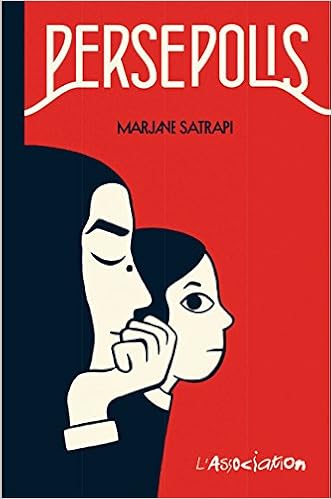
Persepolis by Marjane Satrapi

Persepolis is a graphic novel/comic that was adapted into a movie. The novel is an autobiography with true events that happened in the late 1900’s. The black and white panels of the novel can effortlessly grab the attention of any reader and make it entertaining.

Persepolis follows a young girl named Marjane who lives through the revolutionary changes in her home country of Iran during the Islamic Revolution. The most interesting part is that the ongoing crisis and corruption is viewed from a child’s perspective despite how complex it is. In a way, the reader grows and learns more about the government and cultural contexts along with the maturing Marjane.

Satrapi does not fail in grasping the reader’s attention and making them feel the rollercoaster of emotions along with the main characters. The series visits very critical and mature topics during the late 1900s that the Iranians/Marjane face. Thus, more mature readers should be able to handle these topics. 

Satrapi’s series is emotional and very moving. The oppression and government conflicts can be seen as a parallel to our world today. Just like Marjane who speaks up against the corruption of her government to maintain her rights, many of us participate in rallies or protests to uphold our values. 

Similar to Marjane who is facing a revolutionary change in her nation, many of us are currently facing a new change in our nation as well. Before Marjane knew it herself, her world changed for the better! Thus, just like Marjane, we must find the will to stay strong, inspire others, and survive. 

Ultimately, Marjane’s spirit and growing perspective of the world around her is inspiring. This series is not only a best-seller but also studied in academic literature courses all over the world as a work in translation. I highly recommend this novel to anyone who is struggling to pick up a book during quarantine or in their free time (ahem, I know that’s some of us). It also opens up your ideas of Iranian culture and Islamic politics during the 1900s. 

I also recommend it for anyone who wants to try a new format of reading: comic-style. The panels are very easy to read and the black and white colors are used in such a captivating way. In fact, I read this entire novel in one sitting. I definitely hope others feel the same way as well. 

-Zohal N. 

Persepolis by Marjane Satrapi is available for checkout from the Mission Viejo Library

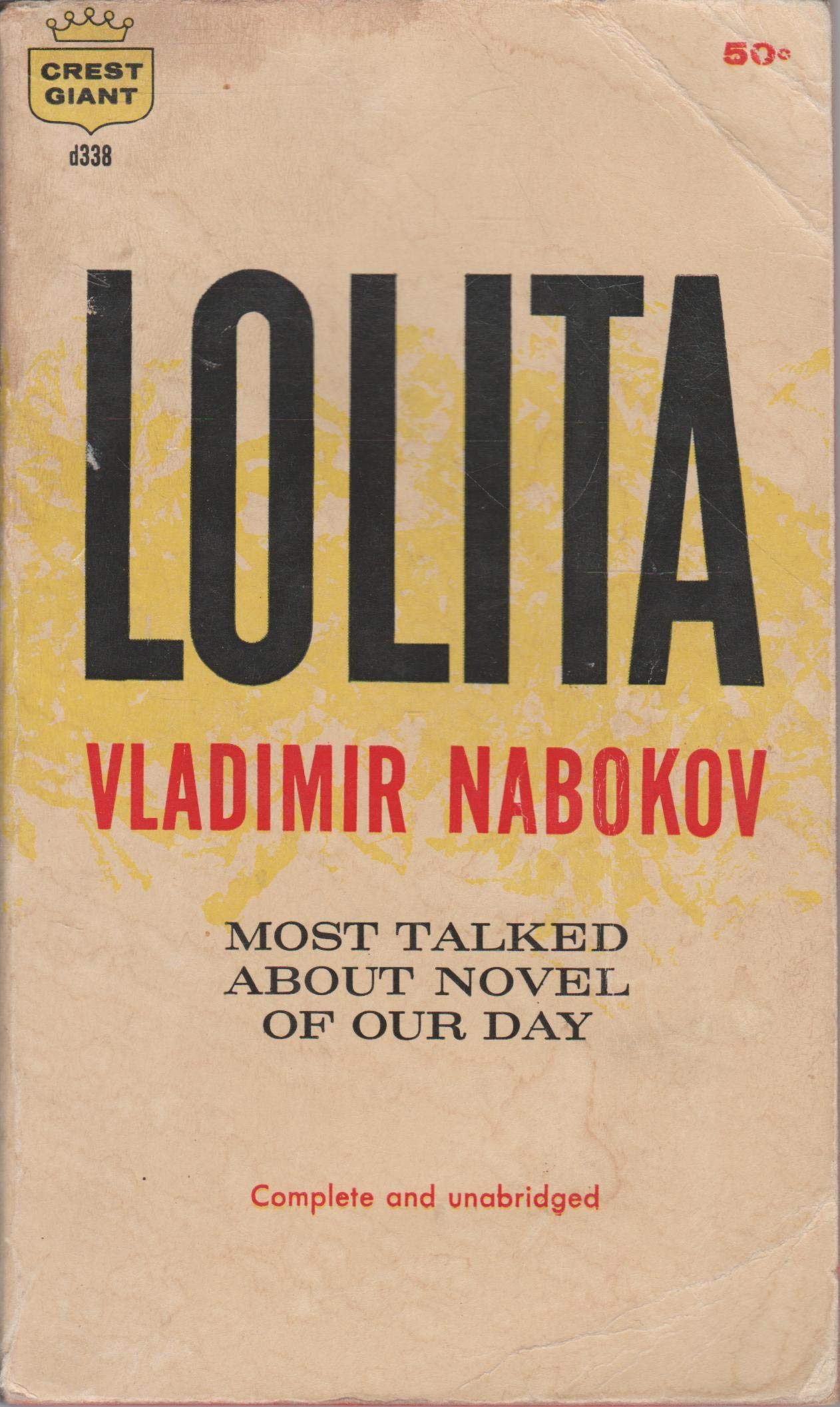
Lolita by Vladimir Nabokov

Lolita: Nabokov, Vladimir: Amazon.com: Books

Most of the book is the confession of Humbert, a death-row prisoner, recounting the love story between a middle-aged man and an underage girl. The novel was initially rejected for publication in the United States and was first published in 1955 by Olympia in Paris. Finally published in the US in 1958, the book rocketed to the top of the New York Times best-seller list. Lolita has been adapted into a film.

In the novel, Humbert Humbert, a middle-aged French immigrant to the United States, had a first love affair with a 14-year-old girl Annabel when he was a teenager. In The end, Annabel died early from typhoid fever, which led to Humbert’s transformation to a pedophile. He defined “goblin” as “nine to fourteen years old”. First abandoned by a wealthy widow, Humbert later falls for Lolita, the 12-year-old daughter of landlady Charlotte Haze, calling her a goblin. Unable to break away from Lolita due to the shadow of his childhood, Humbert marries his landlady and becomes Lolita’s stepfather in order to get close to the precocious and passionate little girl. The girl in the novel is Dolores Haze, or Lolita or Lo, as the Spanish-sounding nickname for the book’s title.

The landlady in her husband’s diary later found out his secret and was very angry that he cheated on her. Humbert later picks Lolita up from camp and travels with her, thinking that by drugging her in her drink he can unknowingly molest her. The drug had no effect on Lolita (because it wasn’t really a powerful sleeping pill), and instead, the next morning, Lolita flirted with Humbert and had an incestuous relationship. Humbert then informs Lolita that her mother is dead, and with no choice, Lolita accepts that she must live with her stepfather. Humbert takes Lolita on a father and daughter tour of The United States, using pocket money, beautiful clothes, and delicious food to control Lolita and continues to satisfy his desire for her. As Lolita grows up, she begins to dislike her stepfather and starts dating boys of her own age. She takes the opportunity of a trip to break away from her stepfather. Humbert searched frantically at first, but eventually gave up.

Three years later, Humbert receives a letter from Lolita. It says that she is married, pregnant, and needs financial help from her stepfather. Humbert gave her $400 in cash, a check for $3,600, and a $10,000 deed to the house that he had sold. He asked Lolita who is the man who took her away from, and Lolita told him that the man is Quilty who is a professor of performance at her school. She told him that she ran away from Quilty because she rejected Quilty’s request to her and the other boys for making pornographic films. Humbert begged Lolita to leave her husband and go with him, but she refused, and Humbert was heartbroken. He tracked down and shot Quilty. Humbert died in prison of a blood clot, and Lolita died in childbirth on Christmas Day 1950 at the age of 17.

-Coreen C.

Lolita by Vladimir Nabokov is available for checkout from the Mission Viejo Library. It is also available to download from Overdrive.

Romeo and Juliet by William Shakespeare

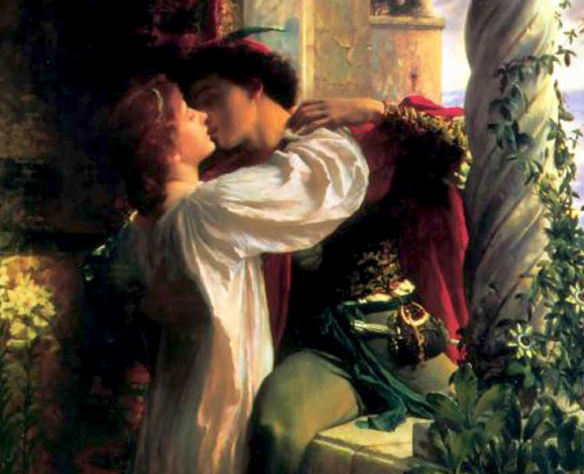
Wait, Romeo and Juliet, that’s the one about love right?  Yes, my friend, that is the one about love, but also it explores so much more.  In the sixteenth century play, two rival clans, the Montagues, and the Capulets has a child, Romeo and Juliet, who fall helplessly in love with each other but are not permitted to be with each other and as a result of this, through an elaborate plan which backfires, ultimately each takes their own lives. 

On a surface level, it is a story about love. But deeper down is the story’s true motifs, rejection of stereotypes.  For example, when Romeo and Juliet come to the conclusion that they are from rival houses, this does not hinder their romance. They put their families’ differences behind them without even a thought. Juliet rebels against her father’s patriarchal control over her by refusing the arranged marriage he attempts to force upon her. Also, she is a renegade in the sense that she was ahead of her time in the ways of intellect. Juliet always thinks things through or has a plan. Her character beats the old fashioned notion of girls being simple creatures that act on a whim and can’t be logical into the ground.  Friar Lawrence breaks the mood by telling Romeo to buy illegal drugs. 

All around in this story, people are rejecting the stereotypes that others represent and rejecting the ones that they represent as well. Today, if we were collectively wise enough as a society to reject stereotypes, think of how much more in unison we would all be. Now, of all times, we should be looking past stereotypes. Over four hundred years ago Shakespeare wrote this revolutionary play about looking past stereotypes and some of us are too ignorant to get it through our skulls. Remember this, a stereotype is merely a figment of one’s imagination. The more you believe it, the more you put it in the forefront of your mind as you go through life, the more prevalent you make it. As the monster you thought was in your closet as a kid, the more you thought about it, the more real it seemed.  The more you see the stereotypes, the more of a monster you become.

In the words of Nelson Mandela, “It is in your hands to create a better world for all those who live in it”

Treat others how you would like to be treated.  Don’t be the monster in the closet that you were scared of as a kid. 

-Ainsley H

Romeo and Juliet, and collective works of William Shakespeare, is available for checkout form the Mission Viejo Library