Starter AP Classes to Take

When exploring classes to take, you will likely come across AP Classes or advanced placement classes. These classes are college-level courses that you can take in high school for college credit. While each test is different for every subject, most tests consist of multiple choice, free-response, short-answer, and essay questions. Tests are typically taken during May, and scores are released in July. AP tests are graded on a scale of 1 to 5, with 5 being the best. If you receive a score of 4 or 5, you can gain college credit.

One AP class that is easy and manageable is AP Human Geography. I took this class as a freshman (usually it is a freshman class) and thoroughly enjoyed it. I found that the content was straightforward and easy to understand; more significantly, it was interesting as well. In AP HUG, I learned about how humans are arranged and the ways in which they interact with others and the environment. At first, this class was challenging to me; however, later in the year, it became one of my easier classes. For me, the hardest part of AP HUG was the multiple-choice questions (compared to AP World they’re easy), and the note-taking which was long and extensive. However, if you diligently study and work hard in this class, you’ll fly through the exam. The multiple-choice questions can be tricky at first because many of them are stimuli and based on models. I believe I received a score of 72% on the first test from the MC’s. One tip that helped was doing test corrections and reviewing the things I got wrong. Although I did horribly on my first couple of tests, I did well on the exam–so don’t worry if you get a bad grade on tests. To conclude, this AP class is great preparation for future classes and an easy way to get college credit.

Helpful Sources

  • Mr. Sinn on Youtube
  • Crash Course Book on AP HUG
  • Princeton AP HUG book

The second AP class that I would recommend taking is AP World. Unlike AP HUG, World focuses on all of the major global events from 1200 AD to the present day. In comparison HUG hones in on the 21st century. Since AP World teaches students about most historical events, it makes the course difficult because there is much to remember. Additionally, the exam is made up of multiple choice questions, short answer questions, free response questions, long essay questions, and a document-based question (essay); this makes the extremely exam lengthy. Because the exam is long, it is difficult to remember all of the content. Another difficulty is that the multiple choice questions are challenging and have trickly answer choices. While you will face these hardships on the AP route, it will strengthen your test-taking skills + knowledge. You should take this class if you enjoy history and practicing writing skills.

Helpful Sources

  • Hiemler’s History on Youtube
  • Crash Course Book on AP World

Two Must-Have Books for Biology-Interested High Schoolers

Over Christmas break, I will spend some extra time studying for USABO, or Biology Olympiad. Even though I am currently taking AP Biology, I quickly realized that AP Curriculums in most schools don’t completely cover the curriculum required for similar competitions for high-school students. After a little research and personal experience, I found the following list of books the most helpful:

Campbell Biology (Any edition after 8th)

This series of textbooks has historically been a must-have if you are studying for USABO or any similar biology-related competition. It is by far one of the most comprehensive and time-saving resources I have found. I currently have the 11th edition, which is not much different from the 10th or 12th editions content-wise. The price of a textbook from this series ranges from 60 dollars to a whopping 300 dollars (if you are considering buying a textbook). Still, many libraries offer this textbook, making it accessible if you would like to use it.

Anatomica: The Complete Home Medical Reference

This book is one of the most comprehensive human anatomy and physiology resources I’ve used. Although not for the faint of heart, with highly detailed diagrams of internal organs and organ systems, I found this book highly helpful for the human A&P class I am currently taking at school. Furthermore, the book contains some more information detailing diseases and disorders affecting each one of the body systems it covers, making this book useful for those who want to learn a bit about medicine.

Overall, if you really love biology or science classes in general, I would recommend both these books as a more comprehensive way to learn at a higher level about biology-related subjects!

Why You Should Join High School Clubs

As the school year begins, high school students form and join clubs. This phenomenon is called “Club Rush,” which is a week dedicated to students joining clubs. During lunch, there is a craze of students mobbing each club’s stand to see if they’re interested in joining. Clubs are extremely beneficial, as they:

1. Bring People Together: If you want to make new friends or be a part of something that brings likeminded people of your interests together, joining a club is a great way to branch out. Clubs are like gold mines for building social connections with your peers. For example, if you are interested in the debate club, joining will allow you to meet others who are interested in debate, and you can compete with or against each other.

2. Build Your Resume Up: Joining clubs allows you to be involved in your school, especially because they are considered extracurriculars. To preface, the clubs you partake in need to be worthwhile to you, as taking the time and energy towards clubs is what colleges value. Truly being passionate about a club shows that you are dedicated and contribute to the prosperity of your school.

3. Exploring Interests: For underclassmen, specifically freshman, joining clubs allows you to evaluate your passions and interests. You can gain skills that you might have found unimaginable, or you might join clubs that you already have hobbies in. Nonetheless, these clubs give you responsibility that is noteworthy, so being a part of clubs that you are interested in can help you figure out your college major and future job. 

4. Allow Leadership Opportunities: You can gain leadership positions in clubs, making you an experienced individual with managing projects and decisions. The communication skills acquired when running a club are invaluable. Overall, you can become more confident as a person and as a leader with the leadership skills you gain when operating clubs.

I hope my guidance inspires you to explore and join clubs at your high school!

– Sophia B.

What is MUN?

Model UN or MUN is an extracurricular where students go to conferences and pose as delegates of the United Nations. At these conferences, students are delegates of their assigned country, where they work together to attempt to to solve a world issue.

Some may not fully understand what delegates do in their committees, but want to join MUN. Listed below are normal procedures in a MUN conference.

  1. Speeches: Each delegate gives a one to two minute speech outlining their ideas for solving the committee’s problem. Every speech should include background information on the subject, country policy, and your solutions as the delegate. 
  2. Unmoderated Caucus: UN MODS are unstructured discussion sessions (that lasts around 10-15 mins) during which delegates are free to speak with one another. You can create resolution groups during UN MODS with nations who have similar country policies or similar solutions.
  3. Comments: After every delegate’s speech, there should be two comments (each lasting about thirty seconds) during which the delegate addresses the past speech. 
  4. Moderated Caucus: MODS are scheduled, structured debating sessions that specialize on resolving a particular aspect of the topic. Early in the conference, delegates use the MODS to discuss and debate various concepts. Basically, it’s a debate format where delegates can speak for around 30-60 seconds about a certain subtopic.
  5. Resolution papers: Once meeting in UN MODS, delegates make resolution papers together on the topic, combining all their solutions together.
  6. Presenting: After all the resolution papers have been made, 1/3rd of each resolution group is allowed to present it to the whole committee. For example, if there are 6 people in your resolution group, 1/3rd of 6 is 2, so there are 2 people allowed to present.

I love MUN because you get to meet new people and act like a true United Nations delegate. MUN is truly a fun experience, as going to different conferences with your friends is really fun. I hope reading my post has encouraged you to join your school’s MUN!

-Sophia B.

Should Cellphones be Banned in School?

Starting in 2025, the LA Unified School District will be enacting a ban on cellphones at school. Cellphone bans are nothing new; in May of 2023, the state of Florida passed a ban on phones in school as well. While some people support these bans, others are more reluctant. In this article, I will be breaking down both sides of the case on phones in school.

Why we should ban phones: 

  • Phones are considered highly addictive. A scholarly journal published by the National Library of Medicine reported that on average, 16% of adolescents are addicted to their phones. In addition to this, addicitoncenter.com states that, “A recent study scanned participants’ brains with a phone addiction and discovered a change in their brain’s grey matter. According to the researchers, the physical shape and size of their brains resembled that of drug users.”
  • It’s a distraction. Since phones are addictive, students can easily be distracted by their addiction in class. Even if they aren’t addicted, it’s hard to resist a buzzing phone. “Approximately 40% of public schools report moderate to severe negative impacts on student learning and on teacher and staff morale when students use their electronic devices without permission. Many teachers report that students being distracted with their cellphones is a major problem in their classrooms… The presence of smart phones may reduce cognitive capacity, especially for those highly addicted to their phones, and notifications disrupt focus and attention. Further, there is a negative association between time spent on smartphones and academic performance,” says KFF (affiliated with Kaiser Hospital).” A common reason for cellphone bans is the high risk of distracting from schoolwork, in turn reducing grades. 
  • They are harmful to mental health. The National Institute of Health says that, “Numerous studies have found that addiction and depression often go hand in hand, and that addiction increases the risk of depression and is an important predictor of depression. A 4-year follow-up study confirms that Internet addiction is a stable cause of depression.” Increased awareness about student mental health have led to concerns about the impacts of smart devices.

Why we shouldn’t ban phones:

  • They are a learning tool. While phones can be distracting in class, they can also be great learning tools. “Cell phones give students access to tools and apps that can help them complete and stay on top of their class work. These tools can also teach students to develop better study habits, like time management and organization skills,” claims Oxford Learning.
  • Cellphones are a way for schools to help students prepare for adulthood. Statistics show that around 97% of the adult population possess cellphones in the US. Even if phones may be a distraction, students need to learn how to responsibly use these devices so that they can be successful as an adult. “A research scientist in the center for Health and Happiness, argues that more flexible classroom policies [regarding cell phones] can create opportunities for teaching tech-literacy and self-regulation,” explains Harvard Gazette
  • Helpful for communication, especially in emergencies. Another reason many parents cite for keeping phones in class is the purpose of communication and safety. Many phones have built in tracking devices that parents use to keep track of their kids. In addition, phones can be very useful in a school emergency as they possess the ability to contact emergency services. “We aren’t texting our kids memes or asking them what the latest TikTok trend is,” National Parents Union president Keri Rodrigues says in a statement. “Cellphone bans fail to take into consideration the tragic, real-life scenarios that unfortunately play out all too often in schools. And schools have yet to improve communication with us.” 

In conclusion, there are many pros and cons to having cellphones in schools. There is no right answer for how to proceed on this policy. Only time will tell if phone bans even end up being effective. What do you think? Should phones be banned in schools?

Tips for Incoming Freshmen

It’s fall again, and the school year is starting back up again. If you are a freshman as I was last school year, here are some tips for the first year of high school.

1. Use a planner-One of the things that I would recommend doing in the freshman year of high school is using a planner. I found doing this helpful because it helps you to keep track of your homework and activities and tests and it is a great way to keep organized in general.

2. Another thing that I would recommend doing during freshman year is to join sports and clubs. Joining a sport is great for making new friends as well as keeping in shape, and it also looks great on college applications. I would also recommend joining clubs during freshman year, since it can help you to pursue the things you are interested in outside of school as well.

3. During freshman year I would personally suggest looking into some of the more challenging courses if you are interested in them. I would recommend taking math, science, and English courses, and look into AP classes if you are interested in them. I would also suggest looking into the electives that are related to the things that you are interested in.

4. Another skill that I found helpful for the freshman year of high school is making good study habits. For example, try not to only study the night before a test, but try to start studying a while before a test. I also found it helpful to make study guides to review which also makes it easier to study for finals. It can also be helpful to review your notes regularly to make sure you know all of the material.

5. Another thing that is great to do during freshman year is to get involved in the community and start doing community service. This is great for making new friends as you will meet many people as you serve in the community. Getting involved in the community early in high school also looks great on a college application and will help you to stand out as well.

6. Finally, don’t worry too much. High school can be challenging sometimes, but one of the things that can be helpful in in getting through your first year is not stressing out too much and still giving yourself time to relax and unwind. Be patient with yourself and don’t stress out too much about mistakes, and keep on doing the things you enjoy. Good luck and have a great first year!

Tips for Incoming Sophomores!

Hey everyone!

The new school year is coming up in a couple of weeks and if you are an incoming sophomore as I was last year, I have some quick tips for you to make sure you get a good start!

  1. This year I would focus on taking more of the harder classes, and making sure you get a good grade in that class. Whether it’s a humanities, math, or a science course, you need those courses as a sort of pre-req into the classes for junior year. For example, at our high school, people who take AP European history sophomore year is oftentimes more prepared for APUSH junior year because you have the foundation of not only history knowledge, but also how to outline (* which is super important btw!!!).
  2. Also, this is the time of year for you to start getting to know which sort of courses you like? Are you into more of the science classes, math, maybe English? Or perhaps it’s an elective course, like AP Seminar/AP Research/AP Comp Sci, etc. Colleges like to know what you are interested in, so it’s time to dive deep and find which courses suit or interest you!
  3. The SAT requirement is starting back up at a lot of the UC schools and Ivy league schools as well! This means you should start prepping for the SAT early on, preferably starting in sophomore year summer! The information presented in the SAT may look easy at first glance, but they test you on a wide range of knowledge, so be prepared!
  4. It is also time to get the extracurriculars in order as well! If you want to suceed and make your own path through high school, it’s crucial to start building a strong extracurricular profile. Whether you’re passionate about a sport, a club, volunteering, or perhaps something more unique like starting your own initiative, now is the time to dive in. Colleges appreciate commitment, so sticking with an activity and taking on leadership roles can really make your application stand out.
  5. Lastly, don’t forget to also have those moments to destress. High school is tough, but it’s important to find a balance. Make sure you’re getting enough sleep, eating well, and setting aside time to relax and enjoy your high school experience. Especially sleep!!! I know we all pull all-nighters from time to time, but sleep is important for you to function!

Good luck sophomores! Junior year awaits you 🙂

What is ASB Camp?

The Associated Student Body (ASB) is a group of roughly 40 students who, each year, make decisions about a variety of school events. The dances, such as the Hello Dance, Homecoming, Winter Formal, and Prom are great examples of this, but ASB students also play a crucial role in hosting an annual leadership conference at LHHS. At this conference, the ASBs from each high school in SVUSD create and run their own workshops for 7th and 8th graders, teaching them what it means to be a leader and how they can strengthen their leadership skills. On top of this, ASB is in charge of maintaining a positive, inclusive environment in the day-to-day life of their school. With all of this responsibility comes a high requirement of experience and dedication– but where do they learn to be leaders? The answer is the Orange County Leadership Camp (OCL). 

OCL is a 4-day summer camp for rising high school students who were accepted to be part of their school’s ASB. Students attend the program with their high school and for many incoming freshmen, this is their first exposure to the new freedoms (and responsibilities) that high school leadership entails. Students are immersed in several workshops taught by public speakers and learn about how to bring the most to their school through their position in ASB. Since each student in ASB has a specific job title such as Commissioner of Campus Awareness, or Class President, they attend classes that are best suited to their duties. In these workshops, students collaborate with others from a variety of backgrounds and learn how to take on different perspectives to incorporate back at home.

Not only does OCL bring in renowned speakers to train our students, but each school’s ASB chooses two people to lead a mini lesson on a specific event or tradition that their school specializes in. In this activity, known as “Meet the Pros,” every student rotates to a different mini lesson after 5-10 minutes. This process allows students to be exposed to a plethora of creative ideas, such as a senior-only talent show at the end of the year, or a student mental health week,  which can be adapted back at their school. Having small groups of students rather than one or two large ones allows for the audience to ask questions and take in-depth notes, even coming up with ways to improve the event being described. Previously, LHHS taught a mini lesson on our Staff Appreciation Week, in which ASB makes candy necklaces for the staff, writes personalized cards to each of them, and makes them elaborate posters. 

Being such an integral part of their school, it is essential for ASB leaders to establish a community where people can feel like their voices are heard. While much of their learning comes from trial and error, OCL provides these students with a head start to making the school year as successful and enjoyable as possible. 

How to Make The Most of the Upcoming School Year

The school year is steadily approaching as summer dwindles to an end, which means it’s time to prepare and get back into routine. However, going beyond academics and succeeding in all your classes, here are a list of tips to remind yourself of during the school year! While it’s important to focus on school itself, there’s still so much more to school than just studying and getting good grades. Let’s ensure that this school year is truly memorable for you and everyone else around you! Good luck in the upcoming school year!

  1. Have fun with friends
  2. Get to know new people
  3. Go after your passions
  4. Challenge yourself
  5. Go outside of your comfort zone
  6. Explore new interests and electives
  7. Create traditions and memories with your friends
  8. Celebrate your achievements, no matter how small
  9. Be kind to others
  10. Set goals to motivate yourself
  11. Be willing to make mistakes and learn form them
  12. Seek help whenever you need it
  13. Learn how to cope with stress and anxiety
  14. Learn more about future career opportunities
  15. Develop time management skills as well as other life skills
  16. Go to school dances and events
  17. Attend a sports game
  18. Join clubs
  19. Make the most out of the school year
  20. Live in the moment

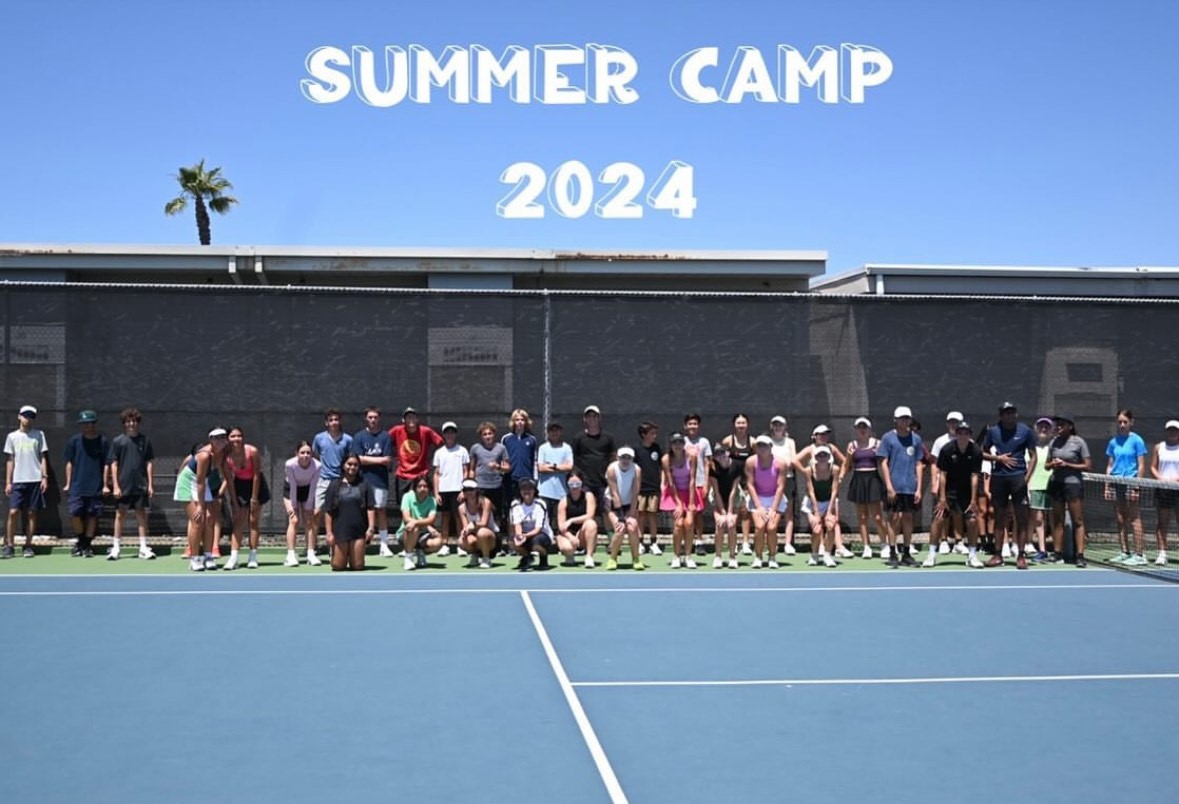
What to Expect from a CUSD Girls Tennis Camp & Tryouts

As the school year approaches, many high schools in the Capistrano Unified School District (CUSD) are preparing for the girls tennis season, as it is a fall sport. The preparation includes tennis camps and tryouts, where girls of all levels play each other to be placed on the team of their caliber. If you are looking to join your high school’s tennis team, listed below are what you should expect:

  1. Conditioning: During tennis camps the girls are expected to do a multitude of running drills to get their speed, endurance, and agility improved for the season. One drill is commonly known aspect “Suicides” where players line up on the baseline and then sprint to the lines below, making sure to touch the baseline again after each one. Another conditioning drill is relay races, where players divide up into teams and do one “Suicide.” Whichever team finishes first wins, and the losing team has to do whatever “punishment” the winners pick, like 10 squats or 10 jumping jacks.
  2. Hitting Drills: In both the tennis camps and tryouts, the girls play hitting drills with the coach on their court. This entails games where coaches feed players the ball, such as overhead and volley drills. There are other drills that include hitting forehand and backhand shots and then coming up to the net with an approach shot, followed by a volley and/or overhead.
  3. Practicing Serves: Players practice their serves simultaneously at the baseline during the camps. Usually while practicing their serves, there will be cones in the service box to target. This is advantageous since it teaches the players how to serve in match play by focusing on the corners. If you hit a cone, you typically will not have to participate in whatever conditioning the other girls on your court have to do.
  4. Live Ball: During live ball, the girls play games against each other, such as Queen(s) of the Court. In Queen(s) of the Court, there is either a single girl or two girls that are the queens on one side of the court. All the other girls have to challenge the queen(s) and if they win, they replace the queen(s) on the other side of the court. There are many other live ball games like Queen(s) of the Court that test how a player responds in match play.

I hope my explanation clarifies any questions you may have about how high schools in the Capistrano Unified School District operate their girls tennis camps and tryouts.

– Sophia B.