Freshman Advice

I know that high school may seem like this big daunting thing that is super scary and stressful. I can tell you from personal experience that while it can get stressful at times, it truly isn’t as bad as it seems. I have complied some tips that I have learned along the way that I wish freshman me had and I wanted to share them with you today.

  1. Time Management

I know this may seem cliche but I truthfully believe this is the one thing that will lead you to success. Time management doesn’t mean getting a planner out and planning out every single second of your day, it could just mean writing a reminder in your phone about when an assignment is due. I cannot stress the importance of using your phone as an academic tool. I personally like to use my phones calendar as a reminder system because I can set it to be a lock screen widget. I can say that the calendar has saved me stress more times then I can count.

2. Join Clubs!

Another cliche but it really is true. Clubs are the way to make yourself stand out in a crowd. I know thinking about college right now may seem scary but thinking about the little things you can start freshman year that your future self will thank you for is very important. I personally didn’t start joining clubs until my Junior year and that is when you should be going for leadership positions and trying to make your extra curriculars stronger. If your school provides it, I think CSF or California Scholarship Federation, is the best club to join your freshman year. It is a volunteering based club which means it teaches you how to time manage as well as make an impact on the community!

3. Try Sports Out

Now, I’m not saying go all into sports and make that the only thing on your mind, but if you generally are not an athletic person, joining a no cut sport may help boost your athleticism and make more friends. I decided to give a no cut sport a try my Sophomore year and I can say that some of my best friends came out of that sport. Remember, if you don’t like it you don’t have to stay! No one is forcing you to do that sport, you are always free to say I don’t like this and quit. Nothing is wrong with quitting if it doesn’t make you happy to be there, happiness is always the main priority.

These were some simple tips and tricks I have complied to help out the future class of freshman before going into high school. The main tip I have is to have fun! Not everything is as serious as it seems, everyone is learning and everyone will make mistakes. You got this 🙂

Next Year Jitters

Whether you’re going into high school, Junior year, or Senior year, then obviously it’s going to be scary. As a sophomore who is going into Junior year, there are so many nerves that are just happening all at once. Especially now that you have to try harder in your academics for potential colleges and careers. One thing I’m glad I know though is that I’m not going through this whole feeling alone, so it gives me that sense of comfort. I asked a lot of my friends these questions about what they’re going to be doing for their classes next year and every response I get makes it seem like they have it all figured out, which I have to admit, I’m a bit jealous of.

It’s not that I know what I’m walking into next year in terms of academic courses, but it also runs down to the fact of how I’m going to handle it. One thing I tend to notice about myself is that I don’t know how to handle pressure, which is a skill I desperately need to work on, but at the same time, how does that benefit me for next year? Because I know that this year (or whatever grade you’re in now) determines a good portion of your life. I know everyone has their way of coping with certain situations, but there would also be a lot of doubt when I feel the walls closing in. Maybe it’s because of fight or flight reaction..?

I know a lot of schools right now are getting out for the summer right now, but thinking about next year kind of makes you think in a new light. How everything in your school career has gone into this very moment of now. Moving into the next grade and all that good stuff, embracing new and old peers, learning new subjects, it all seems a bit surreal. I could probably just be ranting here but the whole moving up to another level of school is very dawning, it just occurred to me that I’m entering junior year next year and mentally, I am not ready in the slightest.

But, I also think about the new things I will be enduring too, because high school is an experience that you can experiment with both the good and the bad at the same time, so it gives that good reflection too! I would say I’ve enjoyed these past two years so far, and it’s also nice to know that I’m in the same boat with a lot of people too. It’s sad but true, school does get harder as you go, but the only way we can actually persevere through the trials and tribulations is just to dive in head first and put in the work to make it all worth it.

AP Seminar: Recommended Class For Juniors!

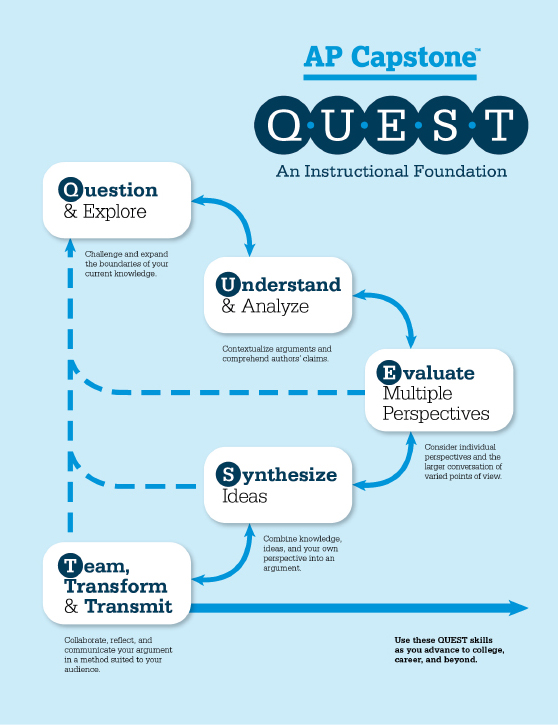
Taking AP Seminar this year has helped me learn and investigate more deeply into a specific topic that I enjoyed. This class is unique from other classes I have taken because it allows you to collaborate with other people to research a topic that interests the whole group.

This class has also helped me develop skills for independent research such as developing the skills to create a research question and being able to narrow down the question into something that is more researchable.

Not only does this apply to real-world applications such as what is happening around the world currently, it also teaches you truly how to research, which oftentimes requires collaboration.

For those of you who get nervous while presenting, this class is for you too! Because this class is a research class, you first do the research, and then you present your topic.

The first 4 months of the class are focused on writing your Individual Research Report (IRR) and a Team Multimedia Presentation (TMP). In these months, your group gets to choose a topic, spend time drafting an arguable research question, and then put that research into a slideshow. The IRR is written simultaneously while you are researching in which you put the different perspectives you researched into conversation with one another.

The second part of the seminar course is where you receive a packet of around 5 stories or articles revolving around a theme. This part is the independent portion and you get to draft your research question based off of the theme. Then, you write a report of your findings and make a 6-8 minute presentation on it by yourself.

This AP course, I believe, is essential for real life as well. In college, we’ll have to be able to research topics we don’t understand, and with this ability we learn in high school, we can better thrive in college.

Tips to Study for the AP Test

Test season is almost here already, and that means that the AP Test is coming up soon as well. The AP test can sometimes be a lot to study for, so here are some helpful tips that helped me and will make studying a breeze.

1. Buy a test prep book.

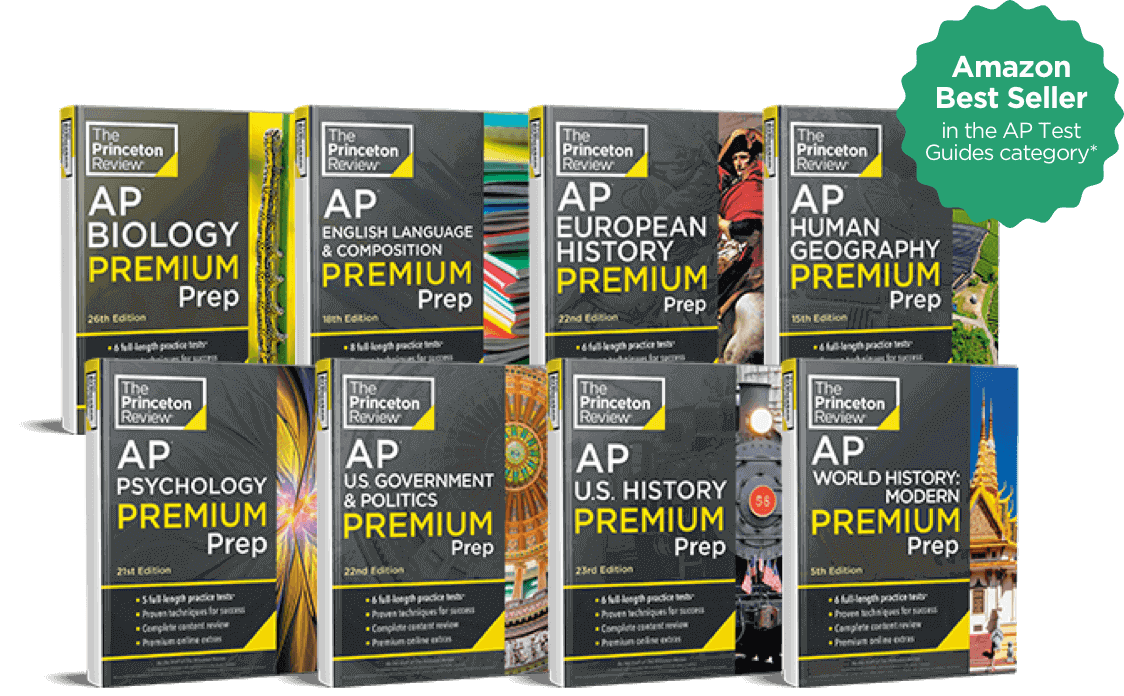
One thing that I found helpful when studying for the AP test is to get a test prep book. This contains a condensed version of the material found in the course, so you can review the material from the whole year and then test your knowledge of the material. A good place to get these books is from Princeton Review.

2. Review your notes.

Another strategy that I found helpful when studying was to review my notes from the year. It can sometimes be hard to remember topics that were taught at the beginning of the year, so reviewing can be helpful especially if you have forgotten some of the material.

3. Study the important topics.

Another useful strategy I found for studying is to review the most important topics or areas of the course first before covering other subjects as well. Spending more time on larger topics can be helpful and is a more effective way to review for the test as well.

4. Take practice tests.

One of the best ways to study for the AP test is to take practice tests. Practice tests can help you to study better and know what material to focus on while you are studying. They can also help you to take the test more effectively, and I personally found them very helpful. Some good places to find these practice tests include College Board and Khan Academy.

5. Make a study schedule.

Another approach you can take to studying is to make a study schedule and to plan out your studying. This allows you to plan backward from the date of the test, and spread out your studying into more manageable blocks over a longer period of time. This also ensures that you are well prepared for the test and are not rushing to study.

6. Make flashcards.

Another method of studying that I found useful was making flashcards. Making flashcards can help you to remember important materials, especially formulas and vocabulary. It is also helpful for quickly reviewing concepts, and helps to prepare you for the test as it gives practice with giving answers for a question format.

7. Use AP College Board resources.

I also found that the AP College Board online resources were very helpful for studying as well. These resources include content reviews and topic quizzes, as well as AP Daily videos, which are daily reviews of material covered in the AP courses, all of which are very helpful when reviewing.

These are some of the important ways that you can make your studying for the AP test much easier and more effective as well, so be sure to try these tips and tricks before your next test!

Heading to the library? Teen Test Survival Kits, created by the Mission Viejo Library Teen Advisory Board, are available to pick up at the library.

Effective Study Methods

Have you ever spent hours struggling through textbooks, study guides, and notes only to completely forget everything during the exam? Or even worse: you are forced to pull all-nighter, and sleep through your alarm! Even if you personally don’t struggle with these, implementing these 3 study methods can still provide major benefits.

  1. The Feynman Technique

In simple terms, this is just explaining to someone– out loud– your study concept. Don’t use any technical terms. Think of it as explaining it to a fifth grader. This may sound weird, but it works for many reasons. Firstly, explaining a concept helps you understand and memorize it yourself. Speaking out loud is more memorable than just writing it down or reading it. Secondly, it helps you fill any gaps in your knowledge. If you can not explain a concept in simple terms, you do not know it well enough. You can also see what parts you forget to mention. This technique is best used when you have reviewed the concepts at least once.

  1. Blurting

Blurting is when you write down everything you remember onto one space. This can be a few sheets of paper, a whiteboard, or even a mirror! Personally, I do not have access to a large whiteboard– so I like to write on my mirror with dry erase markers. It works just the same. This method helps with memorization, gaps in knowledge, and understanding of the concept. 

  1. Spaced Repetition

This method ensures that you won’t be pulling any all-nighters! First, calculate how many days you have until your exam. Next, write the specific topics you want to review, and how long for. Then, follow these guidelines to space out your studying. 1st session: this day. 2nd session: the next day. 3rd session: a week after, 4th session: a week and ½ after. Continue this– spacing out each study session– until the day of your exam! 

Together4Teens on April 13

Join the library, the City of Mission Viejo, and other local groups for this great event for teens and their parents!

Earn community service credit while attending valuable workshops. There will be a resource fair plus a complimentary lunch. Don’t miss the guest speaker, Larissa May!

For more details, see the program here.

The Benefits of Classroom Cameras

According to the National Center for Education Statistics, in 2020, 91% of public schools reported using security cameras to protect their students. These devices are certainly a positive force on campuses. They can work to deter potential threats and catch bullying and theft in the act. Security cameras should be allowed in school classrooms.

Surveillance cameras in classrooms can catch theft, bullying, and other crimes. According to a survey conducted by Campus Safety Magazine, 78% of schools using cameras reported them to have helped prevent crime with nearly one in three describing them as having frequently helped. As seen above, schools themselves have announced the beneficial effects of cameras on campus; therefore, inside classrooms should be no exception. Surveillance indoors can make a huge impact on safety and security in schools. Some people have claimed that security cameras invade privacy, but classrooms are public spaces. They’re not private in the way a bedroom or a bathroom is. School and classroom cameras shouldn’t invade students’ privacy any more than regular cameras in grocery stores or libraries. Altogether, security cameras in classrooms work to dissuade students from misdemeanors.

Surveillance in classrooms is beneficial for keeping students and their possessions safe. There have been many instances where security cameras in schools have caught criminals or protected individuals. Campaigning against security cameras in classrooms is only making school a more dangerous place for students to be. Understanding the benefits of these devices will allow schools to ensure the safety of students.

Improve your Study Planning!

With AP exams a little over two months away, it is never too early to start preparing. Rather than cramming the night before, having an efficient plan may be extremely helpful.

When memorizing vocabulary and key terms, flashcards are a great method. Even though many opt to use online resources such as Quizlet, making physical flashcards may be the better option. While making paper flashcards can be time-consuming, physically writing down the information could help the memorization process. Additionally, you can sort the flashcards into piles based on what you need to work on. 

In addition to the materials you are using to study, the environment in which you work is just as, if not more important. If you are having trouble focusing, consider working in a different place than normal. Also, focus on eliminating possible distractors by keeping your technological devices out of reach. Studying with peers is a personal choice. While some may find it distracting to work with friends, others find that it helps keep them accountable. 

Another important factor in your success is the method you are using to study. While there are many effective ways to work, two popular methods are Pomodoro and the Feynman Technique. 

The Pomodoro method involves creating intervals of focused time to study followed by rest. This method focuses on moderate amounts “deep work” rather than long hours of review. By having rest, students are able to better focus during their study time. However, the break time should be treated as a mental break rather than a moment to use your phone. Using technology during this time could potentially break your focus. 

The Feynman technique emphasizes teaching others to help themselves learn. In order to teach others, you are forced to break down concepts into simple ideas. This could help you better understand the core ideas of what you are studying. Condensing information can help you create your own study guides.

Overall, your materials, environment, and method, are the most important aspects in having a productive study session. Hours of cram sessions may sometimes be helpful, but studying a little each day with these plans can be a great start for anyone. 

Additional Sources:

The Feynman Technique: Master the Art of Learning

Todoist: Pomodoro Method

Book Review: The Glass Castle

I recently was given the opportunity in my AP language and Composition class to choose my own independent reading book. Normally, our book is assigned to us and we have no choice in what we are consuming. However this time, we were allowed to select a nonfiction book from a list of options provided. I chose The Glass Castle by Jeannette Walls, and I was not disappointed.

Jeannette Wall’s captivating memoir, The Glass Castle, is a narrative recounting the tumultuous childhood and adventures of the nomadic Walls family. When Rex Walls, Jeannette’s father, is sober he is a charismatic man who creates magical experiences for his children. However, when Rex is intoxicated, neglect is imminent and the Walls are poverty-stricken. This narrative dives deep into obstacles of alcoholism and poverty that plague the Walls children.

I was absolutely hooked throughout the entirety of Walls’ memoir. Every page brought about another crazy situation and adventure the Walls family was undertaking. I felt deeply connected to Jeannette and her siblings, and found myself rooting for their successes. There were many unimaginable scenarios throughout the story and when discussing with classmates, we all found ourselves jaw dropped. Seeing the Walls children be forced to parent themselves, yet still succeed, was a satisfying experience. Their journey shows that adversity can be overcome and one can rise up above the cards they are dealt, no matter the circumstances. This memoir was gripping and inspiring. It’s a great quick read and I would highly recommend it! It’s also great for my fellow AP Lang students to use as evidence for the free response question 3 argument essay!

This book contains imagery and discussion of topics such as alcohol addiction and SA, so please be cautious before reading!

The Glass Castle by Jeannette Walls is available to check out from the Mission Viejo Library. It is also available to download for free from Libby.

SMART Goals!

The first month of the new year, 2024, comes to an end but it is still not too late to make 2024 resolutions! Goals are hard to set and achieve especially if it’s hard for you to commit to long-term stuff, but using SMART can help you achieve the goals for 2024 whether it be to lose weight, get better grades, or even start meditating. So what does SMART stand for?

S – Specific

The S in SMART means “specific.” This means that your goal has to be specific and it can not be broad. You can be more specific with your goal by using the 5 W’s: who, where, what, and why. You can also use how in this when making your goal. An example of being specific is instead of saying,“My goal is to get better grades,” you can say “My goal is to turn my grades from C’s to A’s for the second semester of high school.”

M – Measurable

The M in SMART means “measurable.” This means that your goal has to be measurable. By being measurable, it means that you can track your progress. If your goal was to lose weight, you could track your weight on a scale at the end of each week. 

A –  Attainable

The A in SMART means “attainable.” This means that your goal should be attainable and not impossible. You can state how this goal is attainable. For example, if your goal is to start getting a better sleeping schedule, you can eliminate some distractions, such as going on your device before you sleep, so the goal is attainable. 

R – Realistic

The R in SMART means “realistic.”This means that you should be realistic in making your goal and that it can be achieved within the amount of time. Ask yourself questions such as “How will I complete this goal by the end of the year?” so that you can be realistic with making your goals. 

T – Timely

The T in SMART means “timely.” This means how you will time your progress. You can time your progress in various ways such as writing down in your planner every week or daily to achieve your goal. For timely, you have to write down how you’re going to time your progress. An example of this could be that you will read 2 books to 5 more books than last year by December 31st, 2024. 

This is really helpful and I apologize if my explanation was not clear enough but this has helped me a lot. I had to make a goal for my English class and although I was obligated to do the assignment, it actually is really helpful for I have stayed consistent with my goals for the new year. So if you really want to be productive and achieve goals for 2024, I recommend using the SMART method.