Love, Magic, and Dreams: An analysis of Shakespeare’s “A Midsummer Night’s Dream”

An entertaining and humorous read, the play “A Midsummer Night’s Dream” by William Shakespeare incorporates a variety of figurative language to demonstrate a number of concepts, ideas, and opinions.

To begin with, Shakespeare skillfully develops the timeless aspect of love. In the very first scene, readers are introduced to Theseus and Hippolyta planning their wedding, as Hippolyta expresses that “Four days will quickly steep themselves in night; / Four nights will quickly dream away the time” (1.1.7-8). The story of Theseus of Hippolyta is quite unique: at first, Theseus kidnapped and beat Hippolyta in battle. By introducing these enemies-turned-lovers at the beginning of the play, Shakespeare foreshadows love issues and complexes, but also suggests a happy ending. Moments later, readers learn about Hermia and Lysander’s love, despite Hermia’s father Egeus’s desire that Hermia marry Demetrius. Hermia’s friend, Helena, is already in love with Demetrius, but as Helena explains, “The more I love, the more [Demetrius] hateth me” (1.1.204). The play is mostly centralized around the loves of Demetrius, Hermia, Helena, and Lysander. Love is universal and timeless–someone from ancient Egypt would feel the same butterflies as someone in 2050. The same applies to sadness, betrayal, and jealousy, all of which are prevalent in the play. In Demetrius, Hermia, Helena, and Lysander, readers understand the timeless complicated and uncontrollable nature of love. Cleverly, Shakespeare further expands on uncontrollability when the fairy king, Oberon, sends Puck to retrieve a flower, whose juice “[w]ill make or man or woman madly dote / Upon the next live creature that it sees” (2.1.177). For the audience, the flower challenges the uncontrollability of love. Demetrius and Lysander are both affected by a simple thing as flower juice, causing them to completely change their views, dispositions, and opinions. Upon analysis, Shakespeare’s incorporation of such a magic flower, which terribly exacerbates the love complex between the characters, represents the irrational, yet consuming aspect of love. 

In addition, magic is a significant element of “A Midsummer Night’s Dream”, and it is not too different from love. Once again, the magical flower is a crucial symbol. Magic is often understood as the ability to do and control virtually arbitrary actions and events. As already discussed, love is a prime example of uncontrollability. With the magic flower, the fairy king and Puck are given greater power over the rest of the characters. They have a greater influence on the events that will ensue in the play. Magic’s influence is further exemplified by Puck, who turns Bottom’s head into a donkey’s head during rehearsal. Unluckily, Titania (who has been spelled with the magic flower) wakes up and instantly falls in love with Puck (3.1.131-164). This situation is especially significant in the theme of magic since it is a magical being herself (Titania, the Fairy Queen) who has fallen under a spell. First of all, the overtaking influence of magic is apparent; moreover, the influence of love is also portrayed. It can be argued that Shakespeare incorporates magic into the play to accentuate its likeness to love. Both magic and love cause troubles, yet they can both completely dominate a person’s actions and way of life.

Finally, the significance of the title  “A Midsummer Night’s Dream” must be recognized. Dreams are random, irrational, and absolutely overtake one’s mind, very similarly to love. Moreover, dreams are repeatedly mentioned throughout the play. For example, Hippolyta expresses that “Four nights will quickly dream away the time” (1.1.8). Referring to the day of her wedding, Hippolyta uses “dreams” to describe her wait. The word “dreams” has a very positive connotation. In this manner, “dreams” recur to represent fantastic events, situations, and emotions.

Clearly, Shakespeare’s “A Midsummer Night’s Dream” well incorporates figurative language to develop a multitude of themes, lessons, and ideas.

-Ayati M.

William Shakespeare’s A Midsummer Night’s Dream is available for checkout from the Mission Viejo Library. It can also be downloaded for free from Overdrive.

Significance behind the Ending of Lady or the Tiger

In 9th grade, I read Frank Stockton’s short story The Lady, or the Tiger? because it was an assignment for English class. The story leaves off with a cliffhanger with two possible outcomes and whatever outcome shows a theme that is inherent in our lives.

From what I remember about the story, the princess was caught being in love with a man who sincerely loves her. However, he has no royal blood, which infuriated her father, the semi-barbaric king. He puts the man through a trial where he would have to choose one of two doors in front of him. One of the doors holds a beautiful lady in which he would have to marry the exact moment he chooses the door, a lady that lives at the palace and the princess hates. The other holds a tiger that has been starved and is looking for a hefty meal. A large audience gathered to witness the man’s fate, the princess forced to watch from her throne above. But she knows exactly what is in which door through bribery. The man she loves turned to her and after some moments of thinking, she flickers her hand to a direction, signalling a door. The man confidently walks up to that door but in the end, it is up to the reader to know which door he actually went into.

But of course the princess told the man to go to the door that held the lady, right? This is the man that she loves and someone she genuinely cared about. The man will be forced to marry this woman she doesn’t like and he won’t love the woman as much as he loves her. But circumstances of that situation would lead to her seeing her lover with another woman at all times. Not only would he be with woman she hates, they would both see each other all the time with the knowledge of the marriage between them. They are in love with each other and there was no doubt about that but they can’t be together because it was forbidden. They are so close to each other, yet so far. Perhaps, he may fall in love with the woman he was tied to be with because all of the private time they have together.

But even with those consequences, she will still rather see her lover everyday than see him eaten alive by a tiger, right? If she signalled for him to be eaten by the tiger, she would be stuck with the knowledge that his death was her doing. The guilt will consume her, she killed the man she loved, and perhaps will turn her into a hollowed version of herself before the trial took place. Though that may be true, the king was said to have semi-barbaric traits. Symbolically, could those traits have passed down to his daughter? Perhaps, she is selfish and she wants all of the man’s love only for her. Perhaps the tiger appealed more to the princess because it ends a cycle of life. Sure, this man is one that she loves but the thought of violence could attract her even more because of her implied barbarism. She has this man’s fate wrapped around his finger and whatever she choose, he will go to confidently because he knows her and trusts her decision, no matter what it is.

There are many themes in this story that could be applied to reality but what I would like to discuss is the theme of fate. The king in his story put this man on trial but even he doesn’t know what is in each door and he doesn’t care what this man gets because in one way or another, it is his punishment. My 9th English teacher called him a symbol of god or the universe in a way, a person who doesn’t care about our meager lives until we have done something that not only affect them but angers them. Ultimately, our fate is decided by them but our will is not. It is decided by ourselves which door we choose to go to, whether we listen to the princess we love on which door to go to or not. The man knows all about his lover’s nature and yet chooses to go into the door she instructs him to go to. He didn’t choose to be on trial but he is going to choose what door he goes into. He is choosing the way he wants the rest of his life to go, though he was put into this predicament that the universe/God/someone else had put him into. We are put into hard situations all the time by someone else but ultimately, it is in our hands the way we decide how we must deal with it. Do we ignore it? Do we push through its obstacles? Do we give up? Whatever occurs next would be our decision, whether we would want to accredit ourselves with this information or not.

(I can’t claim credit for most of the information presented; it came from the knowledge of my 9th English teacher.)

-Saanvi V.

Writing Tips: Fantasy Worldbuilding

How Does Freelance Writing Work?

Genre: The most important part when you begin writing a novel is picking a genre. Think of all your favorite books or movies and take inspiration from all of them. Is your novel going to be set in a medieval world? Space? A dystopian civilization? Apocalyptic world? Once you decide it will be a lot easier to write out a plot and the details of your world.

Setting: The second most important part of writing a fantasy novel is choosing the setting. Typically, most fantasy novels take influence from medieval Europe, but it doesn’t always have to be that. What does the environment look like? Is it set in a cold environment, hot environment, desert, space, mountains, coastline? All of these are factors to consider when creating your world.

Plot: Typically fantasy novels follow a plot where the main character has to go on an adventure or quest to complete a task. However, this plot can have a lot of variation and provide a unique story. Some ideas to consider when working out a plot are the tools you will use to advance your plot. This could be magic, a character with a very specific skill, or any other unique additions to your book. This could also be influenced by the setting, perhaps the world is set in a dystopian setting where there are tensions between the rulers and their citizens. Maybe the main character has to go on a quest to find something. The possibilities are endless.

Characters: People like to read about relatable characters. When creating a main character it’s important to make them believable. Many times, new writers create a character that only reflects positive traits, when in reality, everyone has negative traits they’re not proud of. Insecurities and mistakes in a character give the reader an emotional attachment to said character. When writing side characters, make sure they exist to further the plot. Also try to give them their own personality to engage the reader.

-Michelle L.

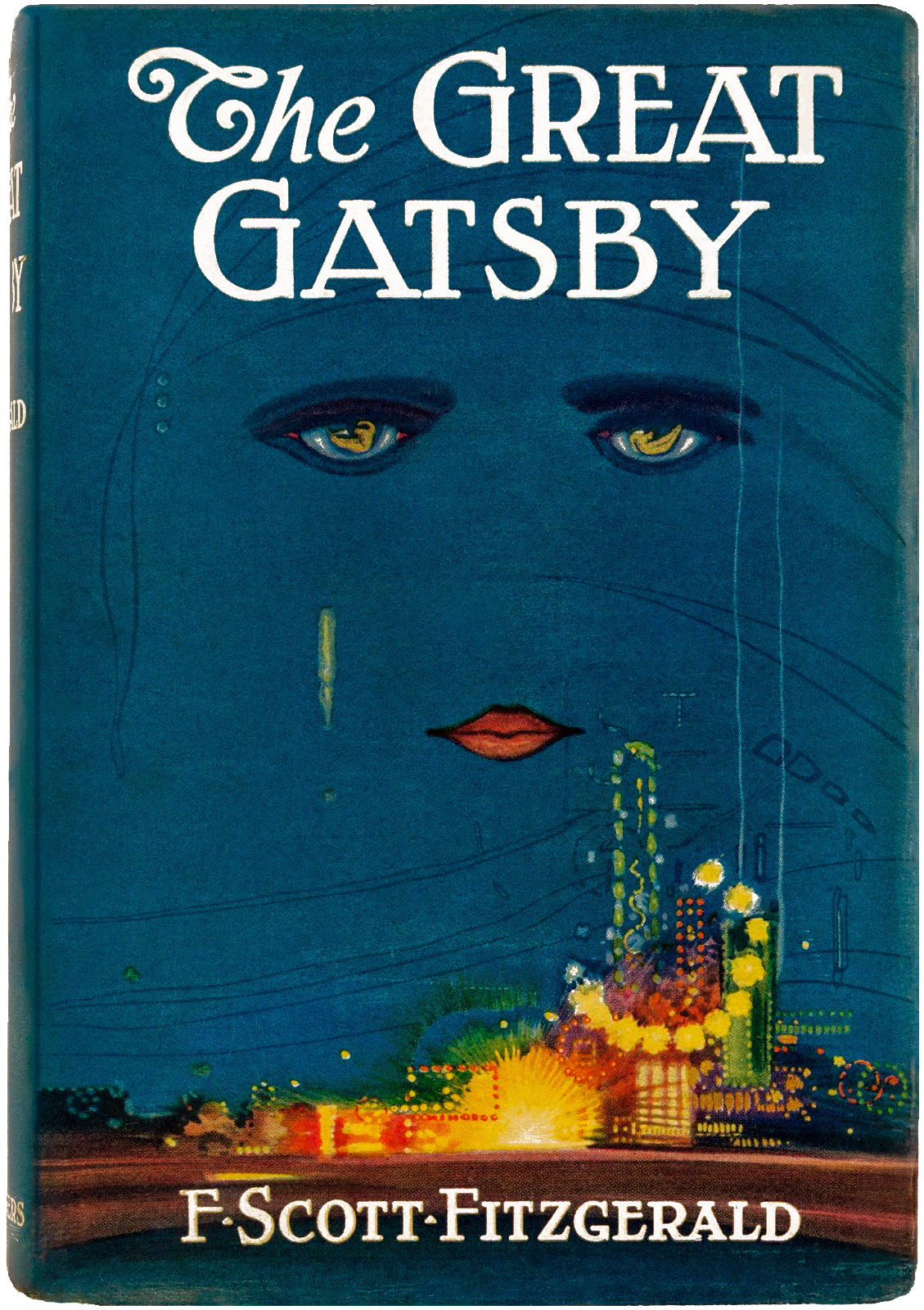
The Great Gatsby by F. Scott Fitzgerald

The Great Gatsby - Wikipedia

Nick Carraway, an intrepid young man from the West, moves east after World War I. Expecting a quiet and comfortable life, he instead finds himself caught up in the fast-paced, dangerous world of highballers such as his cousin, Daisy Buchanan, her husband Tom, the haughty and beautiful Jordan Baker, and the most mysterious man of them all- Jay Gatsby. As lies and betrayal pile onto each other, Nick is left starkly in the middle of a massive cultural and class divide that will leave him forever changed.

I wasn’t expecting to enjoy this book as much as I did, but I really found it riveting- after the first few chapters, it was nearly impossible to put down. The book is rife with symbolism, which gives it incredible depth- and many of the symbols and themes discussed in it are still very relevant to our world today. It’s one of America’s most quintessential and classic novels, and for good reason- even though the novel will turn ninety-six next July, The Great Gatsby will forever offer us an invaluable window into times past and present.

-Vaidehi B.

The Great Gatsby by F. Scott Fitzgerald is available for checkout from the Mission Viejo Library. It can also be downloaded for free from Overdrive

A Separate Peace by John Knowles

Set in New Hampshire during World War II, A Separate Peace by John Knowles tells the story of Gene and his best friend Finny and their lives during this extremely difficult time in history. The novel begins with Gene returning to Devon boarding school after fifteen years and continues as he recounts his time at Devon. 

Gene and Finny are roommates at Devon boarding school. Gene is quiet, introverted, and focuses on his schoolwork and studies. Finny is the complete opposite. Finny is extroverted, adventurous, and carefree. The book is not plot driven, but instead it is about the relationship between Gene and Finny. 

What I really enjoyed about his novel was the characters. The characters are some of the most well-developed and interesting characters I have ever read about. I really enjoyed the interactions between the various characters and how different they are from each other. All the characters have their own individual personality and were developed very well. 

Throughout the book you could start to see the effect of the war on each character and how they all react in different ways. Some of the characters enlist in the military to fight in the war, while others completely deny the existence of the war. Gene and Finny and their friends are a lot like all of us today.  We all choose what to focus on in life and do something about, and some choose to turn the other way and pretend things don’t exist. 

Another thing I enjoyed about this book is the symbolism and foreshadowing in the book. Right from the beginning of the book Gene states that something bad happens during his time at Devon and where it happens, but then we don’t actually find out what happened until much later when it happens in a flashback. It is a unique way of telling a story that keeps the reader interested in what may be coming next.

I would recommend this book to anyone in middle school through high school as I believe they would be able to genuinely relate to the characters in many ways. Adults may also find the details of the relationships that transpire during a tumultuous time in history an interesting read.

-Brandon G.

A Separate Peace by John Knowles is available for checkout from the Mission Viejo Library.

Stoner by John Williams

Stoner, a novel set in the 1920s, is a golden classic hidden beneath time. 

It begins with a slight allusion to the William Stoner’s (our main character) end, citing that he made little to no impression upon his students and colleagues at the University he had attended and worked for. Moreover, he seems to symbolize to these characters the harsh realities that await them (death, of course).

Afterwards, the author (John Williams) slowly appears to construct his life from the start: Stoner was born and raised on a farm with parents that treat him fine. Quite often, he’d help with chores and learn the lifestyle of an average farmer. Therefore, when Stoner was old enough, he was sent to the University of Columbia where he intended to study agriculture. However, these plans were cut short when he fell in love with literature. In turn, his passions for written works (both old and modern alike) seem to act with (or as) the message, for Stoner was willing to cut off his past ties with farm life –  and thus his parents – to study a field he held fondness for. 

In turn, similar elements within the text are brought together to form this wondrous book. For one, the characters and their interactions are so alive, which gives them such a robust roundedness. Furthermore, the plot is pushed onward with descriptions and actions that reek of loss. To illustrate, he loses his parents when he chooses a path towards literature; he loses his sense of importance when he decides not to fight in either war (WWI and WWII); he loses his marriage when he realizes the hard resentment his wife has toward him. Even at its conclusion, Stoner leaves readers empty and restless, perhaps frustrated or confused that he never took the chance to fight against his evident torment. 

Nonetheless, despite these dark matters, Stoner had happier moments to take pride in. For instance, he was able to enjoy a quiet but significant bond with his daughter when she was first born, and also gained some recognition from his students when he decided to integrate new techniques into his classes (much to his colleagues displeasure). 

In this manner, Williams communicates to readers that cold realities have bits of warmth and comfort too. 

It Ends With Us by Colleen Hoover

Woah.

This book was not even remotely close to what I thought it was going to be about. I made sure nobody spoiled anything for me cause I wanted it to be a surprise, and boy was it a surprise. This book deals with parental death, abuse, trauma, and kind of the thoughts that one goes through. Lily wasn’t exactly a character I could relate to on a personality level but the emotional turmoil is one that I believe many people go through so that was nice.

When I first finished the book, I wasn’t satisfied with the ending (yay because I actually think she’s writing the sequel and it’s set to come out soon!) but after thinking about it some more I realized it was the proper “ending” I wouldn’t have been happy with an ending where she ended up staying. The writing style and proficiency wasn’t up there but it was definitely a good plot. Ryle was never a character I could get into, he sounded dreamy sure, but he never got a chance in the book to truly be good until the end.

So if you’re in the mood for a semi-heavy page turner, I definitely recommend this book. It will keep you on your toes wanting to know what will happen next (I finished it in about 2 days and it’s almost 400 pages haha).

-Coralie D.

It Ends With Us by Colleen Hoover is available for checkout from the Mission Viejo Library. It can also be downloaded for free from Libby.

You’re Enough

“I’m sorry I’m not good enough. I’m sorry I can’t help you with your homework. I’m sorry I have an accent. I’m sorry I’m such an embarrassment.” Growing up, I heard my father utter these painful words as he looked tearfully into my eyes. But, even then, I wished I could make him see his true value in shaping me into the person I am today. 

I want my father to see himself as I see him: as a hero. I want my father to know that his scarred and callused hands are not merely the hands of a working-class man, but the hands of a selfless father who has given up everything for his children. The countless scars, cicatrixes, and wounds that decorate his hands are like shining medals in my eyes. Yes, my father came from an impoverished town in Mexico, never earned a college degree, and arrived in America with nothing but the clothes on his back; but in my eyes, he is a hero and his scars are his superpowers. His scars tell the story of a young boy who crossed the border illegally into an unknown land in which people spoke a foreign language. They tell the story of a boy who was forced to work in the fields at the age of seven, later abandoned by his parents at the age of eight. Most importantly, they remind me of my story and of my background. They remind me that just as my father wears his scars proudly, so must I. His scars are a physical representation of his dedication to our family. They remind me that just as he works tirelessly from morning to night to provide for our family, I must work to fulfill my dreams.

I wish I could make my father see that his white beat-up work truck is worth more than any Mercedez and that his tattered work clothes are more valuable than any luxury business suit. Because, in my eyes, his run-down truck and stained clothing tell a story, not of wealth and privilege, but of perseverance and incomparable strength. His scars, beaten truck, and tattered clothing are the reasons I have the opportunity to achieve my dream. They have given me insight into the value of hard work and inspire me to challenge myself daily. One day, I will make my father realize how valuable he truly is. For now, all I can do is hold his hand, look into his eyes, and say, “I promise, you’re enough.” 

-Yvette C.

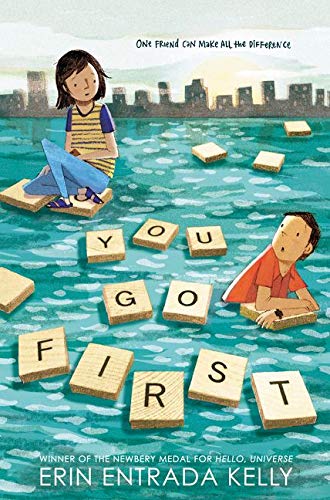
You Go First by Erin Entrada Kelly

In a city near Philadelphia, Pennsylvania, lives a twelve-year-old girl named Charlotte. Over a thousand miles away, in the small town of Lanester, Louisiana, lives an eleven-year-old boy named Ben.

Charlotte’s and Ben’s lives intersect through only an online Scrabble game. At first glance, they seem drastically different—Charlotte possesses a rock collection and aspires to be a geologist, while Ben loves anything related to presidential history, recycling, and Harry Potter.

Yet somehow, as the story escalates, Charlotte’s and Ben’s lives begin to tie together in completely unexpected ways. Throughout their journeys, similarities between the two rise to visibility. Charlotte and Ben learn more about each other, and even more consequentially, themselves, as they figure out the obstacles and challenges thrown into their lives.

You Go First by Erin Entrada Kelly is a truly touching, inspiring, and reflective novel. The parallels drawn between the two main characters’ lives are skillfully crafted, and it is even more so when it is considered how different they really are. You Go First truly impressed me, and I’m sure I’ll be rereading this story countless more times, as readers may if they decide to give this one a try.

I would definitely recommend You Go First, especially for younger teenage readers. I absolutely fell in love with this book, and I’m sure you will too! Hopefully, you will enjoy this tale spun of friendship and family, humor and grief, growing up and breaking down, and finding one’s true identity. Happy reading!

-Lam T.

You Go First by Erin Entrada Kelly is available for checkout from the Mission Viejo Library.

Biology? What?

Biology, Chemistry, Physics, Environmental Science…. the list continues for a while. As a current high schooler, one of my new interests is learning about biology. When I first signed up for AP biology for the 2021-2022 school year I was not the most excited, to say the least. But, now being 5 months into the course, I am happy to say I made the right decision in choosing which course of the many sciences offered to take. 

Just like most people, when I go through my daily schedule, the interactions inside and outside of my body were not a thought that ever crossed my mind. But now, my perspective has shifted. One of the most interesting aspects of biology is learning how all of those little organelles inside of your body all work together to create specific outcomes that keep you alive. Unlike most other offered courses, normal or AP biology highlights the extreme complexity of organisms and how our bodies have evolved into completing intricate processes such as cellular respiration. If you are a person like me, someone that is always curious about how things we expect in life work, biology is an interest that may be worth picking up. 

For those of you reading this and still not found a spark of interest, you may be more interested in the other parts of biology. Currently, I am learning about genetics, or how organisms inherit distinct traits. If you have ever stared at your family and wondered why you look like none of your siblings even though you come from the same set of parents, it is not just a fluke. Siblings could show traits that even their parents do not have and it is still completely normal! Coming from a big family of 6, I had always wondered why I did not look like a single one of my brothers and sisters. Learning about recessive traits, dominant traits, etc… explains why there is such a low likelihood of you looking like anyone else in the entire world.

Personally, these types of topics are thoughts that have lingered in the back of my mind and now that I am actively learning about the interactions of life, are all answered. So, to any of you still reading this, I encourage you to find an interest that you find curious and interesting so that you want to find out more. Biology is a topic that applies to everyday life and is complex and always offers something new to learn.

-Lilly G.