Book Review: Much Ado About Nothing

Much Ado About Nothing is one of William Shakespeare’s most popular comedies. Interestingly, this story is the origin of the enemies-to-lovers archetype we see in all kinds of films and books. This tale explores many themes like epistemology, sexism, classism, honor, and reputation. Set in Messina, a Sicilian city, during the 1500s, Much Ado About Nothing tells the tale of two couples 

Hero and Claudio: The stereotypical couple of their time. The ultra-masculine man and the honorable, demure young lady. What started as a fairy tale, picture-perfect romance quickly becomes heartbreaking for both. These characters were portrayed as almost entirely good, and it was the evil and deception of others that drove them apart.

Benedick and Beatrice: A more modern love story and a transition from enemies to lovers. A loud, outspoken, and opinionated woman with no interest in love, and a witty young man who does not believe in romance. These characters were portrayed as more realistic archetypes, not quite anti-heroes but not as perfectly pure as Hero and Claudio. It took deception from “better” characters like Hero and Claudio to bring them together. 

Overall, this was an amazing read and proof of how Shakespeare’s stories stood the test of time. I highly recommend it for fans of romance stories, but also if you are trying to get into Shakespeare. This play is not as emotionally traumatizing as something like Titus Andronicus. But it would provide a reading challenge along with a pleasant story.

Avatar: The Last Air Bender: a Netflix Series Review

Recently some friends and I  binge-watched Netflix Avatar: The Last Airbender. We all sang along as soon as the theme song started. It’s not the same without the sing-along. I haven’t had so much fun in a long time since school started, and we have all been busy grinding away at our test prep and homework. 

We were happy to see all the characters we recognized, like Aang, Katara, Sokka, and Zuko.

The characters were all so different but very relatable. We saw characteristics that we have and would use in day-to-day situations. Sokka’s fun and goofy jokes got us double over with laughter. At the same time, Zuko’s intense moments reminded us of the emotional rollercoaster we’re all on sometimes. Honestly, it felt like we were right there. These characters were so relatable that it got us thinking about things that happened to us in real life.

Each episode is more exciting than the next. We all kept saying let’s just watch this last one, then go to the park but it dragged on till the 5th episode, and my mom finally told us to get out and get some air. 

The Avatar: The Last Airbender animation is so beautiful. As a person who loves art, when I watch any movie, I focus on the art, especially if it’s animated. Of course, The Avatar did not disappoint. The animation is beautiful, and the storyline is just as good. It’s relatable, and I felt myself rooting for the good guys and wanting them to win. It reminds us that we all need family and friends to cheer for us. Whether you’ve been frozen for hundreds of years or are living your everyday life, you need that support system that will cheer you on to do the right thing and save the world from your evil opposition. The show defintely has a knack for making you feel like that more than you want to. 

It makes us talk about how important family, friends, and the support system help pull us through all the hard times.

The protagonist in Avatar: The Last Airbender, Aang, is only 12 years old biologically, but chronologically he’s 112 years old. He acted like a 12-year-old boy in these episodes.  He’s portrayed as a reluctant hero who spent a century suspended in an iceberg before Katara and Sokka discovered him while fishing. The three of them went on a quest to master the elements and save the world from the Fire Nation. 

This short review does nothing to prove to you how great the series is as it is animation, so watching it makes me appreciate the beauty of the art. As the writer, I love how the story tries to make it relatable to the typical person watching the show.

Being High school students, we are all busy and move through the bustle of everyday busy life. Still, it is good to remember to spend time with family and friends and just relax and catch up. A movie or series like Avatar is a great excuse to do just that. 

Happy binge-watching!

Bella H.

Fort McHenry: A Journey Through American History

Last December I had the chance to visit Fort McHenry, and even though my visit was brief, it was an experience that taught me more than I anticipated. As a high school student who took US History two years ago and will retake it this coming year, I wanted to explore historical sites to deepen my understanding of our nation’s history, understand and remember it. Fort McHenry was a perfect place to start my US history for this coming year.
When we arrived at Fort McHenry, we bought the tickets, which were just fifteen dollars for adults, and if you’re under sixteen, it’s free. Also, if you have a Nation Park membership, you can visit.
Walking through the fort, I was struck by how much I didn’t know despite having studied the War of 1812 in class. When I saw the grand American flag flying over the fort, I was reminded of our national anthem, “O! say can you see…” and how this sight inspired the author Francis Scott Key to write “The Star-Spangled Banner.” Seeing the flag in person and understanding the historical context made the anthem’s words more meaningful.
The star-shaped fortress design was the key to the defense against the enemy during the British battle.
As I walked along the fort’s walls and explored its various sections, I could almost picture the scenes of the battles from the 19th century and see the courageous defenders and the intensity of the war.
One of the highlights of my visit was the Star-Spangled Banner Exhibit.
I learned about the history through reading, but the exhibit provided incredible insights into the creation of our national anthem, and the critical role Fort McHenry played helped me in deeper knowing, not just reading from text. I learned details about Francis Scott Key’s experience that I hadn’t read in textbooks. We attended exhibits that showed the roles forts played in the Civil War and World Wars and their ongoing importance throughout American history.
Another program visitors can participate in is ranger-led. It’s where rangers share stories and knowledge about the fort, which makes history come alive for visitors.
We had a walking tour along the bay, which reminded us how history is interwoven into our daily lives, and the natural landscapes of the fort were very relaxing.
Visiting Fort McHenry was more than just a field trip; I appreciated the historical facts we learned, and the hands-on exhibition confirmed the US history I read or learned in school. It gave me a deep understanding of US history.
I highly recommend visiting Fort McHenry. It’s a place where history comes alive. It offers a personal connection to the stories we often learn about in class. It is also close to Baltimore Harbor, so you’ll have another great place to explore and good food.
Happy exploring!
Bella H.

A Guide to Yosemite

Last summer I had the privilege to visit Yosemite National Park. My family loves to travel to national parks during the summer. This year, we decided to go to Yosemite, since the last time we went was 2010. Though I have been to many national parks, I can say that Yosemite is one of my top 5 favorite parks. Below, you’ll find a guide on where to stay and what to do!

Accommodations

  • Camp Curry Village – My family stayed here because the lodge is very hard to reserve. If you enjoy hiking and are outdoorsy, Camp Curry is a great way to stay in the park for a cheaper price.
  • Yosemite Valley Lodge – This accommodation is very comfortable and has many food options within the lodge. If you’re looking to stay in a small condo, this is the place to be. Make sure to reserve a year in advance to guarantee a spot.
  • The Ahwahnee – Built in the 1920s, The Ahwahnee boasts of a convenient location, stunning views, and remarkable architecture. The Ahwahnee is very luxurious and is definitely the most expensive stay in Yosemite. Come to this accommodation if you would like a relaxing getaway.

Hikes

  • Half Dome – (14-16 miles roundtrip) Half Dome is one of Yosemite’s most famous hikes. This hike goes to the top of Half Dome, where you are met with an unobstructed view. Half Dome requires a permit and is extremely difficult but rewarding.
  • Upper Yosemite Falls – (7.4 miles roundtrip) Upper Yosemite Falls is a great alternative to Half Dome. However, this hike is very tedious and there isn’t much shade at the last stretch going up. Make sure to bring plenty of water!
  • Cooks Meadow – (1 mile loop) Cooks Meadow is a great place to walk and run. This scenic route is great for families with young children.
  • Vernal Falls – (8 miles roundtrip) This hike follows the Mist Trail and leads up to Vernal Falls. I haven’t personally done it, but one of my close friends raved about this hike.
  • Mirror Lake – Mirror Lake is an amazing place to run to. I started at the Yosemite Falls Lodge and it was 5 miles roundtrip. Mirror Lake is also accessible by bikes and cars; it is another family-friendly place to visit.

Activities

  • Hiking
  • Rafting
  • Running
  • Camping

Lookouts

  • Glacier Point
  • Tunnel View
  • Taft Point

The Hundred Dresses by Eleanor Estes

The Hundred Dresses is a short novel by Eleanor Estes. This book won a Newbery Honor award in 1945. This book relates the experiences of Maddie, along with her friend Peggy, and a girl named Wanda. Wanda has only been seen wearing the same faded blue dress every day, even though she claims to have a hundred dresses “all lined up” in her closet. Peggy does not believe this at all, so she makes fun of Wanda every day at school. Maddie knows this is wrong, but she does not stop Peggy for fear of losing her friendship. Peggy teases Wanda on a daily basis, while Maddie just stays silent.  Even though she does not say anything, Maddie feels guilty for lacking the courage to defend Wanda.

One day, Maddie and Peggy are in class when the teacher makes an announcement.  Wanda’s father had sent a letter to the school informing them that Wanda would not attend their school anymore, because of the teasing she had received.  This gives Maddie a sick feeling in her stomach.  She knows that she should have tried to defend Wanda.  Peggy seems to be affected as well.  Later that day, Maddie and Peggy decide to go visit Wanda.

I have always enjoyed Eleanor Estes’ novels, and this book is no exception. In fact, I consider this to be her best novel. Despite its short length, this book conveys many emotions.  It seems light-hearted and melancholy at the same time. However, my favorite thing about this book is the story behind it. When Eleanor Estes was in elementary school, she had a classmate who was constantly teased because of her unusual Polish name. After a short while, in the middle of the school year, the Polish girl moved away before Estes had a chance to apologize. Years later, Estes wrote The Hundred Dresses as her way of saying that she was sorry.

After learning about this background story, it greatly enhanced my appreciation for this book. I really appreciate the lessons taught by this book about compassion and forgiveness. Even though this is such a short book it conveys a sweet but powerful message.  I would recommend it to everyone.

Diversity Circle at the Mission Viejo Library

Globalization is all around us— our electronics, food, popular culture, literature, and much more are all the result of intermingling between many different countries across the world. Different cultures and people will continue to share spaces, creating diversity within our communities. The Mission Viejo Library recognized the need to understand and appreciate diversity, which is why they hosted their Diversity Circle event with Don Han on 4/7.

When I signed up to participate in this event, I was unsure of what to expect. Although I had participated in various diversity events at school, most of them consisted of students watching a powerpoint and being taught about how to be mindful of our differences. However, the Diversity Circle immediately struck me as different. I actually walked right past the event as I was trying to find it— the set up was like that of an intimate conversation, and I thought that a meeting was going on as a glanced through the open door. When I finally found my way in, I saw the seats arranged in a small circle so that everyone could hear each other as they spoke.

Our conversation started with the question of why we thought diversity was important. As we went around in a circle, I was impressed by the unique responses from each of my peers, some of whom I recognized and others whom I did not. As we took turns speaking, we passed around a small ladybug rock, which indicated whose turn it was to speak. Mr. Han explained how it was customary for whoever initiated the meeting (in this case, it was him) to place emotionally significant items in a small wooden bowl in the middle of the circle. One item that particularly fascinated me was a thin cloth that the men of his people would wear in a variety of different ways; Mr. Han had taken it with him when he moved to the United States.

One question that particularly struck me was about DEI (diversity, equity, and inclusion). Mr. Han asked us if we thought DEI was relatively new or if it had already existed for a long time, and for the first time, we respectfully disagreed with one another. We explored this topic as both a specific policy and a general concept about inclusion, with some of us asking about past civil rights movements and whether that counted as a form of DEI.

I am grateful for this opportunity to become a more educated and conscientious member of my community as well as to engage in meaningful conversations. For those on the fence, I encourage you to learn more about diversity!

Water Melon Cooler

Are you ready to shake up your summer with a refreshing twist? I love summer because of the abundance of fruits and vegetables that come with living in California. Imagine the perfect blend of juicy watermelon, zesty citrus, and hydrating coconut water in a harmonious symphony of flavors. That’s right, we’re talking about the ultimate thirst-quencher – the Watermelon Cooler! Whether lounging by the pool or having a backyard BBQ, this exciting concoction will add fun and brilliant color to any gathering. I love this drink’s refreshing, incredible taste; we make it when the fruits are abundant every summer.

Ingredients: –
1 large or 3 cups watermelon
2 Lemons or limes
2 cups of Coconut water
Ice

Equipment:

  • Blender

Instructions:

  1. Cut the Watermelon into chunks and remove any seeds.
  2. Squeeze the juice of lemons or limes.
  3. combine the watermelon chunks, lemon/lime juice, coconut water, and ice in a blender.
  4. Blend until smooth and well combined.
  5. Serve the watermelon cooler in glasses with some ice cubes and fresh watermelon for decoration if desired.

Enjoy your summer!

Bella H.

Book Review and Summary: Gregor the Overlander

A couple of weeks ago, one of my youth group leaders talked about the book Gregor the Overlander. Since it is summer, I’ve been trying to find new books (and book series) to read. So, I decided to embark on Suzanne Collins’ series, The Underland Chronicles. This series starts with Gregor the Overlander.

Spoilers Ahead!

The book begins by introducing the main character, Gregor, an 11-year-old boy who lives in New York City with his mother and two sisters (Lizzie and Boots). Two years ago, Gregor’s father mysteriously disappeared without any word or trace. Most people believe that his father is an absentee; however, Gregor knows that his father will never leave his family. Because Gregor’s father is gone, he takes on many other roles, such as caring for his two-year-old sister, Margaret (fondly called Boots).

One day, Gregor evades his nosey neighbor by going to the laundry room to clean some clothes. He takes Boots with him so she can get out of the apartment. After dumping the clothes into the washer, Gregor discovers Boots has disappeared. He panics but then sees an open grate where Boots has fallen into. Gregor quickly climbs into the grate and falls. Little does he know that the open grate is a portal to the Underland, a mystical world.

After falling down the grate, Gregor is immediately abducted by life-sized centipedes. It is at this moment that he realizes this land is magical. Luckily, the centipedes (aka crawlers) are not evil and bring him to Regalia, the city where Underland humans live.

Gregor first meets Luxa, the 11-year-old who is to be crowned Queen. Her grandfather, Vikus, guides Gregor and his sister to the palace, where they will be kept. Later in the day, Gregor attempts to escape Regalia and go home. However, he is almost killed by the giant rats guarding the exit (the rats and humans are rivals). Fortunately, some humans (including Luxa, Vikus, and her cousin Henry) save Gregor and his sister from the rodents.

When the siblings return to the palace, Gregor finds he is entwined to a prophecy called “The Prophecy of Gray.” Through this prophecy, Gregor is supposed to save the humans of Regalia, who are endangered by their enemies, the rats. At first, Gregor refuses to go on the quest to fulfill the prophecy. But he learns that his father was captured by the evil rats. So, he decides to undertake the perilous prophecy.

The book continues with Gregor, Boots, Luxa, Henry, two crawlers, two spiders, and a peaceful rat going on the quest and eventually fulfilling the prophecy. Ultimately, Gregor and Boots reunite with their father and return home.

My Rating: 8.9/10

At first, I had doubts about this book since it was written for a younger audience. However, after reading this book, I can say it was worth the read. Suzanne Collins made the plot entertaining to read. Each page was full of fun twists and turns and made me anticipate each outcome of the prophecy. I didn’t expect the book’s ending, which pleasantly surprised me. Overall, this book was fantastic, and I highly recommend it to all age groups.

Epic the Musical: The Ocean Saga (EP Review)

EPIC: The Musical is a concept musical loosely adapting the story of the Odyssey, the famous Greek epic. It has been fully released with 9 sagas, each featuring 3-5 songs, and the Ocean Saga is the third in line. If you haven’t listened yet, this will have spoilers – go check it out!

  1. Storm
    The opening song, Storm is mostly setting up the rest of the saga. Odysseus and his crew are facing a torrential storm (go figure), but Ody spots a floating island. He asks Eurylochus to prepare the crew to throw harpoons at the island, hoping to latch on and escape. Admittedly, the plot hook of a storm is underwhelming compared to the previous threat of a cyclops, but it is catchy nontheless. I often find myself humming the main lines when it rains! The vocals of the crew echoing back Odysseus’s lines drive home how he is what is keeping the crew afloat, and how they all listen to him. (Which certainly won’t come back to haunt us later).

2) Luck Runs Out

In this, Eurylochus expresses his doubts about Odysseus’ plan. This song is fascinating as it delves into the mindset of both of the characters. Odysseus’ main trait is that he is cunning, a trickster. He has relied on his wits to get the crew out of all situations thus far. Eurylochus is above all else, practical. We saw this in Full Speed Ahead, in his introduction, where he proposes the crew take the more brutal, but efficient way of raiding the island. Eurylochus is worried about the fact that Odysseus is relying on nothing but himself, that he has no safety net to fall back on. “How much longer,” he asks, “til’ your luck runs out?” Odyssseus tries to convince Eurylochus under the mantra of optimism, but he doesn’t relent. In the end, Odysseus pulls Eurylochus to the side and reminds him that he can’t be opposing his plans. The crews voices, interestingly, echo Eurylochus instead of Odysseus here, showing that they share his doubts and fears and are siding with him.

3) Keep Your Friends Close

Odysseus has successfully made it to the island in the sky, and is now requesting the aid of Aeolus, the wind god, to help them through the storm. Aeolus proposes a deal – the storm will be put inside a bag and given to Odysseus. Now, he will be able to get through, but should he open the bag, his crew will be blown all the way back. Aeolus’ “winions” feed into Odysseus’ crew the idea that the bag actually has treasure inside, tempting them to open it. Despite Odysseus’ best efforts to dissuade the crew and protect the bag, the temptation is too great and the bag is opened – blowing the ship in the complete opposite direction away from Ithaca.
This song overall perfectly accomplishes a light and bouncy feel in the first half contrasted with a deeper, dramatic tone in the second. Aeolus’ singer perfectly portrays the airy, whimsical feel of the wind god, and the segment where Odysseus has a dream perfectly serves to remind the viewer of what he is working towards – right before it is brutally ripped away. This song also deepens the growing divide between Odysseus and his crew, which has been a major theme in this saga. The usage of the flute perfectly suits Aeolus as well!

4) Ruthlessness

The usage of trumpets, Poseidon’s designated instrument, match his aggressive temper amazingly. Poseidon’s singer has some amazing vocals with growls and roughness that perfectly mature the brash nature of the god. Besides the musical aspect of this song, it also displays some important themes. The main conflict of EPIC: the Musical is the clash between the ideology of “Open Arms”, as referred to by Polites in the aptly named song, which is the idea that everyone should be treated with trust and kindness, versus the idea of Ruthlessness.

The Ocean Saga’s songs set up vital theme dominoes for the rest of the musical with their compelling instrumentation and devastatingly catchy lines. Next up: The Circe Saga!

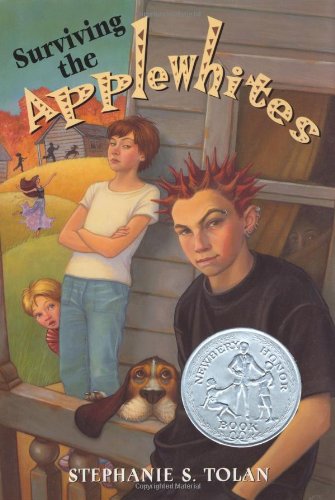
Surviving the Applewhites by Stephanie S. Tolan

Surviving the Applewhites, by Stephanie S. Tolan, is about a troubled teenager named Jake Semple.  Jake has a spiky red haircut and a reputation for getting kicked out of schools.  He even burned down the last school he attended.  Both of his parents are in jail, so Jake is sent off to live with the Applewhite family.  The Applewhites run a homeschooling program, and they are very eccentric and unorthodox in their teaching methods.  Most members of the family are immersed in some kind of artistic or creative endeavor.  They tend to be very spontaneous and difficult to work with, and they enforce many rules that make it difficult for Jake to adjust to their lifestyle.

However, Jake begins to get along with one member of the family named E.D. Applewhite.  E.D. is an intelligent and practical girl who does not have the same artistic preferences of her family members.  She prefers structure and organization, so she does not fit in with the unstructured and impulsive nature of her family.  As Jake and E.D. realize that they both struggle to get along with the family, the two of them begin to develop a friendship as they help each other to survive in the midst of all the chaos.

I think that the author does a great job of creating a cast of realistic and distinct characters that make this story very interesting and compelling.  The internal struggles experienced by Jake and E.D. are very relatable for most people and their personal growth and ability to overcome trials over the course of the story is actually quite inspiring.  This book teaches about the importance of discovering individual gifts and talents.  It also shows the value of a home that nurtures education, and that sometimes unexpected people can help us to become our best selves.  This book is also quite entertaining and humorous, making it very meaningful and enjoyable at the same time.  I am homeschooled myself so I enjoyed this portrayal of a homeschooling family.  This book definitely deserves its Newbery Honor award and I would highly recommend it to everyone.