
AI: the Good and the Bad

From customizing your Spotify feed to helping you with your school work, AI can be super helpful! However, AI is becoming a controversial topic. Here are the pros and cons of AI.

AI Is Great Because:

  1.  AI is a learning tool. AI programs like Grammarly, Khan Academy, Duolingo, and Quizlet are effective learning tools helping people all over the world. I would bet that you or someone you know has used Duolingo to learn a new language. Did you know that a 2021 study by Duolingo Research revealed that 34 hours of Duolingo use is equivalent to a full semester of college-level language instruction?
  2. AI makes our lives easier. AI is used for repetitive jobs like data sorting that would take a human hours to do. According to Forbes, “With a well-crafted prompt, ChatGPT can help you eliminate hours of repetitive work in mere seconds.”
  3. AI improves the quality of life for disabled people. From self-driving cars that can allow people to get around easier, to glasses that caption the world for the deaf–AI fosters inclusivity.
  4. AI makes healthcare better. Google’s DeepMind developed an AI system that diagnoses eye diseases as accurately as leading ophthalmologists: “Our AI system can quickly interpret eye scans from routine clinical practice with unprecedented accuracy. It can correctly recommend how patients should be referred for treatment for over 50 sight-threatening eye diseases as accurately as world-leading expert doctors.”  AI health tech saves lives!

AI Is Not So Great Because:

  1. AI makes mistakes. AI isn’t perfect.  A recent study from Purdue University found that ChatGPT, a popular AI app, presents wrong answers 52% of the time. If using ChatGPT to aid your research, you may find that your facts are false.
  2. AI takes jobs. Vinod Khosla, co-founder of Sun Microsystems, predicts “80 percent of all jobs will be eliminated” because of AI.
  3. AI harms the environment. AI gains its strength from thousands of computers housed in data centers. These centers are constantly operated, leading to a huge amount of energy being consumed. According to Reuters, “The surprising growth in power demand driven by the rise of artificial intelligence and cloud computing is being met in the near-term by fossil fuels like natural gas, and even coal, because the pace of clean-energy deployments is moving too slowly to keep up.” AI is playing a big role in increasing greenhouse gas emissions.
  4. AI distorts reality. AI can be used to generate fake audio or video recordings of people. When what you see with your eyes or hear with your ears can no longer be trusted or do not match reality, the truth becomes hard to discern.

Conclusion:

AI is helpful in many ways, but also has its faults. As time passes, technology improves, so while there are some large problems currently with AI, in the future, they may not be as pronounced. In the end, in order to truly understand the impact something will have, we just need to wait and see.

Does Technology Help Us?

When I was reading the news the other day, I saw that Apple has announced that they have made a ‘mixed-reality headset’ computer called Apple Vision Pro. This product is scheduled to be launched in early 2024 and is said to create an immersive experience between the real world and everyday apps. With Apple Vision Pro, users can have apps open in the spaces they are in.

Technology has many benefits, including making the world more interconnected. But, with technology like the Apple Vision Pro, how can we be sure that humans will continue interacting in person rather than online? With new technology being introduced, will we choose the convenience of Facetiming people or having in-person conversations? While there is no problem calling others, humans are created to interact with the people around us (in person).

New technology prohibits everyday interactions that used to happen before technology. If someone buys something from Starbucks, they can purchase it online or at the counter. Nowadays, most people prefer buying items online, which is more convenient. However, people lose that small interaction with an employee or another stranger. At first, losing this small interaction may seem insignificant, but this can cause harmful effects over time, even as extreme as social isolation.

Future generations need to understand the importance of human interaction. How will they grasp that technology hurts us rather than helps us? And how will society function appropriately if no one has in-person interactions because of increased technology? I believe technology should be limited, especially with advances in virtual reality. In virtual reality, people can ‘own’ as many objects as they want (money, clothes, homes, etc.). Of course, these ‘objects’ are figments; however, to many people, VR offers more than their real life. With the increased use of virtual reality and its attractiveness, will humanity start to live in a virtual world? While this might seem extreme, many articles have been made on this topic.

I believe that there is a chance that people will start to live in VR sets. The average human willingly spends 7 hours a day on technology, so it is highly plausible that future generations will live in VR. This is disturbing because the government can easily control our communities by monitoring content and promoting propaganda. A news article by Global Shakers says that a new company, Stratuscent, is developing technology to synthetically replicate smells from around the world. (For instance, if someone visited Paris in virtual reality, they would be able to see and smell Paris for how it is in real life.) I thought the author brought up a good point; he said, “And when that happens—how long before there’s no distinction between virtual reality and reality?” (Romer). If technology offers these opportunities on one device, people will not want to live in real life. People will not realize what is real and what is not.

Technology has the power to change the world positively, but we must be wary that it does not consume us. With this information in mind, I hope to end this article by causing you to ponder whether technology will help or hurt our society.

AI video and art generator Pros and Cons

When I was in sixth grade I discovered AI art and I thought it was awesome. My history teacher in seventh grade showed me some amazing AI tools to use.

Leonardo AI Pros:

Makes really cool art. Allows you to make animations. Has different styles of art you can use. Has the ability to generate really good random prompts and improve the given prompt with great imagery. You can delete unwanted or failed image generations. You can use other images as references.

Leonardo AI Cons:

Makes you use tokens. If you generate an image of the same person multiple times every single person looks like the first person you generated.

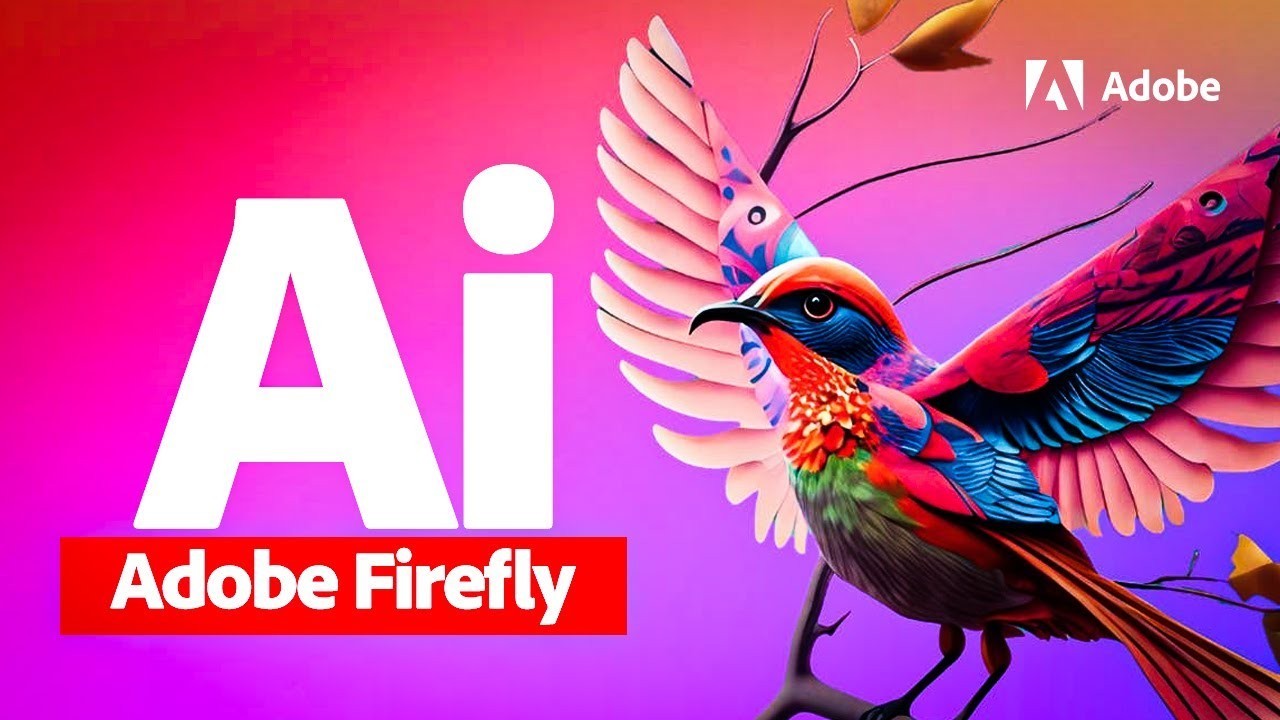
Adobe Firefly AI Pros:

There is no tokens necessary. Generative fill and expand is available. You can use other images as references. Can remove unwanted objects from images. Always is getting updated. Suggestions when you type.

Adobe Firefly AI Cons:

You can’t see your past generations. Not very smart so you have to be very specific with what you want.

OTHER AI TOOLS:

Runway: Generates videos really well.

Pika: Allows an image to look like it’s talking, but it looks weird.

Temp Mail: Gives a temporary email address that can be used.

Pixa Motion: Lets you add motion to images

D-ID: Makes a person image look like it’s talking. Has a water mark though.

Microsoft AI: It’s a really good image generator but you can’t use it with a school account or on a school issued computer.