Analysis of John Keating’s Teaching Style

Dead Poets Society is a touching coming of age story featuring the unconventional teaching methods of John Keating and the impact it has on his students. His passion for educating teens and inspiring them to expand their knowledge beyond the walls of the restrictive school system.

The conversation of a fulfilling, limitless life is so essential to the growth of the boys in the movie, as they come from wealthy, strict families with strategically mapped out plans for these boys’ miserable lives. They are chasing freedom — or even just a little room to breathe and search for meaning in life.

Keating reinforces the need to seize the day or live in the present, as life is a fleeting moment, begging to be appreciated. He challenges the foundation of the school and the suppressive life it fosters. The boys are limited in terms of self expression and identity. They waste their lives, tirelessly yearning for validation from an unforgiving system built on greed, conformity, and misery. 

Knowing his students have been taught to conform without question, Keating turns his classroom into a stage for living truthfully, leading through instruction and more importantly, example. His genuine passion for creativity and poetry is unmistakable in his efforts. He alludes to renowned poets, Whitman and Herrick, to demonstrate his own profound understanding of philosophical insight. Their rich words carry a message of timeless wisdom, eternal in its relevance. He hopes the boys will take control of their lives and seek sincere pleasure.

He further disregards the standard values and structures of a classroom by standing on desks and shouting. He is grabbing the attention of his students and encouraging them to break the barriers of tradition. The school desks resemble authority and standing on them gives the boys the power to practice their freedoms. Keating empowers them to rise above societal pressures to be perfect and shift their perspective on their everyday mundane lives.

This movie is immensely meaningful and worth every two hours and eight minutes. All teens could benefit from hearing this movie’s profound, powerful message. It inspires its audience to consider the current state of their life and how it is impacting their wellbeing.

Dead Poets Society  is available to check out from the Mission Viejo Library.
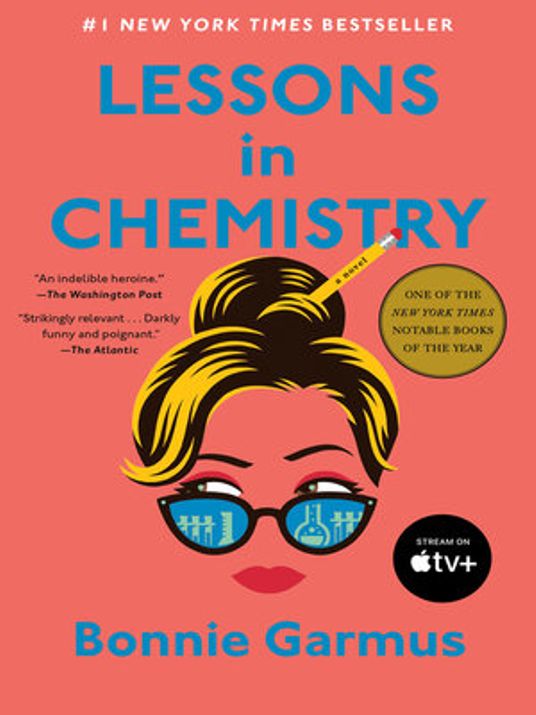
 

Lessons in Chemistry TV Show VS Book by Bonnie Garmus

Well for starters, this was a great show and an even better book. Although I broke the unspoken rule of watching the TV show first, I loved the show so much I knew I had to read the book too. Let’s just say, it did not disappoint.

In Lessons in Chemistry, the main character is an unsocial chemist named Elizabeth Zott. Sadly, she lives in the 1950s, meaning that she faces extreme sexism in every aspect of her career. Furthermore, Elizabeth is a very attractive woman, so she faces sexual assault and cruelty from the men and jealousy and catiness from the women. Personally, I wonder how her life would have been different if she was not as attractive. Back to the summary, Elizabeth does have a job at a science facility called Hastings in Common, California. There, she meets a man named Calvin Evans. They fall deeply in love and live together happily for about two years. They do not get married at Elizabeth’s request and do not have children, but the couple did have a very intelligent dog named Six-Thirty. 

Unfortunately, Calvin gets hit by a police car and dies. Then, to make matters worse, Elizabeth gets fired because she finds out she is pregnant with Calvin’s baby. In her prematernal rage, Elizabeth returns home and makes a lab inside her house to continue working. She also ergs (which is a rowing machine but on land) to keep healthy. When her daughter, Mad, is born, Elizabeth struggles to be a good mom. Her neighbor, Harriet, hears the screaming child and comes to help take care of her and offer support. Now with a 4 year old in kindergarten, Elizabeth has to find a source of income for her family. She gets a job working as a TV chef. On her show, Supper at Six, Elizabeth cooks while explaining the chemistry behind it. She is a huge hit and her show skyrockets. While her mother is on TV, Mad has a troublesome school project. She ends up talking to a minister for help, and later finds out he was a pen pal of her father. After that, (I’m almost done I swear), Elizabeth quits her job. She returns to Hastings and finds out that her sponsor who has funded her work was actually Calvin’s mother. However, the endings are different between the show and the book.

Ok, now that you have the summary for the idea, let’s get down to the differences between the show and the book.

Elizabeth’s Job at Hastings

Show: Elizabeth is a lab technician, showing sexism.

Book: Elizabeth is a chemist (although not respected).

Rowing

Show: It’s not really a key point or focus. It does appear, but not often.

Book: Calvin and Elizabeth row together often and even row with other men. Elizabeth continues to erg for a long time as it not only connects her with Calvin but makes her tired. 

Harriet Sloane

Show: Harriet is a young Black woman who lives with her loving children, as her husband is a soldier at war. She is also an activist.

Book: Harriet is an older white woman. She lives with her abusive husband and her kids are grown up. She is in a way a nanny for Mad and dedicates her time to the Zotts. 

Civil Rights

Show: Harriet is a huge activist. Elizabeth also lives in a predominantly Black neighborhood. Furthermore, Harriet and Elizabeth had important conversations and went to a protest together.

Book: Not talked about or mentioned at all.

The Ending

Show: Elizabeth becomes a chemistry teacher at a local college. 

Book: Elizabeth (is assumed) to return to Hastings as the Head of Chemistry. 

To sum up this entire article: read or watch Lessons in Chemistry, it’s great. I love it. I think it’s a deeper show, but it has so many light moments that it feels satisfying to watch/read. 10/10 Recommendation. 

Lessons in Chemistry by Bonnie Garmus is available to check out from the Mission Viejo Library. It is also available to download for free from Libby.

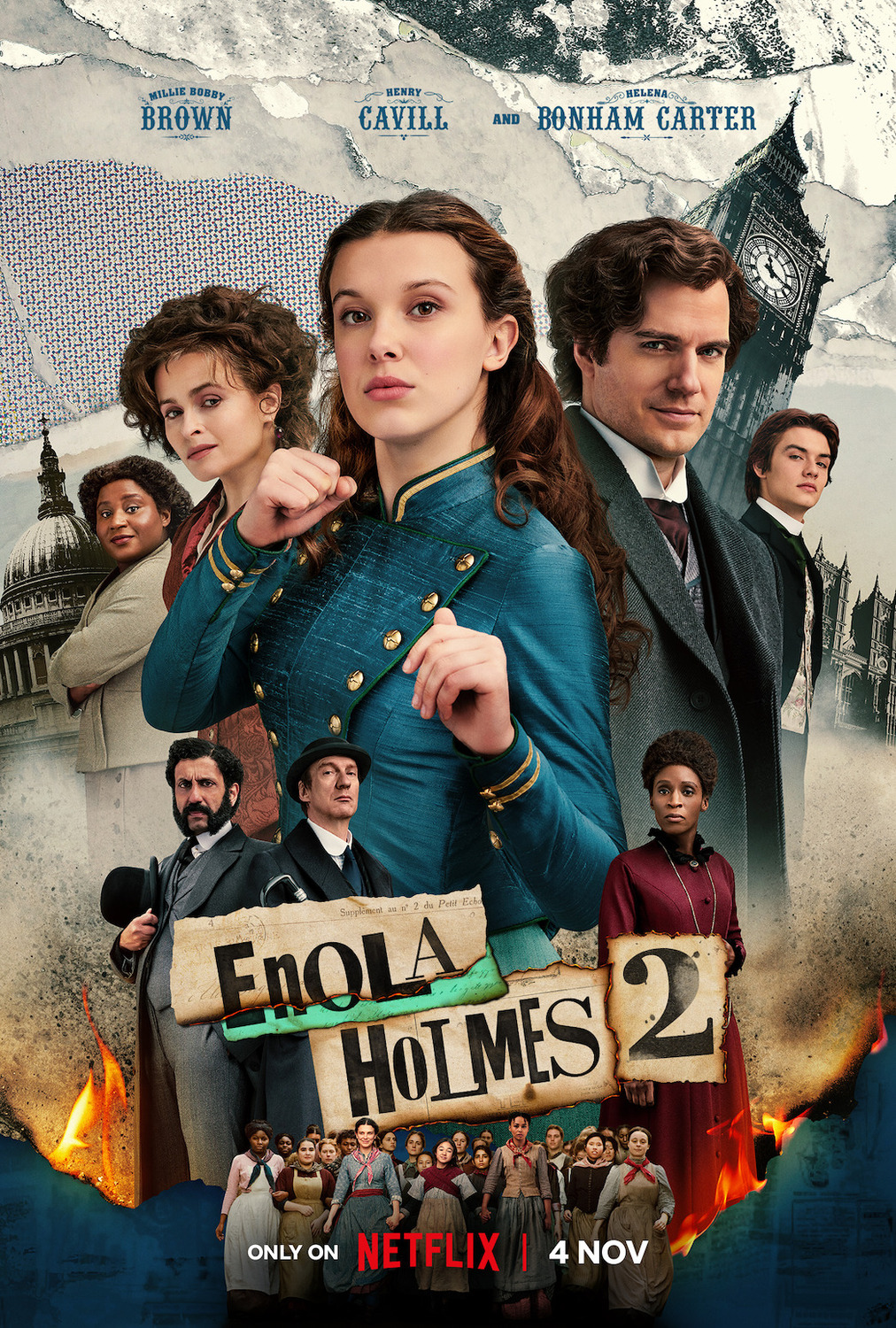
Enola Holmes 1 & 2

I have known Millie Bobby Brown since she starred in Stranger Things. Although I didn’t watch her there, I did watch her in Enola Holmes. I had never actually watched or read the Sherlock Holmes series, though I’ve been wanting to. Sherlock Holmes just seemed like a big commitment, being such a long series in books and shows, that Enola Holmes seemed more intriguing. Enola Holmes was a Netflix movie series starring Millie Bobby Brown as the protagonist. There are currently two movies out so I’ll talk about both of them in this. 

Enola Holmes is about Sherlock’s younger sister who does her best to make a name for herself without the reputation or help of her older brothers, Sherlock and Mycroft. In the first movie, she begins her journey in search of her mother who went missing, trying to avoid her brothers in order to prove her independence. Here she meets a recurring character named Tewkesbury, whom she helps throughout the movie, multitasking in helping Tewkesbury and discovering clues left by her mother. She finds clues relating to women’s rights but does not find her mother. While she may not have completed her first goal, she does end up gaining the support from Tewkesbury, who proves to be important to Enola’s future endeavors.

In the second movie, Enola takes on her first real request as an established detective. She is asked to help find another missing person relating to the real story of the Matchgirls Strike. In the end she teams up with Sherlock and Tewkesbury to solve the mystery. Here she also gains a new interaction with her mother in fighting for women’s rights alongside other women in the film. As the films go along, they grow in intensity and the danger becomes even larger. 

I really enjoyed the Enola Holmes films. I ended up watching them both in one sitting, wanting to see what other adventures were left in store. As obvious as this may sound, I was very fond of the mystery aspect. The name Holmes is often related to mysteries and such, but because I’ve been so out of tune with mysteries, this was a nice dip into the pool of the genre. Whether or not this kind of problem solving would be accurate, I’m unsure, but it was fun to watch anyways. I liked the use of word problems and scrabble. I probably would have never figured it out but it was great to watch the clues come together. 

From the first film, I really liked the focus on problem solving and escaping danger throughout the movie. I liked to see the establishment of Enola’s character; a young girl who is independent but still naive to the real dangers of the world. I liked seeing her figure things out by herself, growing as a person but still keeping her cheeky and clever personality. In the second film, I really liked the further establishment of Enola’s relationships, with both Tewkesbury and Sherlock. The first film focused more on Enola and who she is and her own power, but the second shows how it’s okay to accept help and that it’s okay to need help. I was happy to see more characters developed in the second film in relation to Enola and I also liked the connection the film had to the historically accurate Matchgirls Strike. In both films, I liked to see the actual mysteries and the action that came with them. They induced a fun amount of suspense that had me reacting in my seat. But I especially loved the problem solving portions of them. I always enjoy a nice challenge, and while I couldn’t keep up with the wit of the Holmes’ siblings, it was entertaining to see it all come together. 

I found the Enola Holmes movies really enjoyable. All the aspects ranging from the plot, to the characters, to the action, and to the problem solving were enjoyable to see come to life. There is actually a book series for Enola Holmes that the films are inspired by. Since this is a multi book series, I hope that there will be future movies. I look forward to the creation of a third film (or more) and definitely recommend these movies to start with! 

-Nicole R.

Dune and its Iterations

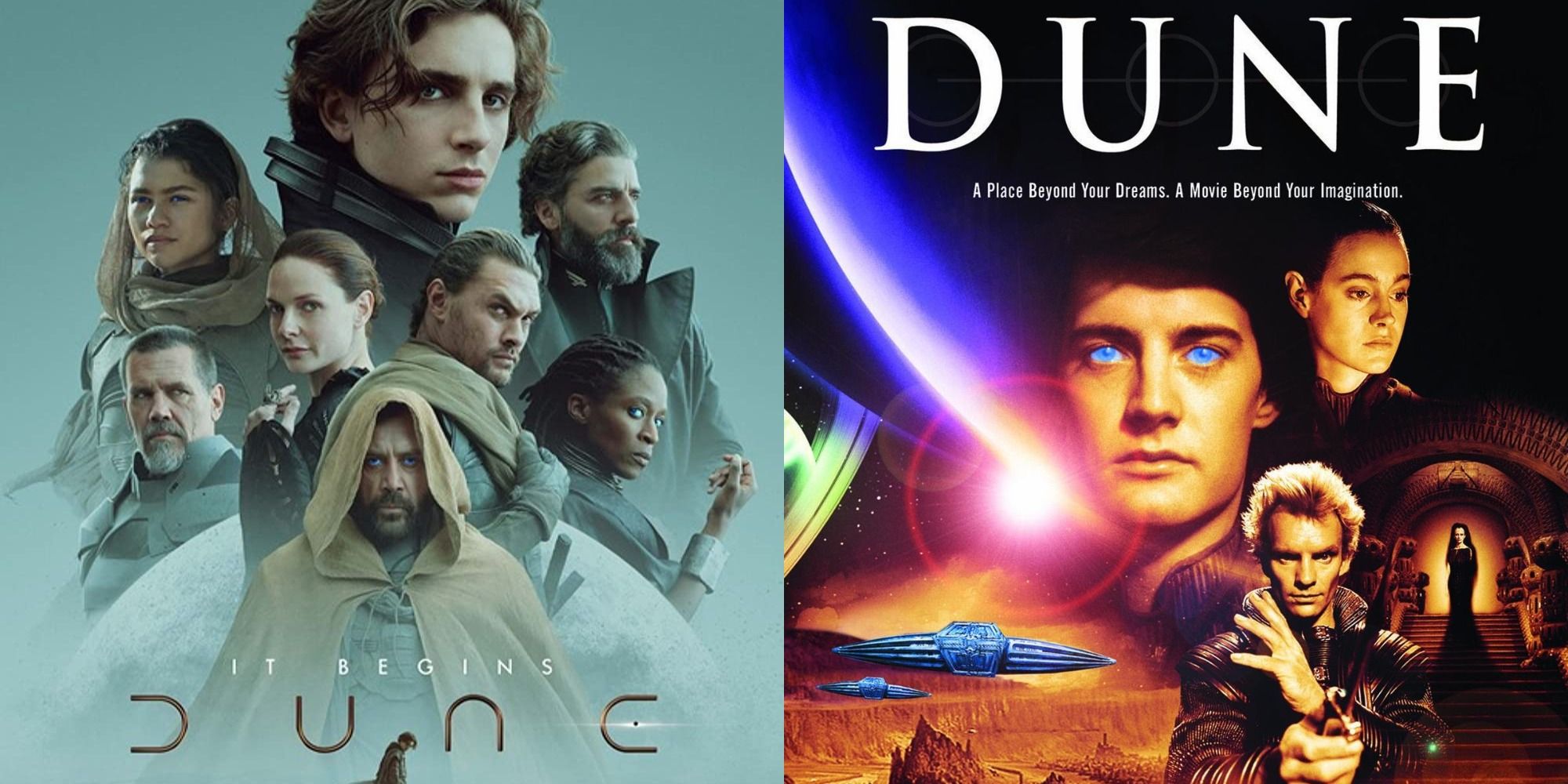
Dune: 10 Biggest Differences Between The 2021 and 1984 Versions
Dune 2021 and Dune 1984

I love Dune or at least two versions of it. My love of it has led me to constantly talk about it, which has caused my friends to ask me what it’s about. It’s a bit hard to answer, I could say “Published in 1965, Dune is a space epic by Frank Herbet that went on to change the face of science fiction.” Or I could say “It’s like Game of Thrones, Lord of The Rings, and Star Wars had a baby, but with a lot more sand.” But if this fails, I use my last resort “The movie has Zendaya and Timothee Chalamet in it” which usually works. 

This is a good thing because I think the 2021 movie is by far the best way to introduce someone to Dune. The movie tackles the first half of the book and introduces you to the world, you learn about the Bene Gesserit witches, the secretive Fremen, the all-powerful Emperor, the powers of Paul Atreides, and most importantly you get to see the planet of Arrakis or Dune. It does all of this while showing you amazing visuals. Through both practical and CGI effects the planet of Arrakis is stunning, a wasteland beaming with possibilities, with hostile giant sandworms that attack anything that moves. The director, Denis Villeneuve does a masterful job staying true to the book whilst using incredible cinematography.

The book itself is a masterpiece of science fiction and world-building. It’s a massive book that’s absolutely jam-packed with details and interesting concepts. At some points, you feel like you’re reading a science textbook when learning about how “spice” is created, or how the Fremen stillsuits retain your body’s moisture. However, it keeps itself interesting by guiding you through the planet through the eyes of various characters. Whether it’s the main character Paul, his mother Jessica, or even the evil Baron Harkonnen, you are constantly interested in how the story is unfolding and what motives are shaping each character’s actions. 

Despite all this praise I have to discuss the awful monstrosity that is Dune (1984). Directed by David Lynch, Dune (1984) was the first attempt at transferring the behemoth book onto the big screen. It fails miserably, the intriguing characters become flat, the massive world seems small, and the science turns silly. All while the directing remains boring with the same transitions being used over and over. Granted it has some awful CGI that keeps it somewhat entertaining. Some scenes from the book remain but most of the movie seems to ignore the book entirely. To Lynch’s credit, the movie was plagued with issues and was supposed to be 2 parts instead of the 1 movie. But in my opinion, this still doesn’t make up for the absolutely awful translation of the book. 

If you want to learn more about Dune I’d recommend starting with the 2021 movie. If you love it like I did you’ll love the book. Be warned that both the book and the movie are long, they have to be in order to explain the world. Chances are the time will fly by while you read/watch it. But whatever you do, stay away from the 1984 version.

-Parker K