
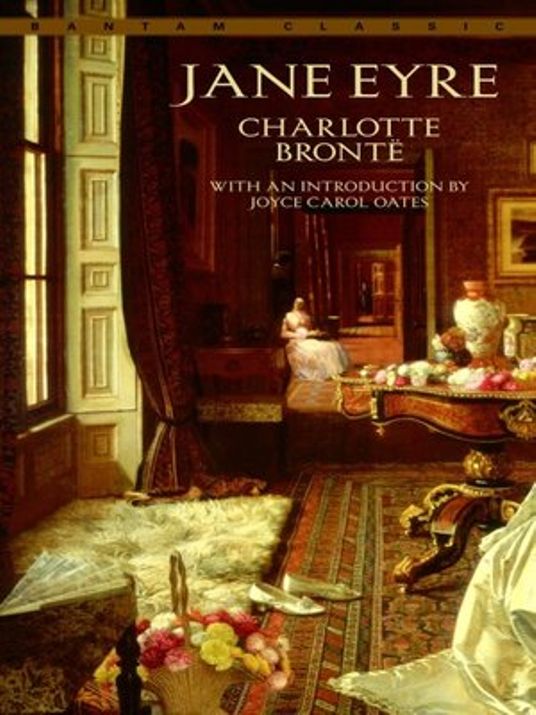
Jane Eyre by Charlotte Brontë

In the public eye, Charlotte Brontë’s Jane Eyre has been reduced to a romance novel. After all, all the elements are present: a plain heroine, a dashing love interest with a mysterious past, a barrier keeping them from their love, and much more. However, to reduce the novel to a story about a madwoman in an attic would be to disregard much of Brontë’s purpose in writing it.

The time Jane Eyre spends in Thornfield with Edward Rochester, the love interest in question, amounts to no more than one third of the book. After all, people do not just appear fully formed out of nowhere – they have a background, and Jane is no exception. Brontë masterfully details Jane’s childhood with her neglectful and abusive relatives at Gateshead, and the positive influence her first friend had on her at the Lowood Institution for Girls. In these parts of the novel, we see Jane growing up and growing into the strong, fierce personality Brontë makes it clear that her protagonist has – a first for female characters at the time.

Moreover, we continue to see Jane becoming her true self in the latter sections of the novel. Although she is finally reunited with part of her family, she does not let her attempts to fit in with them alter who she is and what she believes in. This can be seen when she rejects St. John’s proposal to marriage because she knows he loves another and only wants to marry Jane because she would make a good missionary’s wife. Despite internal and external pressures, she stays true to herself and eventually goes back to Rochester.

Jane Eyre is a bit of a dense read, but it will be time well spent. It covers a variety of topics and themes that allow the modern reader a glimpse into the nineteenth century, while also, of course, noting the forbidden yet passionate romance between Jane Eyre and Edward Rochester.

– Mahak M.

Jane Eyre by Charlotte Brontë is available to check out from the Mission Viejo Library. It is also available to download for free from Libby.

Book Review: Jane Eyre by Charlotte Bronte

jane_eyreUnfortunately Jane Eyre would never become the best seller it once was, if sold within our time. It holds four-hundred odd pages of description-infused writing (hardly any of which is possible to hold in concentration for the average teenager of our generation), a heroine and love interest who both do not seem particularly attractive, overt religious themes mixed in with heavy-handed moral preaching delivered by the author, a plain love story (with a few plot twists thrown in for dramatic affect), etc., etc.

And yet…it has become a story adored by generations, one that has ascended to the lofty consideration of a classic.

Fortunately for me, that meant I was subjected to read this in school, which in turn meant I was definitely not allowed to read it at just face value.

Perhaps two years ago I picked up the book in attempt to immerse myself in a classic for the summer, and at the time, I was incredibly disappointed. Reading it as my impressionable, naïve, opinionated teen self of a few years ago (that I like to think was the Sophia of the past) Jane was a meek protagonist, who was incredibly boring when held up to the “empowered” female protagonists of today. I saw her as too clingy to her outdated morals, and unable to follow “her heart” for love within the book. Predictably I only read through the first half of the novel before sucumbing to complete disatisfaction.

And wow, I was wrong.

Now with two more years of life experience under my belt, along with a hefty dose of analytical interpretation from the English class this assignment was given for, the truth has been revealed in stark comparison. Jane Eyre is actually (when read properly between the lines as well as through its many intricate layers) a compelling and interesting story of 19th century female independence and empowerment, created light years ahead of its time.

It was even considered revolutionary within its time, author Erica Jong stating (of Jane Eyre), “When a book is beloved by readers and hated by contemporary critics, we should suspect that a revolution in consciousness is in progress.”

Jane Eyre is aware of her self-worth. She knows what her morals are, and she stands by them (and unlike many others she sticks to them regardless of the final outcome of her decision). She doesn’t follow the advice of others advising her against marriage, the first time, because she is prudish or caged up or weak unable to sway for love (the mindset I believed before), but instead because she is standing strong for herself, standing by her own integrity and her own beliefs.

Charlotte Bronte masterfully subverts many literary tropes of her time, and of our own. The things that made Jane so unappealing for me before-she was far from perfect (or rather she did not have imaginary flaws seen by only herself; she was completely real, and completely subjected to the human flaws we all have), she was not beautiful which allows her to fall into a relationship with Rochester not based on appearance, but instead due to her true self, not one hidden behind a façade of perfection and beauty.

One of the other things that surprised me after becoming fully immersed in the novel-the dialogue and characters still appear fresh and witty in their interactions. The plot is as intense and immersing as a YA novel of today.

And if you can put aside your phones and your short attention spans for a period of time its 461 pages are filled to the brim with intense gothic imagery and mood, as well as beautiful compelling plot points and twists-things you wouldn’t expect from a novel published 167 years ago.

If you have the time and dedication to read between the lines, perhaps you’ll begin to understand the revolutionary nature of this novel-perhaps even revolutionary for our time.

-Sophia U. 12th grade