
Previously in January, the library held their first STEAM Station to begin the new year. What is STEAM Stations? STEAM Stations is a library program that the Teen Advisory Board organizes that prioritize different aspects of STEAM (Science, Technology, Engineering, Art, Math). The library’s first STEAM Station was Coding Day; a station concentrated around coding.
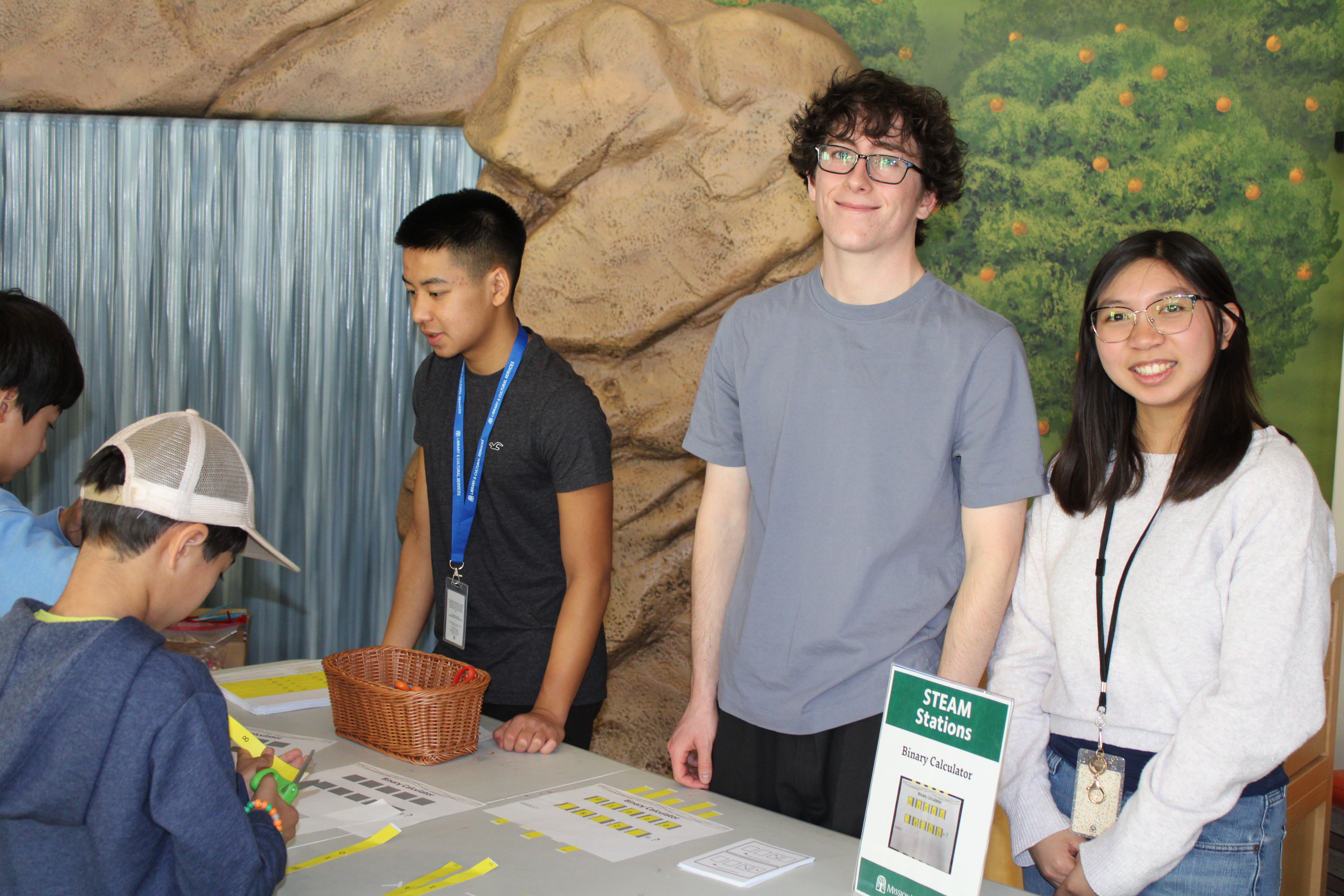
For those who missed it, Coding Day had three mini stations all centralized around binary code:
The first station was our name activity. Essentially, it taught all participants how to write their name in binary code in a fun, artistic way. The activity was an art based project where participants would choose two colors (one to represent 1s and one to represent 0s) so they could create their name in binary code. By coloring in specific squares to fill in the ones and zeroes, they were able to create their own, unique binary block that spelled out their name.

At the second station, participants created a binary code bracelet. Using binary code, they could match the numbers to the three colors of their choosing to create a beaded bracelet with their initials. Each color would represent one letter of their initial which they would then thread through colorful pipe cleaners that could tie around the participant’s wrist. Not only was it fun, but it provided another opportunity to try spelling using binary code.

Finally, at the third station, participants created a paper binary calculator that could create the binary code for numbers all the way from 0 to 31. While the other two activities focused solely on spelling and creating letters with binary code, the binary calculator focused on creating numbers instead. It was a fun but easy math challenge that got participants thinking and learning numbers in binary code.

Coding Day was a great success and had a very good turnout. While the event welcomed everyone 6 years old and up, plenty of young kids came and had a fun time creating art while also learning about how create numbers and letters using binary code. I had a fun time seeing their beautiful bracelets and unique binary names as I quizzed them with math problems using the binary calculator. While the event had many young kids, it was open for all ages to enjoy. All the crafts and activities are simple enough for everyone to try out but still fun to do and you get to leave with your own creations.
While Coding Day was only a one day event, if you are interested in coding, check out the coding program at the Mission Viejo Library for availability. It is open for everyone so do not hesitate to try it out! Furthermore, there are two more STEAM Stations coming up. On February 8th, there will be Engineering Day and our final one on March 8th will be Biology Day. Each will be solely focused on their individual topics with fun and interactive stations for everyone to enjoy. It’s a fun experience that I hope more people come and check it out! Hope to see you all there!
-Nicole R.
 Mission Viejo Library Teen Voice