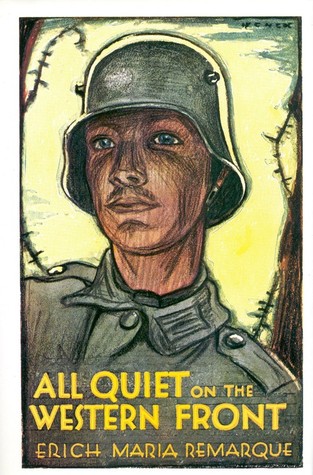
Book vs. Movie: All Quiet on The Western Front

Disclaimer: The movie being compared is the newest 2022 movie.

All Quiet On The Western Front is a classic anti-war novel depicting the tragedies of the western front during World War I. Set from the viewpoint of the Germans, it features Paul Baumer and the set of ‘life and death’ colleagues he makes in the army. Rather than a hopeful take on the war, the author takes from his own experience to realistically express the war’s effect on soldiers and its moral implications.

While difficult, the best advice I can give for readers is to not get too close to any character ❤

Book Rating: 10/10 Movie Rating: 8/10

  1. Signing of the Armistice
    • Book: There is no mention of the signing of the armistice and only through a rumor at the end is it known that the war is coming to a close
    • Movie: Slowly throughout the movie, it cuts to the signing of the armistice. Specifically, it details the heavy restrictions the French politicians place on Germany as a clause in the armistice.
  2. Going Back Home
    • Book: There are two scenes in the book where Paul returns home for rest and recuperation before going to war. Mainly depicts how Paul doesn’t fit in and feels like the ‘lost generation.’
    • Movie: There are no scenes where Paul returns home.
  3. Timeline
    • Book: Starts directly at when Paul has already been in the army for more than a year and flashbacks occur to depict the past. The timing is also more spread out, which allows for more events to take place.
    • Movie: Starts from when Paul registers for the war with his friends and then skips to the later years of the war.
  4. Graveyard Battlefield
    • Book: One of the first (and amazing) battlefields that took place at the western front was in a cemetery and it depicts Paul’s use of coffins and corpses as a shield from bombs and guns.
    • Movie: There are no war scenes at a cemetery.
  5. The Main Antagonist
    • Book: Corporal Himmelstoss is a key figure in the book that often gives punishments over the smallest mistakes, symbolizing the power authority figures have over recruits. He has great character development in the later half of the novel when he joins the war at the western front and learns that power is useless when faced with life or death.
    • Movie: There is no mention of Corporal Himmelstoss. Rather than him, Prussian General Friedrich becomes the key figure in the book that symbolizes the hierarchy in the army. There isn’t much character development with him and he is often seen ordering soldiers and doesn’t directly interact with Paul and his friends at all.
  6. Kat’s Death
    • Book: Kat is hit in the head by a stray shard from a bomb and dies.
    • Movie: After stealing a goose from the owner, the owner’s son shoots Kat with a gun.
  7. The Ending
    • Book: Paul dies from a sniper shot one month before the war ends.
    • Movie: Paul dies during a last ditch effort by Prussian General Friedrich to win the war at the western front. He gets shot and dies just hours before the war ends.

General Thoughts: Movie vs. Book

The war scenes in the movie are arguably one of the best war scenes in the film industry. It gives a very accurate and desperate picture of the western front. I love the use of the many common weapons used during that time, such as poison gas, tanks, and flamethrowers. Would definitely recommend if you are interested in really good fight scenes!

Something I didn’t like about the movie was the ending. A big reason about why the novel is titled All Quiet On The Western Front is because Paul dies on a day so unremarkable that the commander just wrote ‘All Quiet.’ It reveals how unsignificant death was in the war, but it was something Paul was fighting against throughout the whole book. However, the movie shows Paul dying in a big fight on the last day of the war, which kind of undermines the whole point of the title and the book.

I do recommend both the book and movie to historical fiction lovers, so you should definetely check it out!

What to compare them for yourself? All Quiet On The Western Front by Erich Maria Remarque is available for checkout from the Mission Viejo Library. The movie All Quiet on the Western Front is also available for checkout from the Mission Viejo Library.

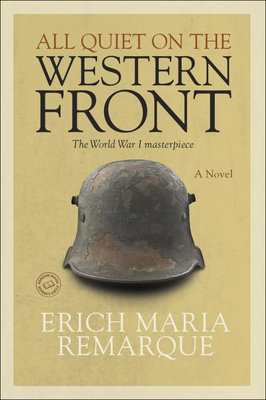
All Quiet on the Western Front by Erich Maria Remarque

Having started my World War One unit in my history class, I remembered I had read a book on it. All Quiet on the Western Front by Erich Maria Remarque is a historical fiction novel I read all the way back in November for my English class. We were given the choices of either reading a book about World War Two or a book about World War One. I made the decision to read the one about World War One, realizing I had barely any information on it in my head. 

All Quiet on the Western Front is set in Germany during World War One following Paul Baumer, his friends and other young men. Throughout the novel, they are slowly losing the spark of fighting they had when they first started. The novel goes in depth on the lost ideologies of war and how they were tricked into becoming patriots of their country, unknowing of what they are fighting for. It’s a gruesome story of loss and reveals the realities of war and what it is like being out on the front lines.

At first, I didn’t really find the novel all that interesting. I am not usually one to watch war films or read war related books. I’ve always been more of a fantasy kind of person. But as I read through this novel, I found more to the simplicity of what I had deemed to be “just a war story.” The novel focuses highly on the small moments outside of war, what happens during battles, what happens to others and the aftermath of war on people. Remarque does a great job on illustrating scenes with her descriptions of the battlefield and the conditions of war back then. We see it when we travel with Paul as he experiences different battlefields, the pain of coming back to and leaving his family, and losses of friends and family. I enjoyed reading this point of view as through Paul’s eyes, I was able to see and live through the emotions and intensity that were experienced in trench warfare and war in general.

However, seeing the ideology of the soldiers fighting in the war was what really interested me. It was the fact that they were young men that didn’t know what they were fighting for that really got me thinking. The strength of nationalism and propaganda on the younger generations is incredibly useful in getting them to do what others want, despite them not truly knowing what they are signing up for. They risk losing their lives and they completely lose their innocence, childhood, and will to live fighting for something they don’t understand; a theme touched throughout the entire novel. I found this theme to be the most striking, something I still remember now even though it’s been a while since I’ve read the book.

While I was skeptical of this book at first, All Quiet on the Western Front was a delightful read. It was difficult at times, because of the strange pacing, but looking back at it now, it really helps to add to the story and pacing of war. I also got to learn more about World War One and what it was like. I definitely recommend this book, for knowledge and the historical portion of it but also because it’s an interesting and emotional read.

-Nicole R. 

All Quiet on the Western Front by Erich Maria Remarque is available to check out from the Mission Viejo Library. It is also available to download for free from Libby.

All Quiet on the Western Front by Erich Maria Remarque

The novel All Quiet on the Western Front by Erich Maria Remarque portrays the events of World War I from the perspective of a German soldier named Paul Bäumer. This shows a new point of view of the war that is often neglected in media.

While the narrative is mostly fiction, the author’s personal experiences in the war heavily influenced the story. So, the book was very accurate in portraying the development of the soldiers and their thoughts as time progressed.

For example, at the story’s beginning, Paul and his comrades, motivated by their school teacher to join the army, are extremely elated at the idea of joining the military. However, by the end, they begin to question what they were fighting for in the first place. A powerful quote reads, “I think it is more of a kind of fever. No one in particular wants it, and then all at once there it is. We didn’t want the war, the others say the same thing and yet half the world is in it all the same”, (Remarque 152).

In addition to the well-developed characters, the figurative language effectively describes the scenery. The claustrophobia and violence in the trenches are displayed through the author’s use of imagery. With the release of the 2022 Netflix film adaptation of the book, it will be interesting to compare Remarque’s descriptions with what has been portrayed on screen.

The scale and perception of time in the book were sometimes difficult to process. Paul and his regiment often traveled to different areas and missions in between chapters, without a clear transition.

Additionally, from Chapter 11 to the end, the story’s pacing begins to increase dramatically, jumping from event to event. However, the main character Paul states that time passes differently on the front lines. So, this critique may have been an artistic choice by the author. 

Overall, the imagery and a well-written ensemble of characters make All Quiet on the Western Front a very enjoyable read.

All Quiet on the Western Front by Erich Maria Remarque is available to check out from the Mission Viejo Library. It is also available to download for free from Libby.

Poem: Lie of the War

Inspired by All Quiet on the Western Front by E.M. Remarque

The story of many through the eyes of one.

First World War, through the sight of man

Testament of Paul Bäumer, a German soldier

His fight for life, run from death,

Until his final one last breath.


World War I, the Allied against the Central.

Assassination of one to bloodshed of many

Young men deceived by “Glory” of war,

Join into the pointless flood,

Of the unforgiving sea of blood


Convinced by his schoolmaster,

Paul falls in line to enter the war for his country.

To only find, the truth of the lie

Of a war that could never be weighed

He is one who has been betrayed


In a war without a climax, he will fight

Eyes of the tale, sight on the field

The clock ticks on for Paul Bäumer’s time

With Stanislaus “Kat” Katczinsky, the best friend,

Till he has meet his end.

Many will die, few will endure

From enemies to classmates, all will fall.

To those who survive,

Irreversible damage is done.

That will last long after the war is won.


Kemmerich, infection of his leg.

Müller, a shot in the stomach.

Detering, death by desertion.

Leer, a shrapnel to the hip.

One by one, their lives are more are gone in a blip.


Bit by bit Paul’s sanity fades away.

As each of his friends turn from life to the grave.

Blood smashed against the walls

Voices of every scream

The only thing that fills his dreams.


Paul lives on to see his friends die.

With death, comes surviving guilt.

“Home” is a torturous place

Without a person to understand.

Paul is alone with none to hold his hand.


The final blow is Kat’s death,

Paul’s best friend and brother

The one who taught him to survive, but

A bullet to the shin, then a shrapnel to the head

Leaves Kat out completely bled.


On the day, that was all quiet on the western front

With a face of calm and the happiness of end,

Paul Bäumer dies in October of 1918.


No one to support, No one for support.

Left alone with no will and no dream

A shadow without hope. Barely, able to cope.

The life of the “Lost Generation”

That Paul escapes.


Lies of the war creates the “Lost Generation”.

Young men tricked by “Glory”,

They survive without hope and a will.

All that they see is the death and the destruction

That will never fade as they live.


-Sarah J., 11th grade

Book Review: All Quiet on the Western Front, by Erich Maria Remarque

all_quiet_coverAll Quiet on the Western Front is a novel about a young soldier’s life during World War I. Or we can say that this book records how a young man walks toward the battle field with proud and excitement to how he crushes to the ground with a tired heart that is harmed by the crying guns. He does not fight for his country, but for his life and the lives around him. However, just like many soldiers, he cannot and does not have the will to escape from something worse than death.

The novel is by Erich Maria Remarque, a German author who participated in World War I himself. Became a soldier when he was 19, Remarque was sent to the western front to fight with France. There he was wounded and sent to hospital, where he spent the rest of the war. During his time in the hospital, Remarque talked with lots of soldiers that were sent to be cured or to be left to death; his own experience with the stories that he heard from others led to his great works.

Why do people put themselves on the battle field? What is the reality on the front line? What happen to them each and every day? What is the thing everyone faces that is worse than death? What is WAR? From the perspective of the main character Paul Bäumer, Remarque showed the real meaning of war- it is a competition with death and a process of losing everything you had.

“We are forlorn like children, and experienced like old men, we are crude and sorrowful and superficial- I believe we are lost.”

“We are not youth any longer. We don’t want to take the world by storm. We are fleeing. We fly from ourselves. From our life. We were eighteen and had begun to love life and the world; and we had to shoot it to pieces.”

Once All Quiet on the Western Front was published, it sold 2.5 million copies in twenty-five languages in first eighteen months. Although Nazi Germany burned the books before World War II and Remarque was exiled, his works still remained popular in both German and the world.

“He fell in October 1918, on a day that was so quiet and still on the whole front, that the army report confined itself to the single sentence: All quiet on the Western Front.”

– Wenqing Z., 10th grade