The Hunger Games: Sunrise on the Reaping

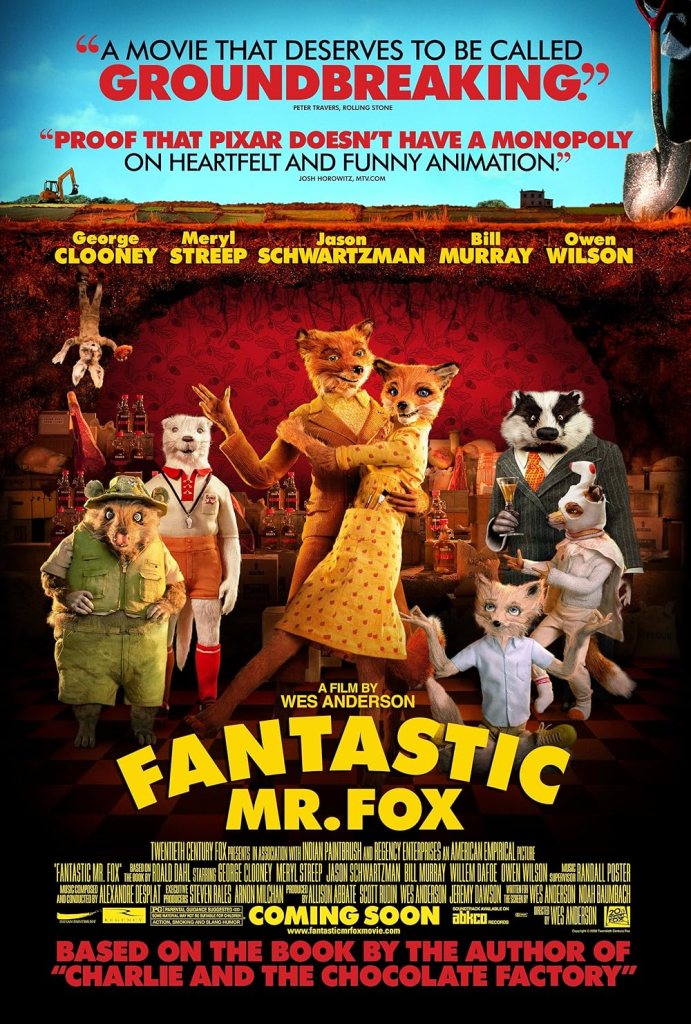
The first impression I got from watching the quirky, animated stop-motion film “Fantastic Mr. Fox” is that it’s a fun, lighthearted film about clever animals and the angry, vengeful farmers who seek to harm them. The film follows Mr. Fox, an ex-thief, who cannot help himself from returning to his old ways of stealing food, despite the promises made to his wife that he would try to live a safer, more quiet life. When Mr. Fox does finally give in to his wild nature again, his actions put his family and friends at risk and causes chaos to erupt. Even though the film has many laughs and is action-packed, it also is a thoughtful and emotional film, especially concerning family, identity and growing-up.

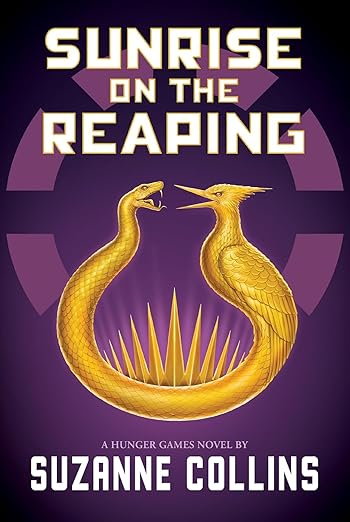
When I first started reading the first few pages of this book, I just could not stop. This book is like my cup of tea, I love dystopian, fantasy novels, and if you are looking for a book in that genre, this is totally the book for you. It is so interesting to follow the journey of Haymitch as a 16 year old boy, because he is so different in his character compared to when he first makes his appearance in the first book of the Hunger Games series. This book is beautifully written with much detail, and action, and is associated with feelings of sadness, and catches your eye throughout the whole book. I am a huge fan of the Hunger Games world, and when I saw that Suzanne Collins was going to release a new book, you have no idea how excited I was, but I also had mixed feelings on if it was going to be as good as the last Hunger Games, the Ballad of Songbirds and Snakes, I was not disappointed at all and love this book.

I would highly recommend this book for action, and adventure seekers, and fans of fantasy and dystopian novels. I would recommend however, reading the first Hunger Games book in the series and continuing through in order, before reading Sunrise on the Reaping, as it better follows through with the story and will allow you to better understand the different characters, and the story. Sunrise on the Reaping is now available to check out at the Mission Viejo Library today! And is going to become a major motion picture in theaters in November!
Book Review: Animal Farm

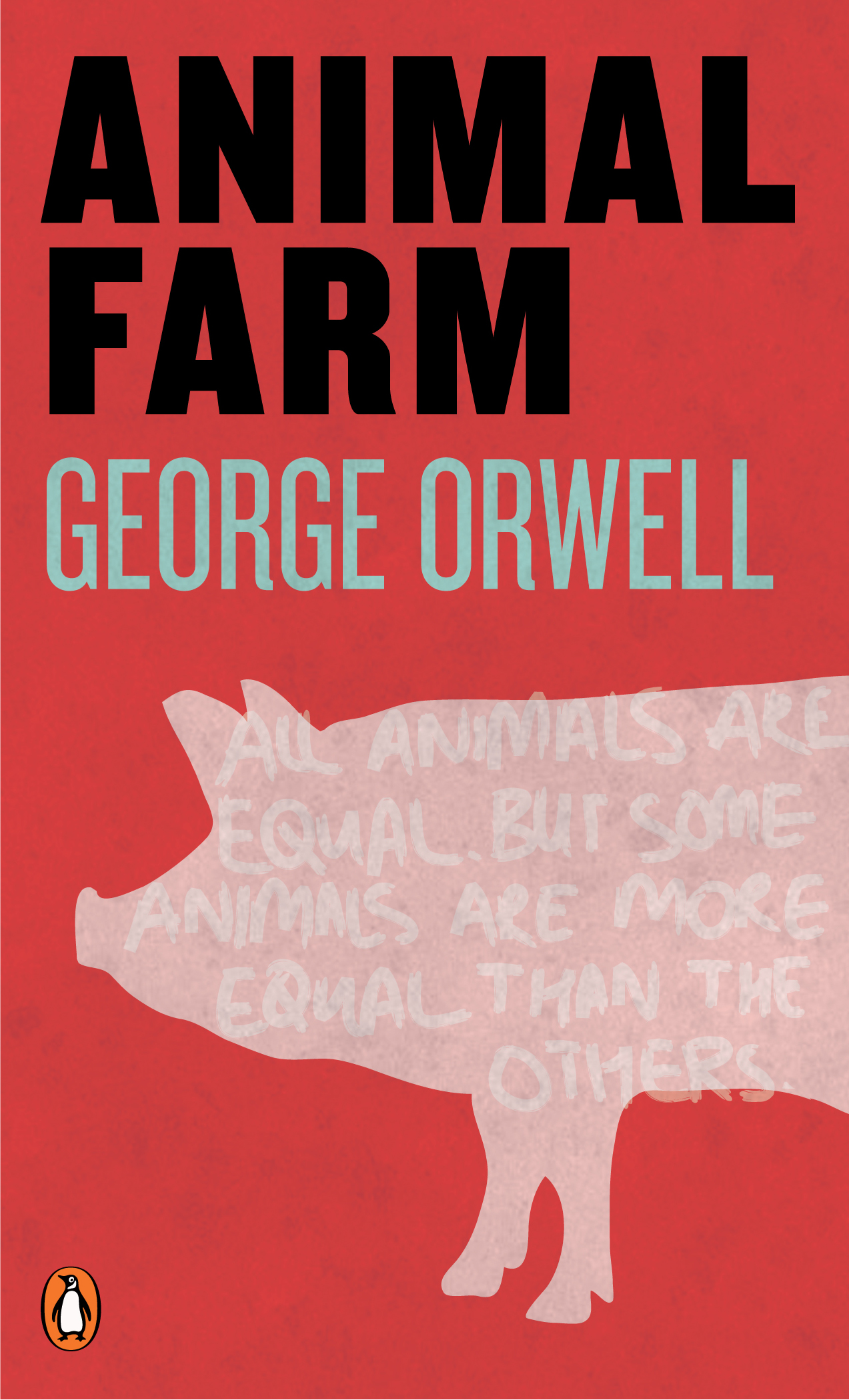
Cover of 'Animal Farm' by George Orwell featuring a silhouette of a pig and the text, 'All animals are equal, but some animals are more equal than others', against a red background.

Animal Farm by George Orwell was one of my first classics, and is one of my favorite pieces of literature. It is a dystopian novella that, despite having complex ideas and themes, is quite easy to understand, making it a great read for beginners. However, it should be noted that this story contains mature themes, such as violence.

Taking place in a mid-20th century English farm named Manor Farm, the book follows farm animals that overthrow their abusive human farmer, Mr. Jones; the animals hope to establish an equal society within the farm. However, the pigs, led by Napolean, take control and tyrannically oppress the other animals.

The plot is interesting, keeping readers engaged the entire time. Orwell’s writing style and language is a bit challenging, but still understandable. The slow build up to the pigs’ corruption is thrilling yet terrifying; the reader slowly begins to understand that the pigs are no better than the humans. Despite being published in 1975, Animal Farm‘s themes are still significant to society today. It criticizes totalitarianism, revealing how power corrupts.

“All animals are equal, but some animals are more equal than others.” This quote by George Orwell is ironic, satirizing tyrannic leaders. It means that ideals of equality can be destroyed by unchecked power. The corrupt pigs of the farm demonstrate this danger.

Perhaps I am a bit biased because it is one of my favorite books, but I cannot provide any criticism when it comes to The Animal Farm. To me, it is an amazing book that challenges readers to contemplate society and its flaws. This novella is powerful, despite its seemingly simple story.

Fantastic Mr. Fox

The first impression I got from watching the quirky, animated stop-motion film “Fantastic Mr. Fox” is that it’s a fun, lighthearted film about clever animals and the angry, vengeful farmers who seek to harm them. The film follows Mr. Fox, an ex-thief, who cannot help himself from returning to his old ways of stealing food, despite the promises made to his wife that he would try to live a safer, more quiet life. When Mr. Fox does finally give in to his wild nature again, his actions put his family and friends at risk and causes chaos to erupt. Even though the film has many laughs and is action-packed, it also is a thoughtful and emotional film, especially concerning family, identity and growing-up.

One of the most powerful elements of the film is the relationship between Ash and his father. Ash spends most of the film wanting to prove to his father that he can live up to his idea of exceptional. However, Ash continually feels like he is being over-looked by his father, especially with the arrival of Kristofferson. Kristofferson is naturally talented and appears to be perfect, everything Ash believes he is not. The comparisons of Ash and Kristofferson cause Ash to feel insecure and believe he will never be good enough in the eyes of his father.

This dynamic of comparing oneself to another person that appears to be superior is particularly relevant to teenagers today. With so many avenues to compare ourselves to others , it is easy to fall into the trap of believing you are inferior. Ash’s frustrations aren’t simply jealousy, it is the fear of never being able to measure up to his father in whatever way he sees fit. His struggles reflect the common pressures teenagers deal with daily, which include figuring out who they are while being compared to everyone around them.

What makes the film “Fantastic Mr. Fox”, so powerful is that it does not suggest that the pursuit of perfection is the ultimate goal. Ash does not become Kristofferson, nor do I think he needs to. Instead, Ash begins to realize that the things that make him different (even the awkward and messy aspects), are the things that provide him with confidence and strength. At the same time, Mr. Fox begins to understand that being “fantastic”, is not necessarily about standing out above all others, but rather about providing for those who depend on you.

Ultimately, the film presents that growing-up is not about finding someone new to become, but instead finding your own sense of self and accepting yourself for who you already are. For teenagers dealing with the pressure of expectations, comparisons, and complex relationships with their parents, “Fantastic Mr. Fox”, provides a gentle reminder that one’s identity is not something earned, but rather something that grows as you mature.

Avatar: The Last Air Bender: a Netflix Series Review

Recently some friends and I  binge-watched Netflix Avatar: The Last Airbender. We all sang along as soon as the theme song started. It’s not the same without the sing-along. I haven’t had so much fun in a long time since school started, and we have all been busy grinding away at our test prep and homework. 

We were happy to see all the characters we recognized, like Aang, Katara, Sokka, and Zuko.

The characters were all so different but very relatable. We saw characteristics that we have and would use in day-to-day situations. Sokka’s fun and goofy jokes got us double over with laughter. At the same time, Zuko’s intense moments reminded us of the emotional rollercoaster we’re all on sometimes. Honestly, it felt like we were right there. These characters were so relatable that it got us thinking about things that happened to us in real life.

Each episode is more exciting than the next. We all kept saying let’s just watch this last one, then go to the park but it dragged on till the 5th episode, and my mom finally told us to get out and get some air. 

The Avatar: The Last Airbender animation is so beautiful. As a person who loves art, when I watch any movie, I focus on the art, especially if it’s animated. Of course, The Avatar did not disappoint. The animation is beautiful, and the storyline is just as good. It’s relatable, and I felt myself rooting for the good guys and wanting them to win. It reminds us that we all need family and friends to cheer for us. Whether you’ve been frozen for hundreds of years or are living your everyday life, you need that support system that will cheer you on to do the right thing and save the world from your evil opposition. The show defintely has a knack for making you feel like that more than you want to. 

It makes us talk about how important family, friends, and the support system help pull us through all the hard times.

The protagonist in Avatar: The Last Airbender, Aang, is only 12 years old biologically, but chronologically he’s 112 years old. He acted like a 12-year-old boy in these episodes.  He’s portrayed as a reluctant hero who spent a century suspended in an iceberg before Katara and Sokka discovered him while fishing. The three of them went on a quest to master the elements and save the world from the Fire Nation. 

This short review does nothing to prove to you how great the series is as it is animation, so watching it makes me appreciate the beauty of the art. As the writer, I love how the story tries to make it relatable to the typical person watching the show.

Being High school students, we are all busy and move through the bustle of everyday busy life. Still, it is good to remember to spend time with family and friends and just relax and catch up. A movie or series like Avatar is a great excuse to do just that. 

Happy binge-watching!

Bella H.

I Who Have Never Known Men by Jacqueline Harpman

Jacqueline Harpman’s novel, I Who Have Never Known Men, surrounds the theme of what it means to be human in a world where you have been stripped of everything that makes you feel human.

The novel follows a young woman, the narrator, with no memory of her past or the outside world, living in an underground cage with 39 other women, guarded by men who never speak. During her time in this cage, the narrator, who remains unnamed throughout the entire novel, lives with a constant urge to gain knowledge of the outside world and what humanity is really like. Relying on the broken memory of the other women, the narrator struggles to put together the notion of the outside world, like a jigsaw puzzle with pieces that don’t fit together. She finds herself holding on to anything that makes her human, while being faced with dehumanizing circumstances everyday, such as defecating without privacy, walking with nowhere to go, and attaining intellectuality without proper books or educational material. This marks an important aspect of what makes humans, humans: The strive for knowledge and persisting curiosity.

One day, an alarm in the bunker where the women are imprisoned goes off, initiating the fleeing of the guards who accidentally leave the cage open when feeding the women. After a moment of wondering whether the guards would return and in disbelief that they were actually free, the women run from the cage, starting up the stairs of the bunker and facing the sky for the first time in years, feeling raindrops fall to their faces like water hadn’t existed, and feeling their heartbeats rise in adrenaline like their heart hadn’t beat before.

However, once free, the women face an unforgiving post-apocalyptic world, unlike the one they had remembered like a distant dream, and slowly begin to die, one by one, not just of illness, but of the burden of grief of missing their past lives. The narrator, having no recollection of this life and having had grown up in an imprisoned world, persists in her efforts to find her humanity while being the last of the women to survive a world unlike the one the women had described.

What I love about this book is that its a story of a human with so much of her humanity stolen from her, yet she still finds herself asking the most fundamentally human questions: Why am I here? What does this all mean? It’s a story about how even when born into a society so different from any that exists now, humans will always find hope, love, and wonder.

I Who Have Never Known Men by Jacqueline Harpman can be downloaded from Libby

Harry Potter and the Chamber of Secrets Review (contains spoilers!)

In the fictional novel Harry Potter and the Chamber of Secrets, the protagonist Harry Potter (who is a wizard) goes to Hogwarts School of Witchcraft and Wizardry. There, everything seemed normal at first, but some strange occurrences started to happen.

There were people being petrified to be as still as a statue. There was also writing on the walls made from blood. The one behind this is Tom Riddle, also known as Lord Voldemort. Harry’s best friend Ron’s sister gets kidnapped by Tom Riddle and used to help him in these mysterious occurrences.

Harry has to fight the Basilisk, the creature that was petrifying students. After defeating the dangerous Basilisk (with the help of Dumbledore’s phoenix, Fawkes) he uses one of the creature’s fangs to stab the diary that allowed Lord Voldemort to come back with his past self, as he was just a memory. We learn that Harry is a true Gryffindor since he was able to wield the sword of Godric Gryffindor.

The novel before this is Harry Potter and the Sorcerer’s Stone, and the one after it is Harry Potter and the Prisoner of Azkaban. I rate this book a 5 out of 5 because it has great characters and an amazing plot. It is by far my favorite in the entire series.

Harry Potter and the Chamber of Secrets by J. K. Rowling is available for checkout from the Mission Viejo Library. It can also be downloaded for free from Libby

Book Review: Wildwood

Be excited! Laika Studios, the same production company that made Coraline and Kubo and the 6 Strings, are turning Wildwood to a movie!

Wildwood is the perfect book to start this fall season if you’re into story building and fantasy worlds like Lord of the Rings but want something more digestible and easier to read. Colin Meloy and Carson Ellis make a wonderful team as husband and wife, the illustrations are beautiful and I love how simple the illustrations are, gently guiding readers to follow the storyline while still leaving more specific details to each reader’s imagination.

Prue loses her little brother to a murder of crows one afternoon, the next morning she leaves early to retrieve him when she finds Curtis, her classmate, following her out of curiosity. Prue and Curtis are classmates in the 7th grade and they end up venturing out together in search for the missing sibling. They discover a troop of disheveled soldiers of coyotes, speaking English, to their surprise and split up while they flee the chasing troop. The story follows the separate adventures of Prue and Curtis until they eventually cross paths once again.

This book is great to unwind after a long day at school or work with a cup of tea and perfect for transitioning from summer to fall.

Wildwood by Colin Meloy is available for checkout from the Mission Viejo Library. It can also be downloaded for free from Libby.

A Wind in the Door – The Sequel to A Wrinkle in Time

When I was younger and first discovering the beauty of classical literature, I fell in love with the famous A Wrinkle in Time, written by Madeleine L’Engle in 1960. Her writing artfully connects the fantastical and harshly realistic, as Meg Murry and her little brother Charles Wallace face extraordinary beings and situations to save those dear to them.

Little did I know after reading this masterpiece, that I would find five more beautifully written books accompanying it. The Time Quintet is one of the best book series I have ever read by far.

The Time Quintet Consists of:

  1. A Wrinkle in Time
  2. A Wind in the Door
  3. A Swiftly Tilting Planet
  4. Many Waters
  5. An Acceptable Time

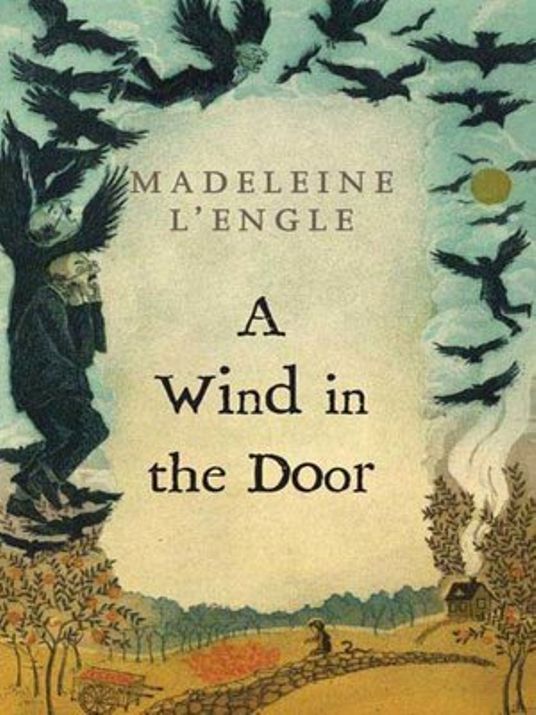
My favorite out of these books though, is definitely A Wind in The Door. The novel continues to follow Meg and the Murray family, as her parents conduct risky and ingenious experiments. The genius family is distraught as they’re faced with one thing they might not be able to fix: a hereditary disease. In order to secure Charles Wallace’s future, Meg must assemble with creatures beyond imagination to defeat “those who hate”. Throughout this journey to save her brother, Meg must not only deal with real monsters but also find the good in someone who seems to be anything but good.

If you loved A Wrinkle in Time, enjoy fantasy or Sci-Fi, or desire to read a beautiful, empathetic story and add it to your repertoire: I highly recommend A Wind in The Door by Madeleine L’Engle.

A Wind in the Door by Madeleine L’Engle is available for checkout from the Mission Viejo Library. It can also be downloaded for free from Libby.

Book vs. TV Series: Percy Jackson

Percy Jackson and the Olympians just wrapped its first season and is renewed for a second. Following the story of Percy Jackson, son of Poseidon, the book and TV show showcase Percy travelling across the US, searching for the real thief of Zeus’s master bolt.

  1. Riptide
    • Book: Percy receives Riptide from Mr. Brunner when Alecto attacks him
    • Series: Mr. Brunner gives Riptide to Percy, encouraging to not let people like Nancy get to him
  2. Alecto Attacks Percy
    • Book: Alecto attacks Percy when they are alone in the Metropolitan Museum of Art
    • Series: Alecto attacks Percy outside in front of a crowd of people
  3. Percy Being Expelled
    • Book: Percy calls Mr. Nicoll an “old sot” and is expelled from Yancy
    • Series: After “pushing” Nancy into the fountain, Percy is expelled from Yancy
  4. Gabe Ugliano
    • Book: Gabe is abusive to both Sally and Percy
    • Series: Gabe is more of a deadbeat “dad” that is mostly just rude to others
  5. The Gateway Arch
    • Book: The trio visits the Gateway Arch due to Annabeth’s love for architecture
    • Series: The trio visits the Gateway Arch, a temple of Athena, searching for protection against Echidna and the Chimera
  6. Ares’s Introduction
    • Book: Ares and the trio meet at a diner
    • Movie: The trio encounters Ares when leaving St. Louis
  7. The Lotus Hotel and Casino
    • Book: The trio visits the Lotus Hotel and Casino after being enticed by a bellhop
    • Series: The trio specifically enters the Lotus Hotel and Casino to search for Hermes and ask for his help
  8. Percy’s Confrontation with Luke
    • Book: Luke sought to get rid of Percy, summoning a Pit Scorpion that later poisons him
    • Series: Luke attempts to recruit Percy for Kronos’s army, resulting in the two sword fighting after Percy refuses

The Percy Jackson & the Olympians book series by Rick Riordan is available to check out from the Mission Viejo Library. It is also available to download for free from Libby.

Book vs. Movie: A Ballad of Songbirds and Snakes

Taking place 64 years before Suzanne Collins’ infamous Hunger Games series, a Ballad of Songbirds and Snakes features a young President Snow as he struggles to maintain his status within the Capitol after the Dark Days. With the goal to secure his future and the Plinth Prize, Coriolanus Snow becomes the mentor for Lucy Gray, a District 12 tribute in the 10th Annual Hunger Games, who he eventually develops feelings for. However, as time goes on, Coriolanus gradually rises to the top, becoming the president of Panem seen in the Hunger Games series.

  1. Crassus Snow’s Death
    • Book: The Snow family receives news at the train station that Crassus Snow was killed by a rebel sniper.
    • Movie: At the Snow’s apartment, Peacekeepers reveal how Crassus Snow was killed by a District 12 rebel.
  2. Jessup’s Rabies Infection
    • Book: Jessup is bitten by a raccoon at the zoo, giving him rabies.
    • Movie: During the train ride, Jessup becomes infected with rabies after being bitten by a bat.
  3. Arachne Crane’s Death
    • Book: Arachne’s throat is slit by her tribute, Brady, and she is given a funeral alongside Diana and Apollo Ring, two other mentors who were killed later on.
    • Movie: Brady stabs Arachne’s throat with a bottle, but she is never given a funeral.
  4. Clemensia’s Fate
    • Book: After being bitten by Dr. Gaul’s snakes, Clemensia develops neurological damage, yellow eyes, a tongue that juts out periodically, twitching, peeling skin, and rainbow scales.
    • Movie: Clemensia is dragged away and never seen again.
  5. The Rat Poison
    • Book: Lucy Gray finds rat poison in the zoo’s monkey enclosure and stores it in a compact mirror that she received from Coriolanus.
    • Movie: Coriolanus supplies both the compact mirror and rat poison.
  6. Lucky Flickerman
    • Book: Lucky, accompanied by his parrot Jubilee, mainly interviews the tributes while Lepidus Malmsey covers the live recordings.
    • Movie: Lucky handles both the interviews and live recordings (without the company of Jubilee).
  7. The Tributes’ Deaths
    • Book: Wovey and Reaper are both killed after drinking poisoned water while Treech is killed by one of Lucy Gray’s snakes. Dill also dies because of tuberculosis.
    • Movie: Dill drinks the poisoned water while Treech inhales rat poison, killing both of them. On the other hand, Reaper and Wovey are killed by Dr. Gaul’s snakes.
  8. Spruce’s Death
    • Book: Spruce is beaten to death by Peacekeepers.
    • Movie: Spruce is hanged alongside Sejanus and Lil.

The Ballad of Songbirds and Snakes by Suzanne Collins is available to check out from the Mission Viejo Library. It is also available to download for free from Libby.