The Hundred Dresses by Eleanor Estes

The Hundred Dresses is a short novel by Eleanor Estes. This book won a Newbery Honor award in 1945. This book relates the experiences of Maddie, along with her friend Peggy, and a girl named Wanda. Wanda has only been seen wearing the same faded blue dress every day, even though she claims to have a hundred dresses “all lined up” in her closet. Peggy does not believe this at all, so she makes fun of Wanda every day at school. Maddie knows this is wrong, but she does not stop Peggy for fear of losing her friendship. Peggy teases Wanda on a daily basis, while Maddie just stays silent.  Even though she does not say anything, Maddie feels guilty for lacking the courage to defend Wanda.

One day, Maddie and Peggy are in class when the teacher makes an announcement.  Wanda’s father had sent a letter to the school informing them that Wanda would not attend their school anymore, because of the teasing she had received.  This gives Maddie a sick feeling in her stomach.  She knows that she should have tried to defend Wanda.  Peggy seems to be affected as well.  Later that day, Maddie and Peggy decide to go visit Wanda.

I have always enjoyed Eleanor Estes’ novels, and this book is no exception. In fact, I consider this to be her best novel. Despite its short length, this book conveys many emotions.  It seems light-hearted and melancholy at the same time. However, my favorite thing about this book is the story behind it. When Eleanor Estes was in elementary school, she had a classmate who was constantly teased because of her unusual Polish name. After a short while, in the middle of the school year, the Polish girl moved away before Estes had a chance to apologize. Years later, Estes wrote The Hundred Dresses as her way of saying that she was sorry.

After learning about this background story, it greatly enhanced my appreciation for this book. I really appreciate the lessons taught by this book about compassion and forgiveness. Even though this is such a short book it conveys a sweet but powerful message.  I would recommend it to everyone.

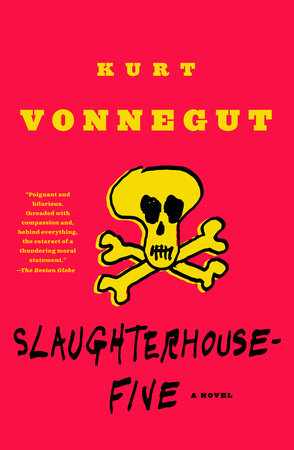
Book Review: Slaughterhouse-Five by Kurt Vonnegut

Recently, I created a bucket list of books that were previously or currently banned in some capacity that I wanted to read, and one book that particularly stood out to me was Slaughterhouse-Five by Kurt Vonnegut. Known for his absurdist writing style, Vonnegut’s work never fails to be humorous and meaningful at the same time.

This book has no specific sense of time, a break from the typical writing style seen in most novels. The book begins with Vonnegut describing his personal connection to the book and his thought process in writing it. Having witnessed the Second World War and its brutality firsthand, there definitely is an anti-war aspect to the book. The story frequently jumps between time periods, as the book’s main character, Billy Pilgrim, becomes “unstuck in time” and “time travels” through what can be implied to be flashbacks and flash-forwards.

The book attempts to explain Billy’s warped sense of time, but also his understanding of life and death, as a result of his contact with an alien race known as the Traufamadorians. Billy “time travels” constantly between WWII and the post-war period, where he is supposedly at, with Vonnegut making it uncertain what time frame the book truly is set in. At the same time, Vonnegut introduces several narratives concerning the brutal and dehumanizing nature of war, including its random nature by killing off characters who were least expected to perish. In fact, part of the reason why the book was banned originally was because of its anti-war nature, with some citing it as “unpatriotic”. By creating these narratives, Vonnegut ultimately expresses a cynical sentiment concerning the cruelty of human nature.

SH5 is one example of Vonnegut’s incredible talent for world-building; while every event seems random or out of place in the context of where it is placed, everything fits together, albeit haphazardly. This book is full of surprises, and I really enjoyed this wild roller-coaster ride of a book that simultaneously managed to be full of significance and meaning, despite the author’s intention for many things to be meaningless. Ultimately, this intention is a paradox in itself. I’d recommend this book for anybody looking for a unique read, or just anybody who wants to read an important piece of literary history in general.

Slaughterhouse-Five by Kurt Vonnegut is available for checkout from the Mission Viejo Library. It can also be downloaded from Libby

Life’s Golden Ticket

Life’s Golden Ticket by Brendon Burchard is a self-help book that helps readers with personal transformation and motivation. He used a fictional character to narrate actionable advice; Burchard aimed to guide readers toward a more fulfilling and purposeful life through his book using his fictional character. While the book has received praise for its inspirational content, it has also faced criticism.
I like that the author used a fictional character to teach readers how to transform their lives and even gave actionable steps.

Spoiler Alert!

In the book, a man receives a golden ticket and an opportunity to transform his life. One of the book’s best parts is the engaging narrative and how the author uses this type of narration to create a format that shows readers ways to change their lives and makes self-help concepts more engaging.

He also provides practical advice through the protagonists’ journey. In the book, the author demonstrates actionable steps, exercises, and reflections using his fictional character as the narrator. Readers can use them to identify their passions and set goals. I especially like the exercises for overcoming obstacles.

The book excels in its ability to inspire and motivate engaging stories and uplifting messages that encourage readers to take control of their lives and pursue their dreams.

The author emphasizes the importance of self-discovery and personal growth throughout the book. Life’s Golden Ticket emphasizes the importance of personal growth and self-discovery and motivates readers to reexamine their values to set more meaningful goals, continuous improvement, and development toward a more fulfilling life.

What I would have preferred about the book is that it’s predictable. While the storytelling approach is engaging, some readers may find the plot predictable and misleading. Although effective, the narrative follows a standard arc of personal transformation that may need more originality for some.

This book is helpful because of the potential impact on readers who don’t like the typical nonfiction self-help book.

The book motivates, brings self-awareness, and makes you think more profoundly about your choices, goals, and personal experiences that lead to transformation. It also encourages readers to pursue their dreams and aspirations by focusing on personal growth and goal-setting. It reinforces the idea that change is possible and that people have the power to shape their own destinies if they work hard and set actionable goals.

I think Life’s Golden Ticket offers a compelling blend of narrative and self-help advice that can inspire and motivate readers. I especially loved receiving my golden ticket at the end of the book when I finished reading it.

Here’s to your Golden Ticket!

Bella H.

Life’s Golden Ticket by Brendon Burchard is available to check out from the Mission Viejo Library.

Picture of Dorian Gray by Oscar Wilde Book Review

Oscar Wilde’s The Picture of Dorian Gray is a haunting and provocative exploration of vanity, morality, and the consequences of indulgence. First published in 1890, the novel follows the life of Dorian Gray, a handsome young man whose portrait, painted by artist Basil Hallward, begins to age and show signs of corruption while he himself remains youthful and unmarked by time. Dorian’s pursuit of hedonistic pleasure, influenced by the decadent philosophy of Lord Henry Wotton, leads him down a dangerous path of moral degradation, as he engages in a life of excess without facing the physical consequences. The painting, however, becomes a mirror to his soul, revealing the true cost of his actions.

Wilde’s writing is sharp, witty, and layered with profound insights into human nature. His exploration of aesthetics and the consequences of living a life dedicated solely to beauty and pleasure is both thought-provoking and chilling. The character of Dorian is a complex one—initially innocent and impressionable, he becomes increasingly corrupted by his own image and the pursuit of personal gratification. Lord Henry serves as a persuasive, almost sinister, mentor, embodying Wilde’s fascination with the idea of “art for art’s sake” and the rejection of conventional morality.

I personally enjoyed the Gothic themes of the novel and how the book evoked a sense of wonder for the world. I became fascinated by the mystical words of Lord Henry and I loved being able to understand why Dorian Gray took the Lord’s words so seriously. I enjoyed how thought-provoking Wilde’s writing was and loved the array of shocking moments within the story. Furthermore, I thought the development of Dorian Gray’s insanity was beautifully written and held strong symbolism for the world’s corrupt obsession with youth, beauty, and immortality.

I would recommend this book to anyone who enjoys classical literature and a short, yet influential read. I think Wilde’s writing would attract readers who enjoy beautiful and mystical writing as well as exciting plot twists! I personally recommend this book for everyone as it is a wonderful novel to discuss peers and leaves you with thoughts about society!

Kaiya T.

The Picture of Dorian Gray by Oscar Wilde is available to checkout from the Mission Viejo Library. It is also available to download for free from Libby.

Circe by Madeline Miller: A Spoiler Free Review

Circe by Madeline Miller is a retelling of the witch Circe from Greek Mythology. She is the daughter of the titan Helios and a nymph. The gods, fearing her witchcraft, banish her to a deserted island. Here, she forges her path – honing her craft, meeting infamous figures of mythology, and being pitted against the wrath of men and gods alike. She’s torn between the mortal and the divine, and forced to grapple with what it means to be immortal. 

I really, really enjoyed this book. It’s one of the most unique stories I’ve read, chock-full of beautiful writing and characters. It’s definitely one I’ll be rereading for a long time to come.

In Circe, I particularly enjoyed the writing. The way Madeline Miller weaves her words into prose is mesmerizing. It’s almost lyrical in its flow, natural yet riveting. I would often read the same paragraph multiple times to soak in the words. This also comes into play as Miller describes the gods. She forgoes many physical details, instead describing things like the sound of their voice and the power in their presence. You begin to fear them the way Circe does. Additionally, the passage of time from the start to the end of the book is beautiful. At the end of the book, you look back and remember all she has gone through – it feels so long ago since she first stepped onto the island. You lived through it with her, in a sense. That feeling of passed time once I finished the book for the first time was overwhelming. 

No one book is enjoyable for everyone. Circe tends to be very character-driven rather than plot-driven and relies on mostly introspective focus. She is isolated on her island, after all. Thus, there are not so many dramatic action moments as dramatic personal moments. Plus, some consider the pacing to be somewhat slow and uneven, especially towards the latter half of the book.

All in all, I enjoyed Circe’s rich, bold 385 pages. It bursts with life and thought, and it holds a proud place displayed on my bookshelf. It is definitely a recommend from me. 

Circe by Madeline Miller is available to check out from the Mission Viejo Library. It is also available to download for free from Libby.

Literature and Escapism: Why are so many drawn to fiction?

In the 21st century, teens and adults alike are bombarded by notifications ranging from depressing news stories to shocking exposés regarding beloved celebrities. Social media has made people emotionally numb as they swipe from one heartwarming post to a sob story on the next page, disrupting their capability to process emotions. In such a mentally taxing world, it seems only natural that some would seek escape through other mediums- this being literature, mainly fiction.

But what do I mean by “escape?” The term for mentally excusing oneself from reality and seeking a sense of calmness, namely through fantasy, is how Oxford Dictionary defines the word “escapism.” While exploring fantastical worlds is okay in moderation, escapism is the excessive use of material to sever one’s connection from reality, resulting in an unhealthy relationship with the real world. This makes it difficult for people to address the root of their problems- whether it be an unfulfilling career, lackluster social life, or an underlying mental health condition, escapism shrouds the problem and allows it to be forgotten in exchange for temporary relief.

Harry Potter and the Philosopher's Stone (film) - Wikipedia

Chief offenders of indulging escapist tendencies include the renowned Harry Potter and Percy Jackson series which are known for their elaborate worlds of magic and Greek mythology. While the authors of the franchises themselves aren’t to blame for the problems of others, they certainly provide a plethora of spinoffs and merchandise to keep legacy readers sucked in for several years (if not decades). With the Harry Potter fans, known as “Potterheads,” a thriving community of middle-aged Millennials are present on platforms such as Discord, Reddit, and Twitter. While being a longstanding fan of a book series is not problematic in itself, it becomes an issue when individuals become so enthralled with the stories that they cannot distinguish reality from itself.

For example, when entering a Google search of “Potterheads are convinced Harry Potter is real,” a plethora of social platforms with questions about whether Harry Potter could possibly be real pop up. Through Google’s Q&A system, a worrying, question of “Is it possible that Harry Potter is real?” can also be noticed. As Miriam Margoyles, the actor who played Pomona Sprout in the Harry Potter series concerningly stated, “I worry about Harry Potter fans because they should be over that by now” (Margoyles Miriam, “Miriam Margolyes jokingly tells Harry Potter fans to grow up | Seven Sharp,” 2024). If even those who stand to gain the most from this disillusionment take issue with escapism, it is time for us to address it as well.

Miriam Margolyes Doubles Down On 'Harry Potter' Adult Fans Stance: "It Was  25 Years Ago, Grow Up!"

Of course, this analysis of human behavior is all in good fun and I appreciate you reading!

Book Review: The Overstory by Richard Powers

From the start, this was probably one of the most unique books that I’ve read, with a very good message behind it. Although it was definitely one of the longer ones I’ve read, it was well-written enough to keep any reader interested.

This book tells the story of 9 Americans who work together to prevent the destruction of forests within the U.S. The book starts in the 1800s with the story of the Hoel chestnut tree, detailing an important background for another character later in the story. The Hoel family had a tradition of taking pictures of the tree every year, and these pictures were eventually inherited by Nicholas Hoel, the great-great-great grandson of Jorgen Hoel, who planted the tree. After this chapter, the book fasts forward in time to the story of Winston Ma and his family, who escapes communism in China and becomes an electrical engineer in the U.S. He starts a family, and plants a mulberry tree. However, later, when everything falls apart, he takes his own life underneath the very tree he planted, leaving behind his daughter, Mimi Ma, who will be an important character later in the story.

There are seven more individual stories in this book, each revolving around a specific character in a different time period. Each of these nine individuals has seen their live impacted massively by nature, and each one of these stories are centered around a certain tree, as seen in the two early characters. The 9 characters eventually go on to formulate a plan to spread awareness for their cause, but It does not really go as planned. I won’t spoil what happens to each of these characters, but I will say that this book can have either a happy or sad ending, depending on one’s interpretation of it.

Overall, I think this book had a great message behind it, with the author clearly emphasizing the importance of nature to the world, as well as the importance of the continued existence of trees. This book is an amazing example of environmental activism through literature, and I would recommend this book to anybody interested in the environment and its preservation.

The Overstory by Richard Powers is available to check out from the Mission Viejo Library. It is also available to download for free from Libby.

Book vs. TV Series: Percy Jackson

Percy Jackson and the Olympians just wrapped its first season and is renewed for a second. Following the story of Percy Jackson, son of Poseidon, the book and TV show showcase Percy travelling across the US, searching for the real thief of Zeus’s master bolt.

  1. Riptide
    • Book: Percy receives Riptide from Mr. Brunner when Alecto attacks him
    • Series: Mr. Brunner gives Riptide to Percy, encouraging to not let people like Nancy get to him
  2. Alecto Attacks Percy
    • Book: Alecto attacks Percy when they are alone in the Metropolitan Museum of Art
    • Series: Alecto attacks Percy outside in front of a crowd of people
  3. Percy Being Expelled
    • Book: Percy calls Mr. Nicoll an “old sot” and is expelled from Yancy
    • Series: After “pushing” Nancy into the fountain, Percy is expelled from Yancy
  4. Gabe Ugliano
    • Book: Gabe is abusive to both Sally and Percy
    • Series: Gabe is more of a deadbeat “dad” that is mostly just rude to others
  5. The Gateway Arch
    • Book: The trio visits the Gateway Arch due to Annabeth’s love for architecture
    • Series: The trio visits the Gateway Arch, a temple of Athena, searching for protection against Echidna and the Chimera
  6. Ares’s Introduction
    • Book: Ares and the trio meet at a diner
    • Movie: The trio encounters Ares when leaving St. Louis
  7. The Lotus Hotel and Casino
    • Book: The trio visits the Lotus Hotel and Casino after being enticed by a bellhop
    • Series: The trio specifically enters the Lotus Hotel and Casino to search for Hermes and ask for his help
  8. Percy’s Confrontation with Luke
    • Book: Luke sought to get rid of Percy, summoning a Pit Scorpion that later poisons him
    • Series: Luke attempts to recruit Percy for Kronos’s army, resulting in the two sword fighting after Percy refuses

The Percy Jackson & the Olympians book series by Rick Riordan is available to check out from the Mission Viejo Library. It is also available to download for free from Libby.

Book vs. Movie: A Ballad of Songbirds and Snakes

Taking place 64 years before Suzanne Collins’ infamous Hunger Games series, a Ballad of Songbirds and Snakes features a young President Snow as he struggles to maintain his status within the Capitol after the Dark Days. With the goal to secure his future and the Plinth Prize, Coriolanus Snow becomes the mentor for Lucy Gray, a District 12 tribute in the 10th Annual Hunger Games, who he eventually develops feelings for. However, as time goes on, Coriolanus gradually rises to the top, becoming the president of Panem seen in the Hunger Games series.

  1. Crassus Snow’s Death
    • Book: The Snow family receives news at the train station that Crassus Snow was killed by a rebel sniper.
    • Movie: At the Snow’s apartment, Peacekeepers reveal how Crassus Snow was killed by a District 12 rebel.
  2. Jessup’s Rabies Infection
    • Book: Jessup is bitten by a raccoon at the zoo, giving him rabies.
    • Movie: During the train ride, Jessup becomes infected with rabies after being bitten by a bat.
  3. Arachne Crane’s Death
    • Book: Arachne’s throat is slit by her tribute, Brady, and she is given a funeral alongside Diana and Apollo Ring, two other mentors who were killed later on.
    • Movie: Brady stabs Arachne’s throat with a bottle, but she is never given a funeral.
  4. Clemensia’s Fate
    • Book: After being bitten by Dr. Gaul’s snakes, Clemensia develops neurological damage, yellow eyes, a tongue that juts out periodically, twitching, peeling skin, and rainbow scales.
    • Movie: Clemensia is dragged away and never seen again.
  5. The Rat Poison
    • Book: Lucy Gray finds rat poison in the zoo’s monkey enclosure and stores it in a compact mirror that she received from Coriolanus.
    • Movie: Coriolanus supplies both the compact mirror and rat poison.
  6. Lucky Flickerman
    • Book: Lucky, accompanied by his parrot Jubilee, mainly interviews the tributes while Lepidus Malmsey covers the live recordings.
    • Movie: Lucky handles both the interviews and live recordings (without the company of Jubilee).
  7. The Tributes’ Deaths
    • Book: Wovey and Reaper are both killed after drinking poisoned water while Treech is killed by one of Lucy Gray’s snakes. Dill also dies because of tuberculosis.
    • Movie: Dill drinks the poisoned water while Treech inhales rat poison, killing both of them. On the other hand, Reaper and Wovey are killed by Dr. Gaul’s snakes.
  8. Spruce’s Death
    • Book: Spruce is beaten to death by Peacekeepers.
    • Movie: Spruce is hanged alongside Sejanus and Lil.

The Ballad of Songbirds and Snakes by Suzanne Collins is available to check out from the Mission Viejo Library. It is also available to download for free from Libby.

Book Review: House on Mango Street by Sandra Cisneros

Recently, I read a book called House on Mango Street, which is the story of a girl named Esperanza, which translates to “Hope” in English, as she navigates her process of coming of age. This book was definitely an interesting read, as it is formatted and told in a style that not many books utilize.

To understand the novel and its purpose, it is recommended that one reads the author’s foreword, as it explains the author’s story, how her background led to this book’s creation, and how Esperanza is loosely based upon Cisneros herself, as both of them like writing. This novel starts off with the author introducing the environment that Esperanza grows up around, her house, and the school she goes to. The author deliberately makes Esperanza an unreliable narrator at the start, realistically depicting a younger child’s naive view of the world. Cisneros shows this through the fact that she didn’t know a car she was riding was stolen by one of her cousins earlier in the book, and is expressed later in the book when she doesn’t understand that some boys were joking with her friend, causing her to react unexpectedly.

The novel is written into short little segments, which the author calls “vignettes”, instead of being split into specific chapters like a traditional novel. This gives the novel a more personal feel and really frames the story, as well as giving the readers more details of the impoverished neighborhood in which Esperanza eventually comes of age. The author also blends her cultural background into her writing with this story, and it is reflected in the character of Esperanza, whose parents are quite similar to Cisnero’s parents in a way.

Overall, this book is a great read for those who are interested in reading novels in which the protagonist grows and matures as a person, and the author definitely makes this process interesting through plenty of storytelling and nuanced descriptions of this book’s setting, giving the reader a more personal look at the lives of the characters within this book.

The House on Mango Street by Sandra Cisneros is available to check out from the Mission Viejo Library. It is also available to download for free from Libby.