
The Secret History – Donna Tartt (SPOILER FREE)

For fans of the aesthetic of upper-class academic settings or those drawn to the darker, more morose themes of literature (or both), Donna Tartt’s The Secret History offers a captivating and chilling experience.

Set at Hampden College in Vermont, the novel follows 20-year-old Richard Papen, who joins an elite, selective Ancient Greek class taught by a brilliant but detached professor. Richard finds himself having to assimilate with the foreign ways of his intellectually and socially superior classmates, who harbor secrets that lead to a series of tragic, life-altering events.

What I found to be most interesting in The Secret History was its exploration of themes like the corrupting impact of economic privilege, the conflict between morality and loyalty, and the weight that guilt carries on one’s consciousness. The novel is full of introspective, philosophical reflections and literary references, which may appeal to readers who enjoy deep character studies, thoughtful commentary on day-to-day life, and stories that stick with you long after the final page.

If you are unsure whether or not you’d enjoy the book, here are a few similar ones that you could compare it to:

Dead Poets Society, N.H. Kleinbaum: Academic settings that are a breeding ground for free intellectual thought that take a turn towards darker themes

The Picture Of Dorian Gray, Oscar Wilde: Captures the psychological and moral downfall of a member of the intellectually and economically privileged class

Brideshead Revisited, Evelyn Waugh: Shows the nostalgia, beauty, and eventual downward spiral of a set of elites through the eyes of an outsider.

Happy reading!

The Secret History by Donna Tartt is available to check out from the Mission Viejo Library. It is also available to download for free from Libby.
Original Story, Greek Myth Style – Kumar and Ram: The Creation of Sorrow

Greek mythology is the basis of modern literature, and the brilliant stories to explain natural phenomena are so captivating that I decided to attempt to write my own myth, similar in style to the Greek myths. The following story attempts to explain why there is sorrow in the world:

Kumar and Ram: The Creation of Sorrow

Long ago, the universe was ruled by its king, Raja, and its queen, Rani. Together, Raja and Rani managed the universe and created a scene so beautiful that not even the most talented artist could depict it. 

Raja and Rani had two sons: their eldest was named Kumar, who was a very obedient and smart child. Their younger son was named Ram, and he was much more mischievous and playful than his older brother. The two had spent their entire lives watching their parents create stars, circulate planets, and sometimes send asteroids into projects that would not turn out the way they wanted. 

One day, Raja and Rani thought that it would be a good training exercise for Kumar to try and manage his own planet, and they provided him with a medium sized planet orbiting a small star on the edge of the Milky Way galaxy. Kumar was elated, and instantly began to decorate his planet with stunning seas, mountains, beaches, and forests. He even created a cover of gases around the planet which would protect it from any asteroids gone astray. Proud of his work, he named his planet Earth.

Like any younger sibling, Ram had always competed with his older brother, and was extremely jealous when he saw what his parents had gifted Kumar. This envy quickly escalated as he observed Kumar taking delight in decorating his planet. 

Wanting to show his parents that he too was responsible enough to manage his own planet, Ram went to his older brother and asked if Kumar would share some of the planet with him. Kumar denied his request at first, but then changed his mind and gifted Ram a small block of clay from Earth. Kumar told Ram that he can create anything with this piece of clay, and Kumar would keep it on Earth. If the creation is both beautiful and successful, it would be a clear indicator that Ram is also ready to have his own planet. If the creation failed to impress, Kumar would destroy it. 

Elated, Ram quickly went to work. He used the clay to create a creature that looked similar to him; it walked on two legs, had two arms, and had a smiling face. He named it a human and went to show Kumar his creation.

Kumar was very amused by Ram’s human and placed it on a piece of land on his planet. Quite soon, the human started to multiply, and its clones were all over Earth. They became very smart and started to use the nature around them to their advantage. They cut down trees to use as shelter, and killed other animals. They even started to create their own inventions that would release a horrible black substance into the gas layer that Kumar had created.

Of course, Ram was delighted upon seeing the intelligence and efficiency of his humans, but Kumar was furious at the harm that his planet had suffered at the hands of the humans. He tried to get rid of them, but they were much too populated. So, Kumar used his power to curse as many humans as he could with negative qualities such as greed, evil, arrogance, and laziness. Kumar knew that this would be just as much of a punishment to Ram, and hoped that it would teach Ram a lesson. To this day, Ram is still paying his price as he watches the evil and sorrow of his once-beloved humans.

-Ayati M.

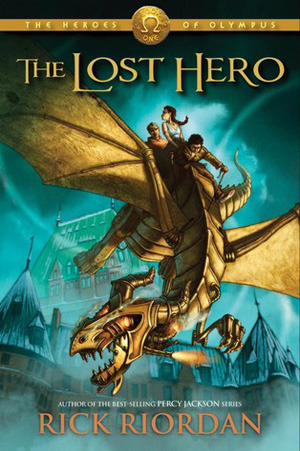
The Lost Hero by Rick Riordan

The Lost Hero, like the other Percy Jackson books, is a fantastic read about Greek and Roman mythology that’s impossible to put down.  It’s the first book in a trilogy called the Heroes of Olympus.

The story is about Jason, a demigod of Zeus who can’t remember his past, Leo, a child of Hephaestus who has a secret power of fire, and Piper, a demigod of Aphrodite with a way with words.

After an incident at the Grand Canyon with a satyr and a few storm spirits, the trio is brought to a demigod camp called Camp Half-Blood by Annabeth, a distraught demigod whose boyfriend Percy went missing a few months earlier.

At Camp Half-Blood, Jason, Piper, and Leo are chosen to go on a quest to find Hera, the queen of the gods, and free her with what little information they received from their camp Oracle, Rachel Dare, in form of prophecy.   Along the way, they face many monsters back from the dead and different Greek gods, including King Midas and Aeolus, the weather god.  Is Hera freed and the prophecy fulfilled? That remains to be seen by you!

The story doesn’t end with this book, so I definitely recommend reading the other two and the Percy Jackson series that is set before these books.  This series is hilarious, masterfully written, and a great way to learn about Greek mythology!

-Kaitlyn S.

Rick Riordan’s The Lost Hero is available for checkout at the Mission Viejo Library.