All The Light We Cannot See By: Anthony Doerr

Anthony Doerr All the Light We Cannot ...

This novel is told from the perspective of two young children during World War II. The first is Marie-Laurie, a blind girl from the center of Paris near the Museum of Natural History, where her father works. The other Werner Pfennig an orphan, from a mining town in Germany who learned how to build and fix technical instruments by tinkering with a broken radio that he found.

When Marie-Laurie was twelve, the Nazi Regime began to occupy Paris, she and her father fleed to Saint-Malo and met her reclusive great-uncle, Etienne. The Museum of Natural History was rumored to own a diamond called the Sea of Flames, under the threat of occupation the museum director created 4 copies of the diamond. He then distributed these to 3 employees and hid one in the museum, but none knew if they had the real diamond. Soon after arriving in Saint-Malo Marie-Laurie’s father is called back to Paris and is arrested by Germans.

As the Nazi Regime, took power over Germany Werner’s talents for technology attracted certain local attention, and at fourteen was recruited to a specialized training program. He sees it as an opportunity to grow and get out of the orphanage that he’s lived in his entire life but his sister worries that he will be corrupted by Nazi propaganda. After 2 years of training at his technical school, he’s documents are falsified to make him seem like eighteen so that he’s able to fight on the front. After 2 years of rising through the ranks, Werner is assigned to Saint-Malo looking for radios, used by the resistance to broadcast their messages.

Marie-Laurie’s uncle begins engaging with in resistance work with the other French townspeople, but he’s agoraphobic so he’s unable to leave the house without intense anxiety. So Marie-Laurie works with her uncle by gathering messages from the resistance for him to transmit from his radio tower in his attic. Werner and Marie-Laurie’s lives begin to further intertwine.

I liked this book, I thought it had a good mix of suspense and historical fiction. I also really liked that one of the main characters has a disability, that is rarely seen in historical fiction. I think if you like historical fiction and has blind representation then this book is for you.

All the Light We Cannot See by Anthony Doerr is available to check out from the Mission Viejo Library. It is also available to download for free from Libby.

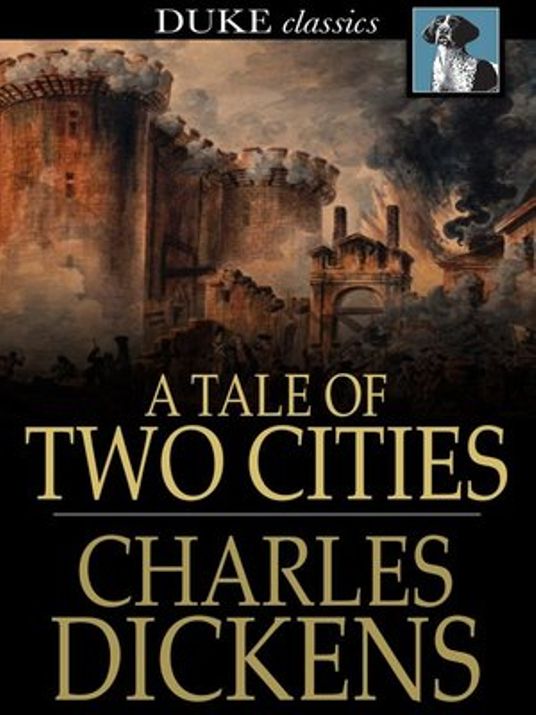
A Tale of Two Cities by Charles Dickens

Let’s go back. This book took me a few months to read for my English class. School is out, yet I haven’t done anything for this novel. A Tale of Two Cities by Charles Dickens was not the easiest book I’ve ever read. I won’t lie, online synopses really helped me out in the understanding portion as I read through it. While it wasn’t an easy book to read, it was by no means bad. 

A Tale of Two Cities is a reflection Charles Dickens writes about on the French Revolution as a warning to those in his period. Almost written in a way to stop history from completely repeating itself. It focuses on the Manette family and their story through trauma and hardships, new found romances and family drama. We meet plenty of characters along the way; those directly involved in the French Revolution and people who are victims to the violence. Dickens sets the stage a few years before the revolution, establishing various relationships and connections that affect all the cast in one way or another. The result of violence and loss, made to make the readers uncomfortable, are beautifully crafted to warn and caution society. 

Dickens writes in a way that elongates the ideas he is trying to express as he sprinkles in colorful vocabulary to make it even more confusing for the everyday reader. However, once you figure out what he is talking about and the main point of what is happening, the story becomes much more enjoyable. The whole plot of the novel is like one big mystery. We all know it leads up to the Revolution, but how could a family and group of friends from London get involved with something happening in France? How are these characters important to the story? I really loved how all my questions were answered by the end of the novel, many of which answered throughout the chapters. And thinking back, I find it even more interesting and intriguing how Dickens had written this novel; releasing one chapter at a time like some TV show with weekly episodes. Dickens released its chapters serially, once a week, to keep readers on the hook, ready and waiting for the next “episode” to find out what happens to their beloved characters. 

All the characters Dickens carefully crafted managed to create an impact on me. Every single one had an important role to play, some more than others, yet they all managed to build from each other and grow into even more impressive people that audiences can feel for and connect to. A fan favorite (for me and for many) was Sydney Carton. He started off as someone your parents would tell you to stay away from, the neighborhood drunk and overall not the best person. What’s worse, is that he knew that. Such an emotionally depressing character was not what I expected and I didn’t know what to expect from him. So many I knew loved this character, including my English teacher. But in the beginning, I had nothing to love about him. But Dickens was fantastic in character development. All characters had their own shining moments, but Sydney just happens to have one of the largest and most dynamic developments in the story. By the end of the book, I discovered a grip he had on my heart as I ended my read with him. His story left me shocked and gaping as I was left to wonder about the rest of the cast. 

Dickens may not be the easiest author to read from. I must say his diction and syntax are not for the weak. However, he writes a very compelling narrative and builds such meaningful characters. I would recommend this novel to others, with a little hesitance. This wasn’t for everybody. I happened to enjoy it, although I struggled a bit; but others may be wanting an easier, less overwhelming read. But if you don’t mind the challenge, I think that this would be a great historical fiction novel to read. 

-Nicole R.

A Tale of Two Cities by Charles Dickens is available for checkout from the Mission Viejo Library. It can also be downloaded for free from Libby

The Forgotten Bookshop in Paris by Daisy Wood

The story begins in Paris with a man named Jacques and his wife Mathilda, one quiet and nervous to speak out and the other like a short fuse, ready to make herself heard when necessary. Jacques finally achieves his dream of acquiring a small, peaceful bookshop when one day, his life is disrupted and becomes anything but that. He soon learns about the French revolutionaries, whom he despises at first for being so outrightly against the Nazi soldiers, but later understands their reasons and joins them by acting as a safe house for Jewish refugees and Allied soldiers.

80 years later, a woman named Juliette with French ancestry leaves the States for a vacation in Paris to search for a hidden plaza depicted in her late grandmother’s favorite painting. Once there, she finds out her husband was cheating on her, and decides to stay in Paris to start a new life for herself. While searching for an apartment to stay in, she meets many new friends (one of which has an old apartment ready for renting) and slowly adjusts to life in Paris. She soon finds an old bookstore below the old apartment with a secret room and a diary inside, describing people of all ages and backgrounds in its pages…

I really love this book and would most definitely recommend it to a historical fiction enthusiast. The author, Daisy Wood, takes the reader back and forth between the World War 2 time period and “present-day” Paris and effectively shows each character’s way of thinking and their reasoning for acting the way they do. Wood also takes her time to show just how heavy the tension was between some Parisian citizens and German soldiers, while also showing that just because someone is on a “bad” or “good” side, doesn’t mean that they are “evil” or “good”.

The Forgotten Bookshop by Daisy Wood is available to check out from the Mission Viejo Library. It is also available to download for free from Libby.

The Samurai’s Garden – book review

The Samurai’s Garden, written by Gail Tsukiyama, is a novel based on historical fiction during the Sino-Japanese war or also known as pre-WWII. 

The story starts off in the city of Hong Kong, China. Stephen, a young boy of only 20 years had developed tuberculosis. A contagious lung disease that not only pains him when he coughs, sneezes, and laughs, but it also takes away his ability to see his beloved family and friends. 

Unable to recover in the sweltering humidity and stuffy air of his hometown, and in addition to the Japanese army inching their way towards them, he is forced to recuperate alone in Tarumi, a small seaside village located in the rivaling country of Japan. 

However, during his stay, he ends up creating friendships with people he never expected to get along with. There, he meets Matsu, the housekeeper of the home he stays at; Sachi, a woman outcasted in a mountainous village due to contracting leprosy; Kenzo, an owner of a teahouse; and Keiko, a girl he can never love. 

Although Stephen carries something that he can never change, such as his Chinese heritage, it doesn’t stop him from learning about Japanese culture. Given that, the hatred he once developed for the country changes into something else… 

Overall, I believe The Samurai’s Garden is a great book to read, and would especially recommend it for those who are interested in learning the beauty of Japanese culture. And along with that, another great thing I would like to add is that this book contains a lot of soothing, and motivational conversations, which I find very inspirational. Thanks to Tsukiyama’s amazing word choices, the reading experience I’ve had with this novel was very intriguing. 

The Samurai’s Garden by Gail Tsukiyama is available to check out from the Mission Viejo Library

Book vs. Movie: All Quiet on The Western Front

Disclaimer: The movie being compared is the newest 2022 movie.

All Quiet On The Western Front is a classic anti-war novel depicting the tragedies of the western front during World War I. Set from the viewpoint of the Germans, it features Paul Baumer and the set of ‘life and death’ colleagues he makes in the army. Rather than a hopeful take on the war, the author takes from his own experience to realistically express the war’s effect on soldiers and its moral implications.

While difficult, the best advice I can give for readers is to not get too close to any character ❤

Book Rating: 10/10 Movie Rating: 8/10

  1. Signing of the Armistice
    • Book: There is no mention of the signing of the armistice and only through a rumor at the end is it known that the war is coming to a close
    • Movie: Slowly throughout the movie, it cuts to the signing of the armistice. Specifically, it details the heavy restrictions the French politicians place on Germany as a clause in the armistice.
  2. Going Back Home
    • Book: There are two scenes in the book where Paul returns home for rest and recuperation before going to war. Mainly depicts how Paul doesn’t fit in and feels like the ‘lost generation.’
    • Movie: There are no scenes where Paul returns home.
  3. Timeline
    • Book: Starts directly at when Paul has already been in the army for more than a year and flashbacks occur to depict the past. The timing is also more spread out, which allows for more events to take place.
    • Movie: Starts from when Paul registers for the war with his friends and then skips to the later years of the war.
  4. Graveyard Battlefield
    • Book: One of the first (and amazing) battlefields that took place at the western front was in a cemetery and it depicts Paul’s use of coffins and corpses as a shield from bombs and guns.
    • Movie: There are no war scenes at a cemetery.
  5. The Main Antagonist
    • Book: Corporal Himmelstoss is a key figure in the book that often gives punishments over the smallest mistakes, symbolizing the power authority figures have over recruits. He has great character development in the later half of the novel when he joins the war at the western front and learns that power is useless when faced with life or death.
    • Movie: There is no mention of Corporal Himmelstoss. Rather than him, Prussian General Friedrich becomes the key figure in the book that symbolizes the hierarchy in the army. There isn’t much character development with him and he is often seen ordering soldiers and doesn’t directly interact with Paul and his friends at all.
  6. Kat’s Death
    • Book: Kat is hit in the head by a stray shard from a bomb and dies.
    • Movie: After stealing a goose from the owner, the owner’s son shoots Kat with a gun.
  7. The Ending
    • Book: Paul dies from a sniper shot one month before the war ends.
    • Movie: Paul dies during a last ditch effort by Prussian General Friedrich to win the war at the western front. He gets shot and dies just hours before the war ends.

General Thoughts: Movie vs. Book

The war scenes in the movie are arguably one of the best war scenes in the film industry. It gives a very accurate and desperate picture of the western front. I love the use of the many common weapons used during that time, such as poison gas, tanks, and flamethrowers. Would definitely recommend if you are interested in really good fight scenes!

Something I didn’t like about the movie was the ending. A big reason about why the novel is titled All Quiet On The Western Front is because Paul dies on a day so unremarkable that the commander just wrote ‘All Quiet.’ It reveals how unsignificant death was in the war, but it was something Paul was fighting against throughout the whole book. However, the movie shows Paul dying in a big fight on the last day of the war, which kind of undermines the whole point of the title and the book.

I do recommend both the book and movie to historical fiction lovers, so you should definetely check it out!

What to compare them for yourself? All Quiet On The Western Front by Erich Maria Remarque is available for checkout from the Mission Viejo Library. The movie All Quiet on the Western Front is also available for checkout from the Mission Viejo Library.

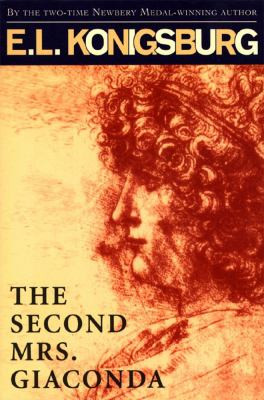
The Second Mrs. Giaconda by E.L. Konigsberg

The Second Mrs. Giaconda, by E.L. Konigsberg, is a historical novel featuring Leonardo da Vinci and the background of his famous painting, the Mona Lisa. The story is told from the perspective of Leonardo’s apprentice, Salai. Before meeting Leonardo, Salai was a liar and a thief. Leonardo catches Salai in the act of stealing, but does not punish him. Leonardo realizes that Salai and his family are living in poverty. Moved by compassion, Leonardo takes in Salai as an apprentice.

Soon after Salai is made an apprentice, it becomes apparent that Leonardo favors him over his other apprentices. A bond develops between the master and the apprentice that becomes stronger through the many hardships that they endure together. After a surprising turn of events, this relationship ultimately leads to the painting of the Mona Lisa.

This is a short novel, but I enjoyed it very much. Even though the story is fictional, it seems realistic. It gives a sense of what life was like during the Renaissance. I think that this book conveys the emotions of the characters very well. I was especially impressed by the development of the character of Leonardo da Vinci, but I enjoyed the other characters as well. 

Overall, I found this book to be very compelling. The plot twists are intriguing, and surprisingly complex for such a short book. The story also teaches good lessons, such as the dangers of wealth and materialism. This book is very entertaining, and I would recommend it to anyone.

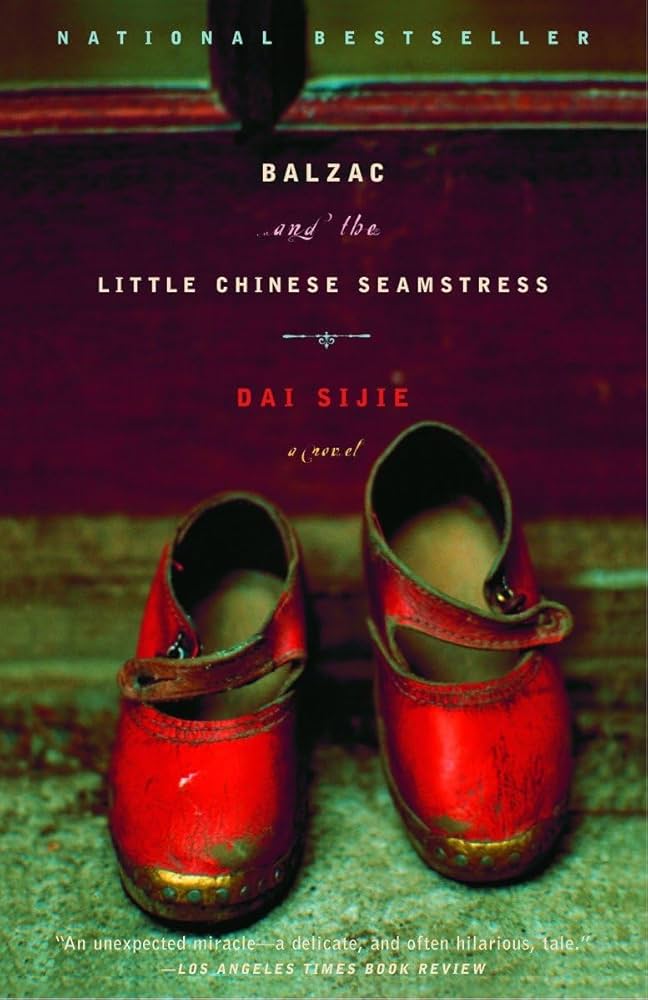
Book Review: Balzac and the Little Chinese Seamstress By Dai Sijie

Recently, I read this book for my school’s international novels unit, and I’d have to say that this is one of the best books I’ve ever read, and probably one of the only times I actually really enjoyed reading a book that was assigned to me.

This book is set in China during the Cultural Revolution. The author actually based the experience of the main character, whose name is not explicitly revealed, and his friend Luo, on his own experiences being re-educated under the communist regime. The boys in this book, who are part of a group the ruling party classifies as “young intellectuals”, are sent away to the Chinese countryside under Chairman Mao’s re-education program, where they are “re-educated” by the peasants. However, ironically, the two boys end up being the ones exposing the peasants to Western ideas, which the author makes apparent since the start of the book, with the violin and alarm clock in their possession, which the peasants have not seen before.

The two boys are sent into a small village in the mountains, for the reasons above. Early in the book, the abilities of the boys are made apparent. The main character’s main talent is playing the violin, while Luo’s ability is being able to retell and tell a story with great emotional effect. Luo’s ability eventually allows them a slight reprieve from the grueling labor they are forced to do in the village, and they get to watch and retell films for the village.

Luo and the narrator eventually meet the daughter of a tailor, one of the wealthier people in the region they are in. He eventually falls in love with her, and they have a relationship together. Meanwhile, Luo and the narrator go to visit a friend nicknamed “Four-Eyes”, who was also sent to be re-educated, similarly to them. As the story goes on, he grows more suspicious of the other two, likely due to his paranoia.

A prevalent, repeated theme throughout the book is the unlikeliness that the boys will ever be allowed to go back to the city, as their parents were branded “enemies of the people” by the new regime. The boys frequently mention that their chance to return is around “three in a thousand.” However, they still do everything in their power to be considered to be allowed to return to the city. The concept of a power balance is also explored by the author throughout the book, as he establishes how the peasants are supposed to be the ones in power and educating the boys, but the items such as the alarm clock that Luo brings to the village govern the life of the villagers to some degree, and at the same time exposes and educates them about the outside world.

I won’t spoil the rest of this book, but this book was for sure one of the better books I’ve read throughout this year. I really enjoyed the perspective and detail the author put into writing this book, using an experience he actually went through to paint a vivid picture of what it was like. I would recommend this book to anybody who likes historical fiction or just want a great book to read in general.

Balzac and the Little Chinese Seamstress by Dai Sijie is available for checkout from the Mission Viejo Library.

Code Of Honor by Alan Gratz

In the beginning of the 8th grade, everybody In my English class needed to choose a book to read. And I thought that I would always hate reading, but luckily the book I chose to read was none other than Code Of Honor.

Code Of Honor is a thrilling, spy action book by Alan Gratz, a Best-selling New York Times author. This book is essentially about a young high school Senior named Kamran Smith. And Kamran had it all. He is the star of the schools football team, is dating the most popular girl, named Julia Gary, and is excited to join the United States Army, like his brother, Darius.

The story begins with Kamran Smith and his family, and They are all doing great. That was, until, Kamran’s brother Darius, is accused of being a terrorist for a character named Haydar Ansari. As soon as the public news channels said that Darius was a terrorist, Kamran’s life turned upside down. Nobody at his school liked him, his friends didn’t like him, and his girlfriend left him. And even worse, their neighbors rallied up near the Smith’s house in protest. Soon enough, government agents come to their house for questioning and house searches, and eventually take Kamran and his family into a secret underground government facility for even more interrogation. Weeks and months later, Kamran is able to sneak out of the facility. Once Kamran escaped, the guards realize and start searching for him. Right when he was about to get caught, 4 strangers who worked with the government took him into a van and saved him. 

If you want to know the details and the rest of the story, I would recommend buying this book at the Mission Viejo library. Code of Honor is a book filled to the brim with lots of suspense and action, and it made me want to never put the book down. I would honestly give it a 10 out of 10 rating.

Code of Honor by Alan Gratz is available to check out from the Mission Viejo Library.

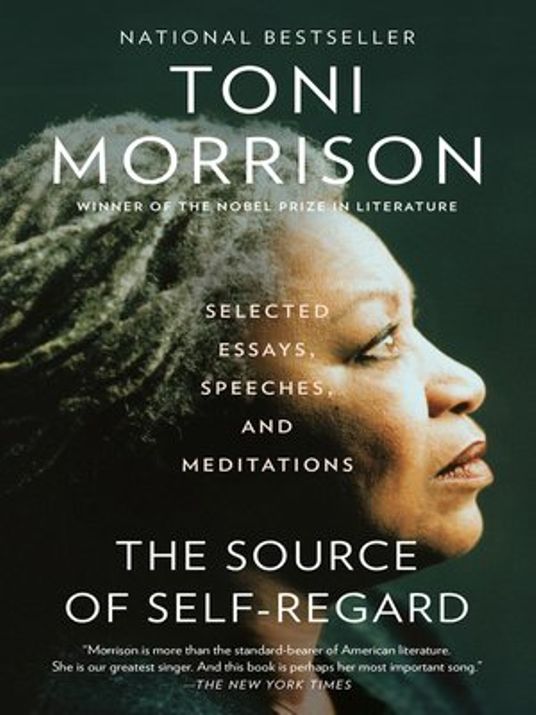
Authors We Love: Toni Morrison

Nobel prize winner and renowned professor, Toni Morrison, is a very influential writer whose impact deserves more discussion.

Hoping to inspire multiple generations, Toni Morrison created her works to appeal to both a young adult audience and an older audience. Her main focus throughout her writing was to show the beauty within the culture she grew up in under the influence of her family.

By incorporating Black culture into her writing, Toni Morrison has gone on to inspire not only the African American community, but other communities as well in an effort to foster a society that celebrates originality and a strong sense of character.

Some of Toni Morrison’s most famous works include: Beloved (which won a Pulitzer Prize for fiction), The Bluest Eye, and Song of Solomon. Beloved specifically details the story of Sethe, a runaway slave, as she navigates life in a world where the ghost of her deceased daughter haunts her family. This story was extremely touching for me to read because I have always had a love for history, and hearing a historical fiction novel Morrison’s perspective was specifically enlightening for me. 

The importance of examining the work of Toni Morrison in literature is evident as she has served to showcase the unjust society in which many African American people lived, specifically women, and its impact on the world we see today.

 Morrison’s perspective is one that goes beyond what schools often teach from textbooks, and gives a deeper meaning to the hardships that many faced in the 19th century.

– Taylor O.

Books by Toni Morrison are available to check out from the Mission Viejo Library. It is also available to download for free from Libby.

Book Review: Before We Were Free by Julia Alvarez

Recently, I read Before We Were Free by Julia Alvarez, which was about a family and their experience in the Trujillo-era Dominican Republic, a period of time when the country was ruled by a terrible dictator. This was definitely one of the best books that I read, as the narrator, in this case, Anita de la Torres, a 12-year-old girl in the family, makes personal connections to the reader throughout the book.

From my perspective, this book has a great build-up, as the author allows readers to slowly uncover what is going on, and we don’t truly know everything at the beginning. At the beginning, everything seems perfectly normal, with not many traces of the dictatorship being present, although the author did include many subtle tips, however, Anita realizes that her “Tio Toni”, or Uncle Toni, was missing. as the story unfolds, Anita comes to find out more and more about the country they live in.

Everything changes for Anita when members of the SIM, or the secret police of the dictatorship, go into her home and search for the Garcias, the neighbors. from here on out, her family has this sense of silence, and Anita comes to the realization that something was wrong, and realization dawns upon her that there was something wrong with the government. Eventually, she realizes that her parents are in a plot to assassinate Trujillo and bring freedom to the country.

I won’t spoil the rest of the book, but I can tell you that this book has a bittersweet ending. This was a great book I’m my opinion, as the narrator makes the reader feel a personal connection to all the characters, as well as explains her surroundings and experiences in vivid detail. All in all, although this book starts off slow, it takes off very quickly, and will leave readers interested in reading the whole thing!

Before We Were Free by Julia Alvarez is available to check out from the Mission Viejo Library. It is also available to download for free from Libby.