
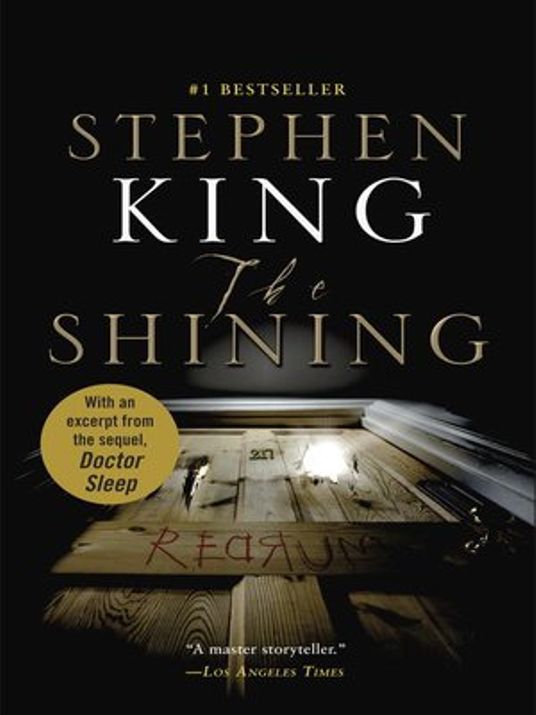
The Shining by Stephen King

In the 1977 horror novel The Shining, Jack Torrance is hired as the winter caretaker of the Overlook Hotel, and was invited to stay there with his family during the rough season. Seen as how Jack was battling against a past drinking addiction that put him and his wife in conflict, this was a perfect chance for the family to get closer. However, his five year old son, Danny Torrance, has a psychic ability called “the shining,” which allowed him to sense that the Overlook Hotel is a place of danger. Despite this, the Torrances, needing the money, continued with their plan to go there, leading to a journey of insanity, demonic possessions, and a dark, gruesome look at the Overlook’s past.

One of the best aspects of King’s writing would have to be his extremely detailed imagery. The extent to which he describes each event allows the readers to better picture the struggles and terrors each character goes through, which is an important aspect of any horror novel. The complexity in the characters, especially in Jack, also added a sense of realism to the story. King shows how Jack wasn’t “perfect,” and that his abusive past ultimately impacted the person he grew to be. Yet, he still felt shame towards his actions at the same time, causing readers to feel confusion as they develop their feelings towards him.

Overall, I found The Shining to be extremely engaging and definitely one of the best horror novels I’ve ever read. While still suspenseful and thrilling, I didn’t find the story to be extremely scary, making it more accessible to a wide audience. I do admit that some chapters felt very long and dragged on, but the build up to the end ultimately made these dull moments worth it. Despite any flaws, the characterization, imagery, and impressive writing displayed throughout the novel makes it truly deserving of the title of one of King’s best works.

-Aysha H.

The Shining by Stephen King is available to check out from the Mission Viejo Library. It is also available to download for free from Libby.
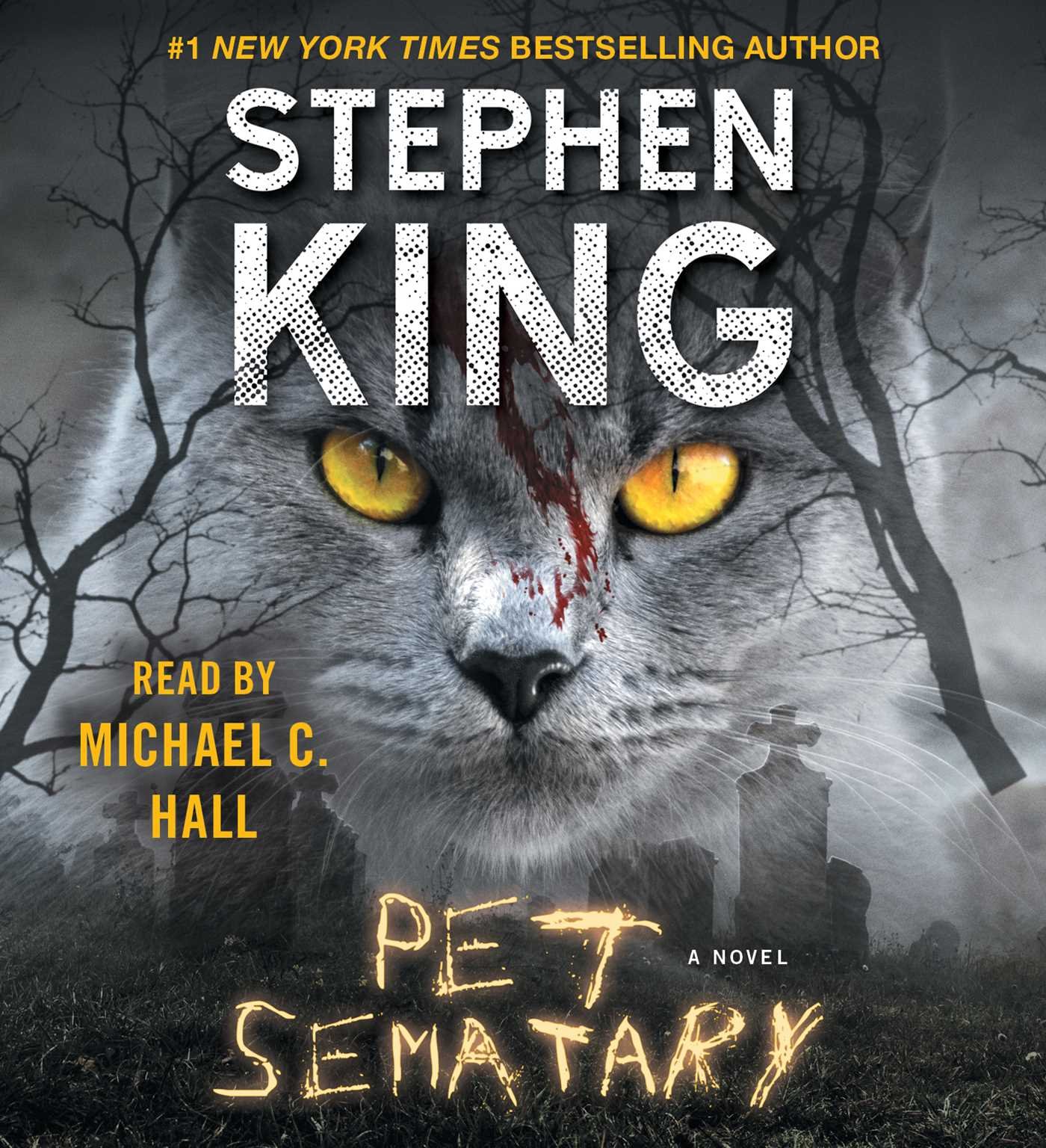
Pet Sematary by Stephen King

As an author known for his horror novels including It and The Outsider, Steven King lives up to his reputation once again through this novel. Despite being less gory than his other novels, Pet Sematary is arguably one of the most terrifying novels he has ever written surrounding grief, loss, and heartbreak—emotions that exceed the limits of even the most moral individuals.

The Creed family moves into a town called Ludlow, Maine, with their cat named Church. Louis Creed—the director of the health service in the University of Maine—meets his neighbor, an elderly man named Jud Crandall. The old man warns the Creed family about a dangerous highway that passes their house and shows them the “Pet Sematary” behind their home where children often bury dead pets who died from highway incidents. Following a series of traumatic events and nightmares for both Louis and his wife, the death of their beloved cat brings a major turn of events for the entire family.

Considering how much of the plot ties into the ending of the novel, there’s only so much that can be summarized without spoiling the book. Setting aside the terror and horror of the novel, the way King depicts grief and loss truly resonates with his readers including myself. King often puts flaws in his characters which creates a realistic perspective on the idea of death and loosing a loved one. As seen in Louis Creed’s parental decisions (or lack thereof), King does a fascinating job in showing readers what a true human does during times where rationalizing is no longer an option. Although it seems terrifying, emotions can bring out the best and worst in people, and that’s what makes them human.

As for the plot itself, its an extremely slow build. Similar to most Steven King novels, it’s best to read his books when you’re given enough time to do so. The longer you stop reading, the harder it becomes to understand the plot. Unfortunately, there’s not much to be said regarding King’s use of horror without spoiling the rest of the novel, but it’s definitely more scary psychologically than physically. Pet Sematary is a must-read for any horror fan and a novel I highly recommend for anyone willing to read this unsettling story.

– Natisha P.

Pet Sematary by Stephen King is available for checkout at the Mission Viejo Library. It is also available to download for free from Libby.

Dracula by Bram Stoker

Dracula (Bram Stoker) eBook by Bram Stoker | Rakuten Kobo

The creation of the horror image and the gloomy atmosphere in the novel is realized by spreading the devil world centered on Dracula, making the readers like a horror drama staged in the dark and dirty old castle. At the beginning, the novel presents a series of mysterious and dramatic images, such as a remote old castle, a desolate night, a sudden werewolf, and a strange bat.

The unknown smoke and other images serve as background factors to arouse readers’ memories and impressions of the grim and horrible scenes, so as to present a terrifying world to readers. This technique was also widely used in 19th century Gothic novels. On the one hand, it introduces the characteristics and identity of Dracula, on the other hand, it also employs these images to expand readers’ imagination and enhance their understanding, which sets a tone of terror and panic for the whole novel.

The existence of Dracula and the perception of his image are the self-perception of human eyes or psychology and the vivid description and presentation of the current social mentality. Jonathan’s visit and familiarity with the castle actually started the contest and struggle between good and evil, and at the same time hinted at the subtle relationship of conquest and resistance between the British Empire and the colonized countries at the end of the 19th century. The novel presents the reader with a strange and deviant world. In such a world, the reader is as anxious as the monster is terrifying. Dracula represents a strong possessiveness and a desire for racial invasion. He tried to invade London from far away eastern Europe, and while women were sleeping, he controlled their consciousness and drank their blood to reproduce his own race, expand his territory, and dominate the British Empire.

At the same time, the women who had been sucked into the blood were transformed into social outliers. They broke away from the male authority and were no longer bound by traditional concepts and customs, and freely expressed their likes, dislikes and desires. They possessed the characteristics of the new females emerging in the British society at the end of the 19th century, which was not recognized by the mainstream population at that time. The image of Dracula’s attempt to overturn the harmonious and orthodox order of British society was the accumulation of capital in the British Empire. The shadow of colonial expansion and self-portrait are the reverse of imperial colonial rule. At the same time, Dracula’s whole scheme is a symptom of the waning British empire’s fear of its own political future, a looming fear of the vassal states that are rebelling against colonialism and the rising powers that are gaining momentum.

The Dunwich Horror by H.P. Lovecraft

Aside from the horror classics of “The Shadow Over Innsmouth” and “The Call of Cthulhu” among one of Lovecraft’s most famous and known stories is “The Dunwich Horror”. The story is often criticized by scholars for being somewhat “formulaic” and for being the exception in Lovecraft’s ideas of an indifferent cosmos and humans being infinitely insignificant in the eyes of the universe.

Rather, the story is a classic battle between good and evil and is one of the few stories in which a hero is seen defeating the villain, although the triumph is ultimately meaningless in the grand scheme of things.

Without spoiling too much, since I heavily encourage people, especially horror fans, to read the story, the tale is of the terror that is Wilbur Whateley and his family.

Born to the deformed albino Lavinia Whateley, they lived in Dunwich. Mainly isolating themselves from the rest of the world, Wilbur was obviously something else. Reaching maturity by the age of ten and being an eight foot, misshapen being who caused dogs around him to go into frenzies, Wilbur was being groomed by his grandfather, Old Whateley, in what many townsfolk presumed to be dark magic.

Progressively, their house increases in size as Old Whateley and Wilbur add more floors and enlarge it, to accommodate for… something. They shy away from people but routinely go to the top of Sentinel Hill to chant in odd hours before hiding away. It all goes downhill when Old Whateley dies, and Lavinia mysteriously disappears.

Overall, while the story is very in line with further rounding the Cthulhu Mythos as a whole, it is quite different from Lovecraft’s typical stories. This is more focused on humans and despite how little the great cosmos thinks of them, they were able to vanquish the horrible monstrosity, although the true threat still lurks in the dark periphery that humans are not allowed to glimpse into.

It feels real, Dunwich feels real, the terror of what characters go through feels real. It is the unspeakable terror that desecrates a small town. It lurks in the night but is preceding something far, far worse.

Nevertheless, humans prevented what would have been a global disaster, even if it may inevitably be temporary. While the story may not necessarily be about this triumph, but rather that we will never truly know the extent and power to which beings beyond us possess, and how many people are willing to give their devotion and whole life to it.

This is one of Lovecraft’s more accessible stories if you will. It is weird, yet grounded in his unconventional reality, and is an interesting mix of science fiction and horror. He gives vivid descriptions of the area and surroundings, immersing you into it, allowing you to visualize what types of horrors will befall this tiny outskirt village.

It is not like his typical stories, it has appeal for larger audiences, is weirder and almost surreal than his bone-chilling horror and is among his more popular works. He makes many exceptions to his rules and theories on this universe and mythos he has created, and although “The Dunwich Horror” bends that, it is done so to a great effect. A wonderful tale is created in the process, and his pantheon of horrors is expanded.

-Farrah M.

Th Dunwich Horror and other tales from H.P. Lovecraft are available for checkout from the Mission Viejo Library.