Nineteen minutes By Jodi Picoult

My English teacher  suggested this book to me on Wednesday (Feb 28) and, in just four days I finished it. This book is over 400 pages but was such an easy read. 

I’m not going to summarize the book, because there is no way too without spoiling it, but it’s basically a book about a school shooting and a deeper dive into the each person in that situation, including the shooter, and the legal issues behind it all.

The book has an insane twist at the end. You will be hooked at the start of the book and will want to read it all the way through, and possibly skip some parts to get to the “juicy” parts, but you should read every detail there possibly is.

In my opinion, this has got to be the best, most attention grabbing book I have read. It brings light to many things and aspects and uses specific moments and people to capture the reader. It also brings up the past to show a more in depth and explaining certain situations and who the characters are to one another. 

There aren’t enough words to describe this book and I don’t know how to make you want to read it, but just do. Trust me you will be shocked, amazed, confused, happy, angered all at once with the many plot twists Jodi Picoult has put into this book.

After reading this book, I will begin to read Small Great Things by her too and will let you know how it goes.

Nineteen Minutes by Jodi Picoult is available for checkout from the Mission Viejo Library. It can also be downloaded for free from Libby

-Zina K

My Sister’s Keeper by Jodi Picoult

mysisterskeeper_jodipicoultIn The Fault in Our Stars, John Green says his novel is not a “cancer book.” Well, neither is My Sister’s Keeper. Bound to bring the reader to tears on more than one occasion, this novel faces tough issues of today.

When Kate Fitzgerald was diagnosed with acute promyelocytic leukemia (APL) at age two, the doctors realized she was going to need a matched donor for stem cells in the near future. So Kate’s parents selectively chose a sperm and an egg to make Anna, in order to use the stem cells in the umbilical cord to save Kate. But Anna’s donations did not stop there. Blood transplants, bone marrow. Basically every time Kate was hospitalized, Anna was there too, donating something else to her sister.

Now Anna is thirteen. Kate is beginning to die of kidney failure, and the Fitzgeralds have asked Anna to donate one of her kidneys. But Anna is fed up, and she sues her parents for the rights to her own body. Needless to say, this causes major conflicts among the family.

This novel discusses the moral effects of having a designer baby, as well as how far one should push for their child to donate for another child. Do the Fitzgeralds love Kate more, so much so that they had a second baby just to save the first? What is it like to live in a family with a child dying of cancer?

Seems straight forward, right? Anna sues for the rights to her own body, and she either wins or loses. But, if she wins and does not donate a kidney, her sister dies. If she loses and donates a kidney, she and her sister have to go through a complicated transplant that doctors think Kate may not be able to withstand.

No matter what happens, both outcomes prove to be a loss for Anna. What do you think? Is it right to have a baby just to save another child’s life? Is it right to be forced to donate parts of your body, without making the decision yourself? Is it right to stop being a donor for someone when they are sure to die without your help?

Combined with drama between the lawyers, the delinquent son of the Fitzgerald family, and some pretty major plot twists, this is a fantastic read. The novel is so captivating, especially because it’s told in the perspective of each character. I think anyone 13 and older can handle the heavy concepts, as long as you accept the fact that you will likely cry. But isn’t that what makes a book so captivating?

Leila Salem., 9th grade

My Sister’s Keeper is available for checkout from the Mission Viejo Public Library.

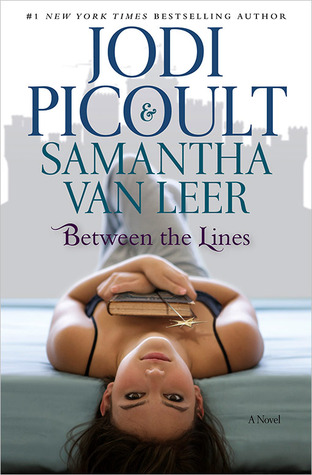
Book Review: Between the Lines by Jodi Picoult & Samantha Van Leer

between_linesDo you ever wish that fiction could be turned into reality? That you could just jump inside a story and live there instead–in a world considerably more interesting than your own? That you could be whatever you wanted to be, anytime you wanted to be it? I know I have. And that is precisely the case for Delilah McPhee, a fifteen year-old, book-wormish girl who happens across a strangely addictive fairy tale.

Despite the fact that it was initially meant for children, Delilah inexplicably falls in love with the story and finds she is able to empathize with the protagonist, who also lost a father at a very young age. I won’t say anything more, for this novel can be easily spoiled and if you have any intent of reading it, I do not wish to do so. That being said, I absolutely love this book. It is both thought-provoking and whimsical, and I recommend it to anyone who who enjoys reading or writing, which I hope is every one of you. Also, this book was co-written by high school student Samantha Van Leer, who originally pitched the book idea to her mom, bestselling author and co-writer (of Between the Lines) Jodi Picoult.

While reading Between the Lines, I began thinking a lot about literature (more specifically, fiction) and its effects on our lives, and I came to the realization: that is precisely why it exists. Writers do not write because they feel like it or because someone told them they should: they write because they have something they need to say; something they wish for others to hear.

There is a quote by bestselling author Dani Shapiro that goes, “Why write? To shine a light; to right a wrong; to shape chaos into art; to know what we think; to pose difficult questions; to challenge our own beliefs; to connect. Because we have to.”  Me, I write because I cannot not write. I read because I want to explore.

In retrospect, I am amazed at how heavily literature has impacted my life.

  • What if Tolkien had gotten precariously ill and never regained enough strength to complete Lord of the Rings?
  • What if C. S. Lewis had decided he fancied a medical career rather than a literary one?
  • What if John Green had become a biochemist alongside his brother Hank?
  • What if J. K. Rowling had never written Harry Potter?

What if all of our favorite authors, the essential beacons of the abundant knowledge we have obtained through reading, had not ever considered writing in the first place? Would your life be the same?

Comment and share what books/series/authors you couldn’t live without. 🙂

-Danielle K., 9th grade

Book Review: House Rules, by Jodi Picoult

house_rulesInexplicably, although unsurprisingly, New York Times Bestselling Author Jodi Picoult has once again succeeded in throwing me into an alternate world of her personal creation—almost instantaneously. I was forced to forget everything pertaining to actuality prior to reaching the final page; alas I sat both cherishing and lamenting the book’s resolution for the entire duration of a four hour return flight from Atlanta, Georgia.

Jodi Picoult seems to possess an unwavering habit of pulling me (and all her readers) into the aperture of her novels—both mentally and emotionally. Although I found myself unable to adequately empathize with the main character of this book in particular, I was able to understand and relate to many of the other characters and their personal anticlimactic struggles.

I really believe that Picoult has not received nearly enough recognition for her incredible contributions to literature (although I am sure it is because I am in 8th grade and her books, it seems, are geared toward a marginally older audience. Plus, no one reads for fun these days! At my school, people read for required Reading Counts points; if it wasn’t for the RC program, I doubt most of them would read at all).

House Rules tells the captivating story of an eighteen-year-old boy named Jacob who has Asperger’s Syndrome (which is declared to be “a form of autism”) and a knack/obsession for forensics (crime scene investigation). Although he is academically empowered and intellectually brilliant, he is also socially impaired; and cannot transform thoughts to words or read social signs as people without Asperger’s can. Little, random things bother him that other people wouldn’t even notice, such as the crumpling of paper, brightly shining lights, or miniscule interruptions to his meticulously planned-out Life Schedule. He cannot lie, for it is nearly impossible for him to tell anything but the undiluted, unmistakable truth; his mother dubs this as “a symptom of Asperger’s” in the midst of the novel. Jacob is a real, living, non-Divergent Candor, so to speak (I realize that describing a fictional character as “real” and “living” is an absurdly paradoxical statement, but I digress).

One aspect of this book that I greatly appreciated was its authentic and…candid…approach to the subject of love. Not only is her perspective true and honest, Picoult seems to voice the things that we are afraid to say. She addresses the fact that love and hate can be felt simultaneously; and that sometimes, even when we love someone dearly, we still wish for them to be a little more perfect than they are in reality. Love, although indescribable in context and unmistakable in its climax, may be transformed into an immovable burden. Jacob’s fifteen-year-old brother, Theo, feels this way when he realizes that he will have to take over caring for Jacob when their mother is no longer able to. He knows he will, though—out of his love for Jacob—which angers him, because he feels like he isn’t given a choice either way. But later in the book, he states that “when he finds a girl he loves and is ready to propose, he’ll just have to make sure she knows that Jacob and himself are a packaged deal, and that she’d just have to deal with it”.

Note: House Rules is a murder mystery. I purposely did not address any specific events/introduce certain characters in fear of giving something away.

This book was enthralling in a way I cannot even put into words. I would recommend this book to anyone who a) likes murder mysteries, b) has read—and liked—any of Jodi Picoult’s other novels, or c) has read—and liked—The Fault In Our Stars by John Green.

-Danielle K., 8th grade

Book Review: My Sister’s Keeper, by Jodi Picoult

my_sisters_keeper_cover“In my first memory, I am three years old and I am trying to kill my sister.”

The first sentence of My Sister’s Keeper by Jodi Picoult shows how special the book is. The author seems to have a talent on catching the sensitive problems of teenagers. Maybe we should put away all the awards that this book earned first and look at this interesting book itself.

First, the book uses days to separate each chapter, which this book starts on a Monday and ends on a Thursday. In each chapter, different characters tell the story in their prospective and finally connect the whole story. We can see how each character think and change through out the book, which is a very important element of the story. Jodi Picoult didn’t write these characters– she brought them to life and recorded their story.

The main character, Anna, is not born by chance. She is a medicine that is scientifically planned, so she can donate her blood and organs to her sister Kate, who has leukemia. Who is she? The youngest daughter, or just a shadow of Kate?

I think this book is suitable for teenagers around 13 years old and above. I will rate this book 10 out of 10, yes. Every character has their own emotional life that even a single word can touch deeply in your heart, and somehow you will find out that there is a part of you that is similar to them. And together we will see this 13-year-old girl fights her battle for her existence; together we will see how this war ends.

“In the end, though, I did not kill my sister. She did it all on her own.”

“Or at least this is what I tell myself.”

-Wenqing Z., 11th grade