Epic the Musical: The Ocean Saga (EP Review)

EPIC: The Musical is a concept musical loosely adapting the story of the Odyssey, the famous Greek epic. It has been fully released with 9 sagas, each featuring 3-5 songs, and the Ocean Saga is the third in line. If you haven’t listened yet, this will have spoilers – go check it out!

  1. Storm
    The opening song, Storm is mostly setting up the rest of the saga. Odysseus and his crew are facing a torrential storm (go figure), but Ody spots a floating island. He asks Eurylochus to prepare the crew to throw harpoons at the island, hoping to latch on and escape. Admittedly, the plot hook of a storm is underwhelming compared to the previous threat of a cyclops, but it is catchy nontheless. I often find myself humming the main lines when it rains! The vocals of the crew echoing back Odysseus’s lines drive home how he is what is keeping the crew afloat, and how they all listen to him. (Which certainly won’t come back to haunt us later).

2) Luck Runs Out

In this, Eurylochus expresses his doubts about Odysseus’ plan. This song is fascinating as it delves into the mindset of both of the characters. Odysseus’ main trait is that he is cunning, a trickster. He has relied on his wits to get the crew out of all situations thus far. Eurylochus is above all else, practical. We saw this in Full Speed Ahead, in his introduction, where he proposes the crew take the more brutal, but efficient way of raiding the island. Eurylochus is worried about the fact that Odysseus is relying on nothing but himself, that he has no safety net to fall back on. “How much longer,” he asks, “til’ your luck runs out?” Odyssseus tries to convince Eurylochus under the mantra of optimism, but he doesn’t relent. In the end, Odysseus pulls Eurylochus to the side and reminds him that he can’t be opposing his plans. The crews voices, interestingly, echo Eurylochus instead of Odysseus here, showing that they share his doubts and fears and are siding with him.

3) Keep Your Friends Close

Odysseus has successfully made it to the island in the sky, and is now requesting the aid of Aeolus, the wind god, to help them through the storm. Aeolus proposes a deal – the storm will be put inside a bag and given to Odysseus. Now, he will be able to get through, but should he open the bag, his crew will be blown all the way back. Aeolus’ “winions” feed into Odysseus’ crew the idea that the bag actually has treasure inside, tempting them to open it. Despite Odysseus’ best efforts to dissuade the crew and protect the bag, the temptation is too great and the bag is opened – blowing the ship in the complete opposite direction away from Ithaca.
This song overall perfectly accomplishes a light and bouncy feel in the first half contrasted with a deeper, dramatic tone in the second. Aeolus’ singer perfectly portrays the airy, whimsical feel of the wind god, and the segment where Odysseus has a dream perfectly serves to remind the viewer of what he is working towards – right before it is brutally ripped away. This song also deepens the growing divide between Odysseus and his crew, which has been a major theme in this saga. The usage of the flute perfectly suits Aeolus as well!

4) Ruthlessness

The usage of trumpets, Poseidon’s designated instrument, match his aggressive temper amazingly. Poseidon’s singer has some amazing vocals with growls and roughness that perfectly mature the brash nature of the god. Besides the musical aspect of this song, it also displays some important themes. The main conflict of EPIC: the Musical is the clash between the ideology of “Open Arms”, as referred to by Polites in the aptly named song, which is the idea that everyone should be treated with trust and kindness, versus the idea of Ruthlessness.

The Ocean Saga’s songs set up vital theme dominoes for the rest of the musical with their compelling instrumentation and devastatingly catchy lines. Next up: The Circe Saga!
Hadestown: a Spoiler-Free Review

Recently I saw Hadestown live – a retelling of the story of Orpheus and Eurydice, in musical form. It was so good! The songwriting, the aesthetic, the performances, they all came together to form an amazing experience that I’d highly recommend.

As I said before, this musical retells the myth of Orpheus and Eurydice, starting from their first meeting all the way to Orpheus’ fated trip below. If you haven’t heard of the story yet, that’s completely fine! It makes your viewing experience perhaps even more dramatic, because you won’t know how it’ll end.

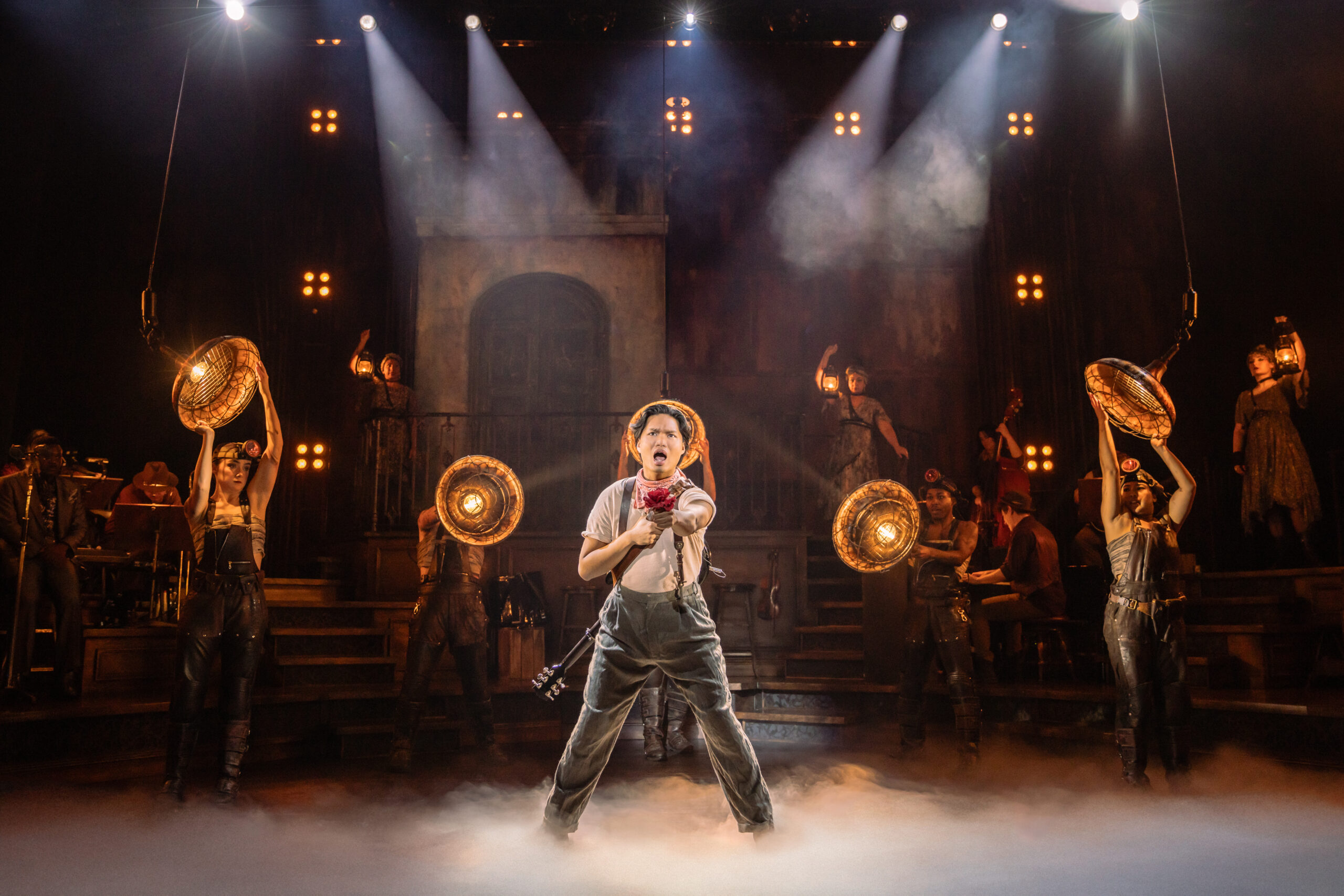
The show sets the Greek Underworld in a sort of industrial, Depression-era aesthetic, making for some really creative interpretations of the various features of Hell. It also does a great job of setting the contrast between the grungy, oppressive, sweltering Hadestown and the bright, airy, but freezing overworld.

The traveling cast that I saw was amazing (they performed in Segerstrom Center in late October) and the Broadway Official Recording is also spectacular. The emotion carries through even without the visuals!

Notably, the band is prominently displayed on stage along with the actors. Not only does this look insanely cool, but it gives the musical a different feel – something more personal. The songs of Hadestown are heavily inspired by different jazz genres, which is a breath of fresh air compared to other musicals.

Overall, I would highly recommend checking out Hadestown if you can!

Shrek the Musical Review

On November 24, 2024, my family and I went to see the Broadway performance, Shrek the Musical, at the Segerstrom Center for the Arts. The hilarious musical is based on the first Shrek movie made in 2001 and starts off in the fictional fairy-tale medieval town of Duloc. 

Summary of the Musical:

Lord Farquaad bans fairy tale characters from Duloc and sends them to Shrek the ogre’s swamp.  Shrek is enraged by this, and with the help of a talking donkey, embarks on a trip to speak with Lord Farquaad. Farquaad needs to marry a princess in order to become the king of Duloc, and he makes a deal with Shrek. Shrek needs to save a princess named Fiona, who is in a castle guarded by a dragon, and bring her to Lord Farquaad for marriage in order for Shrek to have his swamp back. Shrek accepts and both him and Donkey travel together, where they slowly grow fond of each other.

They finally reach the castle and cross a bridge above lava. Shrek goes to find the princess, leaving the Donkey alone. Donkey is captured by the dragon, who falls in love with him. During this, Shrek finds Fiona and he fights off the dragon, saving her and Donkey. 

Before reaching Duloc, they take shelter and the audience finds out that Princess Fiona has a curse that turns her into an ogre by night and she can only take her true beautiful form with a true love’s kiss. The next day, Shrek and Fiona become romantically interested in one another and by night she again demands shelter. Donkey discovers she is an ogre and describes herself as ugly. Shrek tries to confess his feelings to her, but overhears her talking about him.

He calls Farquaad to marry her, but misunderstands the situation that Fiona was indeed talking about herself and not Shrek. Shrek stops the wedding, kisses Fiona, and she takes her true form as an ogre. The musical ends with them married with children, and Farquaad eaten by the dragon, who marries the donkey.

Favorite Song:

The composition I liked best was “I Know it’s Today” by Leah Greenhaus, Marissa O’Donnell, and Sutton Foster. The style of the song is pop and I feel it is this because of the use of female singers, who sing with strong voices in unison, the piano, drums, flutes, who give the song the pop aspect. I liked this composition the best because of the passing of solos between the singers, the blend of the background vocals, and the catchy music. The music made me feel happy and calm and the music evoked the images of the Shrek movie. The song reminded me of when I was little on the couch watching it with my family. It gave me nostalgic emotions but also joyful emotions.

Overall, I 100% would recommend the musical to others and I had an amazing experience!

– Sophia B.

Movie Review: Les Miserables

Les Misérables (2012 film) - Wikipedia

So, I finally got around to watching arguably one of the most iconic films of all time- Les Miserables, about France in the 1800s. The film opens with Jean Valjean, a prisoner, being released from prison after a nearly 20-year long imprisonment simply for stealing bread. As a former convict, he cannot find a job or a place to stay, but a generous Bishop offers to take him in. However, Valjean tries to steal the Bishop’s silverware and run away, but is caught by the police- still, the Bishop stands up for him, saying that he himself gave Valjean the silver so he could start a new life in the world. Valjean is stunned and ashamed- to honor the Bishop, he makes himself a new persona to save other people.

Almost ten years later, Valjean is a rich factory owner- but he is shocked when a man named Javert (formerly a prison guard at the prison where Valjean was held) comes to meet Valjean as the new police chief. Javert begins to suspect Valjean’s real identity. Concurrently, one of the factory workers named Fantine is fired for having a daughter out of wedlock, named Cosette. Cosette is revealed to be living with a greedy family named the Thenardiers, who demand money from Fantine. Fantine, desperate, becomes a prostitute to pay her debts. After she attacks an abusive customer, Javert arrests her, but Valjean remembers her as a factory worker and takes her to a doctor. However, the unrest in Paris has festered for too long- things are about to get, for lack of a better term, heated.

Les Miserables takes place during the French Revolution. The movie is set amongst many historical landmarks in Paris- such as Notre Dame. The time period shines through- the deep social divides and political unrest of the Revolution bleed through and impact all the characters in different ways. 

A big social issue in the film was the issue of poverty and criminality. Deep social and class divides between the rich and poor were very common at this time, leading to deep feelings of unrest in the country. In addition, even stealing was treated as a serious offense- leading to decade-long prison sentences and sometimes even execution. In turn, the imprisoned people were unable to provide for their families- which just reinforced the cycle of poverty and forced their children into stealing in order to survive.

A big social issue mentioned in the film was Cosette living with the Thenardiers. One might ask, why would Fantine send Cosette away? The truth is, it was very common in this time period for working-class women to send their daughters away to live with slightly better-off individuals who could provide the child with some education (for a fee).

There were many cultural differences shown in this movie I wasn’t aware of- for example, the practice of sending daughters away. In addition, I was unaware of the practice of the police dealing with the revolters in those days- I had no idea it was so brutal. I was also surprised by the truly horrible living conditions of the poor shown in the movie- I really had no clue they were that bad. 

The issues this film deals with- poverty, criminality, and doing anything to survive- are definitely universal, and prominent even today, and even in the United States- with the wage gap and class gap that we are currently experiencing in our society. It was heartwarming, though, to see the sense of community, love, and kindness shown by Valjean, even in this brutal situation.

-Vaidehi B.

Les Miserables is available for checkout at the Mission Viejo Library.

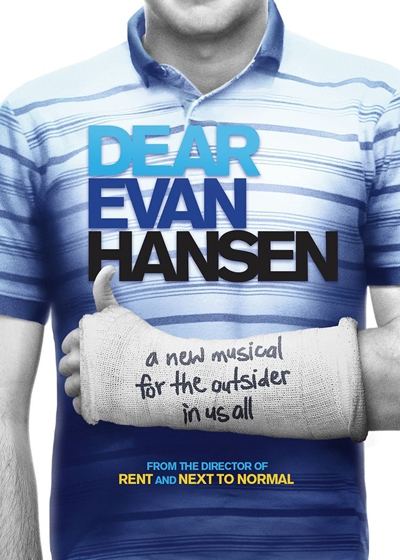
Theater Review: Dear Evan Hansen

The Tony-winning Broadway musical Dear Evan Hansen is currently on tour around the US, and I was lucky enough to snag tickets for a show in Costa Mesa. I had already listened to the soundtrack more times than I could count, but I was ridiculously excited anyway. Dear Evan Hansen is one of my favorite musicals of all time, and it is the second musical ever that I have seen live. And, let me tell you, it was a treat.

This musical addresses one of today’s biggest issues: teen suicide and anxiety. The main character, Evan Hansen, has extreme social anxiety, and his therapist tells him to write positive letters to himself. However, when he prints a failed version one of these letters (it was very pessimistic) out in his school’s computer lab, Connor Murphy, a fellow student, snatches it from him and shoves him. Later, the characters find that Connor has committed suicide, and they find Evan’s letter in his pocket. They think that the letter is Connor’s suicide note, addressed to Evan, and them Evan and his family friend, Jared, get dragged into a huge mess of lies and deception. Evan and Jared write fake emails to Connor to “prove” that they are friends, and they start a huge project to spread awareness for Connor’s death. Evan even gets together with his long-time crush, Zoe Murphy, who also happens to be Connor’s sister.

However, nothing this perfect can last, especially if it is based on a lie. Evan’s mom finds out about the Connor project and how he has been spending almost every night at the Murphys’ home. The whole charade falls apart, Evan eaves the Connor Project, and he and Zoe break up. Although he and Zoe do make peace at the end of the musical, I was still in tears throughout the entirety of Act 2.

Although the soundtrack was very differet from the actual live musical, both are thoroughly enjoyable. Dear Evan Hansen is one of my favorite musicals of all time for its storyline and beautifully written characters, and seeing it live is not something that I will ever forget. This musical is truly fantastic, and I would definitely encourage seeing it if possible.

-Arushi S.