Book Review: Paper Towns, by John Green

paper_towns“At some point, you gotta stop looking up at the sky, or one of these days you’ll look back down and see that you floated away, too.”

Paper Towns is one of John Green’s lesser known novels, but I think it’s one of his best. A novel about an awkward boy who is in love with a girl far out of his league, its very similar to Looking for Alaska. Accompanied by his two best friends, the main character, “Q” embarks on a journey to find his lifelong crush, Margot Roth Speigelman after she runs away from home for the fifth time. The characters are quirky and lovable and each one has a unique personality and sense of humor to contribute to the plot.

“That’s always seemed so ridiculous to me, that people want to be around someone because they’re pretty. It’s like picking your breakfast cereals based on color instead of taste.”

Quirky and filled with light humor, Paper Towns is not only a story about love and adventure but is a fun and entertaining novel that will make you laugh with every page.

-Sara S., 10th grade

Book Review: House Rules, by Jodi Picoult

house_rulesInexplicably, although unsurprisingly, New York Times Bestselling Author Jodi Picoult has once again succeeded in throwing me into an alternate world of her personal creation—almost instantaneously. I was forced to forget everything pertaining to actuality prior to reaching the final page; alas I sat both cherishing and lamenting the book’s resolution for the entire duration of a four hour return flight from Atlanta, Georgia.

Jodi Picoult seems to possess an unwavering habit of pulling me (and all her readers) into the aperture of her novels—both mentally and emotionally. Although I found myself unable to adequately empathize with the main character of this book in particular, I was able to understand and relate to many of the other characters and their personal anticlimactic struggles.

I really believe that Picoult has not received nearly enough recognition for her incredible contributions to literature (although I am sure it is because I am in 8th grade and her books, it seems, are geared toward a marginally older audience. Plus, no one reads for fun these days! At my school, people read for required Reading Counts points; if it wasn’t for the RC program, I doubt most of them would read at all).

House Rules tells the captivating story of an eighteen-year-old boy named Jacob who has Asperger’s Syndrome (which is declared to be “a form of autism”) and a knack/obsession for forensics (crime scene investigation). Although he is academically empowered and intellectually brilliant, he is also socially impaired; and cannot transform thoughts to words or read social signs as people without Asperger’s can. Little, random things bother him that other people wouldn’t even notice, such as the crumpling of paper, brightly shining lights, or miniscule interruptions to his meticulously planned-out Life Schedule. He cannot lie, for it is nearly impossible for him to tell anything but the undiluted, unmistakable truth; his mother dubs this as “a symptom of Asperger’s” in the midst of the novel. Jacob is a real, living, non-Divergent Candor, so to speak (I realize that describing a fictional character as “real” and “living” is an absurdly paradoxical statement, but I digress).

One aspect of this book that I greatly appreciated was its authentic and…candid…approach to the subject of love. Not only is her perspective true and honest, Picoult seems to voice the things that we are afraid to say. She addresses the fact that love and hate can be felt simultaneously; and that sometimes, even when we love someone dearly, we still wish for them to be a little more perfect than they are in reality. Love, although indescribable in context and unmistakable in its climax, may be transformed into an immovable burden. Jacob’s fifteen-year-old brother, Theo, feels this way when he realizes that he will have to take over caring for Jacob when their mother is no longer able to. He knows he will, though—out of his love for Jacob—which angers him, because he feels like he isn’t given a choice either way. But later in the book, he states that “when he finds a girl he loves and is ready to propose, he’ll just have to make sure she knows that Jacob and himself are a packaged deal, and that she’d just have to deal with it”.

Note: House Rules is a murder mystery. I purposely did not address any specific events/introduce certain characters in fear of giving something away.

This book was enthralling in a way I cannot even put into words. I would recommend this book to anyone who a) likes murder mysteries, b) has read—and liked—any of Jodi Picoult’s other novels, or c) has read—and liked—The Fault In Our Stars by John Green.

-Danielle K., 8th grade

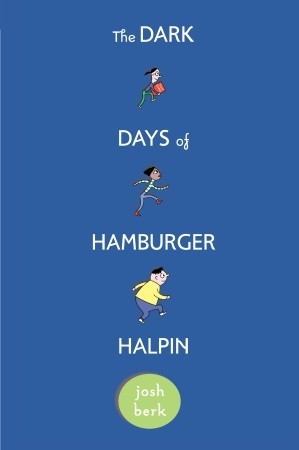
Book Review: The Dark Days of Hamburger Halpin, by Josh Berk

dark_daysHow can a fat, deaf, high school boy be the new Hardy Boy? Well somehow, Will Halpin somehow manages to do it.
With his friends Hardy Boy-loving Devon Smiley and ex girlfriend Ebony, Will Halpin (or as he is known on IM, Hamburger Halpin) must find out who killed the somewhat popular football player Pat- whether it was the depressed prom queen, the sexy math teacher, or Pat’s jealous friends. Along the way, Will wants to see if he could find the ghost of coal miner that he was supposed to be named after.
While this book is a good mystery for teens, whether you like Nancy Drew or not, the mystery isn’t the main point of the book, since the murder doesn’t happen until halfway into the book. If I had to say what the main conflict is in the book, I would say that it’s the internal conflicts that happen inside of Will. All throughout the book, Will tries to find himself, since his old deaf friends hate him, his new classmates don’t want to be friends with him because he’s deaf and friends with weird Devon, he wants to confess to the beautiful Leigha and the hot police chick who knows sign language, and he’s trying to find out why his parents have never told him that he was named after a deaf coal miner.

All in all, this was a great book. It was super hilarious, it had a great mystery that actually made you think, there were references to Nancy Drew and The Hardy Boys, and makes you think differently of other people, whether they are popular or weird. However, there are a few things to take note of. Some of the content is slightly inappropriate, the characters find out some not so nice histories of other people, and the murderer’s motive is just plain sad.
Even so, I suggest that you give this book a try.
-Megan V., 8th grade

Book Review: The Curious Incident of the Dog In The Nighttime, by Mark Haddon

curious_incident_dogThe Curious Incident of the Dog In The Nighttime is a realistic fiction book by Mark Haddon, telling the story of autistic teenager Christopher, who, after finding his neighbor’s dog stabbed with a garden fork, decides to emulate his fictional hero Sherlock Holmes by searching for the murderer. Christopher’s father disapproves of him investigating the case, and what was a simple mystery about a dead dog leads to discoveries about his family, neighbors, and his own place in the world.

The major strength of this book is the unique voice of the main character. Christopher is a mathematical prodigy, but is distressed by loud noises and struggles to understand the emotions of others. His narration is often frustrating to the reader, such as when he breaks off from the plot to explain a math concept or his system of counting different colored cars, but he is also very sympathetic as a character often frightened and confused by his irrational surroundings. Christopher dislikes metaphors and jokes because of their inconsistent multiple meanings, but his literal-mindedness leads to some witty observations about the irrationality of social norms. Though the book takes place in modern London, from Christopher’s perspective it becomes a different world full of distractions and absurd rules.

I would recommend this book to anyone 14+ (for language and thematic elements) who enjoys mysteries and unusual narration.

-Miranda C., 12th grade

Book Review: Shelter, by Harlan Coben

shelter_coverShelter is the first novel in Harlan Coben’s first young adult series, “Mickey Bolitar.”  Mickey, the main character in this novel and the series’ namesake, is featured in some of Coben’s adult crime novels as the main character’s nephew.  After these adult books became such a hit, the author then began writing this series in order to tell Mickey’s story.

Mickey Bolitar witnessed his father’s death and sent his mother to rehab.  He is then forced to move in with his uncle Myron and switch schools.  To top off a great year, the sweet girl he meets at his new school, Ashley, goes missing.  He makes it his mission to find her, no matter the risks.  After looking for clues, though, he begins to realize that the risks are much higher than he realized.

Mickey follows Ashley’s trail, which leads him into a seedy underworld.  The more he uncovers about Ashley, the more he realizes that she is not the sweet, innocent girl he thought she was.  In the process, he also uncovers things about his father that he never expected to find, as well as a conspiracy that makes him question everything he thought he knew.

This novel will leave your heart pounding and your anxiety level sky-rocketing.  It is fantastically written, with characters that are relatable and a storyline that makes readers beg for more.  It is a good read for both pre-teens and teens alike, as it contains little questionable material.  Some parts are a little intense, however, which might not be suitable for younger readers.  Overall, Shelter by Harlan Coben is a must read for anyone with a taste for riveting mysteries and unforgettable adventures.

-Kaelyn L., 10th grade

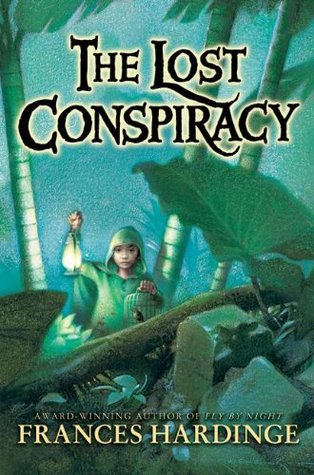
Book Review: The Lost Conspiracy, by Frances Hardinge

lost_conspiracyOn the jungle island of Gullstruck in The Lost Conspiracy, by Frances Hardinge, the people have revered and relied on prophets known as the Lost. Possessing the ability to separate their senses from their body, the Lost can see, hear, feel, and smell things hundreds of miles away. The villages are separated by massive volcanoes, so these prophets fly their senses to distant settlements to relay news. In the village of Lace, a young girl named Arilou is the only remaining Lost, taken care of by her sister Hathin. However, the close knit people guard a secret: Arilou has never communicated with them, always seeming to be far away in her own world.

When inspectors come to test her, Hathin desperately finds ways to convince them of Arilou’s abilities. Suddenly- disaster! All around the island, the Lost are found dead, except Arilou. With their livelihoods in danger, everyone turns on the Lace, destroying their village and sending the survivors fleeing. After all, the only Lost spared was that of the Lace. Now wanted fugitives, Hathin and Arilou must untangle the conspiracy entrapping their people. Traversing the haunting jungles and sacred volcanoes, the sisters and a troop of revenge seekers work to uncover the conspiracy surrounding them all.

As you have probably guessed from the title, The Lost Conspiracy is a mystery novel, which requires a slow, deliberate read to fully understand. A lot of pages are spent contemplating clues and foreshadowing. It has a fair share of action mixed in, to keep the pace moving along. A curious aspect of this book is the dilemma Hathin faces. How can she uphold the village’s pride and treasure when Arilou cannot even communicate?

Throughout the story, Hathin is constantly caring for her sister, yet losing hope as Arilou continues to be unresponsive and distant. However, what most makes The Lost Conspiracy memorable is the unique concept of the Lost. Could we imagine being able to travel anywhere in the world, unburdened by physical needs? Pick up this thrilling mystery, and satisfy your inner detective!

-Phillip X., 8th grade

Book Review: Confessions of A Murder Suspect, by James Patterson

confessions_murder_suspectJames Patterson is one of my favorite authors, and since he’s also one of the world’s highest paid authors, clearly others share this opinion.  When I saw his latest collaboration with Maxine Paetro, Confessions of A Murder Suspect, I knew I had to read it.

The basic premise of the story is the investigation of the apparent murders of Malcolm and Maud Angel. The Angels are a very powerful family, heading up a huge pharmaceutical company and hedge funds, and it would seem that the list of suspects would be huge. The cops however, narrow the list done to one of the couple’s children given that their deaths occurred in a locked, extremely secure and exclusive apparent complex. Tandy Angel, one of the couple’s children, is not going to sit around and wait for the cops to conduct their investigation so she starts one of her own. Throughout the book family secrets and conspiracies arise and nothing is as it first seems. “Confession” chapters break up the main story and give us more insight into the lives of the Angels.

I personally have mixed feelings about this book. When I was reading it, I was fully engrossed and it kept me turning pages… after I had finished, however, I wasn’t quite so sure anymore. A lot of what makes the story so interesting is the many mysteries that the plot centers on, and once the secrets are revealed, the story loses something. It’s not that the answers to the many questions are underwhelming or unbelievable exactly– they just weren’t what I thought, and a lot of it wasn’t really justified in my mind.

The thing that I had the biggest problem with in this book was the final “who done it” explanation. Without giving anything away, suffice it to say that knowing all of the information about Malcom and Maud that is revealed by that point in the book, it doesn’t seem well justified that their deaths occurred in the way that they did. It was mainly the way that Malcom’s death occurred that bothered me- Maud’s was fairly well explained- but I just can’t fathom why Malcom’s death occurred the way that it did, knowing all of the information about Maud.

On the flip side, I think that the book’s strongest point is the careful balancing of several plots lines. While the main focus is the murder investigation, there are several other mysterious that are expertly tied into the main plot. I loved the many family secrets that the Angel family contained and never felt bored.

Another of the book’s strong features are the “Confession” chapters. They’re a unique way to add more information to the story that wouldn’t have necessarily been easily tied into the story if it was written in the traditional chapter format. There are just enough of these to add something extra to the plot without drowning it out.

When the book ended I was mostly satisfied with the way that things were wrapped up and most of my questions had been put to rest. That being said, room was left open for a sequel, which will hopefully fill in any reaming gaps and extend the story of the Angel family.

-Angela J., 12th grade

Book Review: Shadow Horse, by Alison Hart, and Its Sequel, Whirlwind

shadow_horseShadow Horse starts out with a teenage girl named Jasmine Schuler, who has to go to a court hearing for juvenile delinquents. She is accused of assaulting Hugh Robicheaux, the owner of High Meadows Farm, where Jas and her grandfather had lived. She attacked Hugh since she knew that he had killed his own horse, contrary to the story that Hugh recounted about how Jas’ grandfather had killed the house.

After proven guilty in the court room, she must now go live with her foster parent, Miss Hahn, for 45 days. And during that time, she must find evidence to prove that Hugh had killed his own horse. In the meantime, she learns to accept living on the run-down Second Chance Farm, and she even finds a horse at an auction. The discovery of this animal drastically influences the mystery.

I thought this first book in the two-book series was pretty good. However, in my opinion, the real action of the series doesn’t start until the second book.

whirlwindIn the second book, Whirlwind, Jas goes to her next hearing. Hugh strangely shows up there and threatens Jas to keep quiet about her suspicions. This second book becomes a lot darker than the first. An investigator is hired to help with the case. Jas’ relationship with a farm volunteer is growing. Also, Hugh has a spy somewhere on the farm, who is reporting everything about Jas to Hugh. But who is the spy? And how will they get to the bottom of the mystery and stay safe in the meantime?

What made this book unique was the unusual circumstance that brought Jas to Second Chance Farm. Who would have ever thought that a girl guilty of assault on a horse farm would spend her probation days at another horse farm? However, had that not happened, Jas would never have had an opportunity to try to solve the mystery. In the end, it was better for her to be on probation, despite the obvious drawbacks of the situation, like curfew hours.

If you love horses or murder mysteries, or a combination of both of these, then you would enjoy this book series. I would recommend these books for younger teens, since they are relatively basic reads. However, they have a good plot, and once the action starts, it is quite a captivating series. I felt it was pretty realistic, especially since the reason behind Hugh’s actions is unfortunately something that could happen in real life. Overall, I really enjoyed reading these books, and would rate them 4 out of 5 stars.

-Leila S., 8th grade

Book Review: Paper Towns, by John Green

paper_townsIn continuing my mission to read every John Green novel known to man, I invested my time in Paper Towns.  This book follows the life of high school senior Quentin Jacobsen and his mission to find his first love, Margo, after she mysteriously disappears.  Margo is adventurous and exciting, and acts as a nice foil to Quentin’s shy and reserved personality.

As cheesy as this plotline sounds, Paper Towns was actually an interesting story filled with mystery, comedy, and a break-in to Sea World.  While the ending is somewhat disappointing and frustrating, everything leading up to it is exciting and enlightening.  This story is humorous, yet has dark undertones as it reveals faults in humanity and society.

What I learned through reading this book is that Green is an expert at creating relatable teenaged characters.  In Paper Towns, the main characters are worried about their future, but also concerned with living in the moment.  As we all know, these two tasks can be very difficult to balance.  In Paper Towns, Quentin teaches the readers how to balance the two, and how this combination of enjoying adventure and preparing for the future helps us to discover ourselves and what we want out of life.

-Amanda D., 11th grade

Book Review: Paper Towns, by John Green

paper_townsHave you ever met someone, maybe a person who is a huge influence on life, who you immediately had a first impression from them and you were also swept away when you found out that your first thoughts weren’t true? If so, then you’re on league with Quentin Jacobsen, a senior in high school who is in love with Margo Roth Spiegelman.

Quentin (nicknamed Q) is Margo’s neighbor, and has been her friend since they were young. Margo is like an enigma to him. She is the one who is adventurous, has run away four times, and once dressed up as a ninja in order to take Q on a wild adventure. Now, she has run away for a fifth time, and left clues to find her again. Only this time, Q finds out how different she is.

While this book is filled with comedy that anybody over the age of 13 would find funny, there are some scenes that some people might find inappropriate for people under the same age. For example, one time Q went out alone with Margo, who just happens to be the prettiest girl in high school, and when his friends found out about that, they made him write a term paper (30 pages min.), draw a realistic picture, make a sculpture, and write a poem describing the female anatomy. (pg 88) Additionally, some male anatomy parts are mentioned.

However, this book actually teaches an important lesson in the life of first impressions. Q has to learn that the adventurous girl that he thought he knew “was not a miracle…not an adventure…not a fine and precious thing. She was a girl.” (pg 199)
-Megan V., 8th grade