Birds of a feather flock together. Though this phrase might not always apply to people, this applies very well to birds. When you are outside during the evening, as the sun sets, you might notice a swarm of birds chirping and gathering as they migrate in the sky. Adding to the nostalgic atmosphere as the sun sets and the day comes to an end, this swarm of birds, also known as a murmuration, occurs when a large group of birds, such as starlings, crows, and pigeons etc, gather together when the sun sets. The reason for their gathering together in these flocks, especially during the evening when the sun begins to set, is due to various reasons. One reason for this is due to the birds’ ways of living. In comparison to nocturnal animals such as bats, raccoons, beavers, etc, most birds are diurnal, meaning they are active in the day and sleep during the night. In the morning, most birds leave their nests and migrate in order to do their daily living activities, such as hunting, for example, and when the sun sets, the birds migrate back to their nests. When the sun sets, it’s a signal to the birds that it’s about to turn night and there will be no more daylight. For birds, this means the day is coming to an end, so they gather with other birds and flock back to their nests to rest for the day. They often do this in a large swarm, ranging from small groups of about 30 birds to large groups of about 100+ birds. They gather together due to mainly due to one reason. Predators. When a bird is by itself flying back to its nest, it makes it easier for predators to target them and attack them; however, when birds are together in a swarm, it creates this black shadowed figure in the sunset sky, which makes them appear to be a large predator, deterring predators. In the winter, however, birds gather in flocks due to the cold. In the winter, the cooler temperatures decrease the temperature in birds. In order to stay warm, the birds typically gather in flocks. In addition to this, the bird calls, which can be heard during sunset time, are the birds communicating with each other, communicating with each other that it’s time to go home. Thus, next time you see a bunch of birds flocking together during the evening, you’ll know the reason why!
Tag Archives: photography
Fort McHenry: A Journey Through American History
Last December I had the chance to visit Fort McHenry, and even though my visit was brief, it was an experience that taught me more than I anticipated. As a high school student who took US History two years ago and will retake it this coming year, I wanted to explore historical sites to deepen my understanding of our nation’s history, understand and remember it. Fort McHenry was a perfect place to start my US history for this coming year.
When we arrived at Fort McHenry, we bought the tickets, which were just fifteen dollars for adults, and if you’re under sixteen, it’s free. Also, if you have a Nation Park membership, you can visit.
Walking through the fort, I was struck by how much I didn’t know despite having studied the War of 1812 in class. When I saw the grand American flag flying over the fort, I was reminded of our national anthem, “O! say can you see…” and how this sight inspired the author Francis Scott Key to write “The Star-Spangled Banner.” Seeing the flag in person and understanding the historical context made the anthem’s words more meaningful.
The star-shaped fortress design was the key to the defense against the enemy during the British battle.
As I walked along the fort’s walls and explored its various sections, I could almost picture the scenes of the battles from the 19th century and see the courageous defenders and the intensity of the war.
One of the highlights of my visit was the Star-Spangled Banner Exhibit.
I learned about the history through reading, but the exhibit provided incredible insights into the creation of our national anthem, and the critical role Fort McHenry played helped me in deeper knowing, not just reading from text. I learned details about Francis Scott Key’s experience that I hadn’t read in textbooks. We attended exhibits that showed the roles forts played in the Civil War and World Wars and their ongoing importance throughout American history.
Another program visitors can participate in is ranger-led. It’s where rangers share stories and knowledge about the fort, which makes history come alive for visitors.
We had a walking tour along the bay, which reminded us how history is interwoven into our daily lives, and the natural landscapes of the fort were very relaxing.
Visiting Fort McHenry was more than just a field trip; I appreciated the historical facts we learned, and the hands-on exhibition confirmed the US history I read or learned in school. It gave me a deep understanding of US history.
I highly recommend visiting Fort McHenry. It’s a place where history comes alive. It offers a personal connection to the stories we often learn about in class. It is also close to Baltimore Harbor, so you’ll have another great place to explore and good food.
Happy exploring!
Bella H.
The Basics of Camera Settings
Hello! I hope that you found my previous article about starting photography interesting. This article aims to help those with DSLRs (digital singular-lens reflex) Cameras learn their settings.
One of the first and most important things to learn about your camera is what mode you are in. This ranges from auto, portrait, landscape, food, sports, and manual. Most photographers use the mode manual, which allows full control over all the settings in a camera.

Here’s a list of what each letter stands for in the picture above:
- A-Dep = Automatic Depth (of Field)
- M = Manual
- Av = Aperture Priority
- Tv = Shutter Priority
- P = Program
- Green Box = Auto
- No Flash
- CA = Creative Auto
When starting out, try the Auto mode for the first couple of times. However, as you continue using your camera, you’re going to want to learn how to use manual mode.
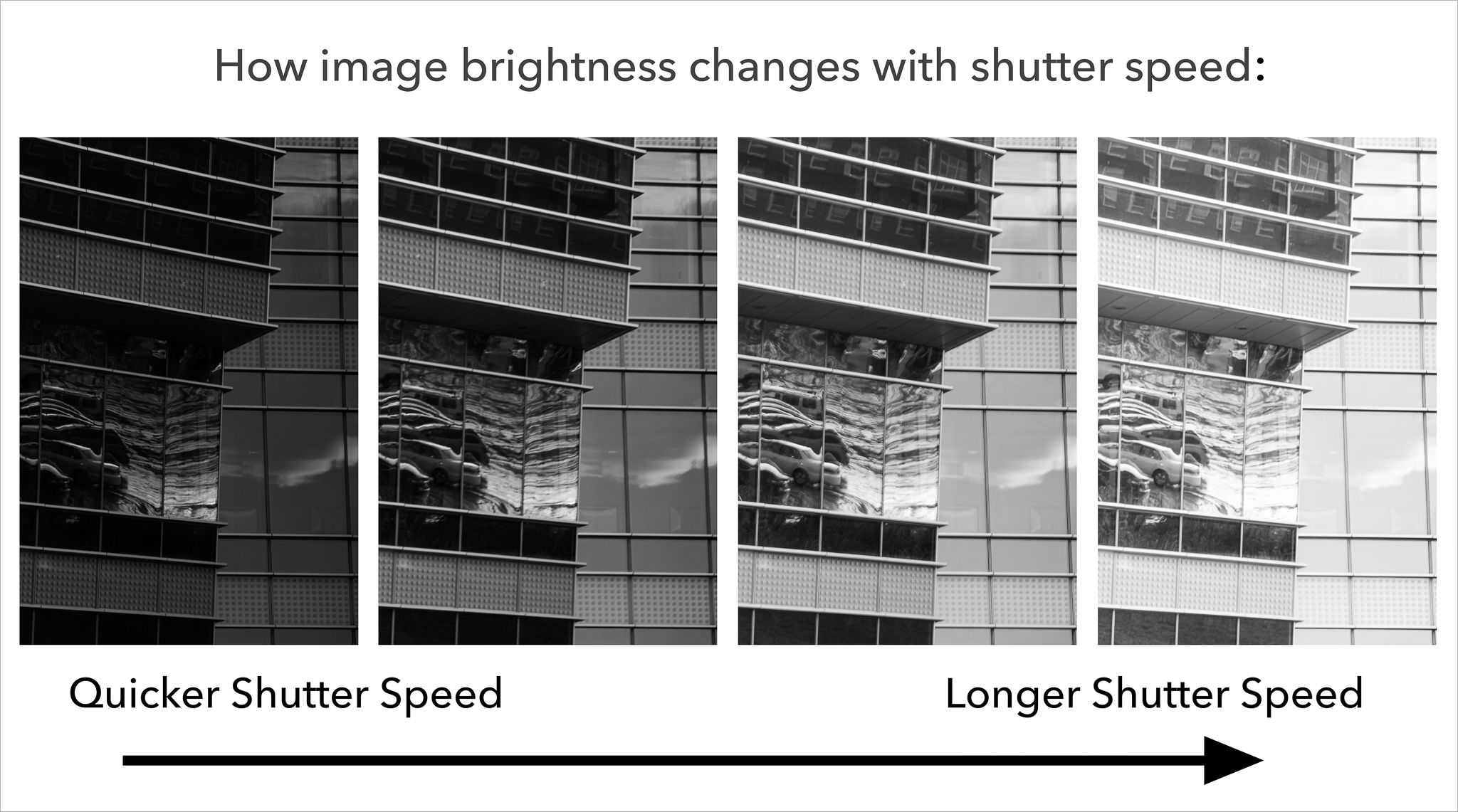
Next, you will want to learn the settings of a camera. The first is shutter speed, which controls how long (or short) your camera’s lens is open. Shutter speed is measured in seconds, and can go down to 1/1000 of a second on most cameras. The smaller your shutter speed is, the less light will enter your camera (and the faster it will capture a movement); use a small shutter speed when taking pictures of movement, or in bright spaces. Slower shutter speeds such as 5 seconds are often used for light painting, or for night photography. You can adjust your shutter speed by using the shutter speed dial, this is different for each camera, so make sure to search it up. I know this is probably confusing, so I’ll insert some helpful articles/videos at the end!


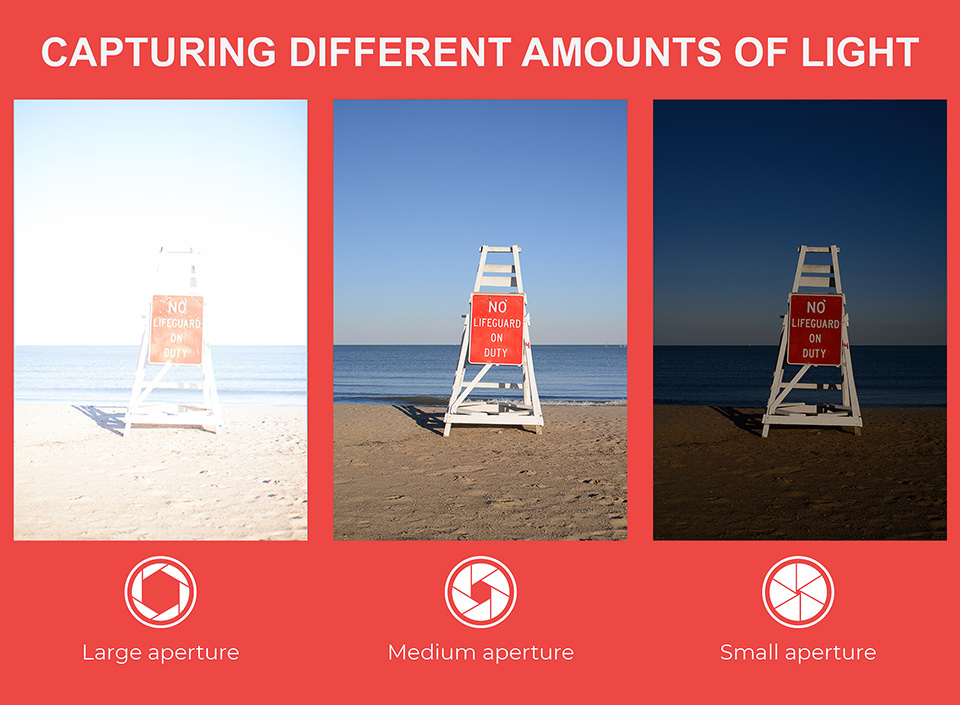
Another important setting is the aperture, also known as the pupil in your camera lens. According to Photography Life, “Aperture can be defined as the opening in a lens through which light passes to enter the camera” (Photography Life). Controlling your aperture makes the opening in the lens bigger or smaller. It is expressed in f-stops. A small aperture makes the hole in the lens smaller, meaning less light will come through. However, a large aperture will make more light come in. In addition to lighting, this setting affects your depth of field (what is shown in your photo–focused or unfocused). Aperture is confusing to learn about, so I’ll link a video in this article.

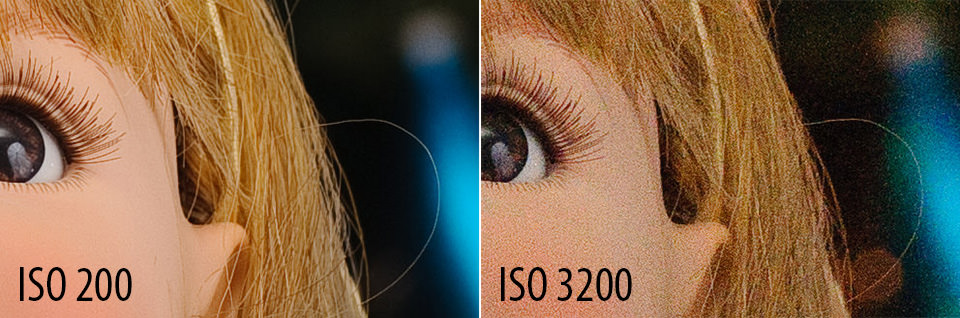
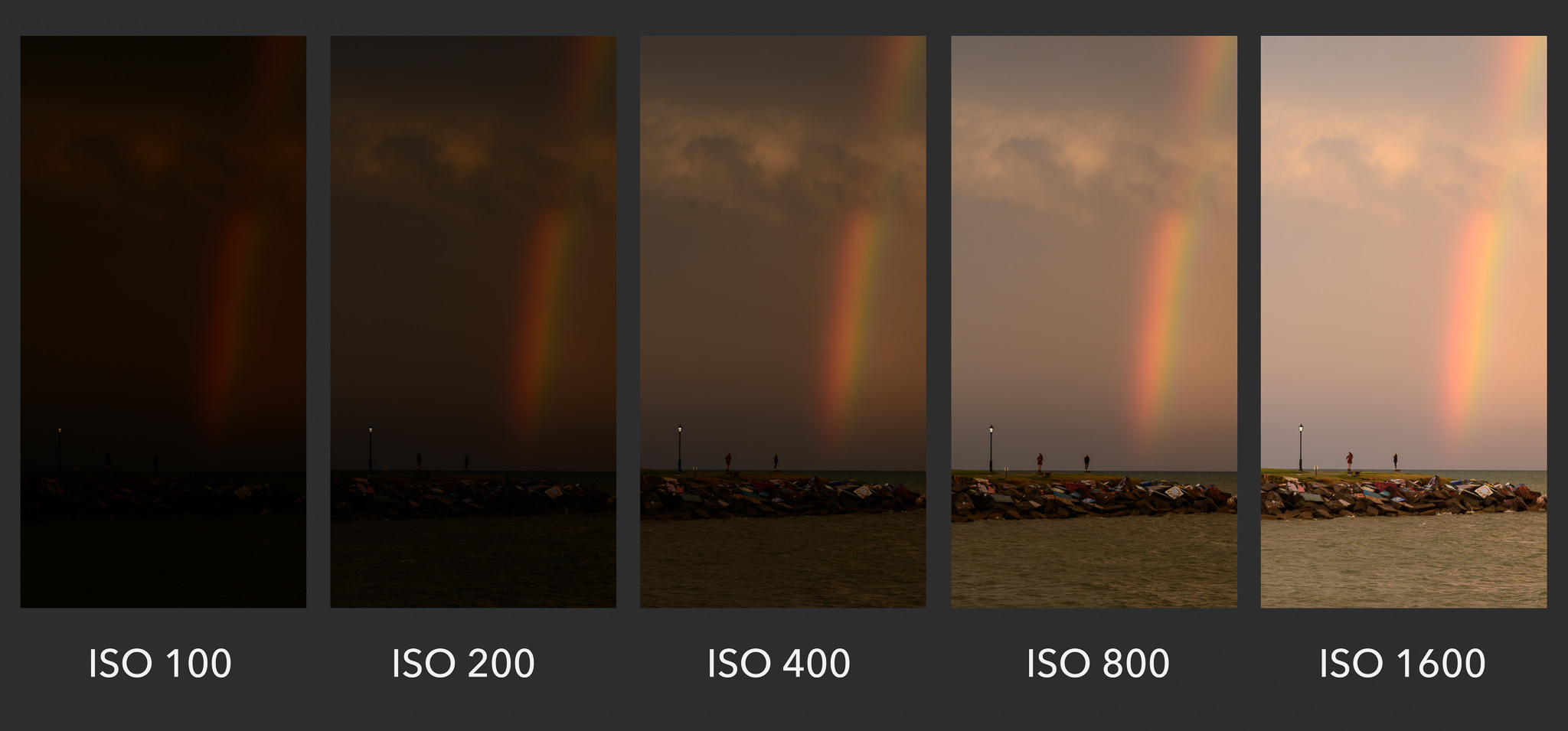
Finally, you’ll need to know the setting ISO. To simplify this term, ISO is a setting that will brighten or darken your photo. An ISO of 100 will darken your photo, but an ISO of 500 will brighten it. However, when using a high ISO, it creates noise–or graininess. You can adjust your ISO by pressing the ISO button on the right-hand side of your camera.


Hopefully, this article was helpful! Below are some helpful articles and videos that explain the concepts better than me.
Camera Modes: article
Video of an Overall Summary
Starting Photography
As a high schooler, one of my passions is photography. In my freshman year of high school, I took a photography class. At first, I thought it was interesting but I didn’t think I would get into it. However, I discovered that photography was an enjoyable way for me to express myself and my creativity.
The first and most obvious step to photography is to buy a camera. While using your phone’s camera is great and totally acceptable, investing in a DSLR is a great option as well. Personally, I use a Canon Camera. I’ve found that this brand is reputable and easy to use. My camera body is a Rebel T6. This is a great starter camera to use. If you aren’t into Canon, Nikon, and Sony are other camera brands that I’ve heard great things about.
Secondly, finding a lens is extremely important. Though you may want to jump into portraits or nature photography, I’d suggest using a kit lens at first. These lenses are affordable and have fewer features than a telephoto or macro lens, but allow first-time photographers to learn the bearings of a camera.
Other equipment that you’ll need are SD Cards (to store your photos) and Battery Charges/Ports. Now that you have the required equipment, start taking photos on your camera. If you’re using a DSLR, put the camera in Auto Mode first. When using the Auto-Mode, the camera makes all the decisions for your settings; all you have to do is press the Shutter Button to take a photo!
I hope this small article helps you in your photography journey; stay tuned for more articles about general rules and tips!
Books about photography are available to check out from the Mission Viejo Library. It is also available to download for free from Libby.