
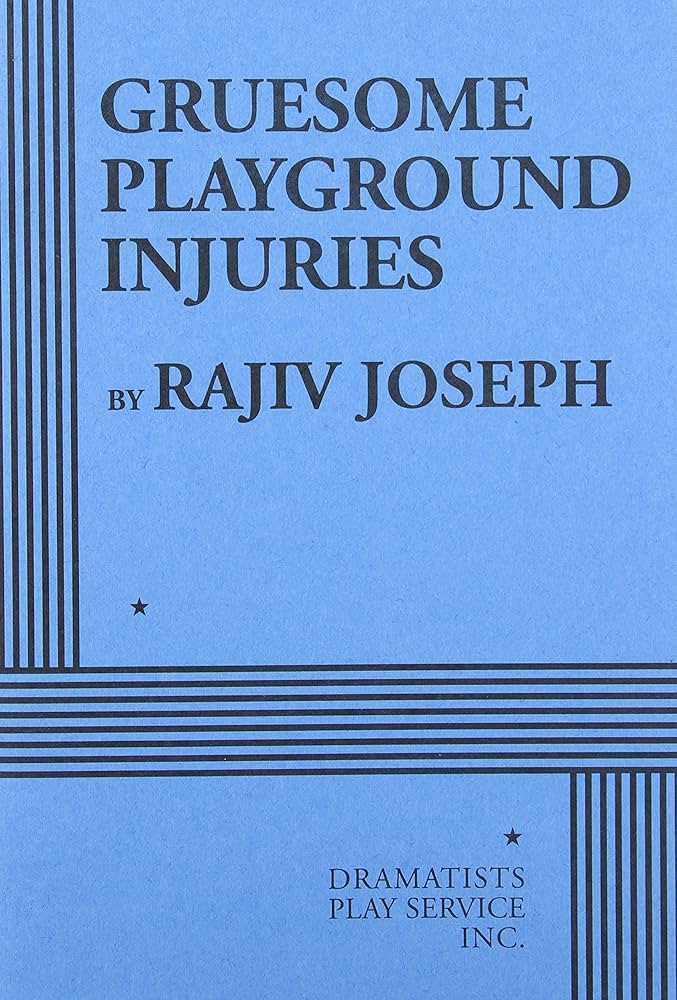
I know this is a loaded statement, but I truly believe it. I recently had to read and perform one of his plays, Gruesome Playground Injuries, for an acting class. This play was my introduction to Joseph’s works and it is astonishing to see how his brain works. His plays are normally short, only a few scenes, not typically exceeding one hundred pages. He is able to develop characters so emotionally complex within that short span it will leave readers so invested and attached that they linger in their brains. At least, that is what happened to me.
My most recent read was a play of his called Guards at the Taj and it was nothing short of mind-altering. The play has four scenes, consistent with Joseph’s concise style, however, it is nowhere near lacking in volume. The play is set in Agra, India, in 1648. Everything, excluding the language, is accurate to the time period.
The first scene opens with the only two characters in the play, Babur and Humayun, two imperial guards at the Taj Mahal. Humayan is very rigid and regimented in his ways. His father is the head of the imperial guards and I believe him to have a mindset of success in quantifiable measures. Babur severely opposes this; he is philosophical in his beliefs and mindsets and sets emotion and abstraction to be prominent ways of his ways of thinking. The two talk a lot about beauty: what it is, who appreciates it more, where it can be found, and what can and cannot be beautiful. Babur accuses his friend of not knowing beauty as he does, but when the two of them see the Taj Mahal for the very first time, the men begin to weep, they drop their swords and hold hands.
The second scene opens with the men standing in two feet of blood. Babur clutching a sword, and Humayan blinded. The gore depicted on the stage is usually what is only alluded to by playwrights. Joseph takes this standard, crumples it up, and throws it out of the window to be found by a lion who rips it to shreds. The stage Lining the stage are barrels of 40,000 hands (the hands of the 20,000 men who created the Taj Mahal), all of which had been severed by Babur and Humayun. I believe that the gore was necessary to the point Joseph is making: what is real will happen and be seen. The reality of the play was that nothing that Humayan claimed he had talked about that would get the men out of their current standing situation (as low-class imperial guards) or even the conversation he said he had with his father (claiming to beg at his feet not to kill Babur when Humayan sold him out). None of it was pictured. What was shown was Humayan severing and cauterizing the hands (and his relationship) with his best friend, Babur, and I think Joseph was determined to make all of the gore and messages in his scenes undeniable.
I believe that this is a piece that everyone needs to read. I really hope to see it performed one day. It stands relevant to so many different situations and in so many aspects of relationships, social hierarchy, and the search for beauty, and the feeling of reading it for the first time cannot be encapsulated in words. And all of it in 45 pages. Rajiv Joseph is a genius.
 Mission Viejo Library Teen Voice