
The House on Mango Street

The House on Mango Street by Sandra Cisneros is a classic book that I believe should be read by everyone, of any age. This novel is composed of short vignettes following the life of a young girl named Esperanza living in a small house in Chicago. The descriptive storytelling style is broken up into 44 short stories, each one no more than two pages in length, totaling a little over 100 pages. It is a fairly quick and easy read, and it can be referred back to at any point without having to reread the entire thing. I first heard of this book in middle school, when I had to read about five of the vignettes. Those have stuck with me, and have continued to be some of my favorites, along with the new favorites I discovered through reading the whole book.

I believe this book should be read by anyone of any age, mainly because of the variety of characters that are introduced. Readers get to learn about Esperanza’s neighbors, who are all quirky in their own ways. We learn about Esperanza’s siblings, her friends, the younger kids on the street, the people who move in and out, the teenagers, the adults, and the elderly. Her neighbors are a diverse cast of characters who each have their own struggles in life, but they form a community on Mango Street. One of my favorite things about the novel is how it is told from the eyes of a young girl. I find that I could relate to her at any age, from reading it when I was in middle school, about the age Esperanza is in the book, but also reading it as I get older when I can see her growth and relate to other characters.

Another one of my favorite things about it is the dedication. The novel is dedicated both in English and Spanish to “The Women” or “Las Mujeres.” The House on Mango Street focuses on the female experience, highlighting female characters that Esperanza interacts with but also observes from afar. The stories about Marin and Sally highlight the struggles of being a girl and the story titled “Rafaela Who Drinks Coconut and Papaya Juice on Tuesdays” depicts Esperanza’s fear of becoming, as she describes it, a woman who sits by the window waiting for her husband. Esperanza wants to be independent, she wants a house of her own one day, that she doesn’t have to share with her entire family. I also loved how there were stories about Esperanza’s parents and her family as a whole. Rather than seeing her observe others, readers get to see someone who she really understands.

Ultimately, I loved this book and I can see myself referring back to it as I get older. If this was a required reading for you, I highly recommend taking another look at it, because it truly is an essential book for young readers. My favorite vignettes include, “My Name,” “Marin,” “Hips,” and “Beautiful and Cruel.” If you don’t read the whole book, I recommend reading those at least.

The House on Mango Street by Sandra Cisneros is available to check out from the Mission Viejo Library. It is also available to download for free from Libby.
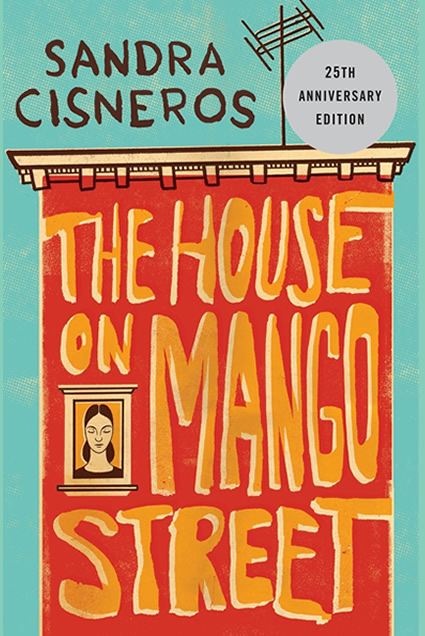
The House on Mango Street by Sandra Cisneros

Composed of multiple vignettes, The House on Mango Street features a young Mexican American girl named Esperanza who struggles with poverty, maintaining her culture, and fighting against the traditional roles of women in this society. As she grows up, Esperanza begins to truly come to terms with her identity, creating a sense of belonging, as she realizes that Mango Street will always be a part of her and her life.

The House on Mango Street is a beautiful story that travels through different moments in Esperanza’s life, using poetic and inspirational phrases to illustrate Esperanza’s struggles, feelings, and dreams of a future where she is truly free. With vivid imagery, descriptions, and symbols, Sandra Cisneros truly encapsulates the struggles of women of color and those struck with poverty, giving a voice to the stories of people who are often overlooked.

As Esperanza struggles to maintain her freedom against a harsh, traditional society, Sandra Cisneros also highlights the consequences and cruel reality that many women face in this society, becoming trapped in a constant cycle of abuse from their fathers or husbands. While also showcasing how writing has helped Esperanza tell stories that have never been heard before as well as escape from the circumstances forced upon her, Sandra Cisneros presents the lives of various women in this society and the confinements they find themselves in.

Overall, I would definitely recommend reading The House on Mango Street if you’re interested in learning more about Esperanza’s life and struggles or analyzing Sandra Cisneros’s poetic and symbolic writing style within the book.

The House on Mango Street by Sandra Cisneros is available to check out from the Mission Viejo Library. It is also available to download for free from Libby.

Book Review: House on Mango Street by Sandra Cisneros

Recently, I read a book called House on Mango Street, which is the story of a girl named Esperanza, which translates to “Hope” in English, as she navigates her process of coming of age. This book was definitely an interesting read, as it is formatted and told in a style that not many books utilize.

To understand the novel and its purpose, it is recommended that one reads the author’s foreword, as it explains the author’s story, how her background led to this book’s creation, and how Esperanza is loosely based upon Cisneros herself, as both of them like writing. This novel starts off with the author introducing the environment that Esperanza grows up around, her house, and the school she goes to. The author deliberately makes Esperanza an unreliable narrator at the start, realistically depicting a younger child’s naive view of the world. Cisneros shows this through the fact that she didn’t know a car she was riding was stolen by one of her cousins earlier in the book, and is expressed later in the book when she doesn’t understand that some boys were joking with her friend, causing her to react unexpectedly.

The novel is written into short little segments, which the author calls “vignettes”, instead of being split into specific chapters like a traditional novel. This gives the novel a more personal feel and really frames the story, as well as giving the readers more details of the impoverished neighborhood in which Esperanza eventually comes of age. The author also blends her cultural background into her writing with this story, and it is reflected in the character of Esperanza, whose parents are quite similar to Cisnero’s parents in a way.

Overall, this book is a great read for those who are interested in reading novels in which the protagonist grows and matures as a person, and the author definitely makes this process interesting through plenty of storytelling and nuanced descriptions of this book’s setting, giving the reader a more personal look at the lives of the characters within this book.

The House on Mango Street by Sandra Cisneros is available to check out from the Mission Viejo Library. It is also available to download for free from Libby.
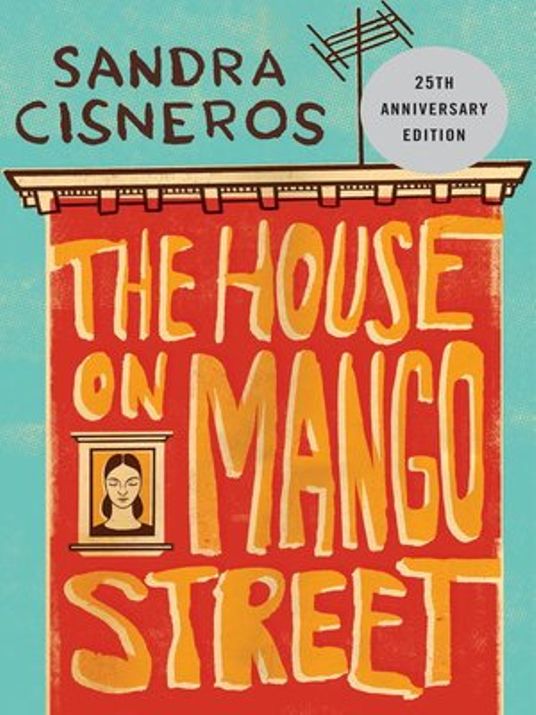
The House on Mango Street by Sandra Cisneros

As usual, school has required readings. The third book required for me this year was The House on Mango Street by Sandra Cisneros. I’m sure many other people know of it. Majority of my friends said they loved the book and remember reading it. 

This coming-of-age novel is split into vignettes–short chapters or episodes–told in the perspective of the main character, Esperanza. She tells stories about things that happen in her life, but in no particular order. It starts with her and her family moving into their new house which is on Mango Street. As she grows up in the new neighborhood, she tells plenty of short stories of different people, what has happened to her, and what has happened to them. 

This is a very short book but it’s still a great read. Most of the book is told in an almost childlike way using simple words and many variations. But even with its simplicity, it holds some very detailed descriptions and symbols. I know that a lot of people would rather not pick out the symbolism and figurative language when they read a book, especially if the book is just for enjoyment. Trust me, if it weren’t for school, then I probably wouldn’t have either. But if you’re willing to look deep into the story and really pick apart a few phrases, then it can make your reading of this book, and others, much more interesting.

This book has so many symbols that really help convey the message more clearly than it already is. It adds so much more to the theme of the book and while you don’t have to pick out symbolism and such, it can enhance this book a lot more.

While it may seem like a fun and happy story, there is a surprisingly darker undertone if you take the time to really look at it. If it didn’t have this other side to it, I don’t think I would have really liked this book. If you’re considering reading this book, just keep in mind that there are some dark messages and scenes that can definitely make you a little uncomfortable. 

Overall, The House on Mango Street was a pretty good read for me. Taking a deeper dive into the symbolism and finer details of the book was fun for me. I think I’d recommend this to anyone looking for a short, good read. But I’d mostly recommend this to people who are a little older, really anyone out of middle school. It’s a great book and a good choice if you’re looking for something to read and really delve deeper into.

-Nicole R.

The House on Mango Street by Sandra Cisneros is available to check out from the Mission Viejo Library. It is also available to download for free from Libby.