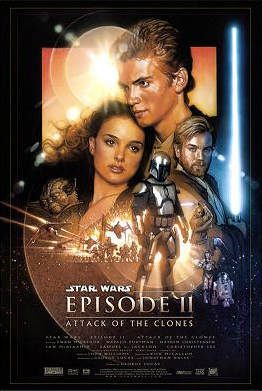
Star Wars: Episode II – Attack of the Clones Review

Theatrical release poster of Star Wars Episode II: Attack of the Clones by Drew Struzan.

A long time ago in a galaxy far, far away.… there was Star Wars! I will continue my Star Wars series reviews with the second prequel, Star Wars: Episode II – Attack of the Clones! For background knowledge, Star Wars is a film saga of family/sci-fi movies created by the renowned George Lucas. I will be exploring the different aspects of Episode II below.

Plot & Story:

Unrest! Ten years after the Invasion of Naboo, the Galactic Republic is in turmoil. The Separatist Crisis has begun and thousands of star systems have declared their intentions to leave the Republic. At the root of the movement lies former Jedi Knight Count Dooku, planning on overthrowing the Republic.

Politics isn’t the only conflict in the galaxy. Padmé Amidala, the new Senator from Naboo, arrives on Coruscant to vote on the creation of a Grand Army of the Republic. Her starship is attacked and her decoy is killed, escaping with her life. Amidala informs the Jedi that she believes Count Dooku is behind the attack due to her strong stance against the separatists. Jedi Mace Windu and Ki-Adi-Mundi insist that no Jedi, current or former, could take an innocent life, adding he’s a “political idealist, not a murderer.”

We also get to see Anakin Skywalker, grown up, dealing with inner conflict and a tense relationship with his paternalistic master, Obi-Wan Kenobi. They both reunite with Padmé in her penthouse, assigned to guard her from a potential new assassination attempt. The mood is tense as Anakin flirts with Padmé and defies the Jedi Code in front of Obi-Wan.

The second assassination attempt fails and Obi-Wan and Anakin chase the assailant, but before they can get the name of her employer, a bounty hunter with a jetpack kills her with a poison dart. The chase scene here is truly entertaining. The Jedi Council hatches a plan to protect Padmé and to uncover her assailant. Anakin will covertly travel with Padmé to Naboo and defend her there. Obi-Wan will investigate the bounty hunter who hired the assassin.

On Naboo, Anakin and Padmé bond, but it is in vain. Padmé emphasizes that they cannot have a relationship as it is forbidden under the Jedi Code. These scenes definitely suffer from some cheesy dialogue, but ultimately they are enjoyable if you can focus on the story first.

Obi-Wan’s story is even more interesting. He takes the role of a neo-Noir style detective, finding a hidden planet named Kamino where the poison dart was produced. The planet is home to the Kaminoans, a species of cloners who are friendly if you have deep pockets. He discovers that an army has been created at the request of a dead Jedi master at the same time the Republic is in dire need of one. This is highly suspicious. He reports this to the Jedi Council. He speaks to Jango Fett, the bounty hunter, fights with him, and chases him to the planet Geonosis.

On Naboo, Anakin is plagued by dreams of his mother’s death. He informs Padmé he must go save her, despite his duty to protect her. Padmé seems to admire this and consents to go with him to Tatooine, on a mission to save Shmi Skywalker. Anakin tracks her down to a camp of Tusken Raiders who are holding her hostage. His mother dies in his arms, sending him into a fit of rage as he slaughters all the men, women, and children of the camp. Anakin brings his mother back to be buried, breaking down in tears to Padmé, confessing that he’s losing control and he’s not the Jedi he’s meant to be. Padmé feels pity for him and comforts him.

Back on Geonosis, Obi-Wan tracks and spies Count Dooku, Jango Fett, Nute Gunray, and other separatist leaders. He overhears a meeting where they plot to launch a surprise attack on the Republic with newly built battle droids. Their goal is to overwhelm the Jedi and quickly force a surrender.

Obi-Wan returns to his Jedi starfighter, informing the Jedi Council and the Supreme Chancellor of a massive army being built to invade the Republic. The broadcast is interrupted as Obi-Wan is captured by separatist battle droids. The Supreme Chancellor, the Senate, and the Jedi resolve to grant the Chancellor emergency powers, creating a Grand Army of the Republic, led by the Jedi that will invade Geonosis and free Obi-Wan and destroy the droid factory.

Hostage, Obi-Wan is approached by Count Dooku who claims the Republic is controlled by the Sith and that together they can root out this menace. While partially true, this is deception as Dooku is a Sith himself and only desires to turn Obi-Wan to his side. Anakin and Padmé are captured trying to rescue Obi-Wan, but Republic forces touch down and free them. An air, land, and space campaign ensues to defeat the separatists. However, Anakin loses an arm and Count Dooku escapes along with the rest of the separatist leadership. The battle can be considered a tactical victory, but a strategic failure for the Galactic Republic.

The film ends with the reveal that Count Dooku and Sidious (Palpatine) have conspired to create the Clone Army and the war. Dooku even operated under the pseudonym “Tyrannus” when dealing with the Kaminoans. The final shots of the film are a triumphant Palpatine standing over the Clone Army deploying across the stars and Padmé marrying Anakin.

With the Clone Wars already begun, the galaxy is forever transformed.

Music Score:

The music in Episode II was written by the iconic composer John Williams, famously known for creating iconic orchestral scores for classics like Star Wars, Jaws, Indiana Jones, E.T., and Harry Potter. If music could be gold, then John Williams has the Midas touch. My favorite piece from Star Wars: Episode II – Attack of the Clones is “Across the Stars.” It plays during key romantic moments between Anakin Skywalker and Padmé Amidala, like when they share their first kiss and when she admits her love for Anakin. The song starts off like a warm hum with an oboe solo, followed by accompanied wind instruments and a harp. It is real. It is emotional. It is beautiful. The most special part of the song in my opinion is when the string orchestra joins in.

Just like Anakin and Padmé’s forbidden love, this song is passionate, strong, and tragic. Playing during pivotal moments and the climax, this love story is perfectly portrayed by “Across the Stars.” Every time I listen to it, I am just taken away by its enchanting quality. The song is truly a work of art.

Overall, I thoroughly enjoyed watching Star Wars: Episode II – Attack of the Clones. Between Star Wars: Episode I – The Phantom Menace and Attack of the Clones, I would say I am more fond of the latter. The overwhelming themes of romance and forbidden love are more alluring in my opinion, but either way both are amazing films. There is more to come, as I’ll be reviewing the other Star Wars episodes every month, so stay posted! I hope you enjoyed this blog and watch the movie if you haven’t before!

– Sophia B.
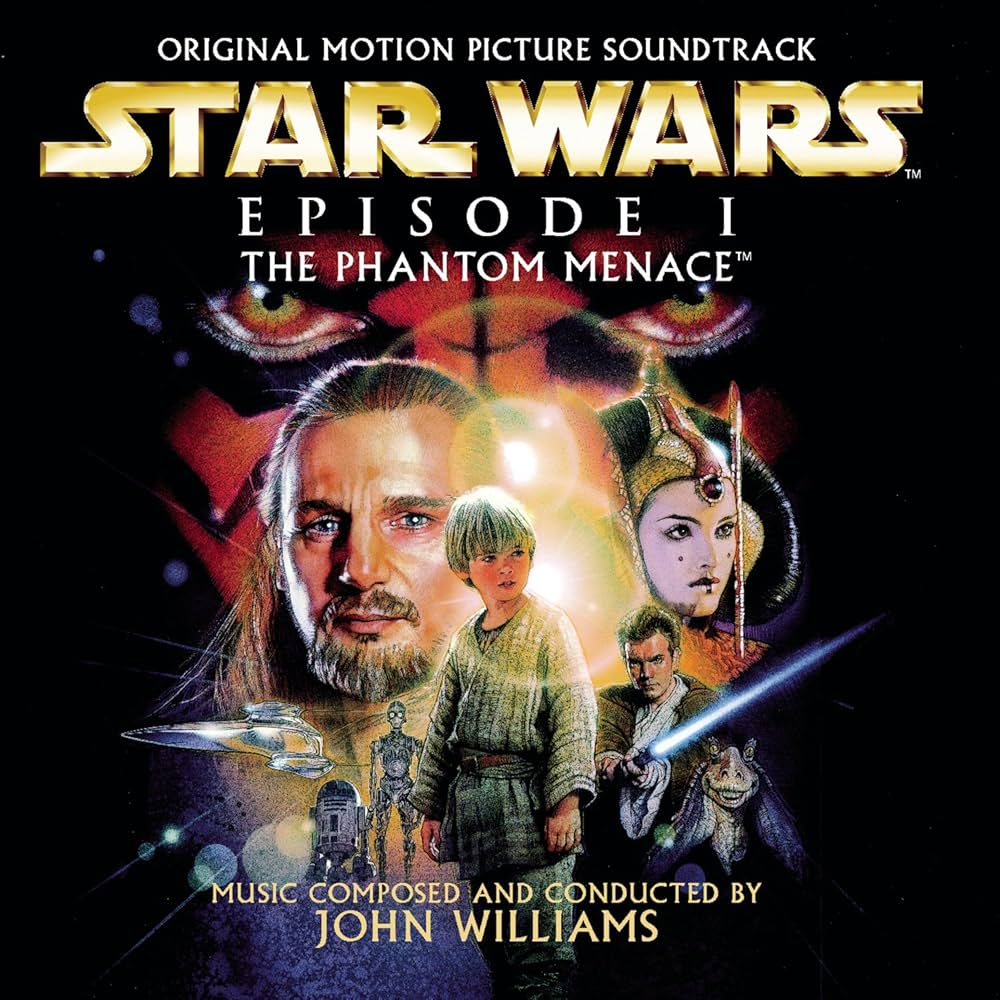
Star Wars: Episode I – The Phantom Menace Review

As an avid movie enthusiast and Star Wars lover, I thought it was best to review the beloved series, starting off with the first prequel, Star Wars: Episode I – The Phantom Menace! For background knowledge, Star Wars is a film saga of family/sci-fi movies created and directed by the renowned George Lucas. I will be exploring the different aspects of Episode I below.

Plot & Story:

Crisis! The Trade Federation, a powerful economic organization, has blockaded the peaceful planet of Naboo to take control. Qui-Gon Jinn and Obi-Wan Kenobi, two space warriors known as Jedi, go to Naboo with the goal of negotiating the end of the blockade and protecting Padmé Amidala, the planet’s queen. Once they get the queen to safety and escape, they find a young enslaved boy named Anakin Skywalker who shows potential as a Jedi. Once they leave the planet, Qui-Gon brings Anakin along for Jedi training because he thinks he is meant to restore balance to the Force. The Force is a supernatural ability that allows users to have powers of telekinesis (the ability to move objects with your mind), sense the future and feelings among other abilities. As the battle against the Trade Federation escalates, the Jedi fight against an enemy warrior named Darth Maul. Subsequently, they arrive on Coruscant, the capital of the Galactic Republic. Queen Amidala appeals to the Senate to end the invasion of her planet, but Senator Palpatine informs her that it is unlikely the Senate will act and the Chancellor is powerless to help. Senator Palpatine advises her to push for a vote of no confidence in the Chancellor, meaning the legislative branch votes to remove and replace the executive. Ultimately, by the end of the film, this leads to the election of Chancellor Palpatine, due to a strong pity vote generated by the invasion of his planet. Next, the queen returns to Naboo to fight back with additional reinforcements. The movie ends with Darth Maul killing Qui-Gon in lightsaber combat, Obi-Wan Kenobi defeating Darth Maul, and Anakin starting his path to become a Jedi.

Music Score:

The music in Episode I was written by the iconic composer John Williams, the man responsible for the legendary Star Wars music in the original three movies. Taking inspiration from the orchestral suite The Planets by Gustav Holst, specifically “Mars, the Bringer of War”, Williams crafted an unforgettable soundtrack. My favorite piece from Star Wars Episode I: The Phantom Menace is “Duel of the Fates.” It plays during the battle between Qui-Gon Jinn, Obi-Wan Kenobi, and Darth Maul. The song starts quietly and has the effect of making one’s heart race due to its fast-paced nature and dramatic chanting from the choir. The rhythm makes the battle feel emotional and dangerous, marking the turning point in the movie, as it determines whether the two Jedi will defeat Darth Maul. I also have a personal connection to the song because my older brother performed “Duel of the Fates” at Segerstrom Center for the Arts with his district’s honor orchestra in the front row, which explains even more my deep love for this work of art.

Ultimately, I enjoyed watching Star Wars: Episode I – The Phantom Menace and highly recommend watching the trilogy in the order of episodes I-VI. There is more to come, as I’ll be reviewing the other Star Wars episodes every month, so stay posted! I hope you enjoyed this blog and watch the movie if you haven’t before!

– Sophia B.
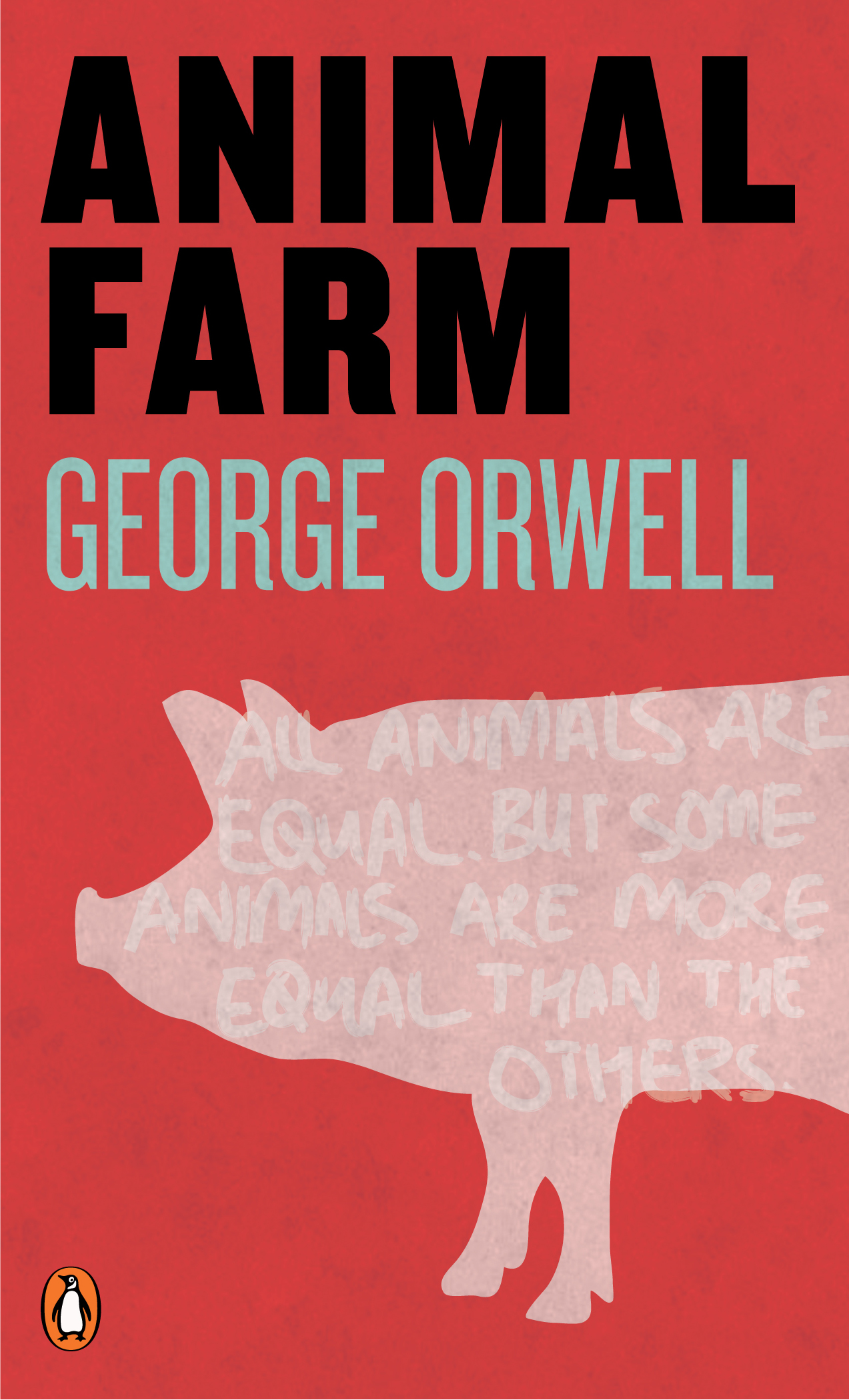
Book Review: Animal Farm

Cover of 'Animal Farm' by George Orwell featuring a silhouette of a pig and the text, 'All animals are equal, but some animals are more equal than others', against a red background.

Animal Farm by George Orwell was one of my first classics, and is one of my favorite pieces of literature. It is a dystopian novella that, despite having complex ideas and themes, is quite easy to understand, making it a great read for beginners. However, it should be noted that this story contains mature themes, such as violence.

Taking place in a mid-20th century English farm named Manor Farm, the book follows farm animals that overthrow their abusive human farmer, Mr. Jones; the animals hope to establish an equal society within the farm. However, the pigs, led by Napolean, take control and tyrannically oppress the other animals.

The plot is interesting, keeping readers engaged the entire time. Orwell’s writing style and language is a bit challenging, but still understandable. The slow build up to the pigs’ corruption is thrilling yet terrifying; the reader slowly begins to understand that the pigs are no better than the humans. Despite being published in 1975, Animal Farm‘s themes are still significant to society today. It criticizes totalitarianism, revealing how power corrupts.

“All animals are equal, but some animals are more equal than others.” This quote by George Orwell is ironic, satirizing tyrannic leaders. It means that ideals of equality can be destroyed by unchecked power. The corrupt pigs of the farm demonstrate this danger.

Perhaps I am a bit biased because it is one of my favorite books, but I cannot provide any criticism when it comes to The Animal Farm. To me, it is an amazing book that challenges readers to contemplate society and its flaws. This novella is powerful, despite its seemingly simple story.

Why Are We So Obsessed With the Apocalypse?

So much media features the end times. From movies like A Quiet Place and Mad Max to novels like Silo and The Girl With All the Gifts, people just can’t seem to get enough of the genre. Why are we so obsessed with the apocalypse? According to Hugh Howey, author of the post-apocalyptic novel series Silo, humans tell stories as much for warning as for entertainment. Stories about disaster are expressions of our internal fears, and seeing characters prosper in face of those disasters gives us hope.

For this reason, wilderness and survival stories have always been popular. But why have we moved past the wilderness and towards the world-ending?

As we’ve explored most of the Earth, we’ve lost a lot of the wonder and fear we used to have for certain environments. Howey believes that “we need to imagine a future where we might be exploring other worlds, or a future where our world returns to the wilderness that we fear” in order to make our stories interesting.

If you’re interested in the post-apocalyptic genre, here are my top 3 favorites:

  1. Parable of the Sower by Octavia E. Butler
  2. The Girl With All the Gifts by M.R. Carey
  3. Silo series by Hugh Howey

These books are absolutely amazing, and I highly recommend them!

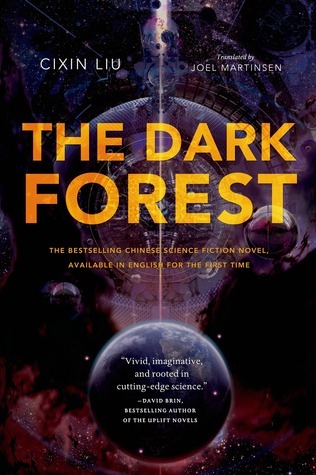
Book Review – The Dark Forest by Liu Cixin

A few months ago, I read The Three-Body Problem by Liu Cixin, and I found it a particularly impressive and riveting work of science fiction. So, I decided to read the second book in the series, which definitely met my expectations on a Liu Cixin work.

This book is the sequel to the Three Body Problem, so to understand the context and setting of this novel, one must have read the previous book. This book is situated under a pretext like the Three Body Problem, but this time focuses on humanity’s survival in the face of the Trisolarian invasion. This book mainly focuses on the efforts of the UN to find a way for humanity to survive, most notably through the Wallface project, granting several individuals great power. This was to counter the “Sophons” the Trisolarians used, a particle that disrupts advancements in physics, while at the same time communicating with Trisolaris via quantum entanglement, which is a theory in physics detailing a phenomenon where two subatomic particles can communicate with each other despite being separated by billions of lightyears of space.

This book was significantly interesting to me, as it is one of the more notable works in the hard science fiction genre of novels. “hard science fiction” defines any science fiction novel that puts an emphasis on scientific logic and realism. The Dark Forest, along with the rest of the Three-Body series, includes both of these things. More interestingly, the Dark Forest is based on a real scientific hypothesis, the “dark forest hypothesis”, which states that the universe contains intelligent alien life, but no advanced civilization would reveal themselves out of the fear of being attacked.

Overall, this was a great sequel to The Three-Body Problem, and I had a great time reading it. I would recommend this book and the corresponding series to anyone who is interested in physics, or anybody looking to read a science-fiction novel with a realistic depiction of scientific concepts.

The Dark Forest by Cixin Liu is available to download for free from Libby.

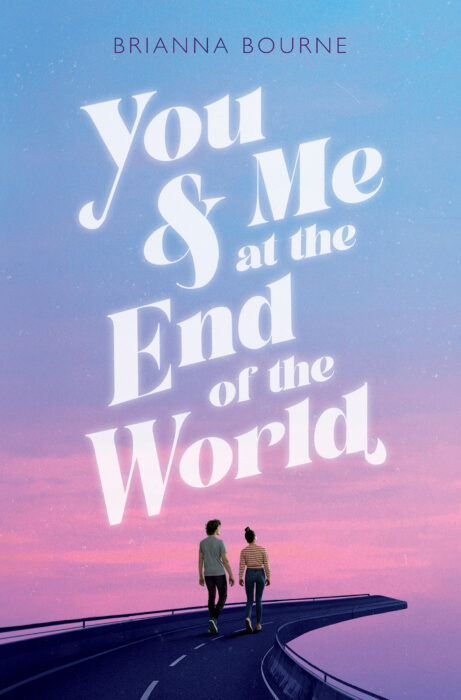
You & Me at the End of the World by Brianna Bourne

Imagine being the only person in the world, with time suspended for some unknown reason, until you finally stumble upon someone. A very affable, music-aficionado someone, in Hannah’s case.

Hannah Ashton and Leo Sterling are the only people in the world. They are completely isolated in an alternate reality without people, problems, or expectations. They take the opportunity to discover their true selves and each other.

I really enjoyed seeing perfect, rigorous, ballet-dedicated Hannah Ashton realize that she also loves feeling wind blowing through her hair and Leo Sterling’s guitar playing.

In real life, Hannah is a driven ballet dancer with high aspirations and Leo is a laid-back rock guitarist. They knew each other from school, but they would never talk to one another. In this dimension, they are given the chance to truly get to know each other.

The entire mystery of the reason for this apocalyptic event kept me in suspense throughout the novel. The instances where Leo and Hannah’s true connection shone, I was expecting a blackout, or a glitch in the matrix of some sort to eventually drive them apart, but it never really came.

The setting of the novel felt almost dream-like. I wondered if Hannah was only imagining Leo or if his personality was a figment of her imagination. Without the confinements of their regular lives, they are free to be whomever they choose.

Eventually, towards the end of the novel, their blissful world takes a turn of events. In the center of the chaos, they find each other.

Book Review: Cinder

You’ve probably heard of the Cinderella fairy tale before.

But you probably haven’t heard of the story becoming a sci-fi dystopian romance series, have you?

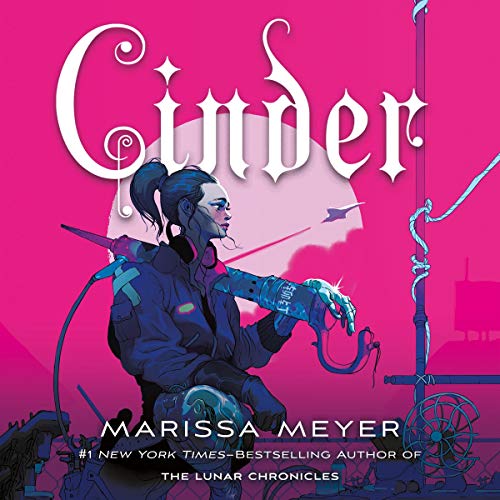
Marissa Meyer’s series The Lunar Chronicles is amazing. Today, we’ll just be reviewing the first book, called Cinder.

Book Blurb

In this novel, Linh Cinder is a talented mechanic and cyborg, living many years after the Fourth World War in New Beijing.

There are laws that demolish cyborg rights to nothing, and her stepmother treats her like trash, calling her junk. Her only friend is an android named Iko, who Cinder built out of spare parts.

A plague by the name of letumosis is raging through the world, killing countless people.

Cinder’s life is routine and repetitive, until Prince Kaito shows up at her mechanic stand with a repair request for a damaged android. Romance, death, adventure, and more await…

This book does contain dark themes, and the series as a whole touches on gore, death, etc. Just a friendly disclaimer!

This book absolutely hooked me right into the rest of the series: which I love to death. But let’s hop into the actual review to see if this book is right for you!

Let’s start with the pros.

Marissa Meyer does an AMAZING job of executing the plot twists, and I just love the dialogue between characters. It flows so naturally.

This story pulls you in with an engaging hook, setting up the absolute masterpieces that are the rest of the series.

The world is so immersive – the book doesn’t throw a ton of exposition at you for you to understand certain parts of the culture, world, etc.

The morality of mind control and influencing others emotions, what makes someone human, and more is tackled in this book and the rest of the series. It’s beautiful to read.

I could not recommend this book more. The series is close to my heart, and Cinder is a stellar hook to pull you in.

You might be wondering – where are the cons?

Books are subjective. Since I love this novel a TON, it was hard for me to find things I didn’t like.

It is pretty lengthy, standing at 387 pages. Cinder is also more tame compared to the rest of the series – and if you read this you’ll want to read the rest, so be wary!

If you’re looking for a dark, yet thrilling sci-fi adventure with a creative world, sparks of romance, and a wealth of references to fairy tales? This one’s for you.

(not sure if there’s anybody specifically looking for that last part, but regardless :p )

Cinder by Marissa Meyer is available to check out from the Mission Viejo Library. It is also available to download for free from Libby.

Fahrenheit 451: Book Review

I read this book in ninth grade English this year and it was one of my favorite books that we read this year!

I have always been a fan of sci-fi books and reading it actually brought me more insight on the dangers of the futuristic society that we might face sooner or later.

In Fahrenheit 451, the futuristic society is controlled by the government. People are emotionless, have no depth, and just can’t care less about anything. Most people consider the word, “family”, as having the latest gadgets such as T.V parlors and less about human interaction and love between husband and spouse.

The main character in the book, Guy Montag, has a breakthrough after meeting his new neighbor, Clarisse. Montag’s job is a fireman, which in this futuristic world they burn books and houses instead of protecting houses from fires. Kind of ironic isn’t it? Clarisse sees the world much more differently than Montag and introduces him to the tiny aspects of nature that makes it worthwhile to live for such as the dewdrops on grass and just looking up at the moon sometimes.

He compares what Clarisse says to his life right now: Mildred, his wife, doesn’t care for him at all and considers the T.V. parlor as her makeshift family. She also overdoses on sleeping pills, which is symbolic since she knows she unhappy but at the same time she doesn’t know why.

He also had a big turning point as well when he watches a woman burn herself alive in the fire with her books rather than live in a world without them. Montag even questions to himself after and says, “there must be something in books, something we can’t imagine, to make a woman stay in a burning house; there must be something there. You don’t stay for nothing.”

There are so many foils in this book, its amazing how Bradbury added so many in a short novel that’s a little more than a hundred pages. You can clearly see the comparisons he’s trying to make with our society and the one he’s created.

Also, Bradbury wrote this book in the 1950s, which means that the things he created in the book such as seashells (now known as modern-day airpods), parlors (T.V that spans the whole wall), and even the mechanical hound (robot dogs) now has been created.

A little more on the mechanical hound: our teacher sent this link the other day saying that “Bradbury really knew it was coming”. The link is down below:

https://abc7.com/robot-dog-lapd-city-council-vote/13290121/

Anyway, a quick summary, the LA police department decided to press the OK button on their proposal to accept donations on funding for a mechanical police dog. Obviously there’s a lot of controversy on this. But, amazing how Bradbury predicted this right?!

Fahrenheit 451 by Ray Bradbury is available to checkout from the Mission Viejo Library. It is also available to download for free from Libby

Everless by Sara Holland

Sara Holland’s Everless was a fresh perspective on time and living life to its fullest.

In the city of Sempura, time is exchanged for blood, and many of its citizens are constantly living in fear of displacement or death.

The main character, Jules Ember, is an audacious young woman who cares deeply for her father and their survival. All her life, he has sheltered her from the process of exchanging blood for money. When her father’s health declines, Jules must forge her own path and do what it takes to survive.

As a child, she was raised on palace grounds alongside the kingdom’s princes, until she and her father were suddenly forced to flee. When Jules begins work at Everless at the princes’ estate, she forms new bonds with them

Everless was a somewhat complex novel, as the realm was intricate and elaborate. As the reader understands Jules and how she perceives her life, reading the novel flows more easily.

Holland also presents the difference in social status and stereotypes in her novel. The contrast between the nobles and commoners are visible in the blithe actions of the nobility and the scrounging lifestyle of those in the streets.

Overall, Everless consisted of a thorough plot, exciting characters, and captivating ideas. This was a great book!

Everless by Sara Holland is available to check out from the Mission Viejo Library.

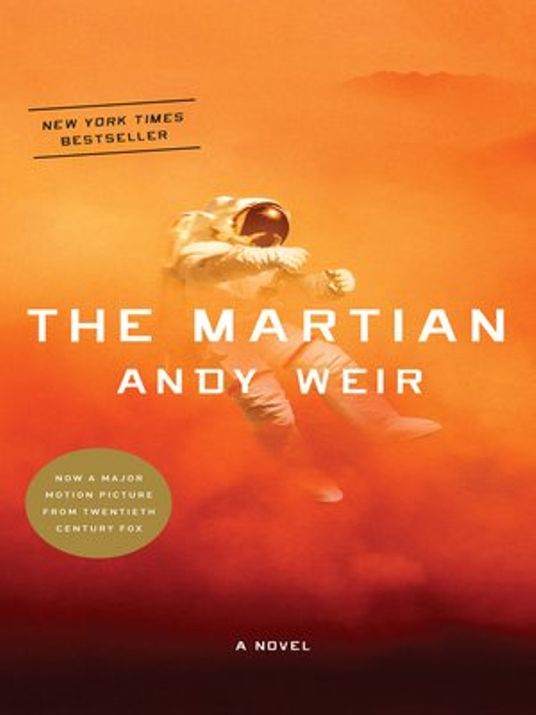
The Martian by Andy Weir

*this review may contain spoilers

I had to read this book for my English class and I actually enjoyed it which was surprising because I’m rarely interested in anything sci-fi related. However, I would say it is a generally long book, so I would only read it if you are dedicated to the storyline/plot.

Astronaut, Mark Watney and his crew mates travel to Mars but essentially he is abandoned alone on Mars due to his crew mates believing he had died. This book follows his journey of staying alive and the various challenges he faces on Mars. Through log entries, readers are able to encompass his thoughts and feelings and really feel connected to him throughout the book.

The book is mainly written in Mark’s POV but fluctuates between workers at NASA and his fellow crew mates. The structure that Weir presents, makes the book enticing and urges the audience to continue reading to know what happens next. I found myself continually rooting for Mark to survive and his comedic and witty personality makes him relatable amongst readers and build a connection amongst the protagonist (Mark Watney) and the audience.

I would first and foremost recommend this book to any sci-fi enthusiast because the entire book is pretty much set in the lonely Mars atmosphere. Another thing, a movie about this book has been made which I thoroughly enjoyed because it helped me envision the characters a lot better. I would say to read this book if you plan on branching out to new genres or wanting to get into sci-fi readings.

-Madison C.

The Martian by Andy Weir is available to check out from the Mission Viejo Library. It is also available to download for free from Libby.