
The Lottery: A Classic That Hasn’t Lost Its Kick

“Horrible”

“Superbly Contrived”

“Cancel My Subscription” 

These were all reactions to Shirley Jackson’s infamous short story, The Lottery. Originally published in The New Yorker magazine in 1948, this story has been haunting minds for generations. When my mom was around my age, she read The Lottery in her 8th grade English class. According to her, she found it eye opening, “I was amazed at how much suspense and curiosity a writer could evoke in just a handful of pages.” After she explained to me more about the story and author’s influence, I was interested in giving it a read. I checked out a book containing an anthology of Shirley Jackson’s short stories from the library. 
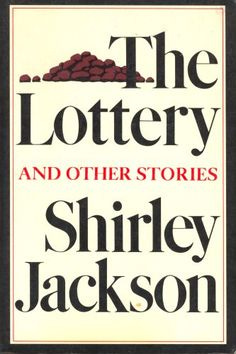
Flipping to the table of contents, I located The Lottery and began to read. The Lottery is a story about a yearly lottery event held in a rural American town. The purpose of the lottery is to ensure a good harvest, but how the lottery achieves this is unclear until the end of the story. At its heart, the Lottery is a cautionary tale about the dangers of blindly following tradition and adopting a mob mentality.

The title alone is foreboding, especially when you have heard people’s previous reactions to the story. This short story is so influential that even Stephen King was inspired by it. He states that, “I read it in the study hall, back at good old Lisbon High School. My first reaction: Shock. My second reaction: How did she do that?” Later, he adapted The Lottery into his short story, Rainy Season

As I closed the book, I found that it was very impactful for a short story. The writing invoked a lot of suspense, and I would recommend it to anyone looking for a quick but thought provoking read. If you are interested in reading it for yourself, (which I highly suggest as it only takes 5 minutes) you can find a free digital/audio copy here at: The New Yorker.
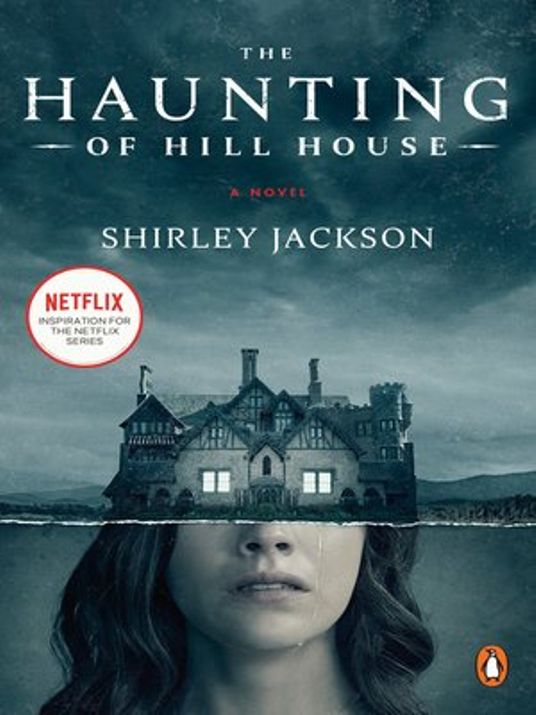
The Haunting of Hill House by Shirley Jackson

No live organism can continue for long to exist sanely under conditions of absolute reality; even larks and katydids are supposed, by some, to dream. Hill House, not sane, stood by itself against its hills, holding darkness within; it had stood so for eighty years and might stand for eighty more. Within, walls continued upright, bricks met neatly, floors were firm, and doors were sensibly shut; silence lay steadily against the wood and stone of Hill House, and whatever walked there, walked alone. 

So opens one of the greatest examples of horror fiction to ever be published: Shirley Jackson’s The Haunting of Hill House. This is the story of a cast of four characters from all walks of life who come together in the eponymous House to investigate possible supernatural disturbances. Little do they know, though, that Hill House refuses to be a passive subject in their study, choosing to fight back against what it perceives as an encroachment of its territory.

The narrator of this harrowing tale is Eleanor Vance, a woman who has spent her entire adult life taking care of her invalid mother. When the chance to escape her rootless existence appears, she jumps on it, but she finds that Hill House is perhaps more haunted than she cares to admit. As the novel progresses, the supernatural events begin to center around her, from mysterious writings on the wall to psychic communications. Eleanor, too, finds herself increasingly becoming out of touch with reality, merging with the House in a terrifyingly slippery slope with the consequence of one of the most shocking climax scenes in literary history.

Overall, The Haunting of Hill House is a brilliantly crafted example of horror fiction. While this genre isn’t usually my cup of tea, I appreciated Shirley Jackson’s masterful weaving of the plot and avoidance of the gore usually found in such books. I would absolutely recommend this book to anyone who needs a new read – so long as you remember to keep the light on.

The Haunting of Hill House by Shirley Jackson is available to check out from the Mission Viejo Library. It is also available to download for free from Libby.