
The Fall of the House of Usher: The Tale of Madness and Decay

Edgar Allan Poe’s The Fall of the House of Usher is a haunting short story that masterfully explores themes of isolation, mental deterioration, and the inescapable grip of family legacy. First published in 1839, the story follows an unnamed narrator who visits his old friend, Roderick Usher, at the Usher family estate. Upon arrival, he is struck by the bleak and decaying atmosphere of the mansion, which seems to mirror the physical and psychological condition of its inhabitants.

Roderick, suffering from a mysterious illness, and his twin sister, Madeline, who is on the brink of death, are the last members of the once-great Usher family. As the story unfolds, the mansion itself begins to embody the psychological torment of its residents. The house seems to crumble under the weight of its own dark history, and its eventual collapse parallels Roderick’s descent into madness.

I personally love the vivid, Gothic imagery Poe uses to enhance the story’s eerie mood. The detailed descriptions of the house’s dark, oppressive environment set the stage for the final, shocking twist, where Madeline, seemingly dead, returns from her tomb to confront her brother. I love the tragic conclusion in which the physical collapse of the House mirrors the emotional breakdown of the entire Usher family. I think Poe created a wonderfully dark story for anyone who loves Gothic, haunting stories.

If you enjoy eerie and chilling stories, Edgar Allen Poe is for you. The suspense leading up to the climax leaves you clinging to your chair and biting your nails which was perfect for Halloween which was when I read this. Ultimately, this timeless exploration of moral decay and inner turmoil is a wonderful read for anyone willing to pick up one of Poe’s horror novels.

Kaiya T.

The Fall of the House of Usher by Edgar Allan Poe is available for checkout from the Mission Viejo Library.
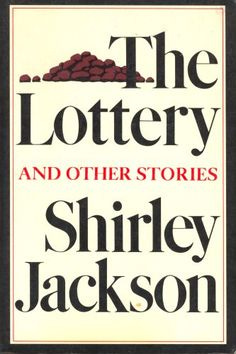
The Lottery: A Classic That Hasn’t Lost Its Kick

“Horrible”

“Superbly Contrived”

“Cancel My Subscription” 

These were all reactions to Shirley Jackson’s infamous short story, The Lottery. Originally published in The New Yorker magazine in 1948, this story has been haunting minds for generations. When my mom was around my age, she read The Lottery in her 8th grade English class. According to her, she found it eye opening, “I was amazed at how much suspense and curiosity a writer could evoke in just a handful of pages.” After she explained to me more about the story and author’s influence, I was interested in giving it a read. I checked out a book containing an anthology of Shirley Jackson’s short stories from the library. 

Flipping to the table of contents, I located The Lottery and began to read. The Lottery is a story about a yearly lottery event held in a rural American town. The purpose of the lottery is to ensure a good harvest, but how the lottery achieves this is unclear until the end of the story. At its heart, the Lottery is a cautionary tale about the dangers of blindly following tradition and adopting a mob mentality.

The title alone is foreboding, especially when you have heard people’s previous reactions to the story. This short story is so influential that even Stephen King was inspired by it. He states that, “I read it in the study hall, back at good old Lisbon High School. My first reaction: Shock. My second reaction: How did she do that?” Later, he adapted The Lottery into his short story, Rainy Season

As I closed the book, I found that it was very impactful for a short story. The writing invoked a lot of suspense, and I would recommend it to anyone looking for a quick but thought provoking read. If you are interested in reading it for yourself, (which I highly suggest as it only takes 5 minutes) you can find a free digital/audio copy here at: The New Yorker.

Hugo’s Thanksgiving – A Short Story

They say you are what you want. This became true for 12-year-old Hugo Stevens as he became addicted to eating mashed potatoes. The addiction began Thanksgiving Day at 4:17 pm on November 25, 2022. Hugo’s Uncle Aleck (who lived with him) was allergic to potatoes. However, he did not attend Thanksgiving Dinner and stayed in his guest house, as he was suffering from a hemorrhoid. 

The doorbell rang, and Hugo opened the door to his new cousin, Willa, who recently married into the family. In her hands was a large pot filled with mashed potatoes. Willa carefully lifted the lid and showed him the dish that he made. A savory, buttery scent wafted into the air, and Hugo’s mouth watered. Unable to have self-control, he stuck his finger into the mixture and promptly licked it. “HUGO,” Willa said as she scolded him. Before she could say anything else, Hugo took the pot out of her hands, grabbed a spoon, and started devouring it. Willa and Hugo’s other family members gasped and began shouting at him. His mom reached over to grab the pot, but Hugo turned the other way. Eventually, Hugo’s dad commandeered the pot of mashed potatoes and sent him to his room.

Hugo lay on his bed and sighed. I want more mashed potatoes, he thought. Suddenly, he heard a tap on his window. Hugo recoiled at the noise and slowly approached his window. An old woman stared into his eyes, and Hugo yelped. He started to back out of his room, but she held a pot with mashed potatoes and smiled, pointing to the pot. Immediately, Hugo opened his window, thanked the woman, and grabbed the mashed potatoes. She hobbled away, and Hugo began to dig into the pot.

5 minutes later

Hugo scrapped the last bits of the potatoes from the pot and sighed in satisfaction. As he slowly walked to his bed, he felt a popping sensation on the surface of his skin. Mashed potatoes oozed out of his skin, and Hugo yelled and ran out of his room to the dining hall. Everybody screamed when they saw Hugo. Curiously enough, Uncle Aleck decided to pop in for a visit. Uncle Aleck dropped to the floor at the mere sight of mashed potatoes. Hugo’s parents, cousins, and grandparents rushed to the floor. During all of the commotion, Hugo tripped on the floor rug. The mashed potatoes from his body flicked and fell on Uncle Aleck’s leg, which grew swollen. Uncle Aleck’s breathing grew shallow, and the light in his eyes dimmed as he breathed his last breath.

Eventually, the mashed potatoes embedded in Hugo’s skin went away, and he lived the rest of his life in a rehabilitation center that attempted to end his potato addiction.

THE END.

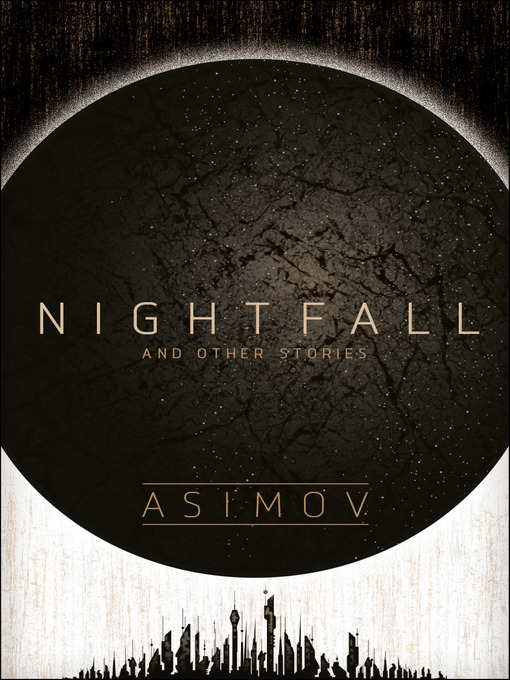
Nightfall and Other Short Stories by Isaac Asimov

Nightfall and Other Stories is a collection of works written and compiled by Isaac Asimov, who was considered a major science fiction writer in the 1900s. Though each narrative is a classic in its own right, I’ve picked out a few that stood out so that I may write a short explanation and/or analysis. Here goes! 

 Nightfall

“Nightfall,” regardless of its age, has certain themes that are quite relatable. For one, its premise  speaks to readers with caution, as it demonstrates our stubbornness and our outright rejection to believe what we cannot see, and so when an outcome occurs the consequences are far more severe. Therefore, despite its shortness in length, Asimov is able to structure his points skillfully. To explain, as his main purpose is to establish the ease at which people lose themselves once shown a foreign situation, he creates a civilization that has never been covered in darkness. In turn, once citizens are able to see their first eclipse, none can take the experience (and go mad as a result). In this manner, Asimov illustrates the importance of balance: we cannot learn to appreciate light (yang) if we’ve never felt our way out of the dark (yin). 

Fun Fact: “Nightfall,” which was published in 1941, was soon voted by the Science Fiction Writers of America as the best science-fiction short story ever written. 

Green Patches

“Green Patches” was an unexpected surprise, as it questions our private values. It asks us whether we could survive as a single “organism” (or consciousness), or if our human instincts for independent growth and movement would smash that chance. In this case, Asimov demonstrates that despite our cries for unity, society thrives on anarchy and thus prefers chaos over peace. 

Fun Fact: “Green Patches,” which was published in 1950, had its title changed to “Misbegotten Missionary” (which was later on changed back to “Green Patches”). 

Eyes Do More than See

In “Eyes Do More than See,” Asimov paints out a distant future in which humans have given up their physical forms (and become energy beams). However, these entities soon realize the repercussions of such a choice, for they can remember memories that spoke of earlier passions, love, and far off adventures. In turn, readers are met with a lesson that hints at appreciation – in other words, we should learn to value our concrete, more tangible lives that we abide to, in which we experience sorrow, passion, and loss. 

Fun Fact: “Eyes Do More than See” was nominated in 1966 for a Nebula Award under ‘Best Short Story.’ 

-Emilia D.

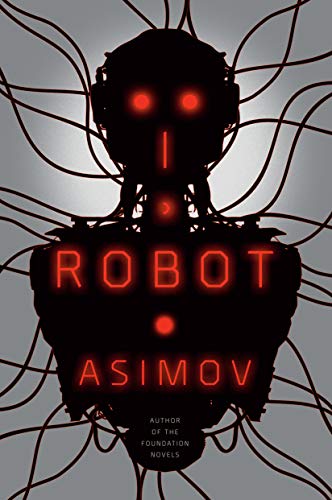
I, Robot by Isaac Asimov

Amazon.com: I, Robot (The Robot Series) eBook: Asimov, Isaac: Kindle Store

I, Robot, a collection of short stories by Isaac Asimov, tell the tales of artificially intelligent robots held in check by the Three Laws of Robotics, which are:

1. A robot may not injure a human being or, through inaction, allow a human being to come to harm;

2. A robot must obey orders given to it by human beings except where such orders would conflict with the First Law; and

3. A robot must protect its own existence as long as such protection does not conflict with the First or Second Laws.

With these three simple directives in mind, Asimov successfully creates a world in which the behaviour of robots is governed, allowing the humans (and the reader) to watch as the robots evolve from their primitive origins to eventually reach ultimate perfection in a future where humanity is on the cusp of being rendered obsolete.

While not technically classified as a novel, the stories have been ordered in such a way as to preserve continuity. Within a frame narrative of an interview of a soon-to-be-retired division head of the U.S. Robot and Mechanical Men Corporation, “robopsychologist” Dr. Susan Calvin, stories are told depicting the key members involved in humanity’s development of a range of robots from infantile to hyper intelligent ones. An especially appealing part of the stories is that most of the characters are kept the same, and while it may seem dull to read about the same few people, the character development in each story produces well rounded characters that are interesting and realistic.

Of the 9 stories in I, Robot, my personal favorite was “Little Lost Robot,” in which Dr. Calvin and her associates lose a robot with a diminished First Law (meaning that it can harm humans), and they must find it again before it can escape to Earth and wreak havoc on the planet, resulting in a loss of support for the robot initiative. However, all the stories were definitely thought-provoking ones, and I would recommend the entire collection to all readers, sci-fi fans or otherwise.

-Mahak M.

I, Robot by Isaac Asimov is available for checkout from the Mission Viejo Library. It can also be downloaded for free from Overdrive.
The Labours of Hercules by Agatha Christie

The Labours of Hercules by Agatha Christie - Agatha ChristieA string of Pekinese kidnappings…a romance left half-finished by the strange disappearance of a young woman…a malicious Parisian gangster fleeing to one of the most remote places on Earth…the largest political scandal in England…a stolen painting and a kidnapped schoolgirl…a series of women dying under odd circumstances, only connected by a mysterious religious sect…an innocent woman on the verge of being framed for a dastardly crime…. 

The only thing that connects these decidedly unusual yet distinctly unrelated cases is one man, and one man alone: the great Hercule Poirot (and his mustaches).

Based on the original Labours of Hercules, Poirot endeavors to act in his namesake by carefully selecting twelve special cases before his retirement from detective work in order to cultivate vegetable marrows.. From the Nemean Lion to the Erymanthian Boar, from the Flock of Geryon to the Capture of Cerberus, Poirot will stop at nothing to bring criminals to justice, and, on occasion, to take matters into his own private hands.  

While writing short stories isn’t standard fare for Agatha Christie, this collection of twelve short stories is the perfect mix of murder, intrigue, and Hercule Poirot (featuring his little grey cells) that any fan of the celebrated Queen of Mystery will surely not be disappointed.

-Mahak M. 

The Labours of Hercules by Agatha Christie is available for checkout from the Mission Viejo Library

The Language of Thorns by Leigh Bardugo

Have you ever imagined the fairy tales you read as a child having different endings, different villains, different heroes? Have you ever wondered how Ursula became so evil, why kings like to assign three impossible tasks to win their daughters’ hand in marriage, or if the Minotaur was really the monster he was accused of being?

Though inspired by fairy tales, mythology, and classic stories, the six stories in Leigh Bardugo’s The Language of Thorns go beyond the basic tales. They are all short stories written in the style of a fairy tale. Although these stories are set in the same world as Leigh Bardugo’s other novels, they made sense even though I hadn’t read any of her other work (now, after reading The Language of Thorns, I look forward to reading Leigh Bardugo’s other books).

Leigh Bardugo creates such a detailed, beautiful, and sometimes dangerous world, and in it she expands upon and adds her own ideas to well-known tales. These stories are elegant and some are a bit creepy (if I had known this before reading, I may not have picked up the book, but now I am glad I did–I really enjoyed reading this book despite the darker parts), and the excitement of the stories combined with the amazing writing makes the book so hard to put down.

I loved how each of the stories had a twist at the end—maybe the villain in a story was not the same character in the original fairy tale (or someone you hadn’t even considered) or the real source of the conflict was an immense surprise. These stories did not always end with a happily ever after, and although I do like happy endings, this was a refresher from the widely expected endings of fairy tales. It made the stories a bit more exciting and unpredictable.

Some of the parts I loved most about this book were the illustrations and borders created by Sara Kipin. At the start of each story there are one or two small illustrations in one corner or part of the page, and as the story continues, new images that connect to the story are added on to the illustrations. At the end of each story you can almost see the tale in the pictures that make up the border. There is also one big picture at the end of each story that shows a scene in the tale. The pictures are beautiful, so thought out, and I really liked seeing the story show through them.

If you are a fan of fantasy, fairy tales, or even just someone looking for fascinating tales to read, I would definitely recommend this book. Not only is the writing magical and detailed, but the world, characters, and illustrations are so well-developed and seem to fit together wonderfully. However, be warned: in this collection of tales the faint may not always be as they seem, and the real villains may have a story of their own.

– Mia T.

The Language of Thorns by Leigh Bardugo is available for checkout from the Mission Viejo Library.
Demigods and Magicians by Rick Riordan

This is another amazing book by Rick Riordan!  Rick Riordan writes about many different mythologies such as Greek, Roman, Norse, and Egyptian. This books features Percy and Annabeth, a couple who are involved with Greek mythology and Sadie and Carter Kane, siblings who are involved in Egyptian mythology.  This isn’t a conventional book in that it is composed of three short stories and a sneak peek of one of his books about Norse mythology, The Hidden Oracle. 

The first story is about Percy and Carter meeting and their unusual fight against an enormous petsuchos, the gigantic crocodile son of the Egyptian crocodile god Sobek. The boys fought and were confused when they first meet as they figured out that more than just one mythology was real. They defeated the monster but felt as though they’d opened a door that wouldn’t be closed.

In the second story, Annabeth meets Sadie and they join forces to stop the past, present, and future from joining together so the Egyptian god of the Underworld, Serapis, can rise.  Annabeth eliminates the god’s future so he can’t exist anymore.  The girls exchange cell phone numbers and agree to contact each other only in emergencies.

In the third story, Percy, Annabeth, Carter, and Sadie all fight a long battle against Setne, an Egyptian magician who came back from the dead to try to mix Greek and Egyptian powers to try to turn himself into a god. After the four defeat him, they decide to keep everything to themselves and stay in contact.

I loved reading the sneak peek because it interested me enough to go check out the full book, which I loved.  There are more books in the series and it’s a great read.

All in all I enjoyed this book a lot.  It answers those questions you sometimes think about, like ‘what would happen if the characters in my two favorite book series met?’  I definitely recommend this book; although it helps to read the series about Percy and Annabeth and the series about Sadie and Carter beforehand because they help you understand the characters and their story.

– Kaitlyn S.

Demigods & Magicians by Rick Riordan is available at the Mission Viejo Library

The Unfinished World and Other Stories by Amber Sparks

The Unfinished World and Other Stories is a beautifully written piece of literature filled with a wide variety of short stories. These stories revolve about everything from time travel and space to thrilling tales of kingdoms and magic. I was truly amazed by the sheer creativity and eccentricity which Sparks was able to spill out and expertly mold into eloquent, intriguing, and though-provoking stories. Each story is unique and unlike anything I’ve ever read before. Although they are completely unrelated, they all seem to have some sort of other-worldy ethereal sense to them. Maybe it’s because of the style in which it’s written, or it could simply be the creative flare with which the author forms her worlds and characters. Either way, I was completely blown away by this book, and cannot get over how utterly incomparable and ingenious it is.

Because this book is composed of so many stories, I have grudgingly decided to speak about only two of them — The Unfinished World ( I suppose I must talk about this one) and my favourite out of the other short stories: And the World Was Crowded with Things That Meant Love.

The Unfinished World (for which this collection of stories was named) tells the story of a boy named Set. Set is an unusual boy who struggles to find and understand himself and his past as he grows older. When he was younger, he was attacked by a bear, and he died…well, sort of. He ended up surviving the attack, but there has always been something missing…no one can quite put their finger on it. He’s never been the same since; there’s an empty hole in his soul. Set follows in the footsteps of his older brother who travels to Hollywood in pursuit of his dreams. Set becomes well-known, and everyone sees him as a handsome, hard-working young man. Anyone who really knew Set would know that that is just a facade — part of him is missing. Then he meets Inge, and she turns his life around.

And the World Was Crowded with Things That Meant Love is a short, but deep and meaningful love story. Early in their lives, a young man and a young woman meet one another and fall in love. However, both have jobs which require constant traveling. They show their love for each other by sending wood carvings and sculptures to each other. By this means, they continue their relationship. A detail which I thought to be particularly lovely was that one would send an artistic portrait to the other, having remembered, in full and perfect detail, what they looked like.

Despite the fact that some of these stories are extremely short (just two or three pages in some cases), the author has a unique ability to weave in and evoke so much emotion. Some of the stories were slightly confusing, some more intense, and some were pretty dark (I would recommend an older audience for this book). However, I would definitely recommend this book, as it felt as if I was in a completely different world while reading it.

-Elina T.

Auggie and Me: Three Wonder Stories by R. J. Palacio

When Wonder, a heartwarming, soul-touching novel by R. J. Palacio, made its way onto the bestseller shelves and into the lives of readers, there was no doubt that more adventures in the world of Wonder would be just as deep and thought-provoking. With Auggie and Me, R. J Palacio brings three more Wonder stories following Julian, Charlotte and Christopher and how August Pullman touched their lives.

Originally separate ebooks, The Julian Chapter, Shingling and Pluto have now been compiled into one enthralling companion to Wonder: Auggie and Me.

As a reader, I really love how R. J. Palacio gives you each of these character’s perspectives on their experiences with Auggie. The wonderful thing about these stories is that they become each character’s own. Although Auggie is a key component to each of the stories, you also get insight into each of these character’s lives. I think it is very important to read Auggie and Me after reading Wonder not only because it may give some spoilers or some inferences which would be more appreciated if you read Wonder, but also because it shows you these three character’s point of view and in some cases justifies or makes you understand questionable actions the characters carried out in Wonder. However, Auggie and Me could also be a great book separate from Wonder, as it does create whole new stories centering around three different characters.

Auggie and Me is definitely a must-read for fans of Wonder who want to read more about or redeem the characters of Wonder. Or it could even be for someone just looking for a heartwarming read that will leave them turing pages until their eyes meet the last words R. J. Palacio left on the page.

-Elina T.

Auggie & Me by R. J. Palacio is available for checkout from the Mission Viejo Library