Freshman Year

An increased amount of overwhelming workload, less time for self, and a brand new environment with lots of unfamiliar faces. These are some things that teenagers usually face when jumping from middle school to high school. Freshman year of high school is a very BIG leap from middle school and this can be very overwhelming for some, but don’t fret. As a student who just finished my freshman year of high school, I will be sharing my personal experience and some tips and tricks!

I do not know what your middle school teachers have told you about high school, but if they tell you that high school is going to be difficult, then they are completely right. Well, at least for me. For me, moving from 8th grade, where everything came easy and I had little worries, to 9th grade with barely any time for anything. It was very hard for me to adjust but do not worry, it might be a lot at first, but you’ll get used to it. 

One thing to keep in mind is that whether you like it or not, you have to socialize. In middle school, I was able to pass without making many new friends, since a lot of assignments and projects allowed independence. However, now in high school, most things require socializing, whether it be for participation or for a group project. However, this isn’t so bad! Through these forced interactions with new people, I gained new friends. These new friends have definitely impacted me lots, both positive and negative, but most of these impacts were positive. I am really glad to have made all these friendships this year.

Speaking of friendships, it is also very important to remember that people change and that’s alright. There’s a saying that “The people you enter high school with might not be the same people you leave high school with” and I did not believe it at first, but it already is the case for me. The people I got into high school all separated and went our own ways, so if you stop being friends with your friends during freshman year, then do not worry. There are tons of other people and amongst them, there is definitely someone who you can really connect to. 

Another important thing that is very useful, especially if you plan on taking hard classes during your freshman year, is to make sure to turn in your work on time and be responsible. Grades actually matter in high school, so fooling around is not the best idea. Once you get your homework assigned, do it immediately if you can. Procrastination is not the best because if you have lots of workload, waiting to do it last minute is a very bad decision and you will definitely regret it later. Stressing about turning in your homework before 11:59 is not worth it!

Since grades matter, the way you study matters as well! Think of the phrase “Study smarter, not harder.” It is best to find a good grade through a study technique that works for you rather than getting the same amount of grade but with more workload. A few study methods you can try are pomodoro technique, Feynman Technique, active recall, and more. Keep in mind that it’s not the same for everyone, so one method might work for someone else, but not for you, which is why you should try testing out many study techniques to find the best one for you. 

However, grades don’t really define who you are, so if you don’t get the best grade, at least you tried your very best! So if you’re as nervous for high school as I was last year, I just wanted to let you know that you will be fine. Yes, it will be hard at first, but it will get easier! I wish you the best of luck!

AP Seminar: Recommended Class For Juniors!

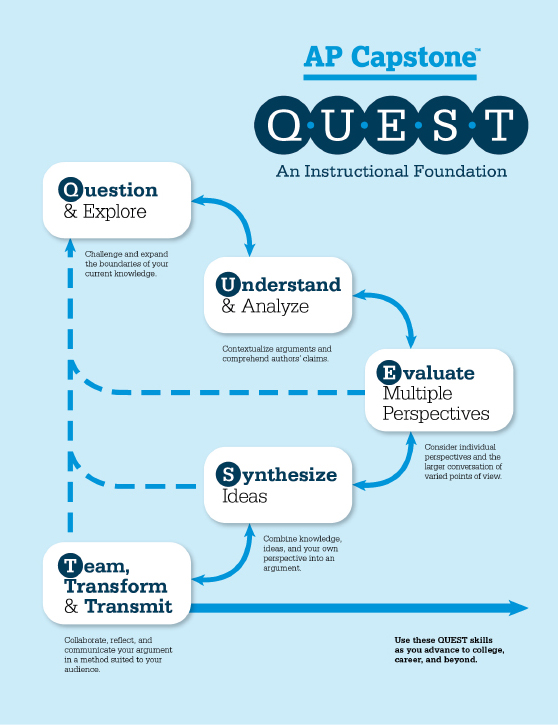
Taking AP Seminar this year has helped me learn and investigate more deeply into a specific topic that I enjoyed. This class is unique from other classes I have taken because it allows you to collaborate with other people to research a topic that interests the whole group.

This class has also helped me develop skills for independent research such as developing the skills to create a research question and being able to narrow down the question into something that is more researchable.

Not only does this apply to real-world applications such as what is happening around the world currently, it also teaches you truly how to research, which oftentimes requires collaboration.

For those of you who get nervous while presenting, this class is for you too! Because this class is a research class, you first do the research, and then you present your topic.

The first 4 months of the class are focused on writing your Individual Research Report (IRR) and a Team Multimedia Presentation (TMP). In these months, your group gets to choose a topic, spend time drafting an arguable research question, and then put that research into a slideshow. The IRR is written simultaneously while you are researching in which you put the different perspectives you researched into conversation with one another.

The second part of the seminar course is where you receive a packet of around 5 stories or articles revolving around a theme. This part is the independent portion and you get to draft your research question based off of the theme. Then, you write a report of your findings and make a 6-8 minute presentation on it by yourself.

This AP course, I believe, is essential for real life as well. In college, we’ll have to be able to research topics we don’t understand, and with this ability we learn in high school, we can better thrive in college.

AP Human Geography Tips

I know the first semester just finished for high schoolers and college students so I guess I wanted to give some more AP advice, at least for classes I took last year as a freshman.

If you are a freshman taking AP Human Geography like I was last year, here is what you need to know: Be prepared to read more difficult and complex texts and answer college board questions that require much more thinking than middle school social science classes. Additionally, there are also 3 FRQs (Free Response Questions) that you have to answer in one hour and fifteen minutes, which leaves you around 25 minutes give or take per question. You can find samples on the AP college board by searching “AP human geography college board frqs”.

The practice questions on the college board (the ones the teachers assign you) are very helpful. They are AP-style questions with 5 answer choices (A-E) per question. These questions come with two basic styles. One is set-based, usually with a stimulus such as asking you to analyze a map of Africa or a table for developing vs developed countries. The other style is just individual concepts that they can ask you that you would have to pull from your own knowledge, with no additional information.

This class is an introductory class to college geography, so a lot of the units are on the analysis of maps and applying that knowledge to understand how the migration of humans affects our geography. Also something to note: You need to memorize a lot of the key terms! I recommend buying the AP Human Geography Flashcards from the Barron’s company (the one with 250 terms). I reviewed this the night before my AP exam, and it was really helpful with locking in on key concepts one last time.

Although many freshmen say that the class is difficult (this is true as it is indeed your first AP class), however this experience can also be really fun as well. It teaches something you don’t normally learn, and you get to learn about the different countries of the world. I don’t know about you, but I have always found the evolution and migration of humans a very interesting topic.

Don’t worry, you guys will do great! – Aleena

Study Tips for High Schoolers

Finals season is almost here, and tests can be a lot to study for. However, with the right tools, you can make studying and taking tests a breeze. Here are a few helpful study tips and tricks that I learned.

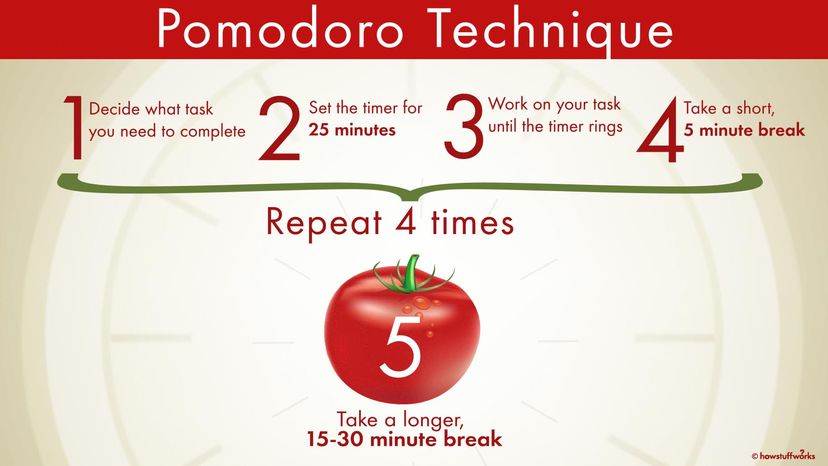
The Pomodoro technique is a great tool to use when studying, and it’s a good way to get more done. First, you pick one task to complete. You next find a timer and set it for 25 minutes and work on the specific task until the timer rings. Next, take a short 5 minute break, and then repeat the process four times. After you have done this, you then take a longer break of 15 to 30 minutes. This process greatly helped me with my studying and with my homework and made my schoolwork much easier in general, so be sure to try this the next time you study.

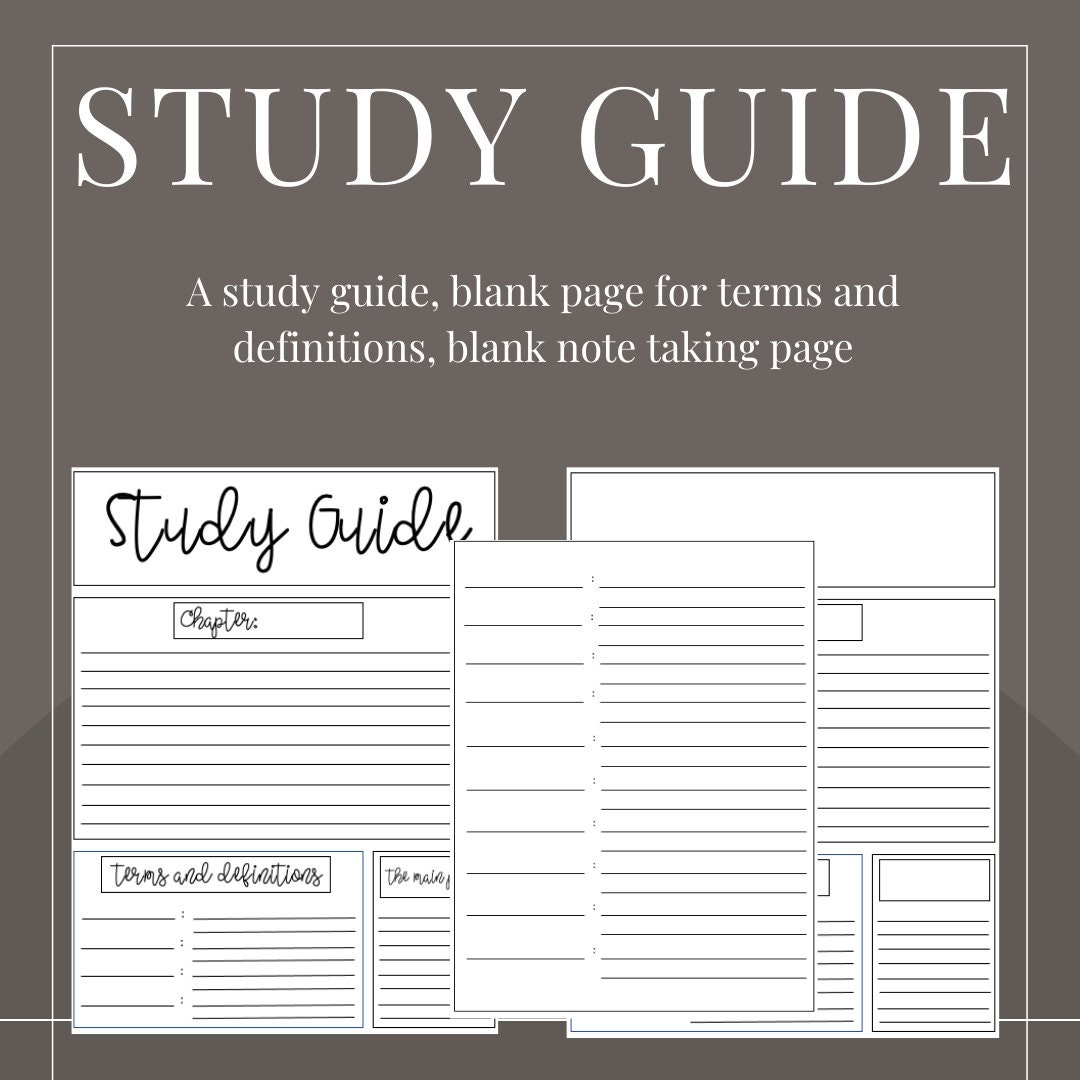
Another studying strategy that I found helpful was to make study guides. I write down the important ideas from a lesson or unit as well as terms and definitions, and then review it before a test so you are familiar with all of the important ideas. If you are given a synopsis for a unit, it will usually give many of the important ideas, so try to write these down on the study guide. Making these study guides made taking tests much easier, and they also make studying for finals easier, as they contain all the important information.

I also found it useful to spread out studying for the period of time before a test. Try to study every day or couple days. I also found it helpful to not cram the night before a test, as it is harder to learn the material and is not very helpful. Also, if you have vocabulary to learn, I would recommend reviewing it by making flash cards by hand or online on sites such as Quizlet.

Finally, I found using a planner or calendar extremely helpful. You can plan assignments and projects and break down your work and studying into manageable blocks, and I found this valuable, especially when working on large projects or assignments. Using a planner or calendar is also helpful for meeting deadlines with assignments, as well as keeping you organized. Overall, all of these study tips were very helpful for me and they’re sure to be useful for you as well, so be sure to use these the next time you’re studying for a test or project!