
Does Technology Help Us?

When I was reading the news the other day, I saw that Apple has announced that they have made a ‘mixed-reality headset’ computer called Apple Vision Pro. This product is scheduled to be launched in early 2024 and is said to create an immersive experience between the real world and everyday apps. With Apple Vision Pro, users can have apps open in the spaces they are in.

Technology has many benefits, including making the world more interconnected. But, with technology like the Apple Vision Pro, how can we be sure that humans will continue interacting in person rather than online? With new technology being introduced, will we choose the convenience of Facetiming people or having in-person conversations? While there is no problem calling others, humans are created to interact with the people around us (in person).

New technology prohibits everyday interactions that used to happen before technology. If someone buys something from Starbucks, they can purchase it online or at the counter. Nowadays, most people prefer buying items online, which is more convenient. However, people lose that small interaction with an employee or another stranger. At first, losing this small interaction may seem insignificant, but this can cause harmful effects over time, even as extreme as social isolation.

Future generations need to understand the importance of human interaction. How will they grasp that technology hurts us rather than helps us? And how will society function appropriately if no one has in-person interactions because of increased technology? I believe technology should be limited, especially with advances in virtual reality. In virtual reality, people can ‘own’ as many objects as they want (money, clothes, homes, etc.). Of course, these ‘objects’ are figments; however, to many people, VR offers more than their real life. With the increased use of virtual reality and its attractiveness, will humanity start to live in a virtual world? While this might seem extreme, many articles have been made on this topic.

I believe that there is a chance that people will start to live in VR sets. The average human willingly spends 7 hours a day on technology, so it is highly plausible that future generations will live in VR. This is disturbing because the government can easily control our communities by monitoring content and promoting propaganda. A news article by Global Shakers says that a new company, Stratuscent, is developing technology to synthetically replicate smells from around the world. (For instance, if someone visited Paris in virtual reality, they would be able to see and smell Paris for how it is in real life.) I thought the author brought up a good point; he said, “And when that happens—how long before there’s no distinction between virtual reality and reality?” (Romer). If technology offers these opportunities on one device, people will not want to live in real life. People will not realize what is real and what is not.

Technology has the power to change the world positively, but we must be wary that it does not consume us. With this information in mind, I hope to end this article by causing you to ponder whether technology will help or hurt our society.
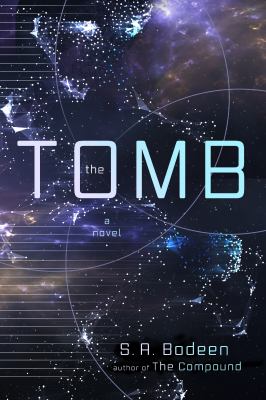
The Tomb by S.A. Bodeen

The Tomb by S.A. Bodeen is a science-fiction novel about fifteen year old Kiva and her discovery that her life is not what she thought it was. Kiva believed that she was being raised in Ancient Alexandria, and had spent the first twelve frolicking with her best friend, Seth. When they were twelve, Seth’s Father, who was the pharaoh in the ancient Egyptian world, caused Seth to become less involved in their friendship. However, three years later, Seth comes back to Kiva to tell her that their world is not what they think it is. This leaves Kiva confused and hurt; she finds out that Seth has died. However, this all is a sham because the world that is portrayed is actually a virtual reality. Everyone portrayed in the world is in a hibernation in a spaceship.

Kiva wakes up to learn about the Planet Earth and how it was impacted by an asteroid, making it uninhabitable. A lucky group of people were able to escape on the ships that were originally intended for escape in a natural disaster. She is on a smaller shuttle, which is on its way to a spaceship to get a spare part for another spaceship. She wakes up to find Seth, who explains everything that happened. His Father died in real life, and he was told about the artificial world soon after that. Initially, Kiva finds it difficult to connect with him, but the two of them reconcile their differences to save the ship while battling foes.

This book was a quick read, and almost felt like the beginning of a novel. A lot of it was devoted to building up the world of Alexandria, and once it shifted to the spaceship, almost half of the novel was done. Also, the characters did not have much growth and were mostly one-dimensional. There was a romance between Seth and Kiva, but it almost felt forced and done in order to move the plot forward. Even though it did that, the moving of the plot really did not go anywhere until the last few chapters of the book. Overall, the book was a quick read. If you are looking for an easy-to-follow science fiction novel, than this one for you.

The Tomb by S. A. Bodeen is available for checkout from the Mission Viejo Library

Movie vs. Book: Ready Player One

As many of you know, Ready Player One has been out for quite some while. Most people who wanted to see it have. But did you know (because I certainly didn’t until it was gifted to me) that Ready Player One was a book as well? If you did know that, points to you. If not, then go to the library, go check out the book, and read it. It’s  very good, in my opinion. Then, come back, and finish reading this. I hope you’ll find it interesting.

The premise of Ready Player One is interesting. There is a high school aged boy, Wade, who lives in the future, 2045 to be precise. The world is in pretty awful condition, and everyone knows it. It’s dirty, global warming is through the roof, and the population is skyrocketing. The only place you can escape, is the OASIS.

The OASIS is a high tech virtual reality system, created by James Halliday. As a child, James Halliday was not exactly a social butterfly. He disliked interacting with other kids, preferring the eccentric adventures of video games over playing outside. James Halliday grew up to become an advanced programmer, eventually creating the OASIS, a place where he could escape from the world and live as a part of the video games he loved.

When Halliday dies (which is inevitable), he creates, basically, an Easter Egg hunt. If you won this hunt, which happens if you complete the clues and series of tasks first, you would inherit Halliday’s large fortune, and control the OASIS. There are three keys that you must find (the Copper Key, the Jade Key, and the Crystal Key), which then unlock three gateways (simply called the First, Second, and Third Gates).

This is the picture of the both the movie and the book. This does not change. However, the characters, Gates, and Keys are very different.

In the book, it is clearly stated that the Avatars in the OASIS are lifelike, at least for the main characters: Parzival, Art3mis, Aech, Daito, and Shoto. It says that you can hook up your system to recognize your facial features, and transfer them onto your avatar. Art3mis is said to have used that program. But, in the movie, Art3mis (the Avatar) is portrayed as a pinkish red alien girl with short cropped red and black hair. Aech is shown as a larger-than-life ogre, when in the books, he is described as a tall, blonde, Caucasian man.

When attempting to obtain Keys and pass through Gates, you must complete a task. This is true for both the hook and the movie. But, the tasks in the movie and in the book are drastically different. For example, to earn the Copper Key, in the book, you must enter the Tomb of Horrors (from a Dungeons and Dragons adventure module), then compete against Acererak the Demi-Lich in a game of Joust (a game in which two players competed to pass levels. You played as a knight riding on a flying ostrich, trying to defeat waves of buzzards). In the movie, the key is obtained by participating in a dangerous race through New York City to Central Park.

The difference is huge, as everyone know how to get the Copper Key in the movie, yet couldnt get past the obstacles. But in the book, no one knew about the Tomb of Horrors, other then Parzival and Art3mis. This is just one example of how different the Key tasks were, the other Keys (the Jade Key and the Crystal Key) also varied between the movie and the book. The Gates, which you opened once you achieved the Key, were also drastically different.

The one other thing that’s bothered me in the difference between the movie and the book, is the moment when Parzival and Art3mis meet in real life.

Meeting in real life is tricky for OASIS players. You don’t know what the person looks like behind the avatar, and it could be potentially dangerous (just like in real life. Never go to meet someone you met online without a parent/guardian/adult). So, when Parzival and Art3mis met in real life, it was a big deal (especially because Parzival had a LARGE crush on her). The difference between the meetings in the book and movie is huge. I was quite disappointed with the meeting in the movie, it wasn’t as heartfelt, or as dramatic as it appeared in the book.

When I went to watch Ready Player One in theaters, I expected something completely different. Although it was the same storyline, I was a bit disappointed they didn’t stick with the original tasks, characters, avatars, etc. But, I did enjoy the movie, and I thought it was worthwhile to go watch. But, you are interested in the movie, and haven’t read the book, go do so. You will NOT regret it.

-Sophia

Ready Player One, both film and the book, are available for checkout from the Mission Viejo Library

Sword Art Online Progressive 001 by Reki Kawahara

Okay, confession time: I’m not really into Japanese anime and manga, or things like that. That is, until I read SAO, or Sword Art Online by Reki Kawahara.

To be clear, there are basically three adaptations of this book. One of them is a graphic novel, but this book, SAO Progressive 001, is a fictional chapter book that’s about 300 or so pages long.

To be honest, I probably wouldn’t have picked up this book if it hadn’t been for my friends, who are obsessed with Japanese manga and stories. The cover art is really cool, but personally, I just wasn’t that interested. One of my friends, who had read the book cover to cover about thousands of times, allowed me to borrow it. At first I was doubting it, but since the cover looked awesome (I know, don’t judge by a book by its cover! Sorry!), I decided to open it.

And then I pretty much didn’t put it down. The story is centered around the main character, a dark-haired swordsman named Kirito, shown on the cover. Next to him is a fencer, named Asuna. Sword Art Online is a a “virtual-reality” world game, where the player is transported into the gaming world, filled with monsters on each level of the hundred floors of a floating, chambered castle: Aincrad. However, there is no escape. Once you enter the game, there’s no way you can leave it. And the death toll begins to rise. 2,000 players are dead, killed by the monsters in the game.

As Asuna the fencer says, “There’s no way to beat this game. The only difference is when and where you die…”

Kirito meets Asuna in the beginning of the story, and over the events happening throughout the book, they form a sort of friendship. They’re not exactly a team, for they are both solo players, only working to strengthen themselves. But when fighting alone means certain death, will Kirito and Asuna overcome their differences and fight together to survive?

I highly recommend this book to anyone looking for high-action, intense combat scenes against bosses, and a story that keeps you hooked in every page. Would you wish SAO was a real-life game that we could play? Anyways, I can’t wait to read Sword Art Online Progressive 002! I’m sure Reki Kawahara won’t let me down!

-Katharine L.