Keeper of the Lost Cities: Exile by Shannon Messenger

This second installment of Shannon Messenger’s 9 (soon to be 10) book series starts with Sophie and her adoptive father Grady going on a hunt for a Sasquatch. Sophie uses her incredible telepathy to listen for nearby thoughts, and soon she hears a few panicked words. She and Grady are in pursuit, but she stops him when she realizes they are scaring him away. They make it to a clearing, and then they see it; an Alicorn. Alicorns are an endangered species in the Elvin world, with only one left. Until Silveny came along.

This book has everything; a magical being that is being threatened by the rebels (Silveny the Alicorn), a mental healing that went wrong, a loss felt by the world, and a bit of sparkly poop mixed in too. I highly recommend reading this book, it shows amazing action that will have you on the edge of your seat. Even though there are action and stressful situations, there is still a funny side to it. Keefe jokes, Sandor and Grizel being so over-protective it’s funny, and some funny Councilor jokes too. I give Exile 10/10 because it has everything you could ever want in a fantasy book.

-Izzy W.

Keeper of the Lost Cities: Exile by Shannon Messenger is available for checkout from the Mission Viejo Library. It can also be downloaded for free from Overdrive.
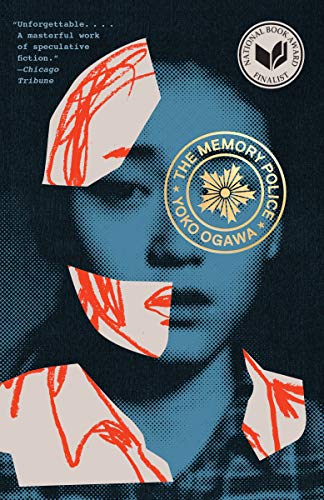
The Memory Police by Yoko Ogawa

As someone who has been reading American and European-written novels my entire life, the only times I’ve gotten close to experiencing Asian literature were through mangas, movies, and TV series. After reading The Memory Police by Yoko Ogawa–a Japanese-written book translated into English–I was opened to a new type of writing style that readers don’t often see in American or European novels. However, that doesn’t make this novel worse than others.

Published in 1994, The Memory Police is a close parallel to 1984 by George Orwell, in the sense that both take place in a dystopian society where the government constantly watches over its citizens. Although both emphasize the dehumanization of totalitarianism, Ogawa wrote her novel differently. Her story begins on a small island where objects disappear routinely, causing people to forget that such things ever existed. Those who try to remember are caught by the police. Those who do remember are taken away only to never return, creating a government-fearing society. The protagonist lives on the island as an orphaned novelist. When she discovers that her editor remembers a long-forgotten object, she keeps him hidden in her home while the Memory Police search for him. As the novel progresses, a fear of forgetting is expressed through her writing as a way to preserve the past.

Considering that this novel was translated from Japanese to English, I’m grateful that the translator was able to keep the same amount of tension and emotion from Ogawa’s writing. Although the protagonist isn’t some fearless character fighting to overthrow the government like in American literature, that only makes her more realistic and more relatable. She isn’t trying to do anything unreasonable–she simply wants her editor and herself to survive. I admit the plot could seem dull to some readers who focus on the action, but I enjoyed the psychological development of the protagonist’s mind. There’s so much depth to her personality and her thoughts which can connect to today’s world. That fear of losing everything–including yourself–is clearly shown in Ogawa’s novel, and I applaud her for her writing.

In essence, I thought the book was a definite read, but only because it appealed to me. The only issue with this novel–along with many other books–is that there’s a limited amount of readers who would be interested. To those who think this novel focuses on characters trying to change a dystopian world: it isn’t what it seems. This book was more psychological than I assumed, with less action or romance. The protagonist doesn’t necessarily stand out amongst the citizens. Instead, the author is trying to show the perspective of a typical person living in a dystopian society. To me, that’s the beauty of this novel. In reality, the novel fits best with analytical readers who want more than just the plot.

-Natasha P.

The Memory Police by Yoko Ogawa is available for checkout from the Mission Viejo Library. It can also be downloaded for free from Overdrive.
Diversifying the English Curriculum: Representation in Literature

If you ask a group of high schoolers what they read in their English Lit. class, you’ll most likely hear very similar answers from all of them: A Tale of Two Cities, Shakespeare, The Great Gatsby, A Christmas Carol, the list goes on. For decades, most of what students read in their English classes has been the same.

While it is important to read and analyze classics such as the ones mentioned, many schools disregard representation in the chosen books for this said motive. When taking a look at the demographics of the authors that have written most of the books in the high school curriculum, you’ll find that almost all of them are men, and almost all of them are white. This results in many students’ English class experience being Euro-centric and lacking in diversity.

In my own high school career, I have only read one book written by a woman (out of 8, currently) and no books written by any POC authors. Writing is my passion, and while I hope to one day be able to use that in my career, it’s discouraging to not see a more diverse range of people representing this career path.

Not only is the diversity of authors important, but also the content that is in these books. A less diverse pool of authors means that the stories read will most likely not contain many different cultures and points of view. One of the main aspects of literature is being able to resonate with the story, and without diverse authors, many high school readers are left feeling disconnected from the lesson and unrepresented in their classroom.

Another important aspect is being introduced to new cultures. This is especially important in schools that are lacking in diversity. Being exposed to different values, religions, and ways of life in general through literature prepares teens for the world, and teaches them to be respectful toward others that have different lifestyles than they do. It helps to be knowledgeable of other beliefs besides one’s own, but this isn’t possible if English classes’ works of literature do not represent a wide variety of cultures.

We live in a world that is quickly changing, a lot for the better. English classes need to reflect this change and update curriculums so that students can learn from and resonate with what they’re reading.

-Luxi B.

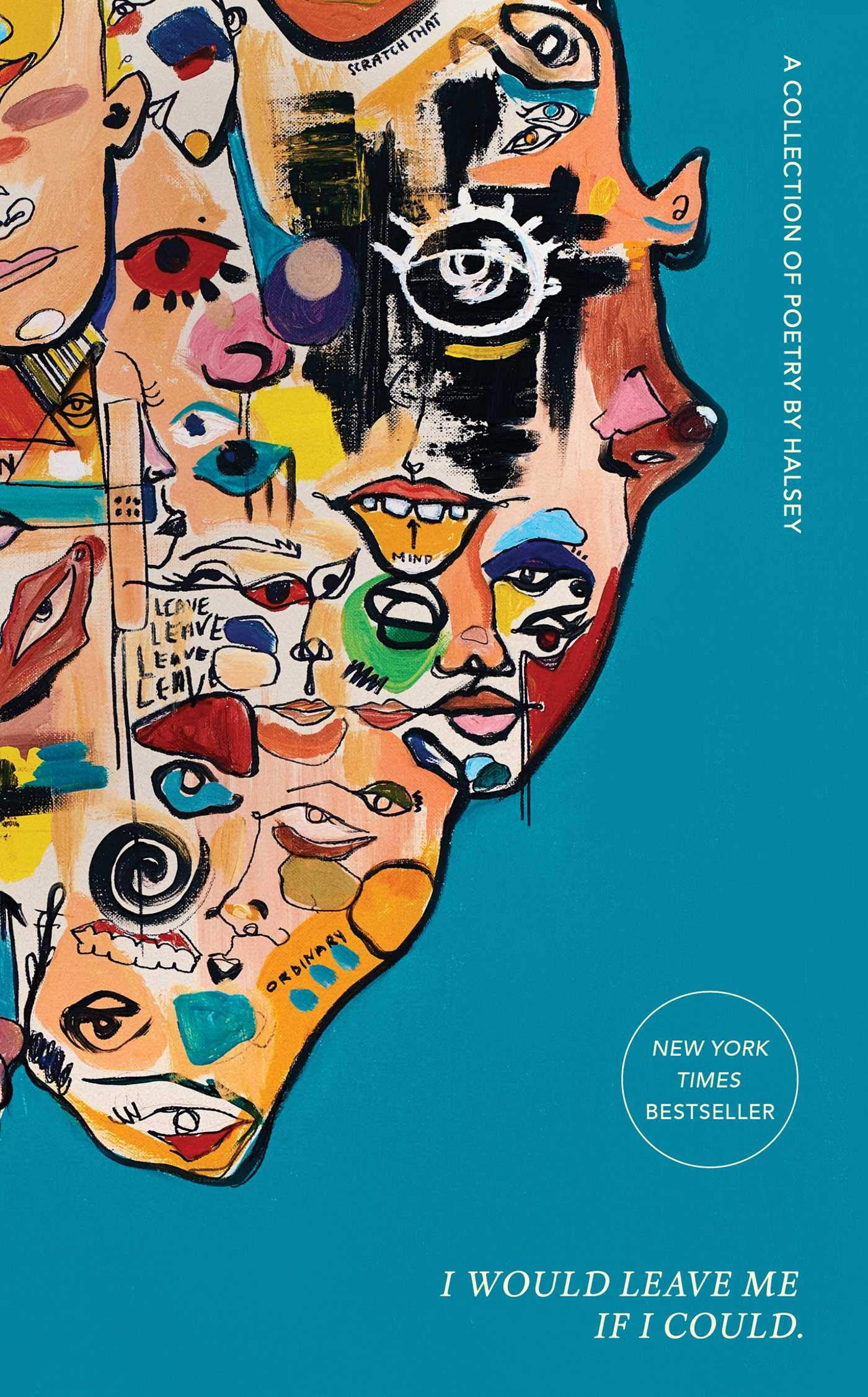
I Would Leave Me if I Could by Halsey

I Would Leave Me If I Could.: A Collection of Poetry: Halsey:  9781982135607: Amazon.com: Books

As a rule of thumb, I usually stay away from books like this one- I’m of the firm opinion that most celebrities have no business releasing mediocre poetry books for huge success and profits while real writers struggle. However, I made an exception for this book on a whim, and I was pleasantly surprised. Halsey’s prowess as a master songwriter and lyricist really shines through here- not only has she managed to create an entire book of poems in perfect rhyme and meter, she has sagaciously sidestepped the usual cumbersome nature of such poetry.

Her near-perfect use of tempo and rhythm, honed during her twenty-odd years as a musician, is delicate and nimble- a refreshing read. Featuring lines from some of her more recent song releases, her writing, rather than being mediocre and hard to digest, is a raw and beautiful excavation into the deepest parts of herself and her psyche- and really, we’re just along for the ride. I would recommend this book to anyone looking for a slam-poetry-type read with some deep and heavy undertones, delivered in a fun (dare I say funky) way 🙂

-Vaidehi B.

This book contains implicit sexual content that may not be suitable for all readers.

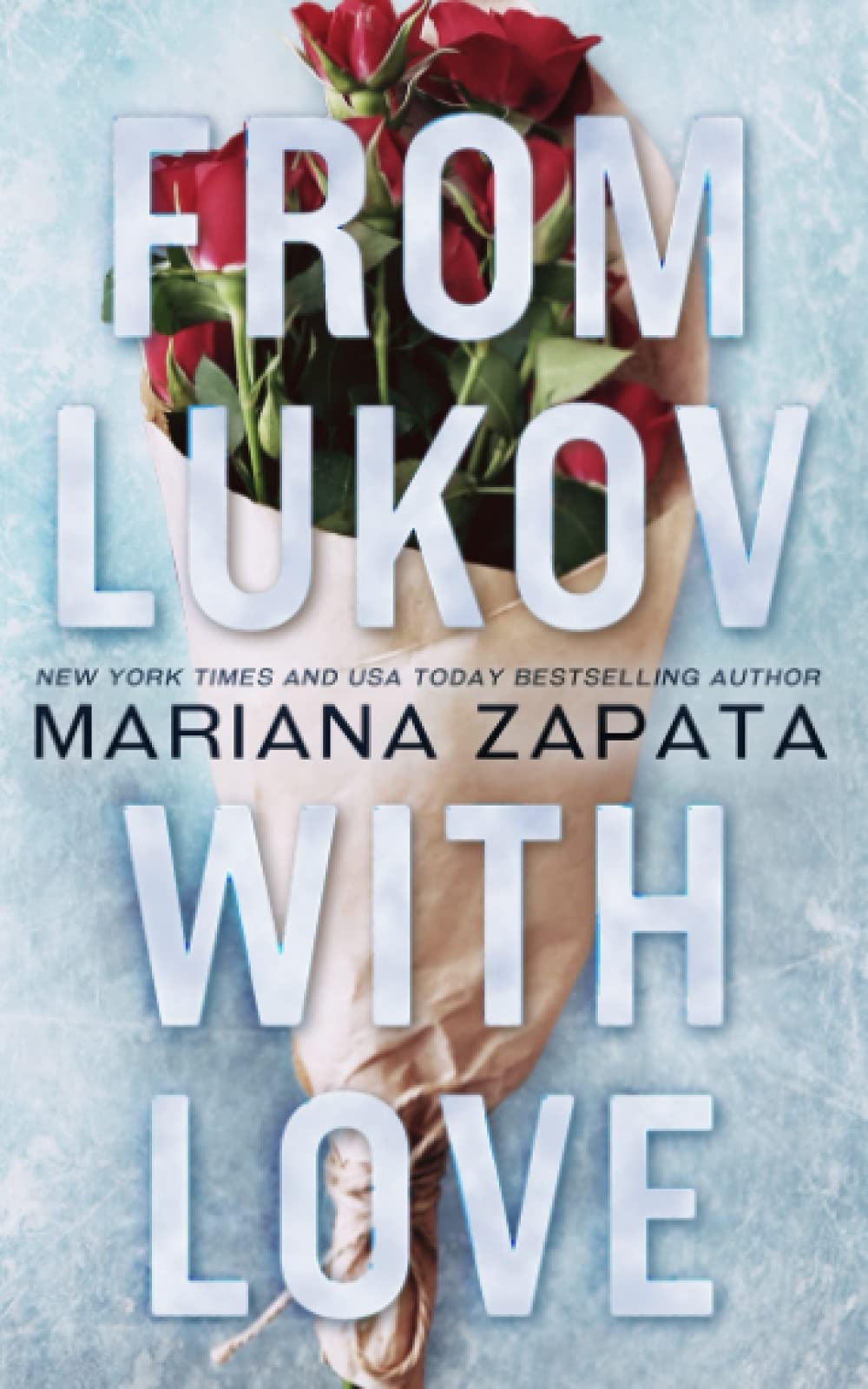
Book Review: From Lukov With Love by Mariana Zapata

From Lukov with Love remains one of my favorite reads ever. I just finished re-reading this masterpiece. Mariana Zapata is a genius and amazing author.

This book is about a girl named Jasmine Santos who ruthlessly trained and trained for figure skating. She never made it very far in competitions as a single skater so she was determined to try pairs. But still, she has trouble succeeding in competition.

She gets offered an opportunity of a lifetime to skate with the great Ivan Lukov who has won many championships. Except, there’s one issue. She hates Ivan for teasing her all her life. He is Jasmine’s best friend’s brother.

Jasmine agrees to this arrangement. She and Ivan still hate each other but have to fake it for the sake of skating. Through banter and nicknames Jasmine and Ivan try to coexist. Slowly they start building a friendship and maybe don’t hate each other as much anymore. 

They are training for the championships and are determined to win gold. But, one day Jasmine lands wrong and her ankle is all messed up. She spends weeks recovering from the injury. They were behind in training but still picked up where they left off.

They ended up winning the championship and each other’s love. Jasmine and Ivan have each other’s hearts and are perfect together.

“I love you so much, I spend all day with you, and it still isn’t enough for me. I love you so much, if I can’t skate with you, I don’t want to skate with anyone else. I love you so much, Jasmine, that if I broke my ankle during a program, I would get up and finish it for you, to get you what you’ve always wanted.”

The book also reflects on the importance of family and friendships. Jasmine really finds herself by the end of the book and she realizes that it’s important to love yourself for who you are instead of comparing yourself to others.

“You are who you are in life, and you either live that time trying to bend yourself to make other people happy, or… you don’t.”

Though the book was a slowburn and the characters didn’t get together until the very end of the book, they still showed romantic elements and how much Ivan and Jasmine loved each other.

“I believe in you. In us. Regardless of what happens, you will always be the best partner I’ve ever had. You’ll always be the hardest working person I’ve ever known. There will only ever be you” -Ivan.

Jasmine and Ivan are everything to me and I will love them and this book forever. 5/5 stars.

-Kaitlyn D.

Investing Time in Learning a Language is Worth it

12 Compelling Benefits of Learning Foreign Languages
Learning a new language has many benefits.

Studying a world language takes away from a large quantity of a student’s time that could be spent on core subjects, extracurriculars, and sports. The time spent memorizing vocabulary and learning how to communicate in the desired language adds up to be a lot that takes away from a student’s personal, family, and school time. Not to mention, will the hard work students put in even benefit them in their future? However, there are some substantial benefits and advantages that come with learning a world language. Investing time in world languages is a necessary skill for students to learn in school because it will benefit them in future jobs and give them a different way of thinking.

Firstly, taking a world language in school will benefit students in the future, such as when they are applying for a job. Individuals have more opportunities for jobs if they are bilingual. For example, according to the report Not Lost in Translation: The Growing Importance of Foreign Language Skills in the US Job Market, “Over the past five years, demand for bilingual workers in the United States more than doubled. In 2010, there were roughly 240,000 job postings aimed at bilingual workers; by 2015, that figure had ballooned to approximately 630,000.” Taking the time to learn a foreign language in school has a great advantage and comes back to benefit the individual later on in life. The number of available jobs for bilingual people is exponentially growing and by the time students have graduated college or high school, there will be even more positions available for them in multiple professions. In addition, according to an infographic of the world’s top languages, three million out of seven million people speak one of ten languages out of 6,900 spoken languages on earth. This illustrates the importance of needing to know multiple world languages so one can communicate on a more extensive scale. By absorbing a language, individuals will get to communicate with others in the language they learned, which also leads to the next advantage of practicing a foreign language in school.

The second benefit of investing time in taking a world language class during school is it will expand one’s thinking skills and will allow one to communicate with others on a much broader scale. Understanding different languages allow for different ways of thinking. In addition to thinking and communicating skills, individuals will also be exposed to many different cultures around the world. According to Liz Reisberg in the article Foreign Language Should be Mandatory, “Studying another language (or two or three) increases the effectiveness of cross-cultural communication, not only in knowing words, but in developing a deeper understanding of language generally and its relationship to culture.” Learning a language not only benefits one in understanding words and how to communicate thoughts, but it also gives one a sense of what life is like in other parts of the world. Knowing different cultures allows for more abstract ways of thinking. Also, according to the Foreign Language Should be Mandatory article, “Without some exposure to a foreign language, how would anyone develop any understanding or insight about the cultural dimension of language?” Learning a language sets one up for success in the future. One should immerse themselves in the culture and language to truly receive all of the benefits.

Studying a world language has many benefits. However one may say that a student has other time priorities and learning a language won’t come back to benefit them later in time. Many often forget the language after coming out of high school and never use it again. As stated by Art Caden in Should Schools Require Foreign Language? Doubtful., “For the average American, studying foreign languages in school is a waste of time given all the other things she could be doing.” However, the author of this claim does not realize the job benefits that come with learning a language. Individuals who are bilingual have a significant advantage over those who are not in obtaining a job. Investing the time now will help students in the future. Additionally, one will not forget the language once graduating high school if they use it nearly every day in the bilingual job they receive. In conclusion, world language education is necessary and should be mandated as it will benefit students’ future jobs and will immerse them in a different way of thinking.

-Abby V.

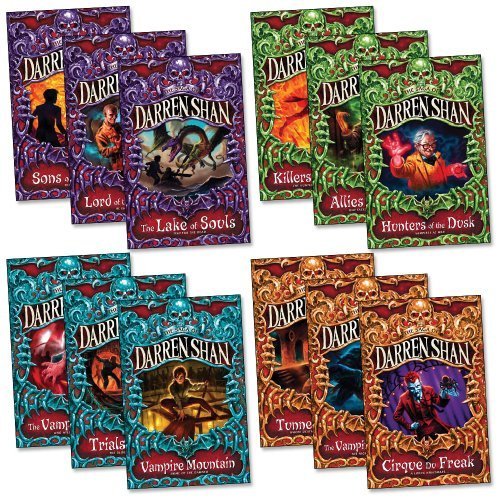
The Saga of Darren Shan, My Favorite Series!

Calling The Saga of Darren Shan a page turner is an understatement. It’s an incredibly dramatic, quick paced thriller, with more brilliant plot twists than you can count on your hands! Just reading one chapter is impossible. Each page leaves you excited for more, until soon enough you’ll realize that you’ve spent nine hours reading on your couch!

When the series starts, we learn that young Darren Shan has always loved spiders. So when he and his best friend Steve Leonard, nicknamed Steve Leopard for his wild and unpredictable nature, saw a beautiful spider at a freak show they were forbidden to go to, it piques his interest. And of course, there’s a plot twist. We find out that Larten Crepsley, the beautiful spider’s caretaker, isn’t who he seems to be. This begins the thrilling destiny that both Darren and Steve are tied to. 

Throughout the series you’ll meet good and bad vampires, a whole lot of spiders and toads, some freak show performers, a couple of dragons, a blob monster, a family of snake people, a passionate vegan, and even a pirate. There’ll be heartbreak, tragedy, mystery, suspense, and so many incredible plot twists that you’ll wish you had amnesia so you could enjoy them again!

Now, are you interested in reading The Saga of Darren Shan? Here’s what to do. First, get all twelve books. Don’t torture yourself by having to wait in between books. Second, clear a day to read. When you start, you will NOT want to stop until you’ve finished the series. Third, find a comfy space to read where you won’t be interrupted. Maybe grab a bottle of water or some snacks; you’ll be there for a while. 

-Caitlyn O.

The works of Darren Shan are available for checkout at the Mission Viejo Library. They can also be downloaded for free from Libby.

Top 5 Books w/ Quick Summaries

I thought I’d share a few books that’ll keep you inspired throughout the school year! 📚

  1. Stoner (John Williams): academic/campus genre; follows and explores William Stoner, a farmer’s boy who sacrifices his familial relationship in pursuit of literature. Throughout, he must face the failures within his career, workplace, and marriage, along with his losses as father to his daughter, whom he’s grown distant from. (10/10)
  2. 1984 (George Orwell): dystopian genre; follows and explores Winston Smith, a member of “the Party” who begins to retaliate (in quiet secrecy) against the totalitarian regime and its ruler, Big Brother. In this manner, Orwell examines the manipulation of truth (and thus facts) within politics, and how it impacts public opinion. (10/10)
  3. The Miniaturist (Jessie Burton): historical genre; filled with suspense, this novel follows and explores Nella Oortman, a young village woman who must face the challenges of love and obsession, twists and retributions, illusions and truth. For in Amsterdam, many secrets lie within. (10/10)
  4. To Kill a Mockingbird (Harper Lee): bildungsroman genre; Atticus (a Maycomb resident and lawyer), is tasked to defend Tom Robinson, an African American who is accused of raping a white woman. He takes on the case despite the public’s certitude (that) he won’t win. (10/10)
  5. The Alchemist (Paulo Coelho): fantasy/allegorical genre; Santiago, a young shepherd, goes on an adventure to discover an unimaginable treasure. Throughout, he learns to listen and follow his heart’s path, and that his dreams/passions are in fact a part of a larger whole: the universe. (9/10)

Honorable Mentions: Book Series Edition! 

  1. Witchlands (Susan Dennard): though the series is not quite complete (just books one through four are out; book five has yet to be given a release date), it’s worth the wait! Check them out on goodreads for more information; https://www.goodreads.com/series/124183-the-witchlands  (5/5)
  2. The Book Thief/I am the Messenger (Markus Zusak): though they’re not a series (but rather two books from the same author), they’re good enough to earn a spot as honorable mentions! Check them out on goodreads for more information; https://www.goodreads.com/book/show/19063.The_Book_Thief & https://www.goodreads.com/book/show/19057.I_Am_the_Messenger  (5/5)
  3. Ash Princess (Laura Sebastian): good news; all three books from the trilogy have been released! Check them out on goodreads for more information; https://www.goodreads.com/series/191507-ash-princess-trilogy (4.5/5)
  4. The Renegades (Marissa Meyer): more good news; all three books from the trilogy have been released! Check them out on goodreads for more information; https://www.goodreads.com/series/208653-renegades (4.5/5)
  5. The Poppy War (R. F. Kuang): extra good news; all three books from the trilogy have been released (+ an added collection of short stories that can be read here: https://rfkuang.com/2020/12/01/the-drowning-faith/). Check them out on goodreads for more information; https://www.goodreads.com/series/243623-the-poppy-war (4/5)

-Emilia D.

Film Review: The 33

The 33 is a movie based on a true story about an event that happened on August 5th, 2010. On this day, 33 miners got trapped under diorite. They were working in the San Jose gold and copper mine when the collapse occurred.

When the mine collapsed, the miners were forced to go to the refuge of 50 square meters of space. They had to survive on 3 days’ supply of food.

They were trapped in the refuge for 69 days. The Chilean Government sent ministers to help with the rescue. Many different companies, including NASA, helped with the rescue. The movie was very moving because it showed a group of everyday average people overcoming hardships. They came together and helped each other through the 69 days of pure fear and despair.

Citations:

https://en.wikipedia.org/wiki/2010_Copiap%C3%B3_mining_accident

https://www.bbc.co.uk/news/world-latin-america-11170852#florencio-avalos

-Ella Y.

The 33 is available for checkout from the Mission Viejo Library.

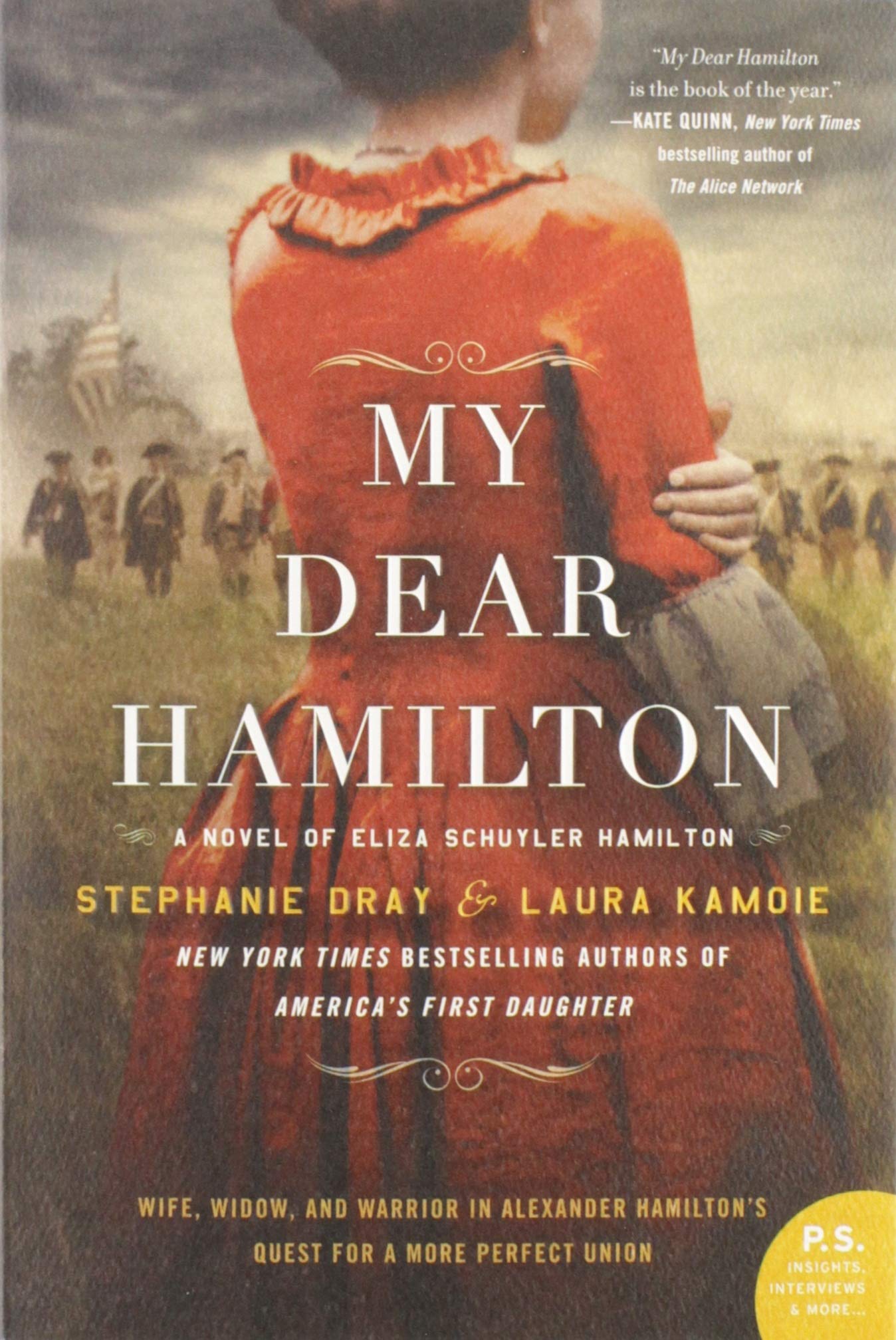
My Dear Hamilton by Stephanie Dray & Laura Kamoie – Book Review

This narrative by Stephanie Dray and Laura Kamoie was made by compiling the hundreds of letters written to and from Eliza and Alexander Hamilton. It starts with Eliza in her early twenties, a few months before she met Hamilton. She talks about her childhood and growing up in a conflicted nation. Her older sister (contrary to what the musical says), eloped at an early age and had a 2-year-old child before Hamilton arrived in the States. The book then splits into four sections:

1- A War for Independence. The first section begins with “I was someone before I met Alexander Hamilton.” This foreshadows her becoming a whole new person during the American Revolution, and how helping Hamilton with politics helped her in the long run.

2- A War for Peace. Eliza, having had a child of her own, Eliza helps Hamilton and James “Jemmy” Maddison with writing the Federalist Papers and trying to keep her kids out of the chaos that ensued after the revolution (Maria Reynolds has entered the room).

3- The War of Words. After just barely surviving Yellow Fever, Eliza and Alexander made up and no longer had issues. He builds her a giant house called the Grange, and she raises a few more children. She soon discovered that her second born, Ana, has some severe mental issues after witnessing her adopted sister leave. The Hamiltons try to ignore her problems, but some of them are too large to overlook.

4- A War for History. This final section talks about Hamilton and his son Philip’s death, and what she does afterward. Her sons all joined the revolt in the war of 1812, and Angelica’s sad death created a ripple effect that almost shattered her perception of her family (read the book to find out what happened)!

-Izzy W.

My Dear Hamilton by Stephanie Dray and Laura Kamoie is available for checkout from the Mission Viejo Library. It is also available for download for free from Libby.