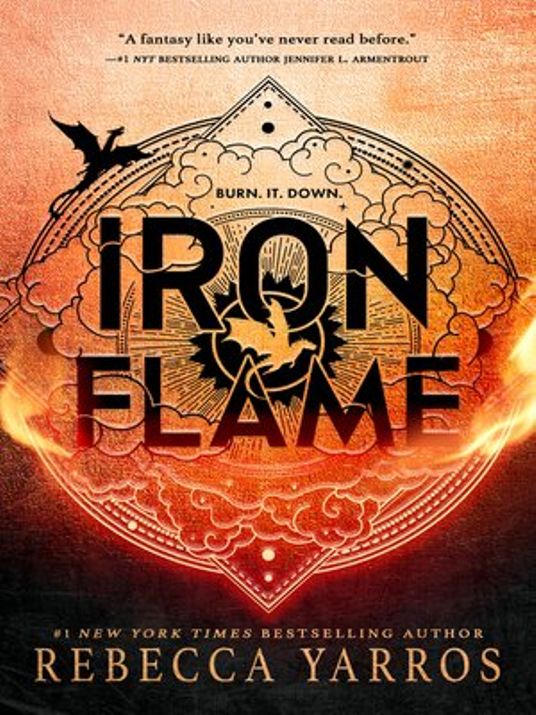
Iron Flame by Rebecca Yarros

**this review contains spoilers**

I was building up my anticipation for weeks on end after finishing Fourth Wing, for it’s sequel Iron Flame to release. Still following Violet Sorrengail and Xaden Riorson as well as other students in attendance at Basgiath War College. This book was actually longer than the first book with a whopping 600+ pages, but I was accomplished to finish it as quickly as I could to avoid spoilers.

Here, it picks up from a MASSIVE cliffhanger being that Violet’s brother, Brennan is in fact alive. The book picks up the storyline from when it ended and doesn’t skip over time but lets the readers return back to this fantasy world. Violet and Xaden are continually maintaining their relationship with ups and downs throughout the book. Especially with Xaden graduating from Basgiath, he is sent to a war post and isn’t in close proximity to Violet as they were in the first book.

More problems arise with more people knowing about the Venin and Wyvern which causes a panic amongst all students in attendance not only those in the Riders Quadrant. Officials, captains, generals, constantly argue with one another about what plan is truly beneficial for Navarre and to keep it brief, there’s a lot of stubbornness from both ends. Half of Basgiath leaves to go to Xaden’s home where they will continue their leanings; due to the Venin likely to attack Navarre. Here, Gryphon fliers join them which causes conflicts between Riders and Fliers but in the end they are able to put their differences aside.

Throughout Iron Flame, there is also the introduction of a lot of new characters which just adds to the depth of the storyline. Seeing snarky teenage Andarna is always a treat and can we talk about her being the SEVENTH type of dragon…..jaw dropping.

There are so many theories that have formulated because of Iron Flame, and I’m here for it. Does Xaden have any more secrets? How will he stop being a Venin? Does Violet have a second signet because of Andarna because a special dragon? To add on, would her second signet be something related to the dead? Especially with that moment between her and Liam while she was essentially getting tortured. Who knows, besides Rebecca Yarros! Those that have read this review probably will continue to read the 5-book series, and I’m excited to share this journey with my fellow readers.

-Madison C.

Iron Flame by Rebecca Yarros is available to checkout from the Mission Viejo Library. It is also available to download for free from Libby.

Understanding Globalization in the Past and Present

Below I have another historical essay which I created on the topic of Globalization throughout ancient history. I hope you enjoy reading it and are inspired to produce paper’s like these in the future!

“It has been said that arguing against globalization is like arguing against the laws of gravity.” – Kofi Annan

  1. Introduction

In our exploration of ancient civilizations throughout this course, we have delved into the intricate tapestry of societies such as the Khmer Empire, the Ming Dynasty, the Tupinamba, and the Spanish. A prevalent theme in this course has been how these civilizations established themselves within their borders. However, the meaningful engagement that these societies experience with one another emerges as a fascinating element in each of their histories. This revelation prompts us to reconsider the conventional timelines and narratives of globalization. By examining the rich tapestry of inter-civilizational connections, we aim to discern the nuanced dynamics that existed beyond the confines of individual borders, challenging our understanding of ancient societies as isolated entities.

  1. Historical Overview of Ancient Civilizations

At the heart of East Asia, the Ming Dynasty (1368-1644 CE) stands as a testament to the height of Chinese civilization. Under Ming rule, China experienced a cultural and economic renaissance marked by syncretic advancements in art, literature, and technology. Admiral Zheng He led the Ming’s maritime expeditions, exploring vast foreign territories, and connecting China to distant lands while fostering cross-cultural exchanges. The Admiral’s journeys promoted pluralism between the dynasty and other nations, such as the Japanese, led by Queen Himiko. Compared to its predecessors, the Ming Dynasty was far from isolated, as they actively interacted with neighboring regions, leaving an indelible mark on the interconnected history of the ancient world.

Meanwhile, the Khmer Empire of Southeast Asia (802-1431 CE) thrived as a powerhouse of culture and architecture. Centered around the magnificent city of Angkor and structured along the Mekong River, the Khmer Empire’s influence and territory extended across present-day Cambodia, Thailand, Laos, and Vietnam. In addition, the Khmer’s magnificent temple of Angkor Wat displays both the empire’s architectural prowess and reflects its syncretism with Hinduism and Buddhism. The Khmer Empire stood out for its religious syncretism through its fusion of Hindu, Buddhist, and Khmer ideals. The Khmer Empire’s trade networks and cultural interactions across Southeast Asia positioned itself as a key player in the transregional dynamics of the continent.

Turning our gaze to Europe, the Spanish played a pivotal role in shaping the narrative of the ancient world. The Spanish Empire, particularly during the Age of Exploration (15th-17th centuries), embarked on daring maritime expeditions, opening new avenues for global interaction. Their exchanges with the Americas transformed not only the Spanish but also the indigenous peoples they encountered, through major events such as Cocoliztli and the institutionalization of the Americas. This collision of worlds resulted in a complex intermingling of cultures, ideas, and commodities, challenging the perception of isolated civilizations.

In the lush landscapes of South America, the Tupinambá people thrived along the coastal regions of present-day Brazil. Their vibrant societies were deeply interconnected with the surrounding environment, emphasizing a harmonious relationship with nature. The Tupinambá engaged in elaborate trade networks and cultural exchanges with neighboring indigenous groups along with Portuguese explorers who created Feitorias and Engenhos throughout Brazil, assembling a dynamic web of connections that extended beyond geographical boundaries. The existence of the Tupinamba challenges the notion that globalization was solely a phenomenon of the Old World, offering a glimpse into the multifaceted nature of inter-civilizational interactions in the ancient Americas.

  1.  Rethinking Globalization: Khmer and Chinese Interactions

As we scrutinize the intricate web of inter-civilizational interactions, the spotlight falls on the exchanges of the Khmer Empire and the Ming Dynasty. In the realm of trade and cultural exchange, historical evidence reveals a vibrant network of connections, especially in religion. Serpent worship runs like a dark thread through all the mazes of Hindu literature and belief from the earliest to the latest. When Buddhism raised its head from the fold of Hinduism, the Sacred Naga again became active, and we find the Naga supporting and sheltering Buddha at the time of his enlightenment so that the seven-hooded head of the cobra becomes one of the symbols of Buddhism (Reed 212). Reed’s recounting of the serpentine aspect of Hinduism and the seven-hooded cobra of Buddhism, reveals the religious syncretism and globalization which stands as the foundation of the Khmer Empire’s culture. In addition, maritime activities played a pivotal role, exemplified by the Ming Dynasty’s ambitious naval expeditions and the Khmer Empire’s influential presence in Southeast Asia. The archaeological record, enriched with artifacts and historical documentation, provides a compelling narrative of economic and cultural interdependence displayed in these two formidable ancient powers.

Diplomatic and political techniques for expanding and maintaining territories further underscored the depth of collaboration and understanding of the Khmer Empire and the Ming Dynasty. While emphasizing their Chinese origins, the Ming relied on a melange of ruling practices that had been forged by earlier emperors, advisors, and military leaders. The Ming retained provincial structures used by the Yuan and reaffirmed the traditions of rule by officials and through imperial law (Burbank 204). These political structures and techniques passed down from the Yuan Dynasty to the Ming Dynasty, attest to the influence of globalization on the role of dialogue in fostering cooperative endeavors. These historical interactions challenge the notion of isolated civilizations, highlighting the Khmer and Chinese as active participants in a broader, interconnected world. The archaeological discoveries unearthed in this exploration offer a nuanced understanding, utilizing key terms related to trade, diplomacy, and cultural diffusion, reshaping our perspective on the origins of globalization.

  1.  Rethinking Globalization: Spanish and Tupinambá Encounters

In the crossroads of the Spanish Empire and the Tupinambá in South America, a fascinating tale of conquest, cultural exchange, and resilience unfolds. The impact of the Spanish conquest on the Aztecs and neighboring indigenous groups initiated a complex dance of cultural exchange. This encounter witnessed the blending of Spanish and indigenous traditions, revealing instances of cultural syncretism that defy simplistic narratives of conquest.

Delving into the perspective of the Tupinamba by foreigners, the Portuguese accounts by Hans Staden, reveals the way of the Tupinamba, casting a negative look on the Southern Brazilian tribes. The savages among whom the Portuguese live [the Tupiniquins] had traveled to the land of the Tuppin Imba to wage war on them and had captured a whole village and eaten the old people (Staden 59). Accounts such as that of Staden’s instantly give the reader a negative perspective on the culture of the Tupinamba, without showing any appreciation or respect towards the tradition of the Tupinamba. Amidst these interactions with the Portuguese, the Tupinambá showcased remarkable resilience, offering a counterpoint to narratives dominated by the conquering forces. Indigenous perspectives on the encounter with the Spanish provide crucial insights, emphasizing the importance of understanding historical events through diverse lenses.

The narratives of the Spanish and the Tupinambá, woven together, challenge traditional views of conquest and colonization. This exploration incorporates key terms related to colonization, cultural resilience, and indigenous perspectives, contributing to a nuanced understanding of how these ancient interactions continue to shape our understanding of globalization in the contemporary world.

  1. Agree or Disagree?

The Ming Dynasty’s maritime expeditions, as highlighted in lectures and readings, exemplify a deliberate effort to establish connections beyond regional boundaries. The archaeological evidence supporting the existence of trade routes and cultural diffusion of the Khmer Empire and the Ming Dynasty further substantiates the idea that globalization was not a recent phenomenon but had roots in the ancient world.

Similarly, in the context of the Spanish and Tupinambá, evidence from lectures and readings underscores the significant impact of the exchange between these two worlds. The blending of Spanish and indigenous traditions, coupled with the establishment of trade networks, emphasizes the intricate economic and cultural interdependence that existed. The resilience displayed by the Tupinambá against the Portuguese challenges the narrative of passive indigenous societies, highlighting a dynamic engagement that was crucial in shaping the complex tapestry of globalization.

As we delve into these historical narratives, it becomes increasingly apparent that the interconnectedness of ancient civilizations surpassed mere happenstance, pointing towards deliberate efforts to engage with the broader world. The evidence gleaned from these interactions solidifies the argument that globalization is not a recent phenomenon but rather a continuous thread woven into the fabric of human history.

  1. Personal Reflection

This exploration of ancient civilizations and their interconnections has undeniably influenced my perception of globalization. Witnessing the intricacies of trade, diplomatic negotiations, and cultural exchanges of these ancient civilizations, has completely shattered any preconceived notions of isolated societies that I had before this course. The realization that these interactions transcend geographic borders has prompted a reconsideration of the very essence of globalization. It emphasizes the notion that the roots of globalization delve deeper into history than I had previously acknowledged.

  1. Relevance to the Contemporary World

The lessons obtained from the ancient interactions of these four ancient civilizations offer profound insights into our present globalized reality. Parallels can be drawn between the economic interdependence, cultural syncretism, and resilience witnessed in ancient times and the dynamics of our contemporary globalized society. For instance, the violent approach of the Spanish towards the indigenous people which they encountered can be related to the Nazi’s relationship with the Jewish people during World War II. I [Columbus] found very many islands peopled with inhabitants beyond number. And, of them all, I [Columbus] have taken possession for their Highnesses, with the proclamation and the royal standard displayed; and I [Columbus] was not gainsaid (Columbus 268). This excerpt from Columbus’s letter to Luis de Santangel describes his ‘possession’ of the indigenous people whom he found. These actions seem to have recurred again 400 years later with Adolf Hitler through his mass genocide of the Jewish people, and forcing them into aiding him in the war effort by participating in his intensely laborious concentration camps. All in all,  by understanding the complexities of inter-civilizational interactions in the past, we gain a nuanced perspective that aids in navigating the complexities of our current world.

  1. Conclusion

In conclusion, the examination of the Khmer, Chinese, Spanish, and Tupinambán interactions reshaped our understanding of ancient civilizations. The evidence from the readings and lectures of this course challenges the perception of isolated societies and prompts us to rethink the origins of globalization. Whether through the vibrant exchanges in the Khmer Empire and Ming Dynasty or the complex dynamics of the Spanish and Tupinambá, the ancient world emerges as a testament to the interconnectedness that laid the groundwork for the globalized world we navigate today. As we continue to explore and question traditional historical narratives, we are reminded that the roots of globalization stretch far into the past, connecting us to the diverse tapestry of human history.

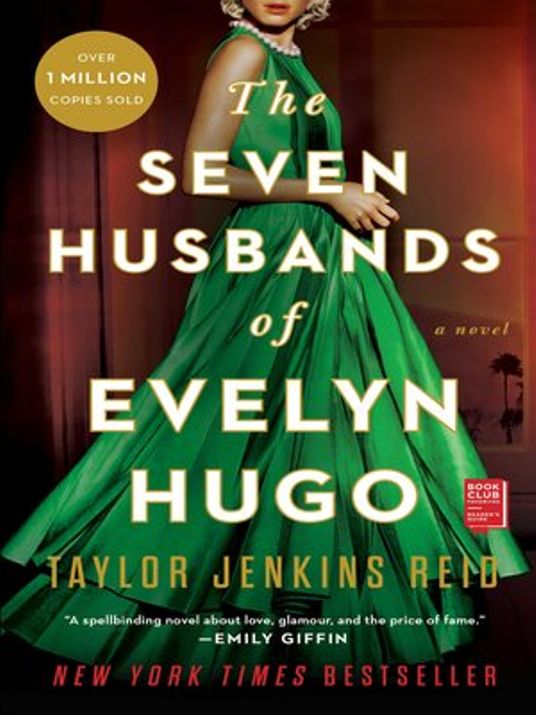
The Seven Husbands of Evelyn Hugo by Taylor Jenkins Reid

The Seven Husbands of Evelyn Hugo is a fantastic read that has blown up on TikTok as one of the prized #BookTok books. That is where I first discovered the book before heading out to buy it at my nearest Barnes and Noble.

The story starts with one of our main characters, Monique Grant who works as a journalist at a magazine called Vivant. She is the storyteller that Evelyn Hugo, one of the most renowned actresses personally invited to tell her life story. Not some baloney that would sell copies, but the hard, cold, and raw truth. Monique is a regular, even a rookie journalist, not some big shot everyone knows. Why would Evelyn Hugo, someone who is known for not exposing her personal life into the public choose her to make her debut? That is a startling question with a soul crushing answer.

The layout of the story is very, very interesting and different. You would jump from Evelyn’s story to suddenly, it became the interview between Monique and Evelyn ending. As well as different gossip and rumour newspapers cutting between chapters. I really liked it as it dives into the story before abruptly cutting off at the suspense and making you never want to put it down.

This was a book that I could not put down. The mysterious and glamourous Evelyn Hugo has captivated me with her emotional take on Hollywood and how much many actresses had to sacrifice behind the scenes. The Seven Husbands Of Evelyn Hugo is a book that mainly will enjoy. If you like romance or psychological fiction, this is a must read.

The Seven Husbands Of Evelyn Hugo by Taylor Jenkins Reid is available to checkout from the Mission Viejo Library. It is also available to download for free from Libby.

September 29 Oakland Athletics vs. Los Angeles Angels

Today I went to an Angels game with my mom and my baby sister. I got to the line at 3:40 p.m. so that we could get more balls and autographs.

Oakland Athletics Starting Lineup:

  1. Ryan Noda: First base
  2. Zack Gelof: Second base
  3. Brent Rooker: Designated hitter
  4. JJ Bleday: Left field
  5. Aledmys Diaz: Third base
  6. Lawrence Butler: Center field
  7. Esteury Ruiz: Right field
  8. Nick Allen: Shortstop
  9. Tyler Soderstrom: Catcher

Game Result:

Oakland Athletics vs. Los Angeles Angels

1-5 Angel Win

Balls and Autographs from Players and Coaches:

  • An autograph on a ball by an Angels pitcher Ben Joyce.
  • An autograph on a ball by an Angels pitcher Andrew Wantz.
  • An autograph on a ball by an Angels pitcher Carlos Estevez.
  • An autograph on a ball by an Angels pitcher Jose Soriano.
  • An autograph and a ball from an Angels catcher Logan O’Hoppe.
  • A baseball from an Angels pitcher Chase Silseth.
  • An autograph on my baseball glove by an Athletics pitcher Ken Waldichuk.
  • An autograph on my baseball glove by an Angels position player Brett Philips.

Divergent – Book vs. Movie

NOTE: SPOILERS AHEAD

Recently, I got the chance to watch the movie Divergent over Thanksgiving break. I was curious to see how this movie was since Divergent is one of my favorite books. I was pleasantly surprised by the film.

A Quick Introduction

Divergent, written by Veronica Roth, is a dystopian novel in future Chicago. To give you some context, Divergent is about a young teenager named Tris who has to decide between five factions. These five factions value different things and organize society. Abnegation – selflessness, Candor – truth, Erudite – intelligence, Dauntless – courage, and Amity – peace. To determine which faction Tris is to be placed in, she takes a test that tells you which factor you belong to. However, the test determines her to be Divergent–meaning she belongs to multiple factions. Unfortunately, this is extremely dangerous; the government cannot control divergence. After contemplating her results, Tris decides to join Dauntless. The story continues to describe her struggles as a Divergent and the corrupt faction Erudite.

My Ratings

Book – 10/10

Movie – 8.5/10

Comparing the Two

After watching the movie, the plot follows the story, but minor details are left out. For example, the film does not show how the evil leader of Erudite almost drowns Tris. While this scene is intense, it is crucial for Tris’ character development. Her character development changes her relationships with family and friends, which makes the story more engaging. The movie did a great job of bringing the book ‘to life’ and had accurate portrayals of the characters. However, as I mentioned earlier, the movie leaves out important plot details essential to making Tris a stronger, more determined character.

In comparison, the book dives into Tris’ more profound thoughts and emotions. In contrast, the movie doesn’t intricately show her graduation process from childhood to adulthood. In the part of the plot when the trainees attempt to murder Tris, the book describes the scene more graphically and shows Tris’s inner thoughts, which lead to her hatred towards other important characters. These parts of the story help to strengthen (and loosen) the bonds between Tris and her friends. I thought that these minor details made the story more interesting. Since the movie did not include these details, the plot was weaker. While Divergent is a great movie, the book is significantly better. Both of the book + movie are worth reading or watching. However, you should read the book first.

Divergent by Veronica Roth is available to checkout from the Mission Viejo Library. It is also available to download for free from Libby

The film Divergent is also available to checkout from the Mission Viejo Library.

Fahrenheit 451 by Ray Bradbury

Over the summer, I was told I needed to read two books to be ready for my next school year. One of them being Ray Bradbury’s Fahrenheit 451. I remember I asked about the book to others who had already read it. I was given various opinions from both sides of the spectrum. I had high hopes going into the book, seeing as it was a classic, but unfortunately, it wasn’t exactly my taste. 

Fahrenheit 451 is set in a futuristic, dystopian world where books were illegal and the lives of many people were dull and so similar that you would be outcasted if you had a different opinion. The main character, Guy Montag, is like any other guy in his city, but what sets him apart is that he works in the fire department. Unlike what we know today, the fire department in the book actually creates fires and burns places down, specifically places infested with knowledge and books. Throughout the book, Montag discovers how wrong society is and begins to stand up for himself and others. Of course, this isn’t taken well and the government tries to shut him down, putting Montag’s life in danger. Montag, finally gaining a sense of humanity and individuality, does his best to gain and spread knowledge, although it causes him harm.

The overall plot of Fahrenheit is great and really enjoyable if you think about it. But in the moment of reading, it can be super hard to immerse yourself into Bradbury’s words. While I am all for repetition to emphasize the importance of an idea, some of the phrases in the book felt like a chore to read through as it was a similar idea that was mentioned again and again. And maybe this was just me, but it was difficult to picture what exactly he was describing in scenes. For example, he would describe a room that could have thousands of different depictions and nothing was good enough for me to settle on. It frustrated me that I couldn’t picture the image Bradbury wanted to paint. 

I think the main thing that influenced my disharmony with the book was the slow buildup of characters. The two characters I found most interesting were Clarisse and Beatty. Clarisse was a teenage girl who was considered an oddity in the society and was socially outcasted. It was nice to read the interactions between Montag and Clarisse mainly because it finally showed another perspective and was the first step to help Montag find himself. Beatty was the captain of Montag’s fire department, but unlike Montag, was his own person and had his own beliefs which happened to match with the government and rules he enforces. Both Beatty and Clarisse, while they were stepping stones for Montag’s development, also gave the book variety and a set of very enjoyable characters in the long run. However,  it took super long for Montag’s development to happen and most of the other characters didn’t show up often and were mainly only used to help grow Montag. Most of the characters were less secondary protagonists and more like prominent side characters which made it hard to read, since Montag was already a difficult character to get attached to because of his lack of character.

Fahrenheit 451 has a good plot and storyline, but I felt like there could have been more done with other aspects, such as the characters and descriptions. The book is by no means bad, but it just doesn’t fit my tastes. While this book is really my type, I wouldn’t stop anyone from reading and experiencing it myself. If you ever find yourself getting to read this book, by all means, please do. Give the book a shot, maybe you’ll enjoy it!

-Nicole R.

Fahrenheit 451 by Ray Bradbury is available to checkout from the Mission Viejo Library. It is also available to download for free from Libby.

Embracing Fall Craving: Vegan and Gluten- Free Pumpkin Spice Latte Recipe

As the fall season approaches, the cooler weather makes your body crave warm, comforting foods. I’m no doctor, but we crave warm food during this time of year, probably because we need extra calories to keep ourselves warm. Instinctively, your body seeks to regulate and maintain warmth by eating more warm foods. Consuming warm foods can help raise your body temperature, making you feel more comfortable in cooler weather.

Fall is also associated with cozy, comfort, and warmth. A time when we are cozy up near the fire with family and friends with a cup of warm drink. I am physically comforted when I drink hot beverages and psychologically evoke the feeling of security and well-being. 

Fall vegetables and fruits are also abundantly available, making it easier to have homemade comfort foods at home. Fall food is also more nutrient-dense, which helps the body survive the harsher weather.

Warm foods also have more sensory appeal because of the palate’s rich aroma and robust flavor.

My favorite is pumpkin; this fruit is so hardy and abundant in the fall that you can make anything from soup to dessert to latte.  

I know during this time of year, Starbucks always has their Pumpkin Spice Latte; being gluten-free and vegan, my mom often makes this drink at home because she can’t always get it. We experimented and found a recipe that tasted even better and healthier than the Starbucks version. Give it a try, and experiment and find your own recipe.

Vegan and Gluten-free Pumpkin Spice Latte 

INGREDIENTS

  • 1.5 cups of creamy dairy-free milk like coconut or Macadamian
  • 2/4 cup strong brewed coffee or coffee alternative (like dandelion root)
  • 3.5 tablespoons organic pumpkin puree
  • 2.5 tablespoons pure maple syrup or dark, raw honey or monk fruits(sugar-free alternative)
  • 1 teaspoon pumpkin pie spice 
  • 1/2 teaspoon vanilla extract
  • Sprinkle of sea salt
INSTRUCTIONS 
  • Suggestions: Creamier milk will give this latte a richer and more satisfying taste, as less creamy milk will make the spices not dissolve. Also, the strong coffee will make it more like a Starbucks pumpkin spice latte. 
  • Place all ingredients in a blender in the order listed and blend until very frothy.
  • Then, Add the liquid to a small pot over low heat. Once it comes to a gentle simmer, cook for 2 minutes, whisking it continuously until steamy. Don’t overcook it.  
  • Divide into 2 mugs and serve with a sprinkling of pumpkin spice and vegan whipped cream. 

Enjoy experimenting!

Bella H.

Book Review: A Burning by Megha Majumdar

Recently, I read A Burning by Megha Majumdar, which is mainly about the story of Jivan, a Muslim girl living in India, who comes from a less fortunate background. She is accused of a crime she didn’t commit, and there are two other characters, Lovely, an aspiring actress, and PT Sir, Lovely’s old gym teacher who is trying to move up in society. This book was definitely a good read, as it is told from multiple perspectives, as well as exposing social issues in India.

The novel starts with Jivan making a post on Facebook regarding a recent terrorist attack that happened at a train station in the Kolabagan slum, where she lives. In this part of the story, the author gives important background into who Jivan is. After a brief online argument with another woman regarding this issue on Facebook, she makes her own post criticizing the government for their lack of action, resulting in suspicion of assisting or participating in the terrorist attack being placed on her, and eventually leading to her arrest. The story then shifts to the perspective of Lovely, who is a hijra, which is considered the “third gender” in India, and an aspiring actress. this part of the story gives background on her as a person as well. then, the perspective shifts to PT Sir, the only male teacher at an all girls school, whose desire to move up in society eventually causes him to join the JKP, a right-wing political party in India.

As the story progresses, both Lovely and PT Sir realize that they must work against Jivan in the ensuing legal case in order to boost their own position in society. This causes both of them to work against Jivan in her already precarious position. Although I won’t spoil the ending, This story makes us question whether we will choose our own personal paths and careers over the well-being of others, and it brings up the question of character. However, it also exposes other issues in India, such as the persecution of minority groups, as well as corruption within politics. This was a great book in my opinion, as the shifting perspectives between the three main characters in this book really gives a good view into the world within this story. All in all, this was a great read, and I would recommend it for anybody who is interested in learning about social issues as well as those looking for an interesting read!

A Burning by Megha Majumdar is available to check out from the Mission Viejo Library. It is also available to download for free from Libby.

Anna and the French Kiss by Stephanie Perkins

After her dad ships her off to the School of America in Paris (SOAP) for her senior year of high school, Anna meets St. Clair, a young boy with a British accent, who soon makes her forget her homesickness and begin to fall in love with more than just Paris.

There’s just two problems. He has a girlfriend who also just happens to be her neighbor and best friend, and Anna may or may not have a crush of her own back home, Toph.

Anna and The French Kiss is a truly beautiful romance filled with fluffy scenes between Anna and St. Clair as the two go to the theater, spend Thanksgiving with the each other, and visit Les Jardins de Luxembourg, the place where their romance begins to flourish.

Yet, personally, Anna can be a little hypocritical with the other characters in the novel. For example, Anna immedietely feels betrayed and considers breaking off her friendship with her childhood friend Bridgette after finding out that she started dating her old crush without telling her. However, Anna also goes behind her best friend Meredith’s back, choosing to continue her “friendship” and feelings with St. Clair, despite him already dating Meredith.

In spite of this fact, however, St. Clair truly is lovable and sweet, comforting Anna when she’s homesick and defending her against Ellie, his ex-girlfriend. Yet, even going so far as conquering his fear of heights for Anna, the book truly creates heartfluttering scenes atop Point Zéro as Anna and St. Clair begin to realize that home is when they’re together.

Anna and the French Kiss by Stephanie Perkins is available to check out from the Mission Viejo Library. It is also available to download for free from Libby.

My Favorite Camping Destinations

Throughout my life, I’ve always loved camping with my family and friends over the summer break. During the school year, I look forward to spending time with my loved ones exploring the beautiful sights of nature. My family and close friends started out with local campsites and beach camping, but over the years, we’ve ventured far and wide to see some of the views of a lifetime with our growing camping family.
Following are some of my favorite camping destinations that I would fully recommend!

Jackson Lake, Grand Teton National Park

1. Grand Teton National Park, Wyoming
During the summers of 2022 and 2023, my family and our friends camped in the Tetons for ten nights, and I would say both trips were the highlight of my summer. We camped by Jackson Lake, a beautiful lake with a beautiful view of the mountains, and the scenery was incredible. There are many beautiful lakes and other views nearby, and Yellowstone National Park is only an hour’s drive away. At Grand Teton and in the nearby town of Jackson Hole, there are many fun activities, like paddle boarding and kayaking on the lakes, hiking, sightseeing, horseback riding, river rafting (my favorite!), biking through town, and many more! I also love the unique restaurants, ice cream shops, and souvenir shops in Jackson Hole. Overall, it makes for an exciting experience!

Secret Beach, Oregon

2. Brookings, Oregon
I’ve only been to the Oregon coast once, but I’m hoping to go again many more times. The coast is so beautiful and serene, and the hikes are scenic with breathtaking views and greenery. Camping there really puts my mind at peace because it is so calm and picturesque there. For me, the long drive was completely worth it. There is so much to explore, and I would of course recommend traveling there!

Carpinteria State Beach, California

3. Carpinteria State Beach, California
Carpinteria is a place that will always feel like my home away from home, as I’ve camped there almost every year for a long time. The beach is gorgeous, the waves are perfect for swimming, and there are great trails for hiking as well. It’s also really fun to walk or bike through town, where my favorite places are the ice cream shops, thrift stores, record stores, candy shops, antique stores, and coffee shops. All in all, it’s a beautiful beach not too far away with lots of fun things to do.

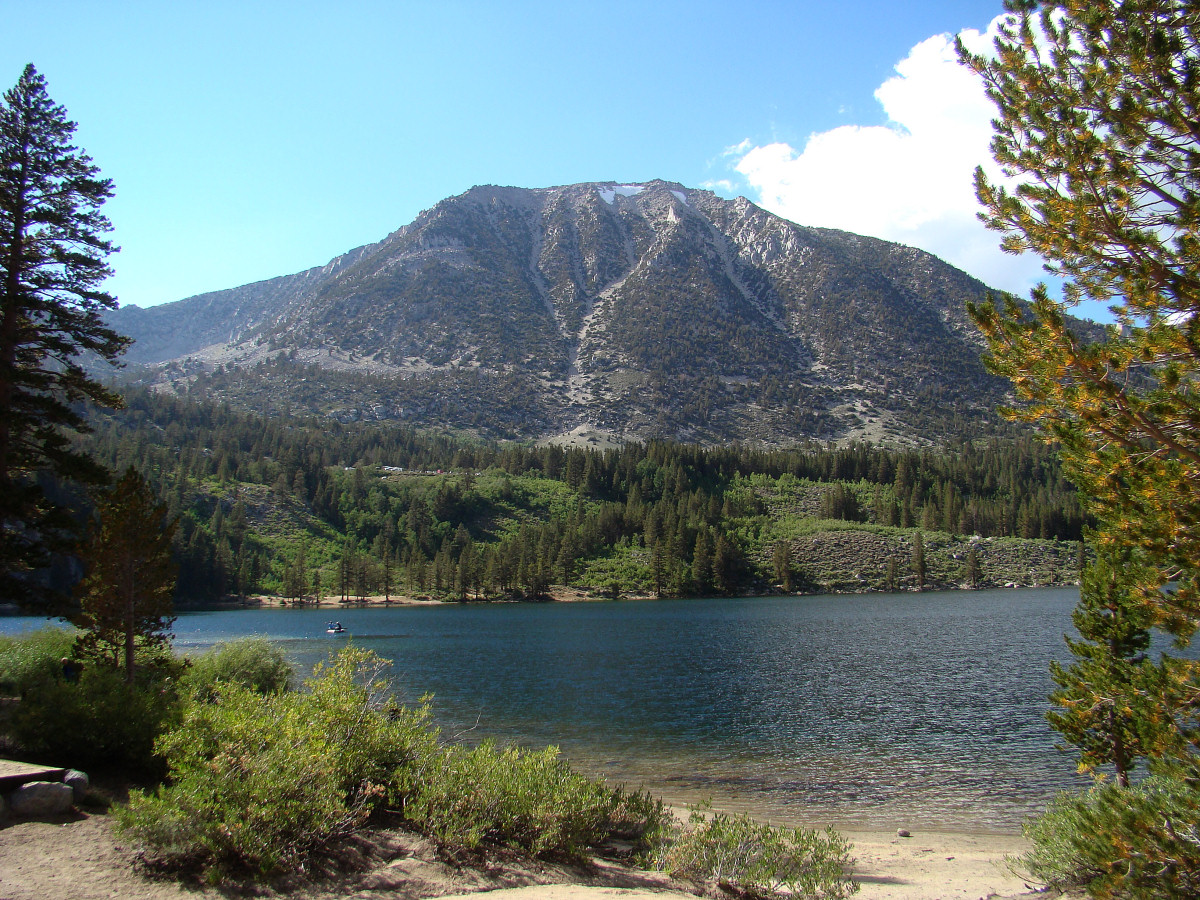
Rock Creek Lake, Inyo National Forest

4. Inyo National Forest, California
I’ve camped and sightseen at many places in Inyo National Forest, including Rock Creek Lake, Twin Lakes, Lake Mary, Lake George, and more, all being beautiful places with amazing views and waters great for swimming, paddle boarding, and kayaking. I’ve also biked around and taken the trolley through the town of Mammoth Lakes, where there are excellent restaurants and bakeries. One thing my family loves to do there is hike the trail to Gem Lake from Mosquito Flat. The trail is ten miles, but what I love about it is there are views the whole way there, so you can turn back whenever you want without missing out; there is a lake about every mile on the trail. On the way to Inyo, there is a great bakery in Bishop called Erick Schat’s Bakery, which has amazing breads, jams, sandwiches, pastries, cakes, and fresh-squeezed orange juice. Overall, trips to Inyo National Forest are a great experience.

Hume Lake, Sequoia National Forest

5. Hume Lake, California
Hume Lake is a beautiful lake, perfect for swimming, paddle boarding, and kayaking. The view is amazing, and there are places all around the lake to sit and relax by the water. Something my friends and I love to do there is jump into the water off of the large rocks; it’s always so much fun. There is also a general store by the lake where you can get icees, milkshakes, ice cream, candy, soda, Hume Lake hoodies, and lots of other snacks and appliances you might need while camping. Hume Lake is beautiful and it is so much fun to camp at!

To conclude, these are my favorite places to camp at that I would absolutely recommend if you like camping, or even just traveling or sightseeing. I promise that you’ll have an amazing experience and see some gorgeous views!

-Lam T.