Dear Mr. Henshaw by Beverly Cleary

Dear Mr. Henshaw is a short novel by Beverly Cleary. An eleven-year-old boy named Leigh Botts lives with his mother in a tiny house that used to be someone’s summer cottage. Ever since second grade, Leigh had written letters to an author named Mr. Henshaw every year. Finally, Mr. Henshaw writes back to Leigh and asks him a series of questions. This book is a compilation of Leigh’s letters to Mr. Henshaw, along with excerpts from Leigh’s personal journal.

Leigh’s letters to Mr. Henshaw reveal many personal challenges. Leigh’s parents are divorced, and his father is negligent. Leigh is also struggling to fit in at his new school. Among other problems, someone is stealing Leigh’s school lunch. To make matters even worse, Leigh finds out that his dog had disappeared during a snowstorm. Leigh blames his father for this loss, and does not know if he can ever forgive his father for his negligence.

This book deals with many difficult topics. I was surprised by the subject matter of this book because Beverly Cleary’s books usually have a light-hearted and playful storyline and tone. On the other hand, this book has a somber tone overall. It deals with weighty issues that may be difficult for some people to read about. However, I feel that the author dealt with these issues very well. This book is very realistic and well-written. Many people can relate to the challenges that Leigh is coping with, and I appreciate the tender and bittersweet emotions that are conveyed in this book. The book is well-deserving of the Newbery Award and I would recommend it to almost anyone, with a warning that it deals with sensitive issues.

Dear Mr. Henshaw by Beverly Cleary is available to check out from the Mission Viejo Library. It is also available to download for free from Libby.

SUMMER BUCKET LIST!

School is officially out! 

But, what are kids like me supposed to do with all this newfound free time. I’m sick of sitting around and being bored, so here are 20 fun activities to do this summer:

  1. Go on a hike
  2. Have a shopping day
  3. SLEEPOVERS!!!
  4. Watch all of the Marvel movies in chronological order
  5. Do every single dance on Just Dance and get 3 megastars
  6. Paint your room
  7. Go on a road trip
  8. Learn how to knit
  9. Volunteer with an organization
  10. Read 40 books
  11. Go to the beach
  12. Find a music artist and listen to every song/album by them
  13. Paint
  14. Binge a show
  15. Learn how to play an instrument
  16. Travel out of state
  17. Rollerskate/Rollerblade
  18. Do a coloring book
  19. Go to the pool
  20. HAVE FUN!

Don’t forget to visit the library for books, movies (DVDs or Blu-Ray), games, and activities! You can also stream music or movies free with your library card.

The Fall Guy

Similar to his work on the Deadpool films and Bullet Train, David Leitch brings comedic energy and intense action in his new movie, The Fall Guy. Starring Ryan Gosling as Colt Seavers and Emily Blunt as Jody Moreno, this new film brings emotional moments along with “dumb-fun” action sequences.

The Fall Guy is a must-watch for all audiences, whether you are looking for a break from “superhero fatigue” or just want to experience something new.

Spoiler-Free Synopsis from Rotten Tomatoes: He’s a stuntman, and like everyone in the stunt community, he gets blown up, shot, crashed, thrown through windows and dropped from the highest of heights, all for our entertainment. And now, fresh off an almost career-ending accident, this working-class hero has to track down a missing movie star, solve a conspiracy and try to win back the love of his life while still doing his day job. What could possibly go right?

While the standout performances by the main actors Ryan Gosling and Emily Blunt are the main draws to watch the film, other characters also shine. Personally, I believe that the character of Dan Tucker, played by Winston Duke, was a clear standout. Duke’s character stole the show whenever he was on screen. His role as Seavers’ “wingman” and reliable partner made him a very likable character. On the opposite side of the spectrum, the film also includes detestable villains. Their unlikability encourages the viewer to root against them, making the ending much more satisfying.

In addition to the stellar score, 2 song choices in particular stand out. The song “I Was Made for Lovin’ You” is included in many scenes in the movie, performed by both KISS and YUNGBLUD. Additionally, I enjoyed the inclusion of Against All Odds (Take a Look at Me Now) performed by Phil Collins.

A review of this film would not be complete without recognizing the stunt work. The car “cannon roll” included early on in the film has broken the world record for most rolls in a car with 8.5 rolls (previously held by the film Casino Royale with 7 rolls.

There are many other notable stunts, but I believe that those should be watched and not spoiled.

(Image from the right extracted from an article by ign.com)

Overall, the combination of record-breaking stunts, music choice, and characters makes The Fall Guy a must-watch. I highly recommend viewing the movie in theaters before you watch it on streaming services.

The Great Gilly Hopkins by Katherine Paterson

The Great Gilly Hopkins is a Newbery Honor award-winning book by Katherine Paterson. The story is told from the perspective of eleven-year-old Gilly Hopkins. Gilly is a foster child who idolizes her birth mother and wants to live with her again. Life has been difficult for Gilly because she has been forced to live with many different foster families instead of with her birth mother. Gilly is intelligent but difficult to manage. She takes her anger and frustration out on others and does not get along well with her foster families. Gilly has developed a reputation for being rude and uncooperative, and her behavior only seems to be getting worse.

As the story begins, Gilly is sent to live with yet another foster family. Her new foster mother is Mrs. Trotter. Trotter is different from the other foster mothers that Gilly has lived with, but Gilly is determined to escape from this new foster home. She comes up with a plan to try to get her birth mother to come and take her away from Trotter. The scheme does not go as planned, but Gilly comes to realize that the Trotter home is not so bad after all.

This book is quite well-written. The characters are interesting and the story is entertaining. However, I did not enjoy everything about this book. I found Gilly to be quite annoying and even unlikeable at times, although her misbehavior is an important element of the story. Also, Gilly sometimes uses inappropriate and offensive language that I did not appreciate for a children’s novel, even though Gilly and the other characters are portrayed in a very realistic way.

Overall, this book flows well and is quite engaging. Despite Gilly’s brash behavior and improper language, I sympathized with her challenges. Her rudeness and anger seem to be natural reactions to the difficult circumstances of her life. I appreciate that this book also includes kind and loving characters who demonstrate patience toward Gilly. This book shows that there are good people in the world, despite all of the bad things that can happen.

The Great Gilly Hopkins by Katherine Paterson is available for checkout from the Mission Viejo Library. It can also be downloaded for free from Libby.

The Origin of Volleyball

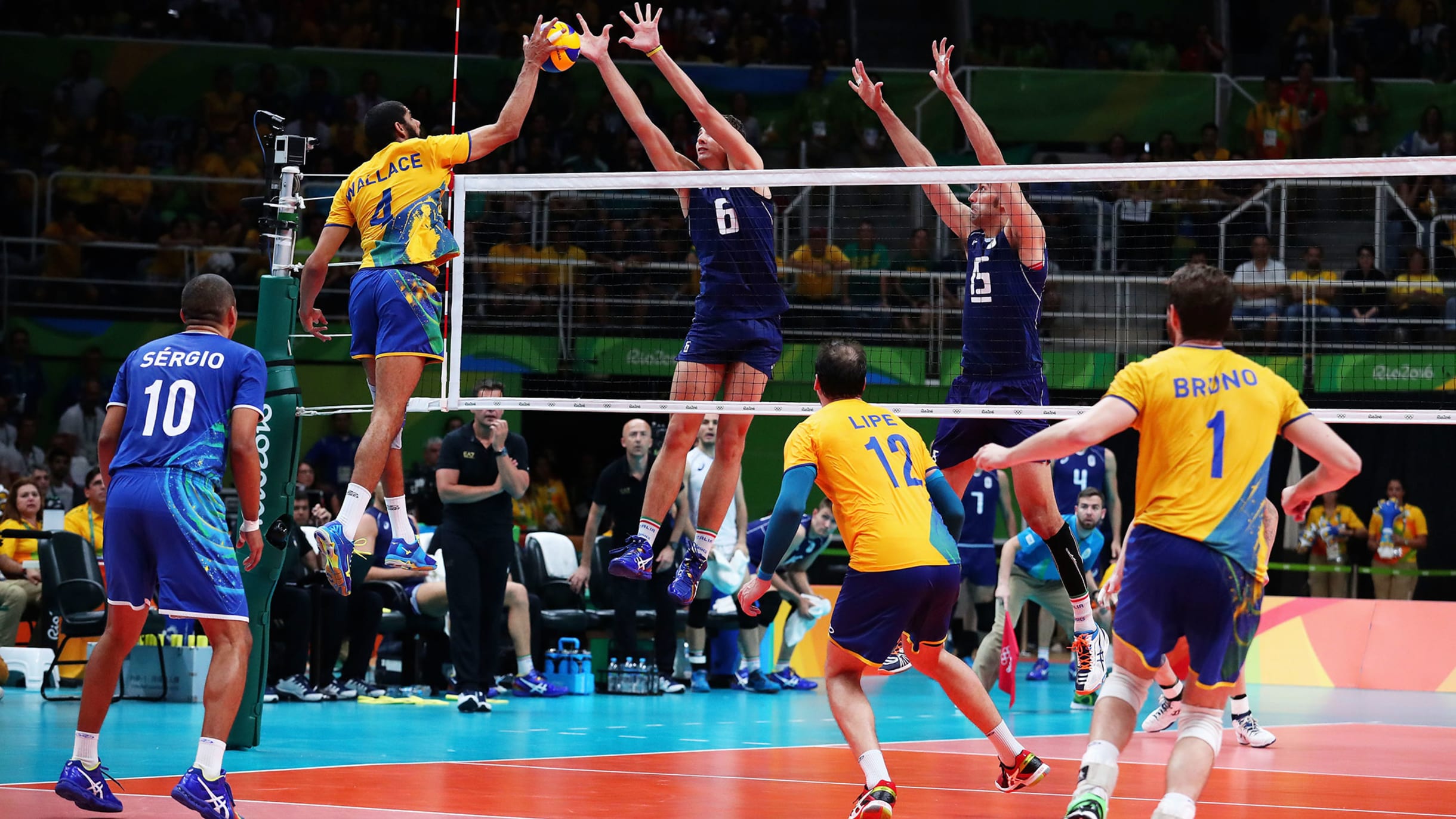
Men’s volleyball is one of the fastest-growing sports in the United States, having increased by 40% since 2017. This fun and easy-to-learn sport has a rich and interesting beginning, and it all started in 1895, at a YMCA in Holyoke, Massachusetts.

William George Morgan was born on January 23, 1870, in the town of Lockport, New York. Morgan attended the Northfield Mount Hermon Preparatory School, where he met James Naismith, the future inventor of basketball. After that, he attended the International Young Men’s Christian Association Training School (now known as Springfield College) in Massachusetts, where he and Naismith both pursued careers in physical education. In 1895, Morgan moved to Holyoke, Massachusetts, where he became the Director of Physical Education at the local YMCA.

Morgan noticed that while playing basketball, the non-athletic/older men playing would have a hard time keeping up with the strenuous physical activity involved. He decided that he wanted to make a different game, similar to basketball, but more inclusive and easier to play. Morgan used ideas from handball, tennis, badminton, and his own experience to develop his new game.

The game would feature:

  • A 30 feet wide, 60 feet long playing area
  • A 6-foot, 6-inch net in the middle, separating the play area into two halves
  • 5 people on each side of the court, making a total of 10 players
  • A ball, which would be sent over the net in a “volley”
  • Innings (inspired from baseball), later called “sets,” to add a competitive tone to the game

A problem that Morgan had was finding a ball to use for his new game. A basketball was too heavy and hard, and just the bladder of the basketball itself was too light, so he contacted A.G. Spalding & Bros to make him a custom ball. They created a leather ball, around 26 inches in circumference, and was the perfect weight for his sport, 9-12 ounces. Finally, all the new sport needed was a name, and Morgan named it “Mintonette,” a word derived from badminton.

In 1896, William Morgan first presented his sport at the to the YMCA Directors of Physical Education at the YMCA in Springfield. The object of the game was to keep the ball off the floor as it went from one side of the net to the other. One person that was especially intrigued was Professor Alfred T. Halsted, who was the first person to suggest naming the sport “Volley ball,” later formed into one word, volleyball.

As the years went by, many major things happened:

  • 1900 – Spalding starts to produce the volleyball
  • 1920s – First beach volleyball courts are created in Santa Monica, California
  • 1922 – First YMCA volleyball national championships held in Brooklyn; 27 teams appeared
  • 1928 – the United States Volleyball Association (USVBA) was created, which made rules and held tournaments (now known as USA Volleyball)
  • 1937 – USAV recognized as the national governing body for the sport
  • 1947 – FIVB (The Federation Internationale De Volleyball) was founded
  • 1964 – Volleyball was introduced to the Olympic games in Tokyo, Japan
  • 1983 – The Association of Volleyball Professionals (AVP) is formed
  • 1996 – Two-man beach volleyball becomes an Olympic sport

Book vs. Movie: All Quiet on The Western Front

Disclaimer: The movie being compared is the newest 2022 movie.

All Quiet On The Western Front is a classic anti-war novel depicting the tragedies of the western front during World War I. Set from the viewpoint of the Germans, it features Paul Baumer and the set of ‘life and death’ colleagues he makes in the army. Rather than a hopeful take on the war, the author takes from his own experience to realistically express the war’s effect on soldiers and its moral implications.

While difficult, the best advice I can give for readers is to not get too close to any character ❤

Book Rating: 10/10 Movie Rating: 8/10

  1. Signing of the Armistice
    • Book: There is no mention of the signing of the armistice and only through a rumor at the end is it known that the war is coming to a close
    • Movie: Slowly throughout the movie, it cuts to the signing of the armistice. Specifically, it details the heavy restrictions the French politicians place on Germany as a clause in the armistice.
  2. Going Back Home
    • Book: There are two scenes in the book where Paul returns home for rest and recuperation before going to war. Mainly depicts how Paul doesn’t fit in and feels like the ‘lost generation.’
    • Movie: There are no scenes where Paul returns home.
  3. Timeline
    • Book: Starts directly at when Paul has already been in the army for more than a year and flashbacks occur to depict the past. The timing is also more spread out, which allows for more events to take place.
    • Movie: Starts from when Paul registers for the war with his friends and then skips to the later years of the war.
  4. Graveyard Battlefield
    • Book: One of the first (and amazing) battlefields that took place at the western front was in a cemetery and it depicts Paul’s use of coffins and corpses as a shield from bombs and guns.
    • Movie: There are no war scenes at a cemetery.
  5. The Main Antagonist
    • Book: Corporal Himmelstoss is a key figure in the book that often gives punishments over the smallest mistakes, symbolizing the power authority figures have over recruits. He has great character development in the later half of the novel when he joins the war at the western front and learns that power is useless when faced with life or death.
    • Movie: There is no mention of Corporal Himmelstoss. Rather than him, Prussian General Friedrich becomes the key figure in the book that symbolizes the hierarchy in the army. There isn’t much character development with him and he is often seen ordering soldiers and doesn’t directly interact with Paul and his friends at all.
  6. Kat’s Death
    • Book: Kat is hit in the head by a stray shard from a bomb and dies.
    • Movie: After stealing a goose from the owner, the owner’s son shoots Kat with a gun.
  7. The Ending
    • Book: Paul dies from a sniper shot one month before the war ends.
    • Movie: Paul dies during a last ditch effort by Prussian General Friedrich to win the war at the western front. He gets shot and dies just hours before the war ends.

General Thoughts: Movie vs. Book

The war scenes in the movie are arguably one of the best war scenes in the film industry. It gives a very accurate and desperate picture of the western front. I love the use of the many common weapons used during that time, such as poison gas, tanks, and flamethrowers. Would definitely recommend if you are interested in really good fight scenes!

Something I didn’t like about the movie was the ending. A big reason about why the novel is titled All Quiet On The Western Front is because Paul dies on a day so unremarkable that the commander just wrote ‘All Quiet.’ It reveals how unsignificant death was in the war, but it was something Paul was fighting against throughout the whole book. However, the movie shows Paul dying in a big fight on the last day of the war, which kind of undermines the whole point of the title and the book.

I do recommend both the book and movie to historical fiction lovers, so you should definetely check it out!

What to compare them for yourself? All Quiet On The Western Front by Erich Maria Remarque is available for checkout from the Mission Viejo Library. The movie All Quiet on the Western Front is also available for checkout from the Mission Viejo Library.

7 Worldbuilding Element Ideas

Whether you want to write a story, draw some art, make a game, and more: worldbuilding is the core of your creative energy. But where to begin? Here are seven ideas to inspire you on your journey!

  • Urban Fantasy

Using the best of both worlds, in a setting like this you can have a character who texts and performs alchemy, who goes to college and also goes on quests. The possibilities are endless!

  • Floating Islands

Need I say more? The land of this world is locked in a stagnant, floating position above the ground. Cities are connected by bridges. The ground world is overrun with poisonous flora and fauna. Will anyone ever leave?

  • Timezones…Literally

In different parts of the world, time moves slower and/or faster compared to other regions. Going on a week-long vacation in one region can mean a 2-year disappearance in the other…

  • Dragons with Different Hoards

In most fantasy worlds, dragons hoard gold and treasure fiercely, fighting off intruders who come to invade. But what if they guarded other things: a library of books, a garden of precious fruits?

  • Gravity Seasons

As our weather patterns change over each year this world’s gravity changes. It may become more or less intense, or even switch directions…?

  • Energy Parasites

Taking the form of a firefly, these sap the energy from people, causing them to become increasingly demotivated, tired, and pliant. Hopefully, the characters notice before it’s too late…

  • Raft Cities

In this world, a flood spilled over the land thousands of years ago. From the materials of the plants and animals who have adapted to this water world, the humans of today survive on rafts floating on the endless waves. They are no longer the apex predators: what is beneath the surface is far more powerful…

Hopefully one of these inspired you to create your own fantasy or sci-fi world!

Freshman Year

An increased amount of overwhelming workload, less time for self, and a brand new environment with lots of unfamiliar faces. These are some things that teenagers usually face when jumping from middle school to high school. Freshman year of high school is a very BIG leap from middle school and this can be very overwhelming for some, but don’t fret. As a student who just finished my freshman year of high school, I will be sharing my personal experience and some tips and tricks!

I do not know what your middle school teachers have told you about high school, but if they tell you that high school is going to be difficult, then they are completely right. Well, at least for me. For me, moving from 8th grade, where everything came easy and I had little worries, to 9th grade with barely any time for anything. It was very hard for me to adjust but do not worry, it might be a lot at first, but you’ll get used to it. 

One thing to keep in mind is that whether you like it or not, you have to socialize. In middle school, I was able to pass without making many new friends, since a lot of assignments and projects allowed independence. However, now in high school, most things require socializing, whether it be for participation or for a group project. However, this isn’t so bad! Through these forced interactions with new people, I gained new friends. These new friends have definitely impacted me lots, both positive and negative, but most of these impacts were positive. I am really glad to have made all these friendships this year.

Speaking of friendships, it is also very important to remember that people change and that’s alright. There’s a saying that “The people you enter high school with might not be the same people you leave high school with” and I did not believe it at first, but it already is the case for me. The people I got into high school all separated and went our own ways, so if you stop being friends with your friends during freshman year, then do not worry. There are tons of other people and amongst them, there is definitely someone who you can really connect to. 

Another important thing that is very useful, especially if you plan on taking hard classes during your freshman year, is to make sure to turn in your work on time and be responsible. Grades actually matter in high school, so fooling around is not the best idea. Once you get your homework assigned, do it immediately if you can. Procrastination is not the best because if you have lots of workload, waiting to do it last minute is a very bad decision and you will definitely regret it later. Stressing about turning in your homework before 11:59 is not worth it!

Since grades matter, the way you study matters as well! Think of the phrase “Study smarter, not harder.” It is best to find a good grade through a study technique that works for you rather than getting the same amount of grade but with more workload. A few study methods you can try are pomodoro technique, Feynman Technique, active recall, and more. Keep in mind that it’s not the same for everyone, so one method might work for someone else, but not for you, which is why you should try testing out many study techniques to find the best one for you. 

However, grades don’t really define who you are, so if you don’t get the best grade, at least you tried your very best! So if you’re as nervous for high school as I was last year, I just wanted to let you know that you will be fine. Yes, it will be hard at first, but it will get easier! I wish you the best of luck!

Carpenter’s Performing Arts Center: A Performer’s Experience

In early March, La Paz Intermediate received an invitation to play at Carpenter’s Center in Long Beach, California. Our symphony orchestra would be playing alongside some of the best intermediate schools in California. Although it seemed like an ambitious goal, we were up for the challenge.

After months of practice, hand cramps, and heavily annotated sheet music, we were ready for our performance on May 19th. The performers’ entrance was clearly marked and easy to find, and each school was given a large space to warm up and tune. The hosting group was the South Coast Youth Symphony Orchestra, comprised of the most talented high school and middle school students in our area. They provided us with dinner and let us explore parts of the campus. Additionally, there was a room where we could watch the other schools perform on a TV. Obviously we were a bit judgmental of them, due to the competitive nature of teenage musicians. 

There were two schools performing before us: One of them was a band and the other was an orchestra. La Paz would be the last performing school with a combination of both band and orchestra. I was the principal viola player, so I would be seated near the very front of the stage. When our performing time approached, we were led backstage and given specific instructions of how to enter and exit. We waited in anxious silence for the orchestra before us to finish.

Finally, we went onstage. The auditorium was completely sold out— filled with supportive family members and other schools. Usually, we struggled to fit all our musicians in one space, but the Carpenter’s stage had more than enough room for everyone to spread out. After a few words of introduction from our conductor, Mr. Robbins, we began our pieces. We played four pieces, one of them being exclusively for strings and the rest played all together. The sound shells implemented above the stage drastically helped the quality of our music.

When the last note was played, we received a standing ovation from the audience. Mr. Robbins later said that it was probably the most applause he’s ever gotten for a group, which was impressive considering he’s been teaching for 31 years. Overall, it was an extremely unique experience that I am very thankful I was able to participate in. Even though it was difficult work, it was definitely worth it in the end.

The Hunger Games by Suzanne Collins

The Hunger Games by Suzanne Collins is a dystopian novel about a teenage girl, Katniss Everdeen, living in a society where the Hunger Games are held every year. A boy and a girl, known as Tributes, are chosen by Panem, the capital of what was formerly North America, to participate in the infamous Hunger Games. As a result, all twelve of the Capitol’s districts are completely under its control. Every citizen is required to see the youth fight to the death until just one remains. Katniss Everdeen’s sister is chosen as a tribute but Katniss volunteers to take her place as the girl tribute from District 12. When it comes to making decisions between love and survival, Katniss Everdeen only has her hunting skills and keen senses to help her.

I LOVE the Hunger Games Trilogy SO MUCH! I was addicted to reading this book to the point where I had to force myself to put the book down and go to bed. While reading, Collins leaves you on a cliffhanger after each chapter. Also, I enjoyed how Collins described Katniss’ emotions, as I could relate to them. 

I didn’t dislike anything about this book. I highly recommend it to people who like action and a good dystopian novel! I have seen the movies at least 5 times and there is nothing negative I could say about this trilogy! 

The Hunger Games by Suzanne Collins is available to check out from the Mission Viejo Library. It is also available to download for free from Libby.
the-hunger-games